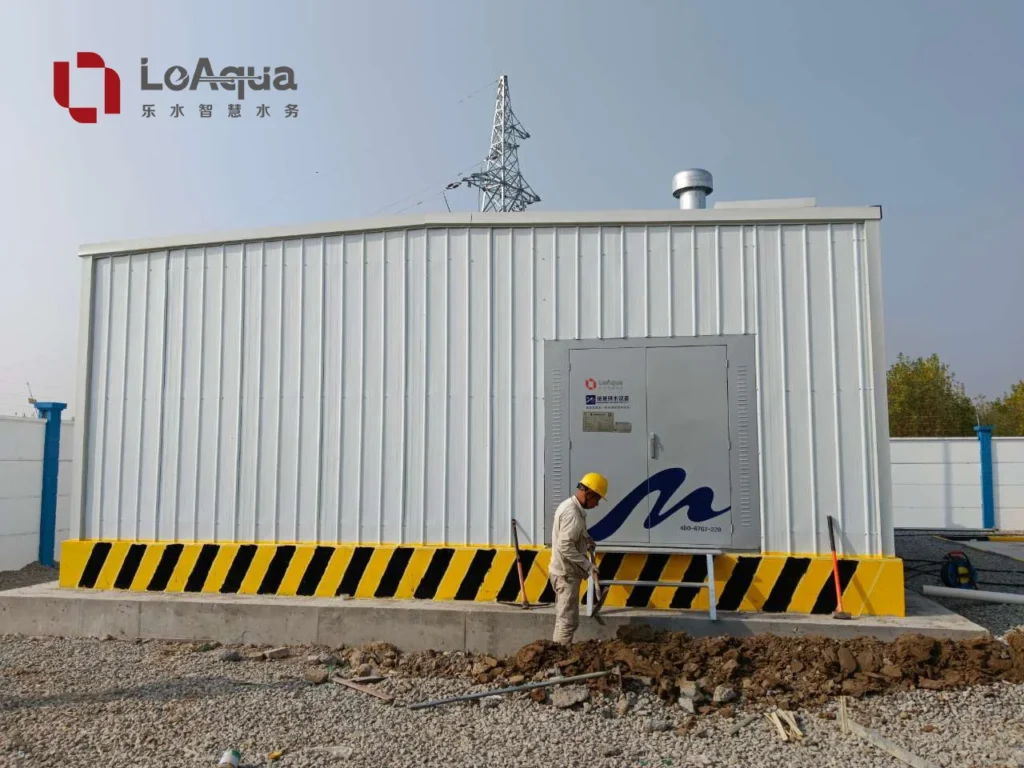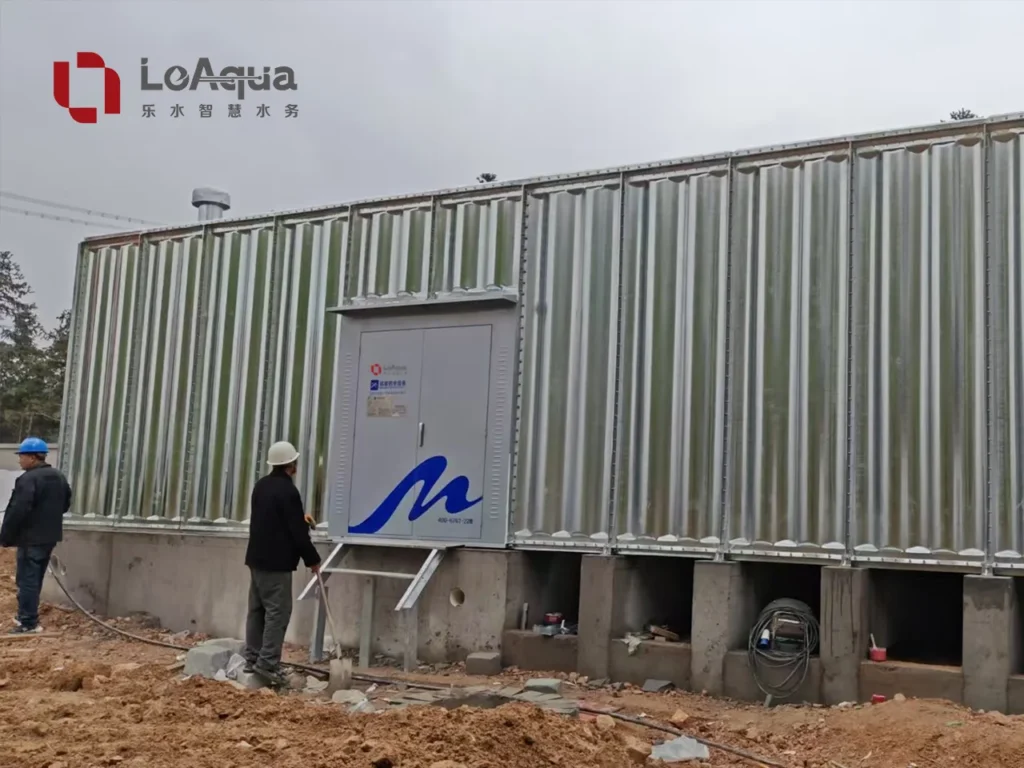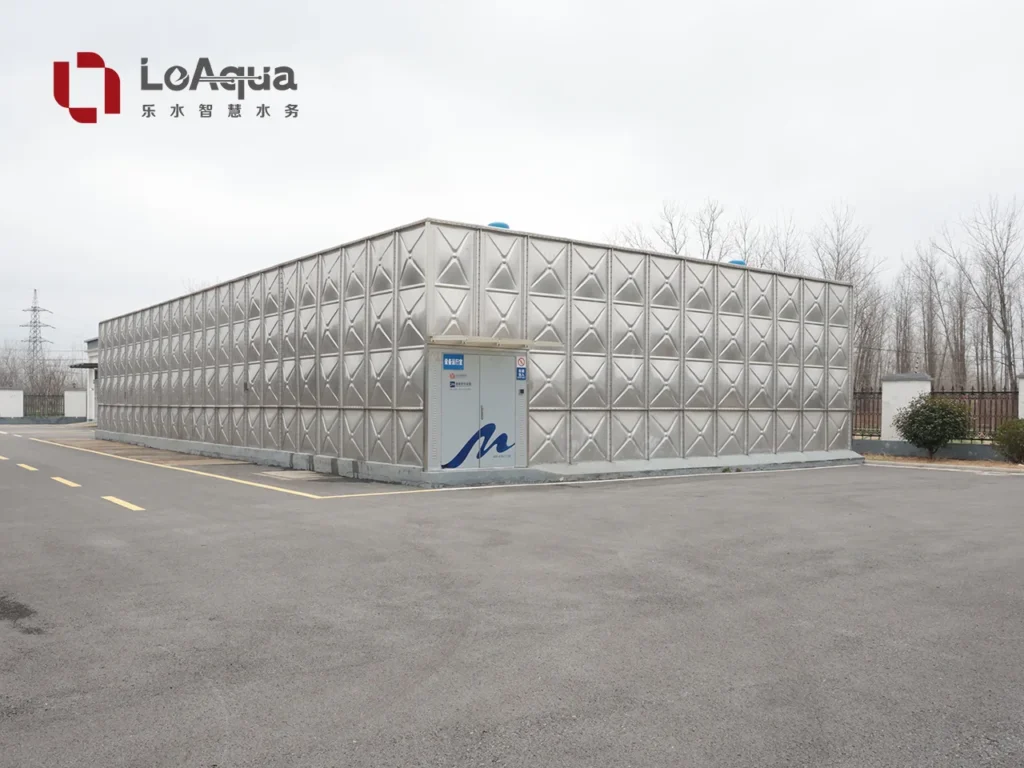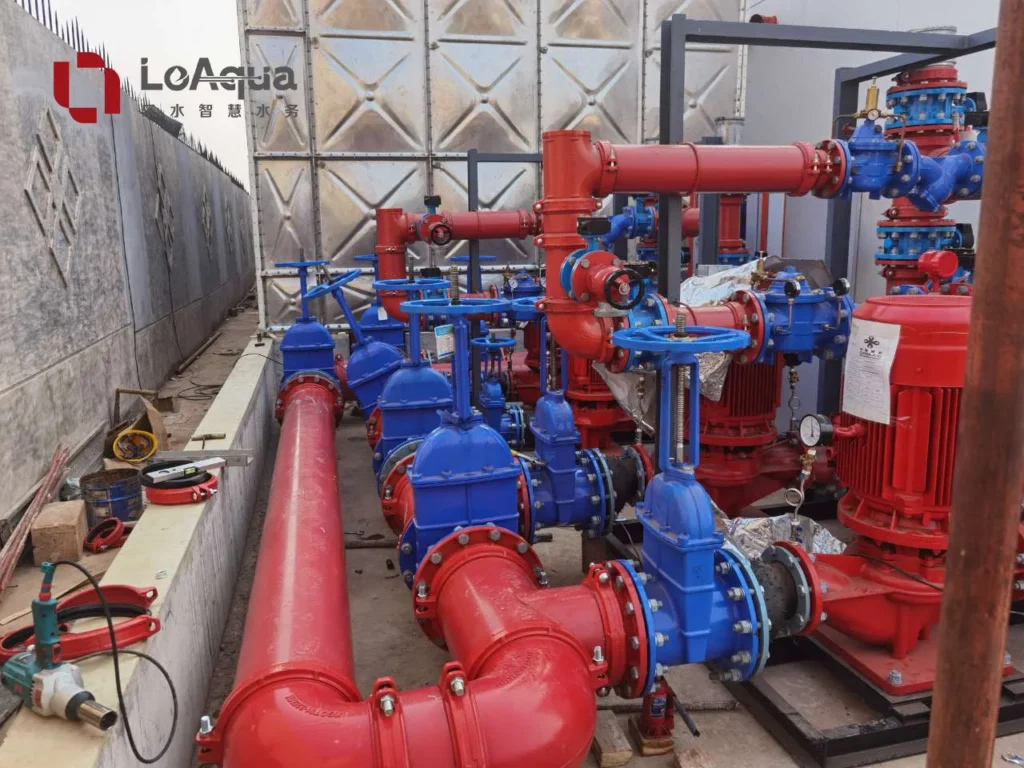
Water tank installation cost is not determined by the tank price alone. The final project budget may also include the foundation, support structure, shipping, lifting equipment, pipework, valves, pumps, electrical work, testing and commissioning.
Quick answer: The tank package is only one part of the installed project cost. A reliable comparison should separate the tank, foundation, logistics, connections, pumps, controls, site installation, testing and technical documentation.
This distinction helps prevent buyers from comparing one supplier’s complete scope with another supplier’s tank-only price.
What Is Included in Water Tank Installation Cost?
A typical installed water tank project may include:
- water tank panels or shell;
- internal reinforcement and accessories;
- foundation or support structure;
- delivery and unloading;
- lifting or positioning equipment;
- inlet, outlet, overflow and drain pipework;
- valves, flanges and flexible connectors;
- pump and control equipment, if required;
- installation labor;
- leak testing and commissioning;
- technical drawings and operation manuals.
Not every quotation includes all of these items. The first step is therefore to confirm the supply boundary.
1. Tank Type and Material
The tank itself is usually the largest equipment item, but its price depends on more than the nominal capacity.
Important factors include:
- stainless steel, GRP/FRP, composite or galvanized construction;
- welded or bolted assembly;
- panel size and thickness;
- structural reinforcement;
- water quality and operating temperature;
- internal and external finish;
- required accessories and connection layout.
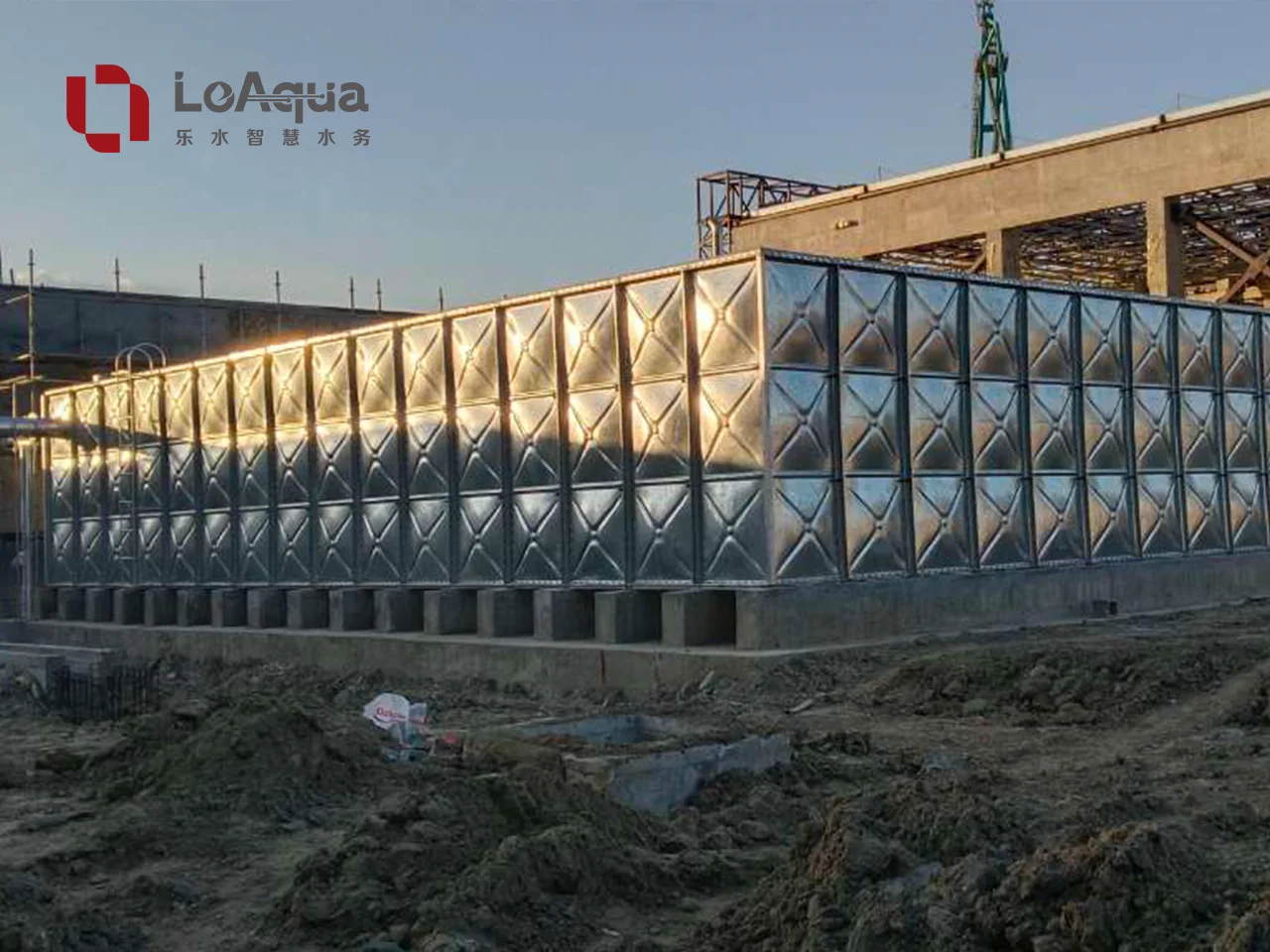
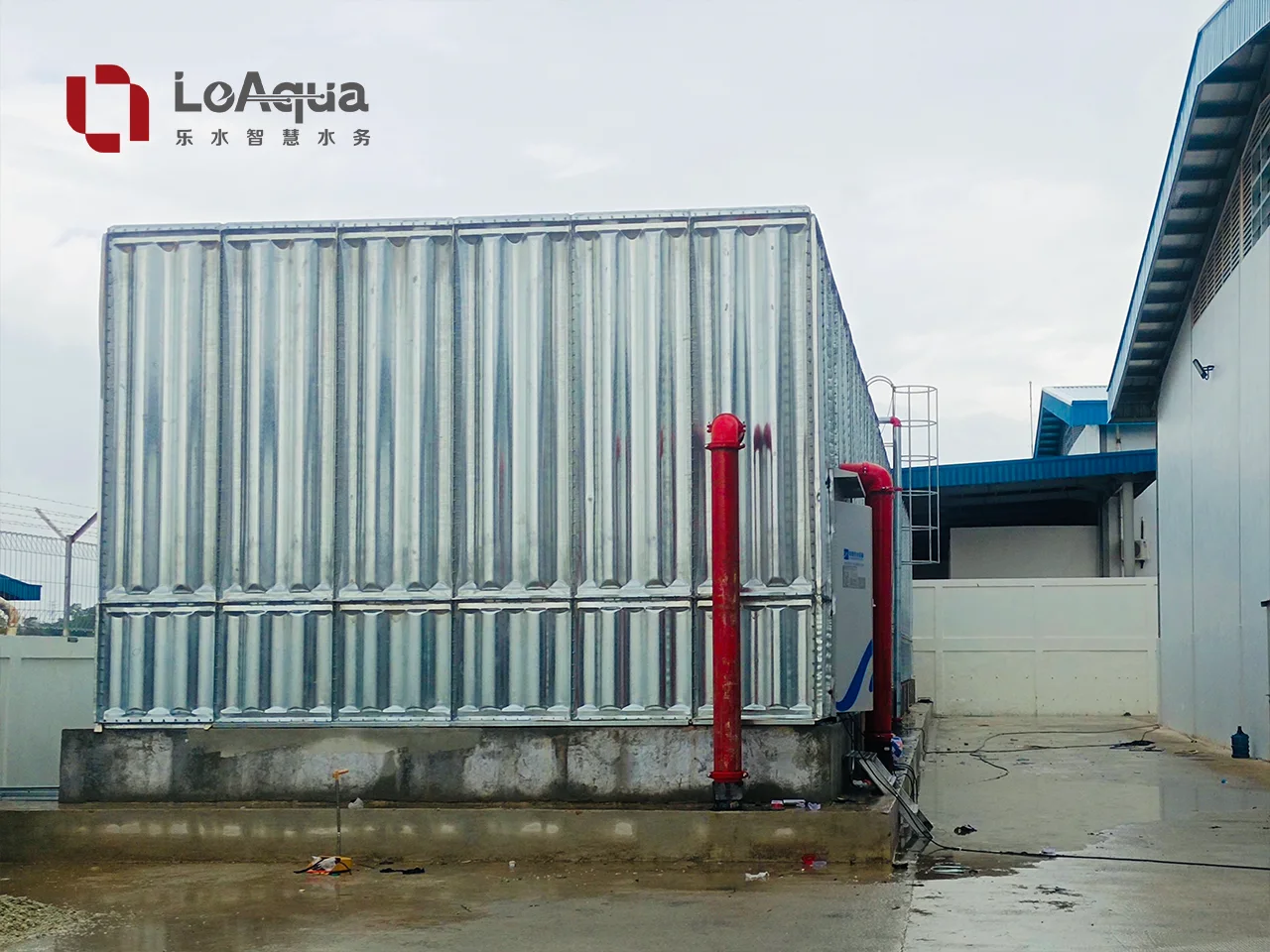
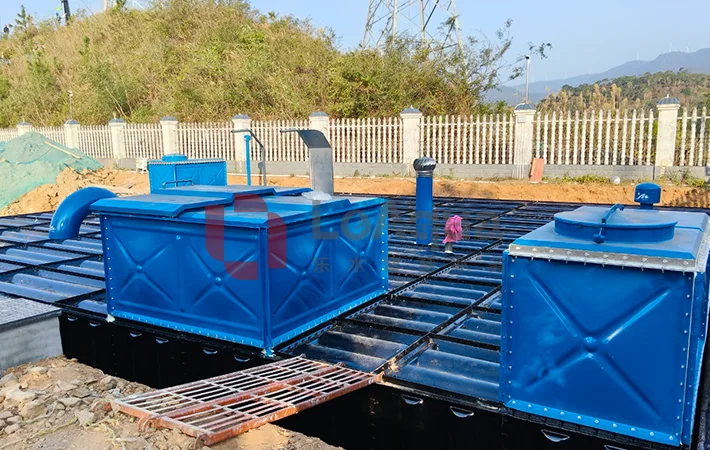
For example, a sectional stainless steel tank may be easier to transport to a restricted site than a large factory-assembled tank, but it still requires proper site assembly, sealing and inspection.
LeAqua’s stainless steel water tank page and water tank selection guide explain how material and construction type affect project selection.
2. Foundation and Support Structure
A water tank transfers its operating load to the foundation. The foundation must therefore be reviewed before the tank is ordered.
The project may require:
- reinforced concrete;
- strip foundations;
- a full concrete base;
- a steel support frame;
- level checking and surface preparation;
- special support for elevated or rooftop installation.
The cost depends on the tank footprint, water depth, site condition, local construction rates and the existing building structure.
A tank supplier can provide foundation requirements and loading information, but the final civil and structural design should be checked by the project engineer.
See the related guide to sectional water tank foundation requirements.
3. Delivery, Unloading and Site Access
Transport cost is affected by the distance, shipment method, packing arrangement and site access.
For sectional tanks, the panels may be packed for container shipment and assembled at the destination. This can help with transportation to some sites, but the project still needs to consider:
- container unloading;
- local transport from port or warehouse;
- temporary storage;
- access for workers and tools;
- lifting or positioning equipment;
- restricted roads or limited working space.
A tank that is inexpensive to manufacture may still have a high installed cost if the site is difficult to access.
LeAqua’s guide to shipping sectional water tanks covers packing, container loading and site-readiness considerations.
4. Pipework and Connection Scope
The tank price may not include the external pipework required to connect it to the building or process system.
The installation scope should clarify whether it includes:
- inlet pipe;
- outlet or suction pipe;
- overflow;
- drain;
- vent;
- isolation valves;
- strainers;
- flexible connectors;
- pressure gauges;
- pump headers;
- external support and brackets.
Connection locations and elevations should be confirmed before fabrication. Changing the nozzle arrangement after production can create additional work and delay.
For a broader review, see the water tank connection specification guide.
5. Pumps and Control Equipment
A storage tank may work as a standalone storage unit, but many projects also require pumping and automatic control.
Additional costs may come from:
- transfer pumps;
- booster pumps;
- duty/standby arrangements;
- control panels;
- water level sensors;
- pressure sensors;
- alarm systems;
- remote monitoring;
- electrical cabling;
- commissioning of the control sequence.
The pump should be selected according to the required flow, head, suction condition and operating mode. Adding a pump after the tank layout has been fixed may create problems with suction pipe routing or maintenance access.
6. Installation, Testing and Commissioning
Installation cost depends on the tank construction method and the work conditions.
A sectional tank may require:
- panel assembly;
- bolt tightening;
- gasket installation;
- internal reinforcement;
- accessory installation;
- connection work;
- leak testing;
- cleaning and handover.
The quotation should also clarify whether testing and commissioning are included. “Installation included” does not always mean that external pipework, electrical connection, water filling, disinfection or final performance testing are included.
Tank Price Versus Installed Project Cost
When comparing quotations, use a table like this:
| Cost item | Included? | Responsible party |
|---|---|---|
| Tank body and accessories | Confirm | Supplier |
| Foundation and civil work | Confirm | Contractor or owner |
| Shipping and unloading | Confirm | Supplier or logistics contractor |
| Lifting equipment | Confirm | Site contractor |
| External pipework | Confirm | Mechanical contractor |
| Pumps and controls | Confirm | Supplier or MEP contractor |
| Testing and commissioning | Confirm | Supplier or site team |
| Drawings and manuals | Confirm | Supplier |
This makes it easier to compare equivalent scopes instead of comparing different assumptions.
How to Request a More Accurate Quotation
Before contacting a water tank supplier, prepare:
- required storage capacity;
- application and water type;
- tank dimensions or space limitations;
- installation location;
- foundation information;
- connection sizes and elevations;
- required pumps and controls;
- delivery destination;
- installation responsibility;
- required drawings, tests and manuals.
LeAqua can coordinate tank configuration, connection requirements, pump interfaces and technical documentation for project-specific water storage systems. Civil works, local installation and code review should remain clearly defined in the project responsibility matrix.
For a more detailed enquiry checklist, see the water tank RFQ checklist.
Conclusion
The lowest water tank price is not always the lowest project cost.
A reliable comparison should include the tank, foundation, logistics, pipework, pumps, controls, installation, testing and technical documents. Once these items are separated and clearly assigned, buyers can compare quotations more fairly and reduce unexpected costs during installation.