How to Choose the Right Water Tank in 5 Steps
Every project has different requirements. Use this guide to narrow down the most suitable water tank solution based on your application, environment, water quality, capacity and budget.
Application
Installation
Material
Structure
Capacity
1. Choose by Application
Application is the first factor in tank selection because it defines the water type, operating duty and applicable project requirements. The suggestions below are starting points: final selection depends on water chemistry, site conditions and project specifications.
Potable Water
For drinking water storage in residential, commercial, institutional and municipal applications. Hygienic materials are commonly considered to protect water quality.
- Stainless Steel Water Tank may be suitable where hygienic, corrosion-resistant storage is required.
- Composite Stainless Steel Water Tank may be suitable for larger modular potable water systems.
- Double-Sided Arc-Rib Water Tank may be suitable for large modular potable water systems where high panel rigidity, pressure distribution and simplified internal design are important.
Material grade (for example SUS304 or SUS316) should be confirmed against local water quality and standards.
Fire Protection
For fire water storage and fire protection systems, where reliable large-volume storage is typically required.
- Stainless Steel Water Tank may be suitable where long service life and corrosion resistance are priorities.
- Composite Stainless Steel Water Tank may be suitable for modular fire water storage where corrosion resistance and economical material selection are important.
- FRP Water Tank is commonly considered for fire water duties.
- Double-Sided Arc-Rib Water Tank may be suitable for large-capacity fire water storage where high structural rigidity and modular installation are important.
Confirm capacity and configuration against the applicable fire protection requirements for the project.
Industrial Water
For process water, production facilities, cooling water and other industrial systems.
- GFS Cylindrical Water Tank may be suitable for industrial water storage where corrosion resistance and long service life are important.
- Epoxy-Coated Cylindrical Water Tank may be considered for industrial storage where corrosion protection and economical material selection are required.
- Double-Sided Arc-Rib Water Tank may be suitable for large modular industrial water storage where high structural rigidity and efficient installation are important.
For corrosive environments, seawater-related applications, high-purity requirements or other special conditions, project-specific selection is required.
Contact our engineering team with water chemistry, operating temperature and site details for a project-specific recommendation.
Rainwater Harvesting
For rainwater collection and non-potable water storage. The suitable material and structure depend on the project environment and water quality.
Tell our engineering team about your collection system, local climate and intended use so the storage solution can be evaluated for your conditions.
Tank + Pump Systems
When a project also needs pressure boosting, fire pumping or automatic water supply, storage and pumping should be planned as one system.
See LeAqua Integrated Pump Station solutions for combined storage and pump configurations.
2. Choose by Installation Environment
Installation environment affects transportation, assembly, corrosion exposure, structural requirements, maintenance access, available space and modularity. Considering where and how the tank will be installed early helps avoid redesign later.
Common Installation Environments
- Indoor — check floor loading, assembly access, ventilation and clearances.
- Outdoor — consider weather exposure, UV and temperature effects, anchoring and wind loads.
- Rooftop — verify structural support and weight limits; lighter modular systems may be considered.
- Ground-level — plan foundations, drainage, vehicle access and maintenance clearance.
- Restricted-access sites — evaluate how panels and equipment will reach the installation point.
- Underground — account for soil and groundwater loads, corrosion protection, ventilation and access for maintenance.
Why Installation Conditions Matter
- Transportation and assembly: can full tanks or large panels reach the site?
- Corrosion exposure: outdoor, coastal or aggressive environments affect material and coating choices.
- Structural requirements: rooftop, underground and seismic conditions change foundation and bracing needs.
- Maintenance access: internal cleaning and inspection are easier when the design avoids obstructions.
- Available space: modular designs can adapt to the footprint and shape of the site.
Modular bolted tanks can be advantageous for difficult-access locations because panels can be transported and assembled on site. Bolted construction is not universally better: foundations, waterproofing and project-specific structural requirements must still be evaluated.
For underground projects, see what engineers consider before installing an underground water tank.
3. Choose by Material
Material selection should be based on water quality, service environment, project budget and applicable requirements, not on material cost alone. The comparison below is a starting point for project evaluation.
| Material | Best Suited For | Main Advantages | Important Considerations |
|---|---|---|---|
| Stainless Steel | Potable water, hygienic applications, long-term water storage, projects requiring corrosion resistance | SUS304 / SUS316 options; hygienic surface; strong corrosion resistance | Water chemistry and environmental conditions should be considered when selecting the grade |
| Composite Stainless Steel | Potable hot and cold water, fire water, commercial, industrial and municipal systems | Large modular panels formed by one-time pressing; SUS304-2B contact surfaces; bolted assembly without on-site welding | A composite system is not simply a cheaper stainless steel tank; suitability depends on project size, water quality and structural requirements |
| GFS (Glass-Fused-to-Steel) | Large-capacity water storage, industrial and municipal applications, wastewater treatment | Strong corrosion resistance; modular bolted construction; suitable for large-capacity tanks | Water chemistry, coating condition and service environment should be evaluated |
| FRP / GRP | Corrosion-sensitive environments, selected industrial applications, lightweight modular construction | SMC panels with food-grade resin; corrosion resistance; light weight; thermal insulation | Suitability depends on application and water chemistry; confirm project-specific requirements |
The table is a decision aid. Final material selection should be confirmed against water quality, local standards and project conditions.
4. Choose by Tank Structure
Tank structure affects fabrication, transportation, installation, maintenance and future expansion. Welded and bolted structures are both common; the best choice depends on project conditions, site access, maintenance expectations and budget.
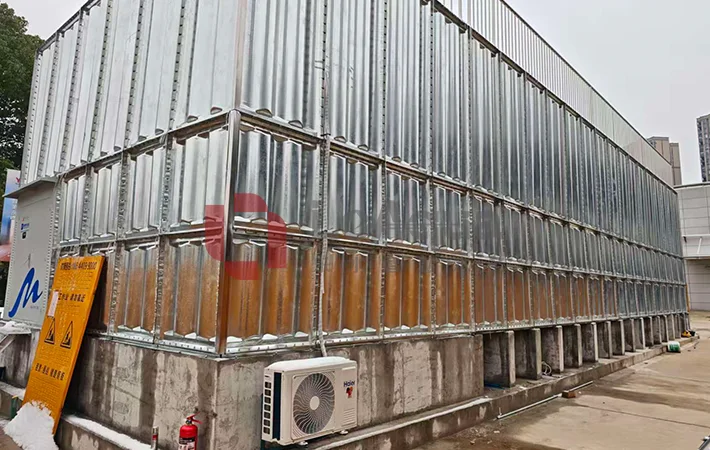
Double-Sided Arc-Rib Water Tank
A LeAqua modular pressed-panel technology with double-sided arc-rib reinforcement. Panels are formed by one-time hydraulic press molding and assembled with bolts. The design needs no internal tie rods, improving internal accessibility and making cleaning and maintenance easier. It is suitable for projects where internal obstructions should be minimized.
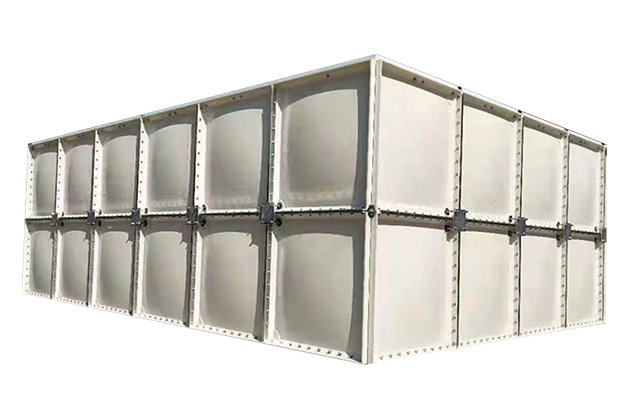
FRP / SMC Water Tank
Modular SMC / FRP panel construction with lightweight, corrosion-resistant panels. It is commonly considered for corrosion-sensitive environments and applications where structural load and handling weight matter.
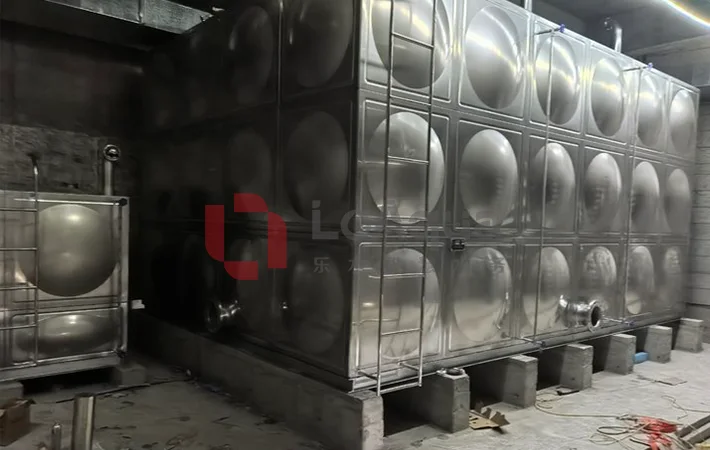
Welded Stainless Steel Water Tank
Factory-fabricated welded construction provides a strong, permanent structure and is appropriate for projects where welded construction is preferred.
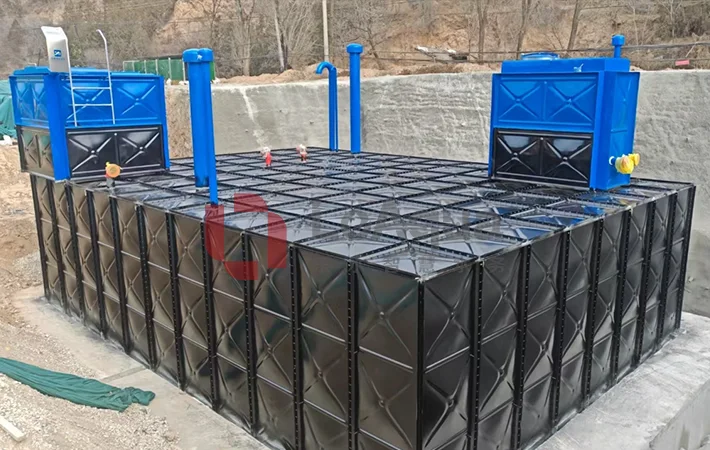
Bolted Stainless Steel Water Tank
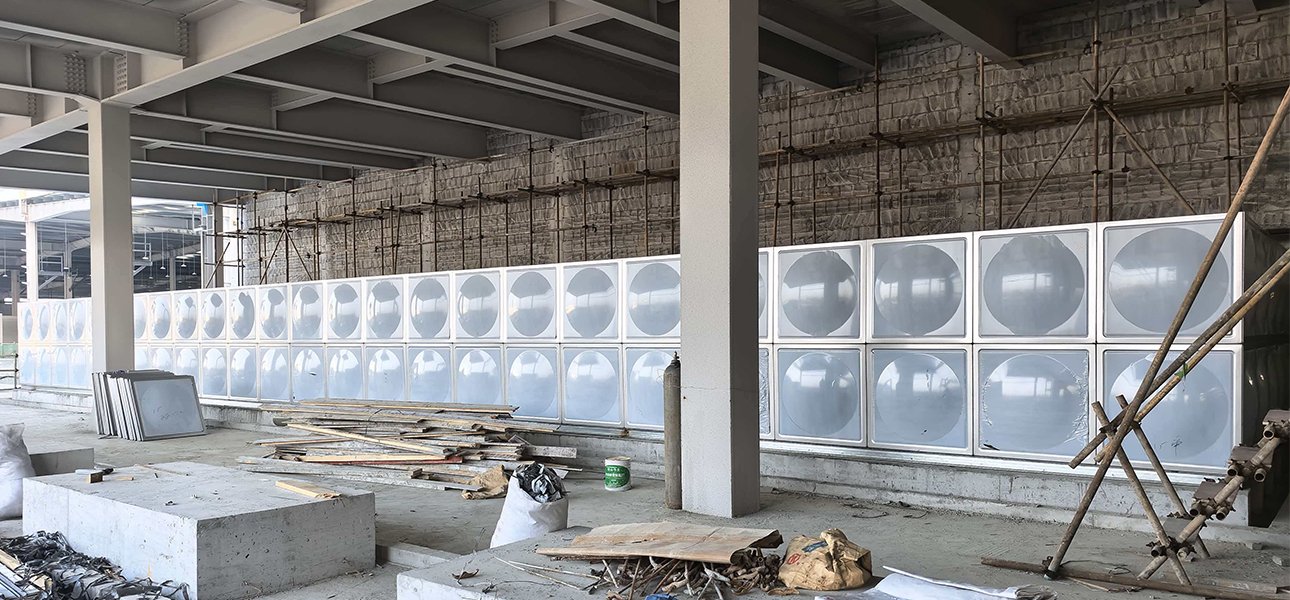
Modular panel construction offers easier transportation and on-site assembly, is suitable for restricted-access locations, and can simplify expansion or reconfiguration in some projects.
5. Choose the Right Capacity
Capacity should not be selected from tank dimensions alone. It is an engineering decision based on how the storage system will actually be used.
Factors That Determine Capacity
- Daily water demand
- Peak demand
- Fire water requirements
- Required storage duration
- Water supply reliability
- Pump system requirements
- Local regulations
- Available installation space
- Future expansion
Capacity Is a System Decision
Because these factors interact, there is no single universal sizing formula. The appropriate capacity depends on project parameters, and tank dimensions follow from that calculation.
Provide your application, water demand and site conditions to LeAqua, and the engineering team can evaluate the appropriate capacity and configuration for your project.
Need Help Determining the Right Capacity?
Share your project parameters and receive an engineering evaluation of the suitable capacity and tank configuration.
Water Tank Selection Decision Matrix
The matrix below summarizes commonly considered solutions for typical project requirements. It is a decision aid, not a specification.
| Project Requirement | Commonly Considered Solutions |
|---|---|
| Potable water | Stainless Steel / Composite Stainless Steel / Double-Sided Arc-Rib |
| Fire water | GFS / Stainless Steel / Composite Stainless Steel / Double-Sided Arc-Rib |
| Large industrial storage | GFS / Epoxy-Coated Steel / FRP-GRP / Stainless Steel, depending on conditions / Double-Sided Arc-Rib |
| Wastewater treatment | GFS / Epoxy-Coated Steel / FRP-GRP, depending on water chemistry |
| Restricted-access installation | Modular Bolted / Composite Stainless Steel / Double-Sided Arc-Rib |
| High hygiene requirements | Stainless Steel / Composite Stainless Steel / Double-Sided Arc-Rib |
| Corrosive environment | GFS / FRP-GRP / Epoxy-Coated Steel, depending on water chemistry |
| Minimal internal obstruction | Double-Sided Arc-Rib |
Quick Recommendation
Tell us your application, water type, required capacity and installation conditions. Our engineering team can recommend a suitable tank material and structure for your project.
Why Choose LeAqua for Your Water Tank Project?
LeAqua is an R&D-focused water tank engineering manufacturer, combining water tank R&D, manufacturing and project-specific engineering support.
- R&D-driven manufacturer — tank technology is developed in-house, with an R&D center in Shanghai supporting project-specific engineering recommendations.
- Standards and technical reference work — MingXing has served as a co-editor of T/CECS 623-2019, Technical Specification for Integrated Fire Pump Stations with Assembled Tank and Pump House, developed with the China Institute of Building Standard Design & Research.
- National standard design reference experience — MingXing is a co-lead organization for 24CS01-1, Integrated Fire Pump Station with Assembled Tank and Pump House — Intelligent Type, the current reference atlas that supersedes 18CS01. ——For supporting records and official source links, explore 【LeAqua’s engineering standards and technical references】.
- Self-owned manufacturing facility — a 32,600 m² manufacturing base supports factory-direct production and quality control.
- Multiple water tank materials — Stainless steel, composite stainless steel, GFS (Glass-Fused-to-Steel), epoxy-coated steel and FRP/GRP systems cover a wide range of water storage applications.
- Modular and welded technologies — bolted modular tanks and welded stainless steel tanks, including double-sided arc-rib panel technology.
- Engineering support — project-specific material, structure and capacity recommendations based on application and site conditions.
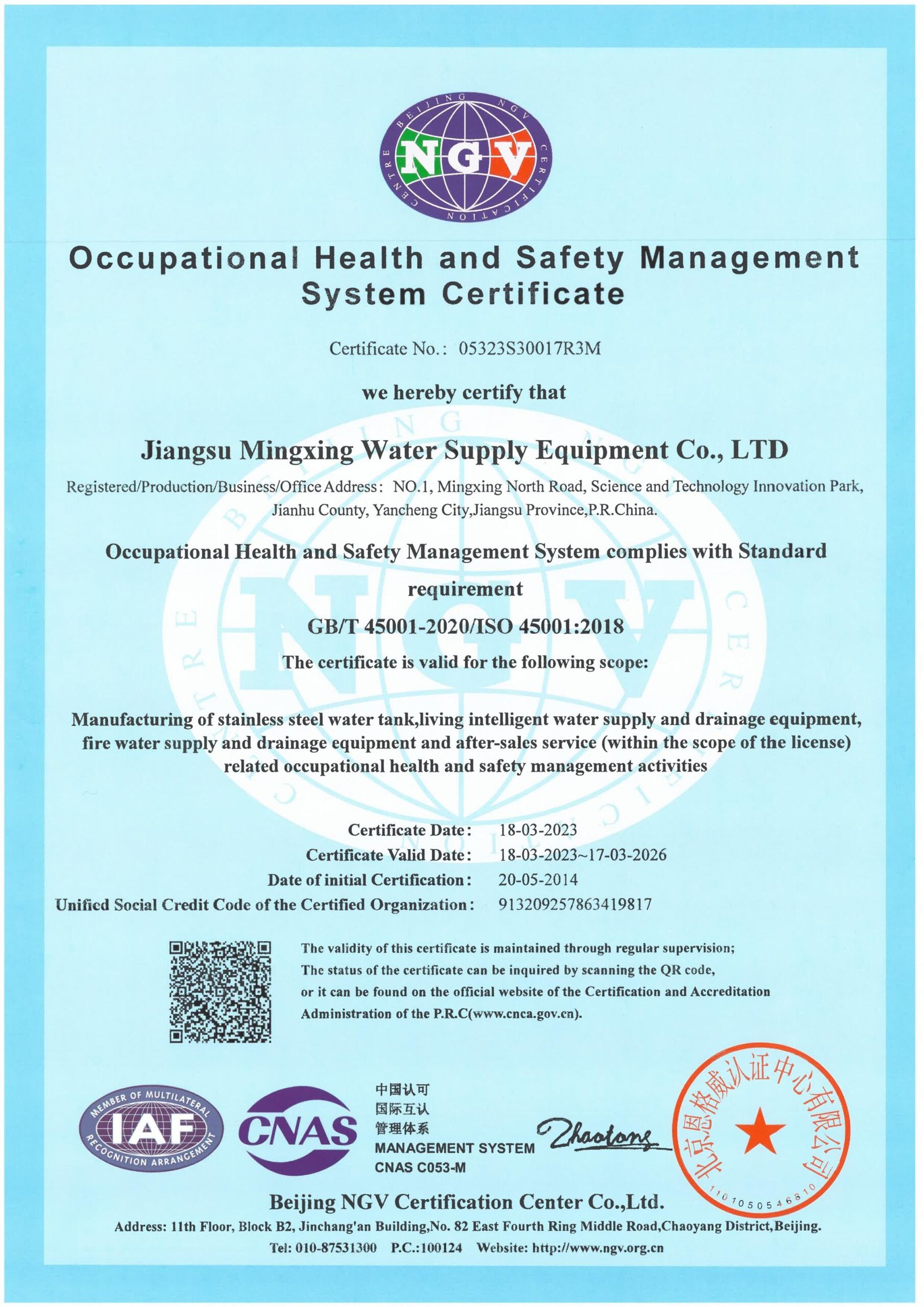
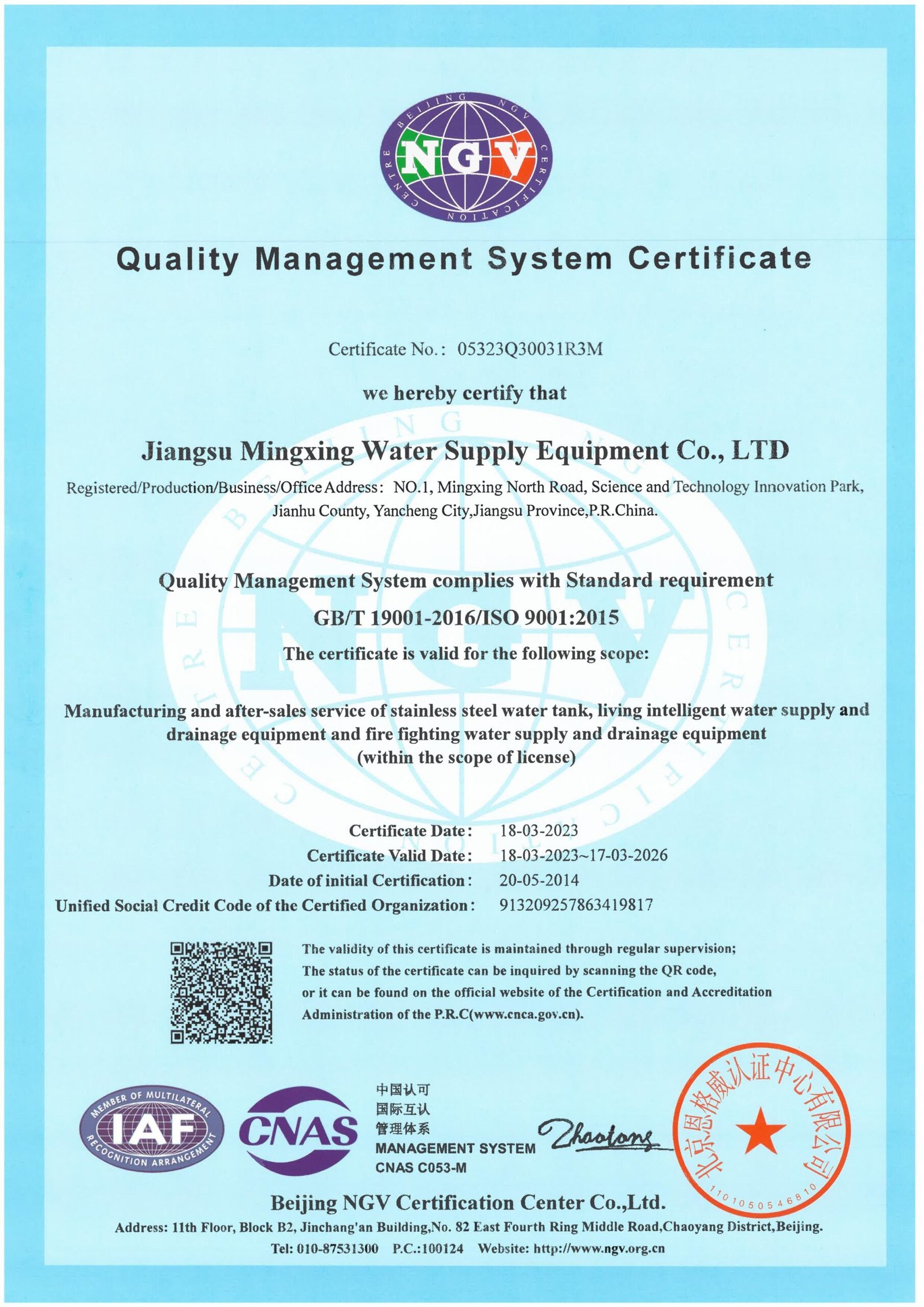
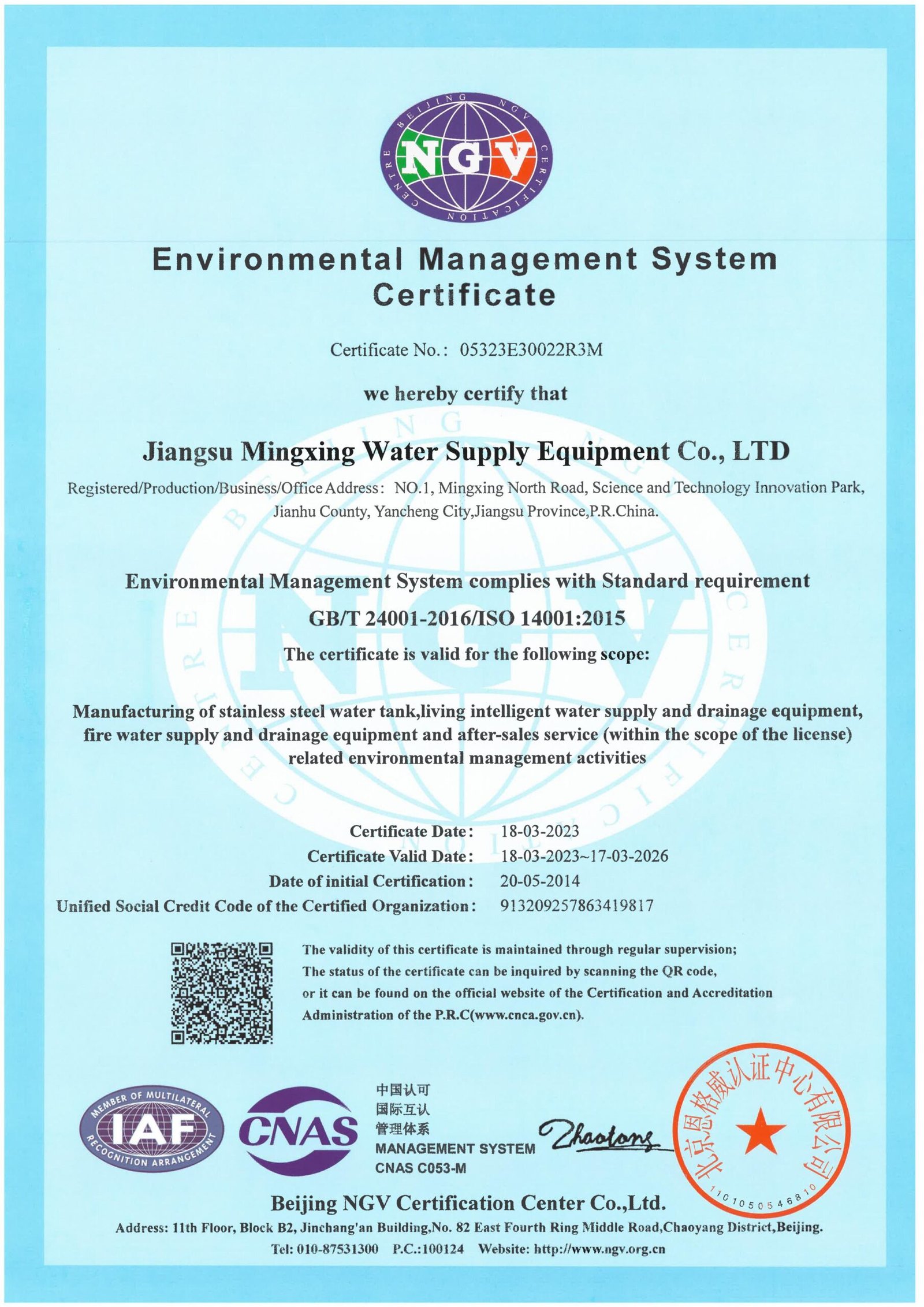
ISO 9001:2015, ISO 14001:2015, ISO 45001:2018 and CE certification documentation are published on the Stainless Steel Water Tank page.
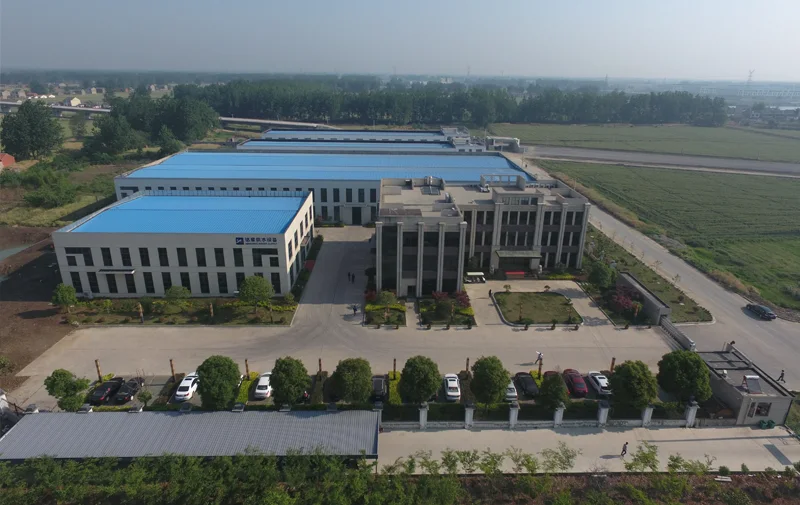
Manufacturing base: No. 1 Mingxing North Road, Tech Innovation Park, Jianhu County, Yancheng, Jiangsu, China. R&D center: Shanghai.
Explore All Water Tank Solutions
Review the full LeAqua water tank range and related systems, or jump straight to the product page that matches your application.
Related Systems & Resources
Not Sure Yet?
If your project does not fit neatly into one category, send your application, water type, capacity and installation conditions to the LeAqua engineering team.