Compsite Stainless Steel Water Tank
Introduction
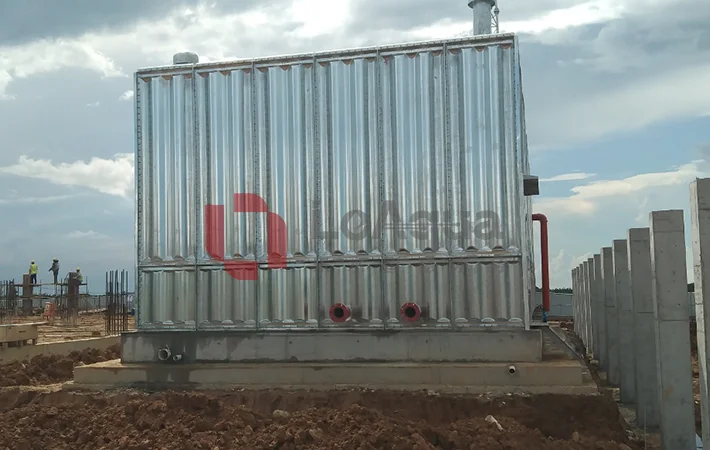
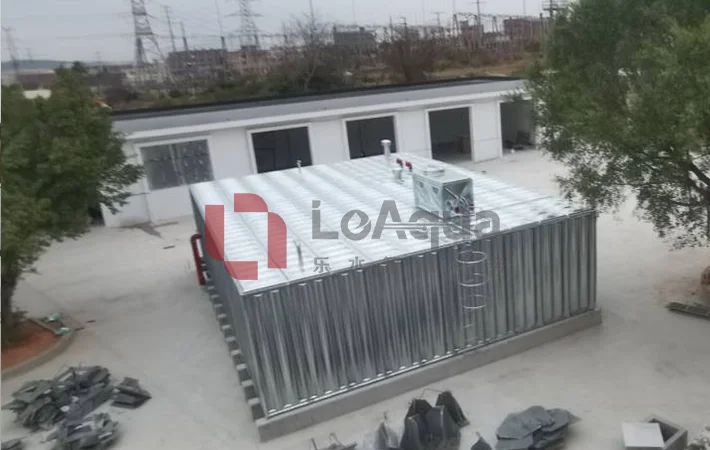
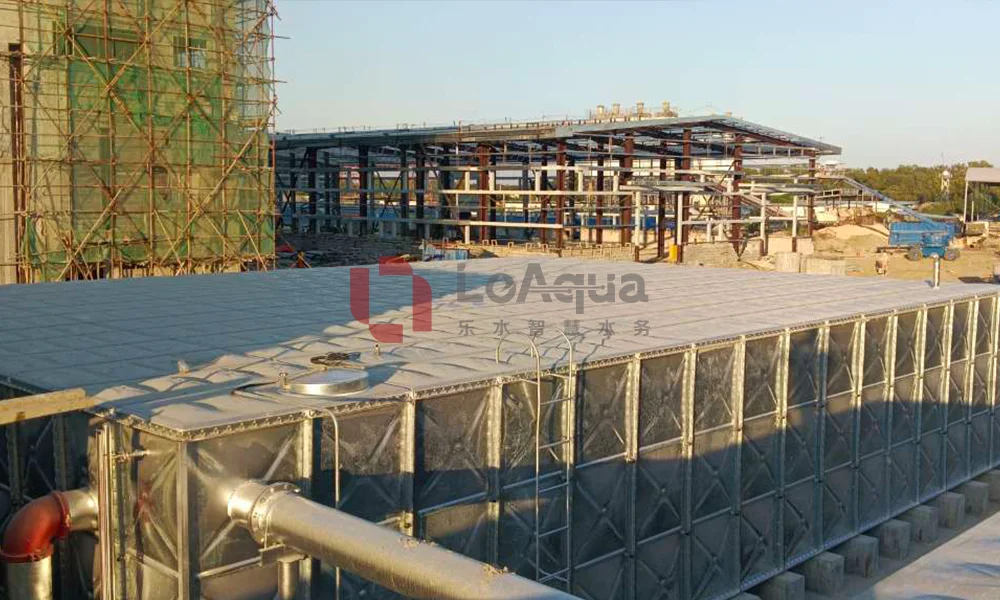
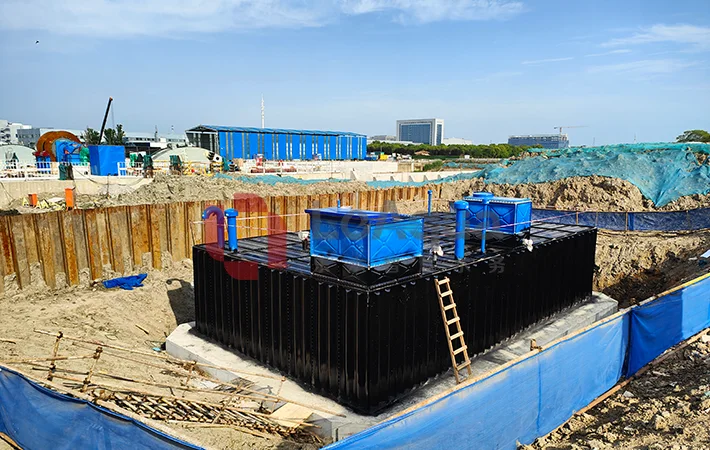
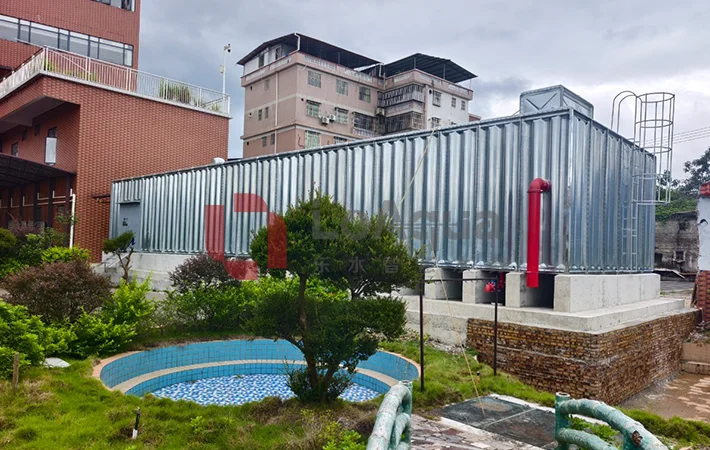
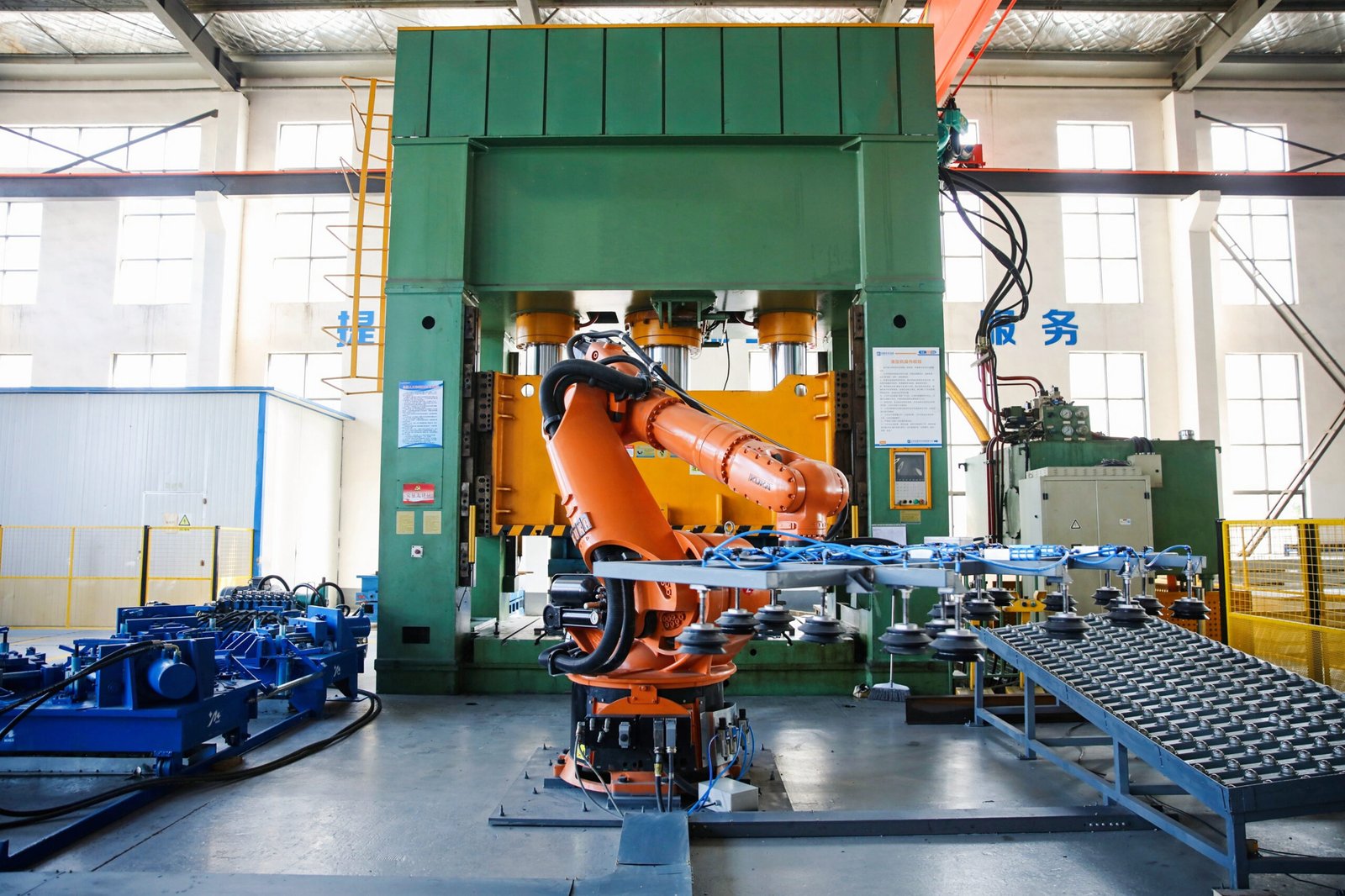
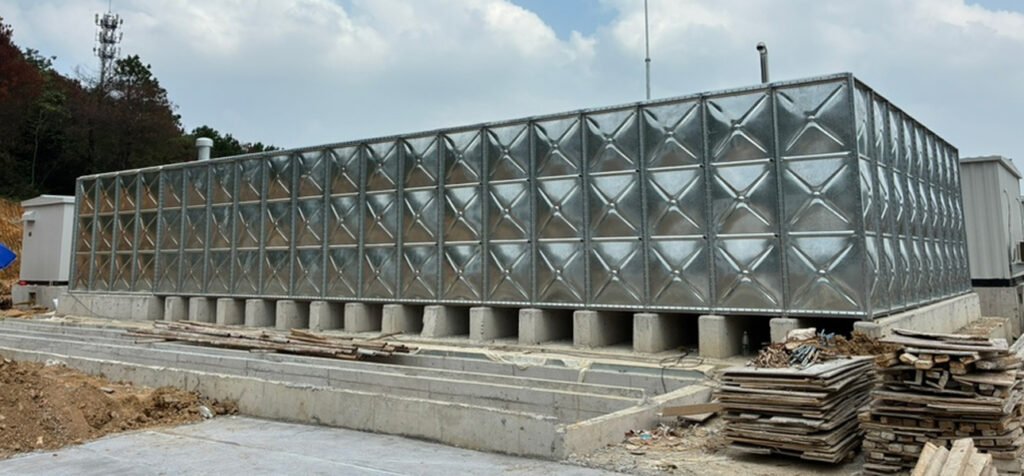
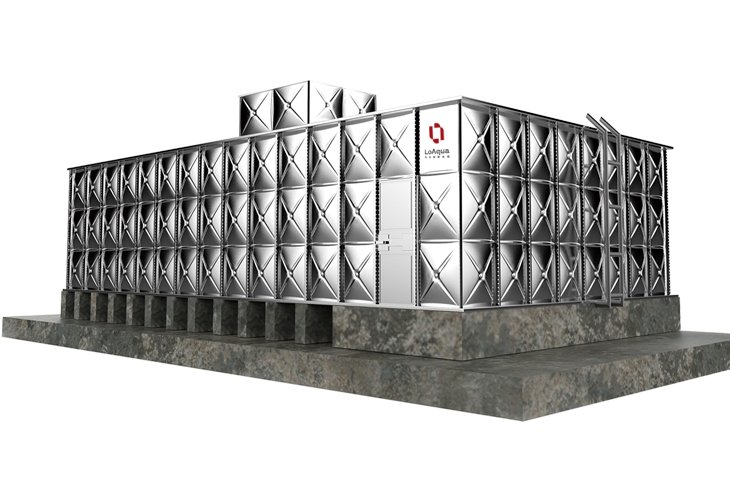
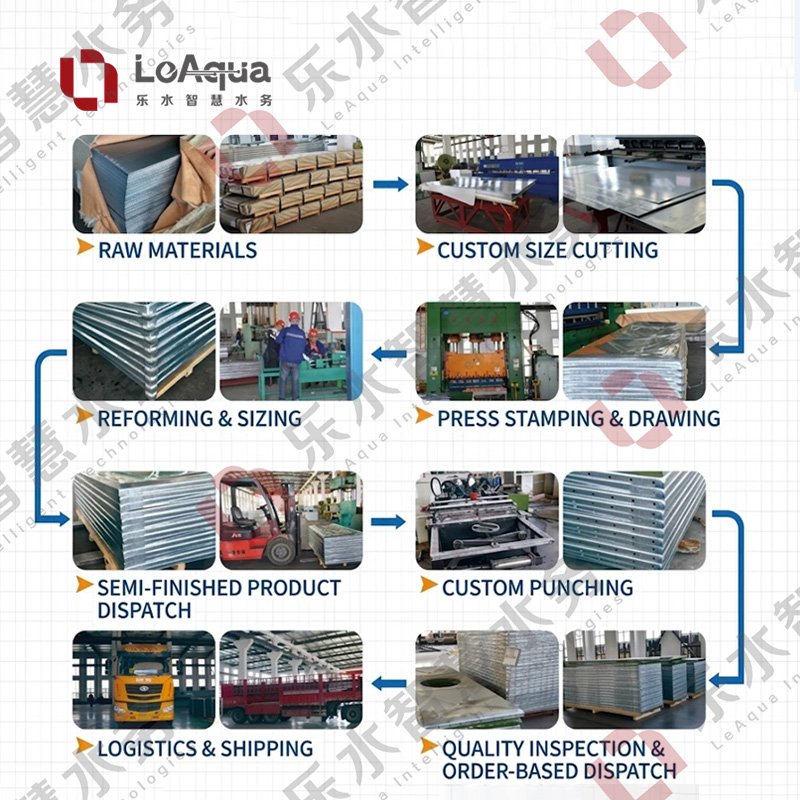
LeAqua composite stainless steel water tank is a large modular bolted water storage system made from pressed composite panels. Each panel is formed by a 2500-ton hydraulic press through one-time mold pressing and stretching, combining SUS304-2B stainless steel with hot-dip galvanized steel into a high-strength integrated panel structure.
Unlike traditional welded stainless steel tanks, the SW large modular composite water tank is assembled with bolts. The panels require no welding during installation, helping reduce welding-related corrosion risk, installation time, power consumption, and environmental impact.
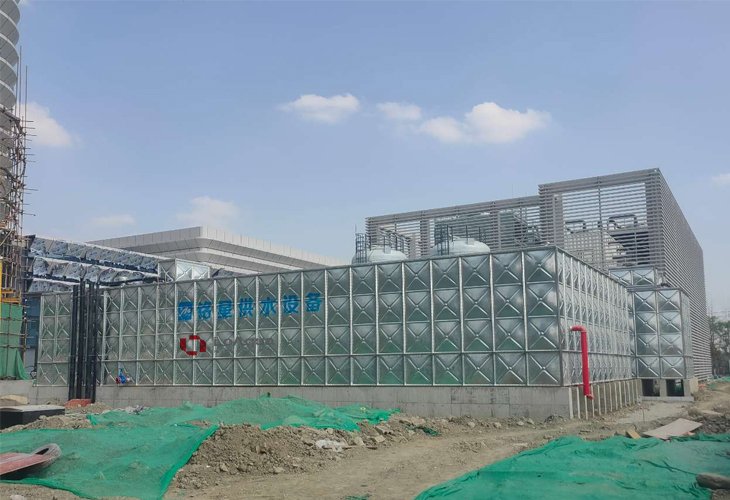
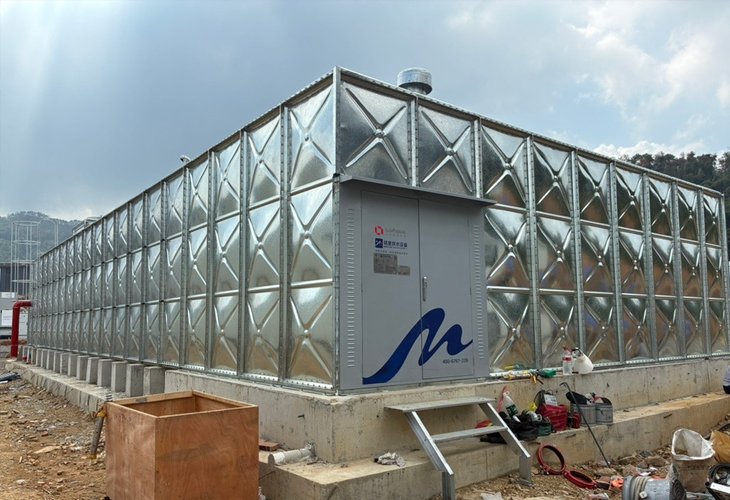
This tank is suitable for potable hot and cold water storage, fire water storage, commercial buildings, industrial facilities, municipal water supply projects, hotels, hospitals, and other engineered water storage systems.
Key Features
- Composite stainless steel and galvanized steel structure
- One-time molded large panels without welding seams
- Bolted modular assembly for flexible installation
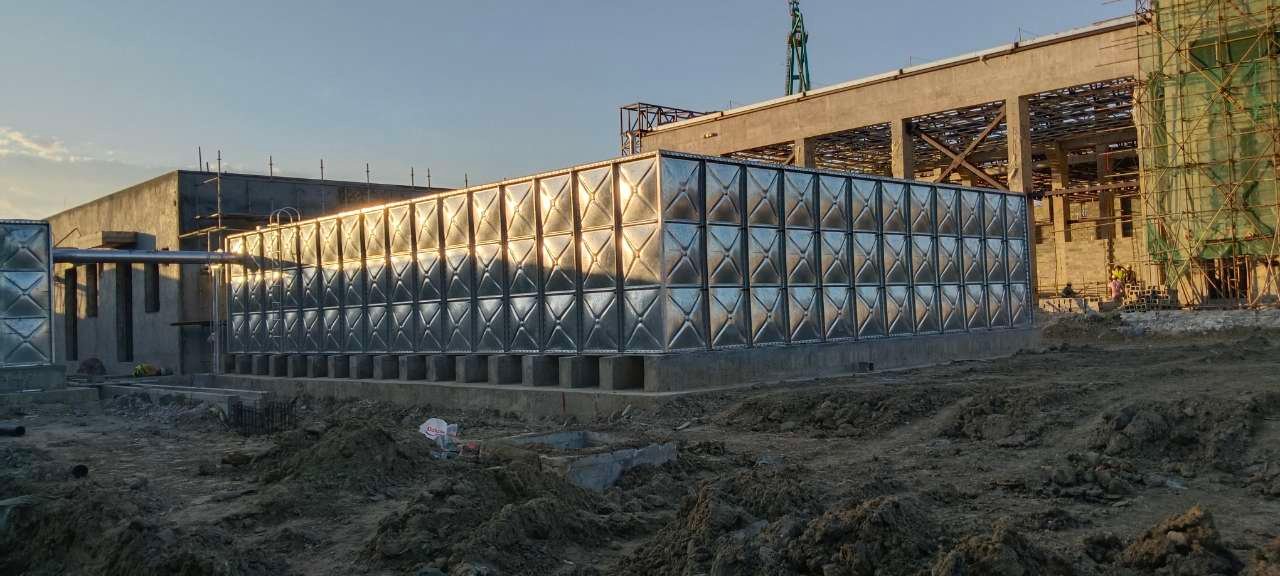
- X-reinforced arc panel design for enhanced rigidity
- High hygiene standards for potable water storage
- Long service life and low maintenance requirements


Product Advantages
Outstanding Corrosion Resistance
All components in contact with water are made from SUS304 sanitary-grade stainless steel, effectively preventing corrosion and ensuring safe water storage.
Ultra-Long Service Life
Unlike traditional welded tanks that may experience corrosion after around 10 years, the composite modular tank can achieve a service life of more than 70 years.
No Welding – No Corrosion Risk
The modular panels are produced through one-time pressing without welding seams, eliminating welding-related corrosion such as intergranular corrosion and stress corrosion.
High Structural Strength
The pressed convex arc panels combined with X-reinforcement ribs provide structural stiffness more than three times higher than standard arc panels.
Seismic Resistance
The tank structure has been verified through structural calculations to comply with building electromechanical seismic design standards, meeting seismic intensity requirements of 6–9 degrees.

Technical Parameters
| Item | Specification |
|---|---|
| Product Type | Composite stainless steel modular water tank |
| Water-Contact Material | SUS304-2B stainless steel |
| Structural Backing Material | Hot-dip galvanized steel |
| Panel Forming Method | 2500-ton hydraulic press, one-time mold pressing and stretching |
| Panel Size | 1 m × 2 m / 1 m × 3 m |
| Panel Thickness | 1.5 mm / 2.0 mm / 3.0 mm / 3.5 mm / 4.0 mm |
| Assembly Method | Bolted modular assembly |
| Reinforcement | Internal stainless steel reinforcement rods |
| Panel Design | Convex arc panel with X-shaped reinforcement |
| Applications | Potable water storage, hot and cold water storage, fire water storage, commercial and industrial water supply |
Composite Water Tank vs Welded Stainless Steel Water Tank
| Item | Composite Stainless Steel Water Tank | Traditional Welded Stainless Steel Tank |
|---|---|---|
| Assembly Method | Bolted modular assembly | On-site welding |
| Panel Structure | Large pressed composite panels | Welded stainless steel plates |
| Corrosion Risk | Lower welding-related corrosion risk | Welded areas may face intergranular or stress corrosion |
| Installation Efficiency | Faster modular installation | Longer welding and finishing process |
| Power Consumption | No on-site welding required | Requires welding equipment and electricity |
| Service Life | Designed for up to 70 years under proper conditions | May require repair or replacement earlier depending on welding quality and environment |
| Maintenance | Modular parts are easier to inspect and replace | Welded structure may be harder to modify or repair |
Installation and Foundation Requirements
The foundation should be designed according to project requirements and relevant engineering standards. For stable installation, the foundation surface should be level, strong, and suitable for supporting the full operating weight of the tank.
| Foundation Item | Requirement |
|---|---|
| Foundation Standard | Designed according to GB02S101 or project-specific engineering requirements |
| Foundation Surface Level Difference | ≤ 5 mm |
| Distance Between Adjacent Foundation Centers | ≤ 1000 mm |
| Concrete Foundation Width | ≥ 240 mm |
| Base Support | Typically 10# channel steel; larger tanks may require customized base structures |
Compsite Stainless Steel Water Tank FAQ
What is a composite stainless steel water tank?
A composite stainless steel water tank is a modular bolted water storage tank made from pressed composite panels. LeAqua tanks combine SUS304-2B stainless steel with hot-dip galvanized steel to provide hygienic water-contact surfaces and strong structural support.
What is the difference between SW-I and SW-II composite water tanks?
SW-I uses single-side SUS304-2B stainless steel combined with hot-dip galvanized steel. SW-II uses double-side SUS304-2B stainless steel combined with hot-dip galvanized steel for enhanced corrosion resistance and durability.
Is the composite stainless steel water tank suitable for drinking water?
Yes. The parts in contact with water are made from SUS304-2B stainless steel, which is suitable for hygienic potable water storage applications.
Can this tank be used as a fire water tank?
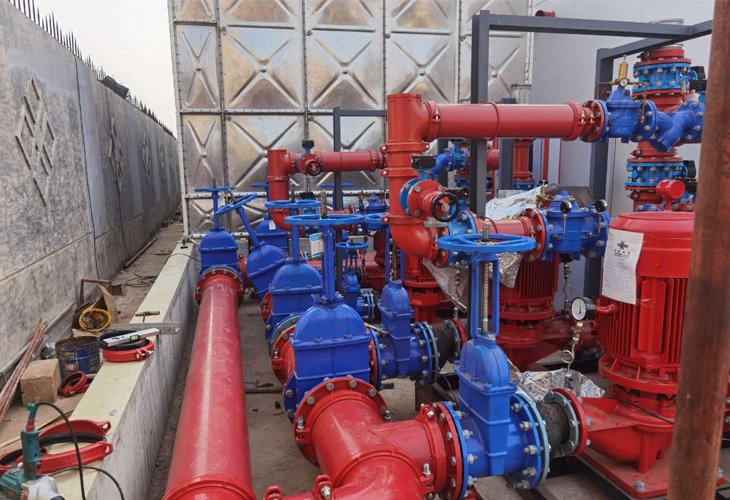
Yes. Composite stainless steel water tanks can be used for fire water storage, building water supply, and other engineered water storage systems.
How long can a composite stainless steel water tank last?
The tank is designed for a service life of up to 70 years under proper operating and maintenance conditions. Actual service life depends on water quality, installation quality, environment, and maintenance practice.
Why does bolted assembly reduce corrosion risk?
Bolted assembly reduces the need for on-site welding. This helps avoid welding-related corrosion risks such as intergranular corrosion and stress corrosion around welded areas.
What information is needed for a quotation?
To recommend the right tank solution, please provide the required capacity, tank dimensions or installation space, water type, application, project location, foundation condition, and any special requirements for accessories or seismic design.
Composite Water Tank Technical Insights

Why Modular Composite Water Tanks Simplify Modern Construction
Construction projects today face increasing pressure to reduce installation time, improve quality control, and make better use of available space. Whether developing a commercial complex, municipal water supply system, industrial facility, or integrated pump station, project owners are expected to deliver reliable infrastructure while controlling both…

Underground Water Tank Design: 5 Engineering Factors You Should Never Ignore
Underground water tanks have become an increasingly popular solution for commercial buildings, municipal infrastructure, industrial facilities, and integrated pump stations where efficient land use is a priority. Unlike above-ground installations, underground systems make full use of the available space by placing the water storage structure beneath…

How to Choose the Right Water Tank for Your Project
Selecting a water tank is not simply a matter of choosing a material or comparing storage capacity. Modern water storage projects involve a wide range of engineering considerations, including structural design, installation conditions, maintenance accessibility, lifecycle performance, future expansion, and the operational objectives of the entire…

Composite Water Tank vs Stainless Steel Water Tank: Understanding the Engineering Differences
Selecting a water storage system is no longer as simple as choosing a tank with sufficient capacity. Modern infrastructure projects require solutions that balance structural performance, long-term reliability, maintenance requirements, construction efficiency, and overall lifecycle value. Among the many options available today, stainless steel water tanks…

Composite Water Tanks for Long-Term Infrastructure: Why More Projects Are Making the Switch
Infrastructure projects are expected to operate reliably for decades. As a result, selecting a water storage system is no longer based solely on initial construction requirements. Engineers and project owners increasingly evaluate how a solution will perform throughout its entire service life. This shift has contributed…

Can Vehicles Drive Over an Underground Water Tank? Engineering Considerations Explained
One of the most common questions asked during project planning is whether an underground water tank can safely support vehicle traffic after installation. The answer depends on engineering design rather than the tank alone. When an underground water tank is properly designed with an appropriate structural…
Explore Related Water Tank Solutions
Compare stainless steel, GRP, composite, and modular water tank solutions to find the right system for potable water, fire protection, industrial, and municipal applications.