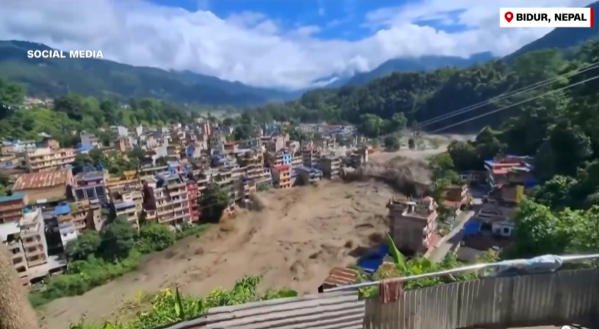
When a flood, landslide, earthquake, wildfire, or other major disaster damages infrastructure, the immediate concern is often visible damage: roads are washed away, bridges collapse, power is interrupted, and buildings become inaccessible.
Water infrastructure can be affected just as seriously, although the consequences are sometimes less visible.Recent flooding in Nepal has once again highlighted how quickly roads, bridges, power systems, and water infrastructure can be disrupted by extreme weather events.
A damaged pipeline, contaminated water source, flooded pumping facility, or prolonged power outage can quickly interrupt access to safe water.
This is why disaster resilience is not only about preventing physical damage. It is also about maintaining essential services when normal infrastructure is disrupted.
Water storage tanks can play an important role in this process.
A properly planned water storage tank does not prevent a flood or earthquake. Instead, it provides a reserve of water that can help communities, facilities, and emergency infrastructure maintain access to water when parts of the normal supply system are temporarily unavailable.
For engineers and infrastructure planners, this changes the way water storage should be considered.
A water tank is not simply a container for storing water.
In disaster-resilient infrastructure, it can become part of a broader strategy for maintaining water availability.
Why Water Supply Becomes Vulnerable During Disasters
Modern communities depend on interconnected infrastructure.
Water may need to pass through:
- Municipal pipelines
- Water treatment facilities
- Pumping stations
- Electrical systems
- Distribution networks
- Control systems
- Roads and other transportation infrastructure
A failure in one part of this chain can affect the final water supply.
For example, a flood may damage a pumping station while leaving the water source itself intact.
An earthquake may damage pipelines connecting a community to a treatment plant.
A landslide may block roads, making it difficult to repair damaged infrastructure or deliver emergency supplies.
A power outage may prevent pumps from operating even when water is physically available.
These situations demonstrate an important principle:
Water availability and water accessibility are not always the same thing.
A community may have access to a water source but still experience a temporary shortage because the infrastructure required to deliver that water has been disrupted.
This is where local or on-site water storage can provide an additional layer of resilience.
Water Storage Provides a Buffer During Infrastructure Disruption
A water storage tank creates a physical reserve between the water source and the final users.
Under normal conditions, the tank may simply support daily water supply, fire protection, industrial processes, or other operational requirements.
During an emergency, however, the stored volume can provide additional time for operators to respond.
The principle is relatively simple:
Water source → Storage → Distribution
If the upstream supply is temporarily interrupted, the storage tank may continue supplying water until the reserve is depleted.
The actual duration depends on:
- Stored volume
- Water consumption
- Emergency demand
- Pumping capacity
- Distribution requirements
- Priority users
- Replenishment possibilities
This does not mean that a larger tank is always better.
Oversizing a tank can increase construction costs, space requirements, and maintenance requirements.
The objective is to establish an appropriate reserve based on the actual risk and operational requirements of the facility or community.
1. Emergency Water Storage Can Protect Critical Services
Not every user has the same priority during a disaster.
Hospitals, emergency shelters, schools, public facilities, industrial sites, and other critical infrastructure may require continued access to water even when normal services are disrupted.
For these facilities, water storage can provide an additional level of operational security.
Depending on the project, stored water may support:
- Drinking and domestic use
- Sanitation
- Emergency cleaning
- Fire protection
- Medical operations
- Industrial processes
- Emergency response activities
The required capacity should be determined according to the facility’s actual emergency demand rather than using a general tank size.
For example, a hospital may need to consider patient occupancy and critical operations, while an industrial facility may need to prioritize process water or fire protection.
This is why disaster-resilient water storage should begin with a risk assessment rather than simply selecting a large tank.
2. Elevated Water Tanks Can Reduce Exposure to Flood Conditions
Flood-prone areas require additional consideration.
A tank installed directly at ground level may be exposed to floodwater, debris, contamination, or restricted access.
Depending on the site and flood risk, engineers may consider elevated storage or other installation strategies that reduce the exposure of critical water infrastructure to flood conditions.
Elevation can also provide another potential benefit.
Where the system design allows it, stored water at a higher elevation can contribute to gravity-fed distribution or provide hydraulic head, reducing dependence on pumping during certain operating conditions.
However, elevated installation introduces its own engineering requirements.
Engineers need to consider:
- Structural loads
- Foundation design
- Wind loads
- Seismic conditions
- Tank water weight
- Access for maintenance
- Pipe flexibility
- Overflow and drainage
- Stability during extreme events
Therefore, an elevated water tank should not be treated simply as a normal tank placed on a higher platform.
The supporting structure and the tank need to be considered as one engineered system.
3. Tank Location Is as Important as Tank Capacity
When designing water storage for disaster resilience, engineers should ask two separate questions:
How much water is required?
and:
Where should the water be stored?
A tank may have sufficient capacity but still be vulnerable if it is installed in a location that is highly exposed to the hazard being considered.
For flood-prone sites, engineers may review:
- Historical flood levels
- Site elevation
- Drainage conditions
- Floodwater flow paths
- Foundation conditions
- Access routes
- Nearby infrastructure
- Potential contamination sources
For earthquake-prone regions, additional considerations may include:
- Seismic design requirements
- Foundation stability
- Tank anchoring
- Panel connections
- Pipe connection flexibility
- Structural deformation
For wildfire-prone areas, accessibility and the reliability of firefighting water may become particularly important.
The lesson is straightforward:
Disaster-resilient water storage is a combination of capacity, location, structure, and system design.
4. Water Tank Structure Matters During Extreme Conditions
The structural design of a water tank becomes especially important when the installation environment is demanding.
A filled tank contains a significant mass of water.
As the tank becomes larger or taller, hydrostatic pressure and structural loads must be carefully considered.
For modular water tanks, engineers may need to evaluate:
- Panel thickness
- Panel dimensions
- Reinforcement design
- Connection strength
- Sealing performance
- Foundation requirements
- External loads
- Seismic conditions
- Wind conditions
Different tank structures respond differently to these requirements.
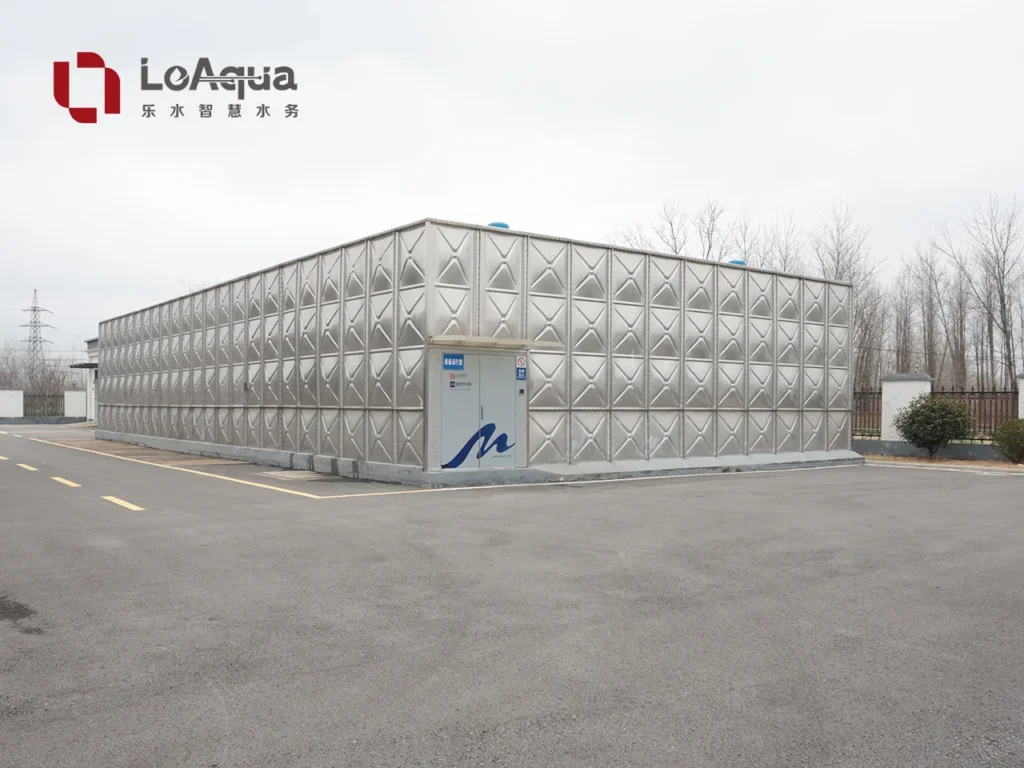
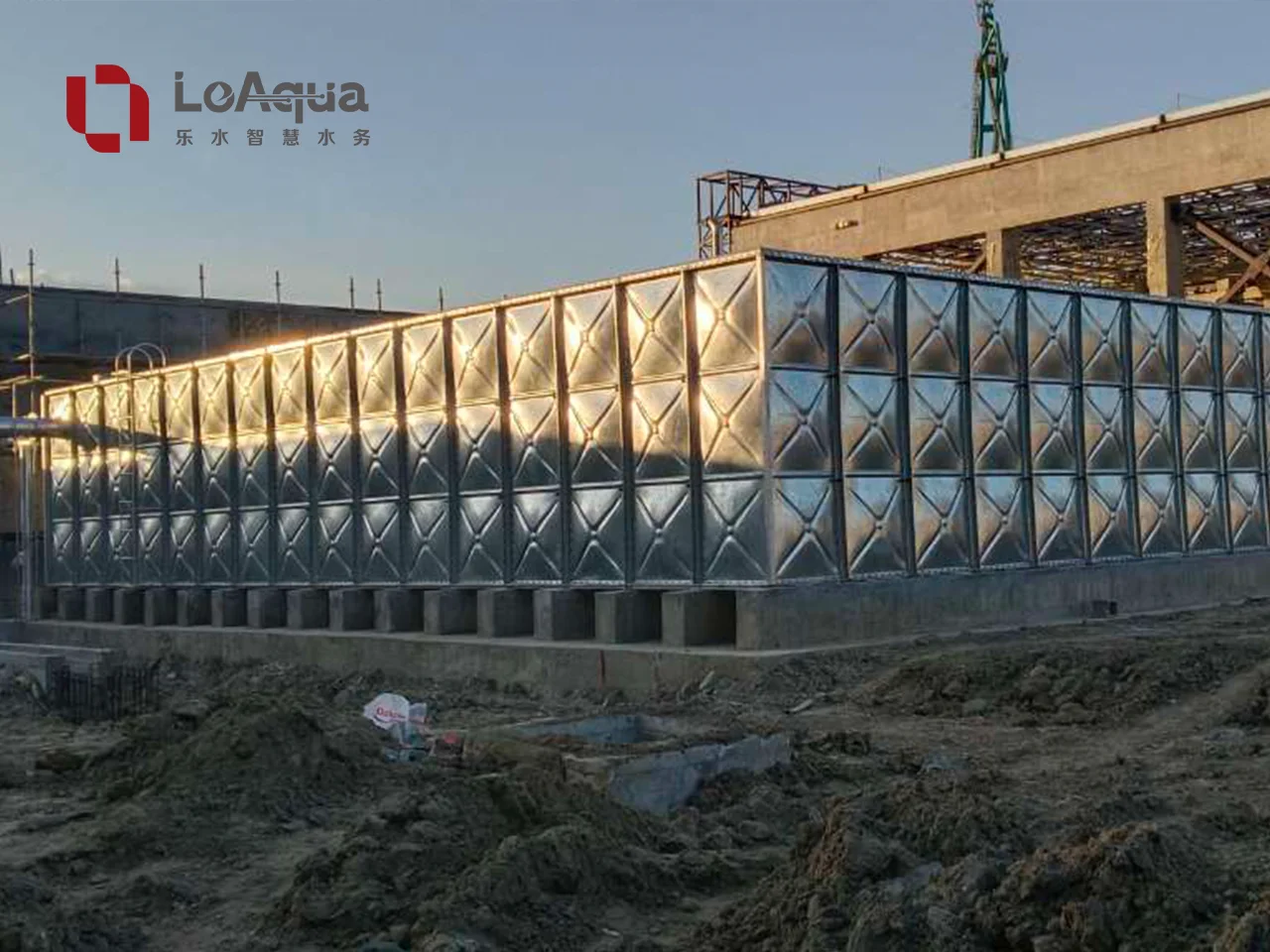
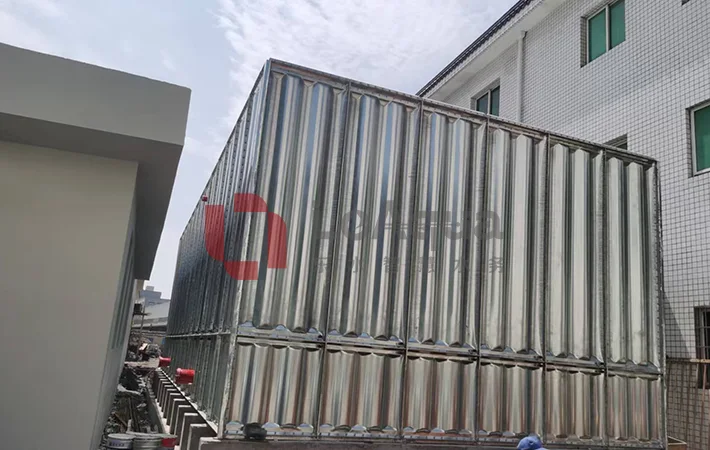
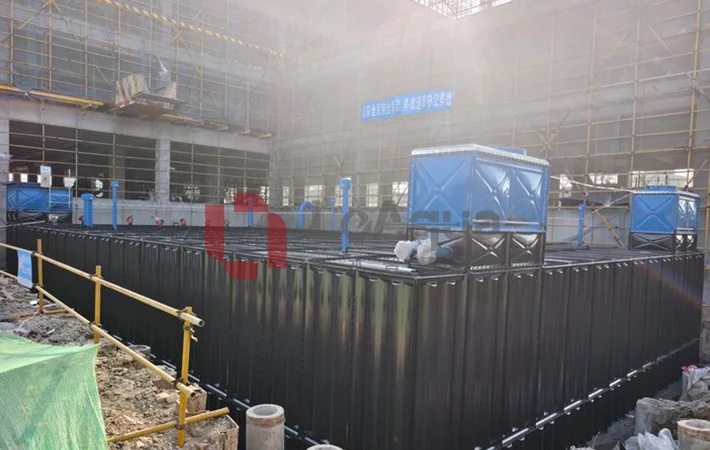
For example, modular bolted tanks can provide practical advantages where transportation and site access are difficult because individual panels can be transported and assembled at the installation site.
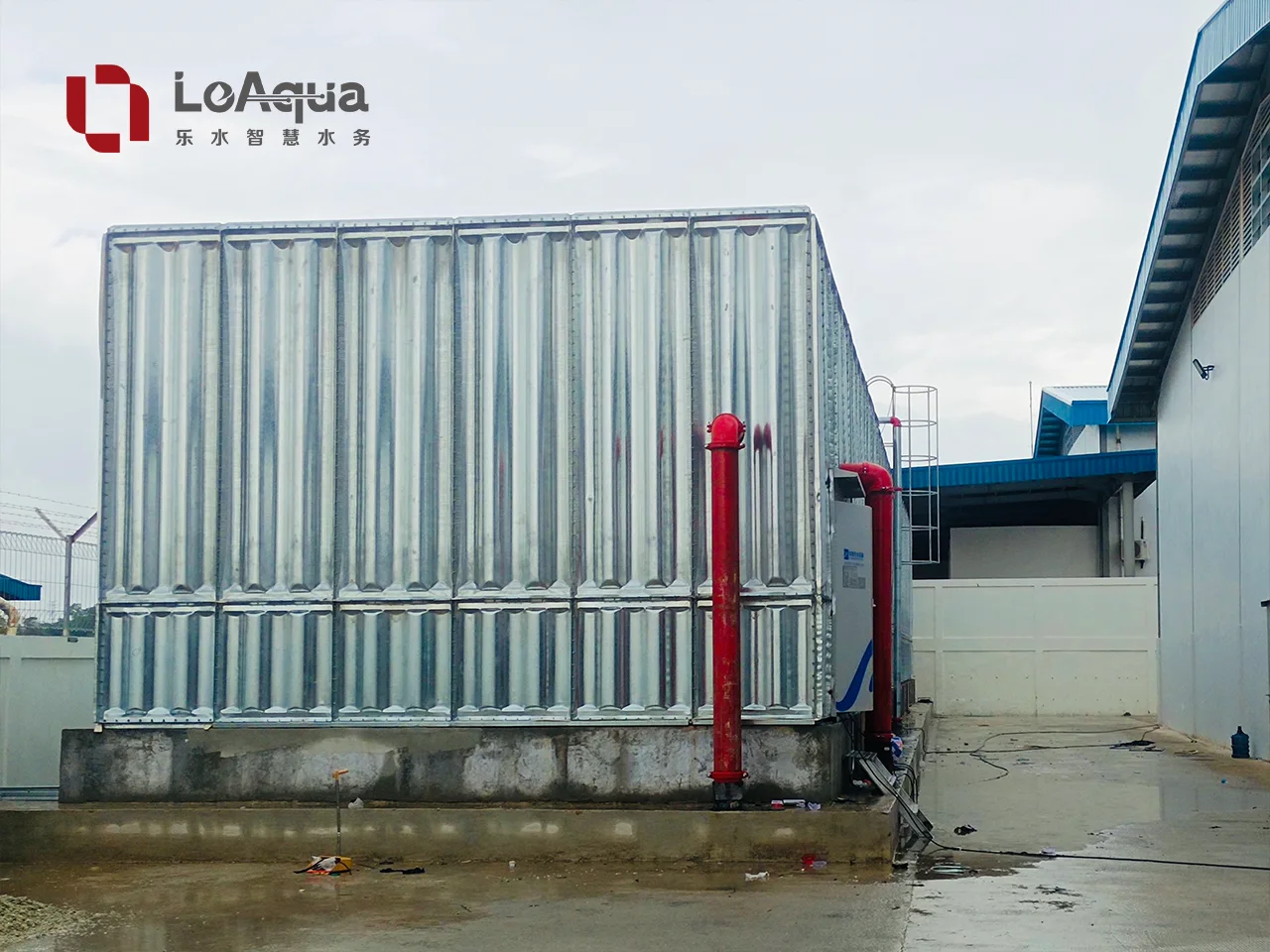
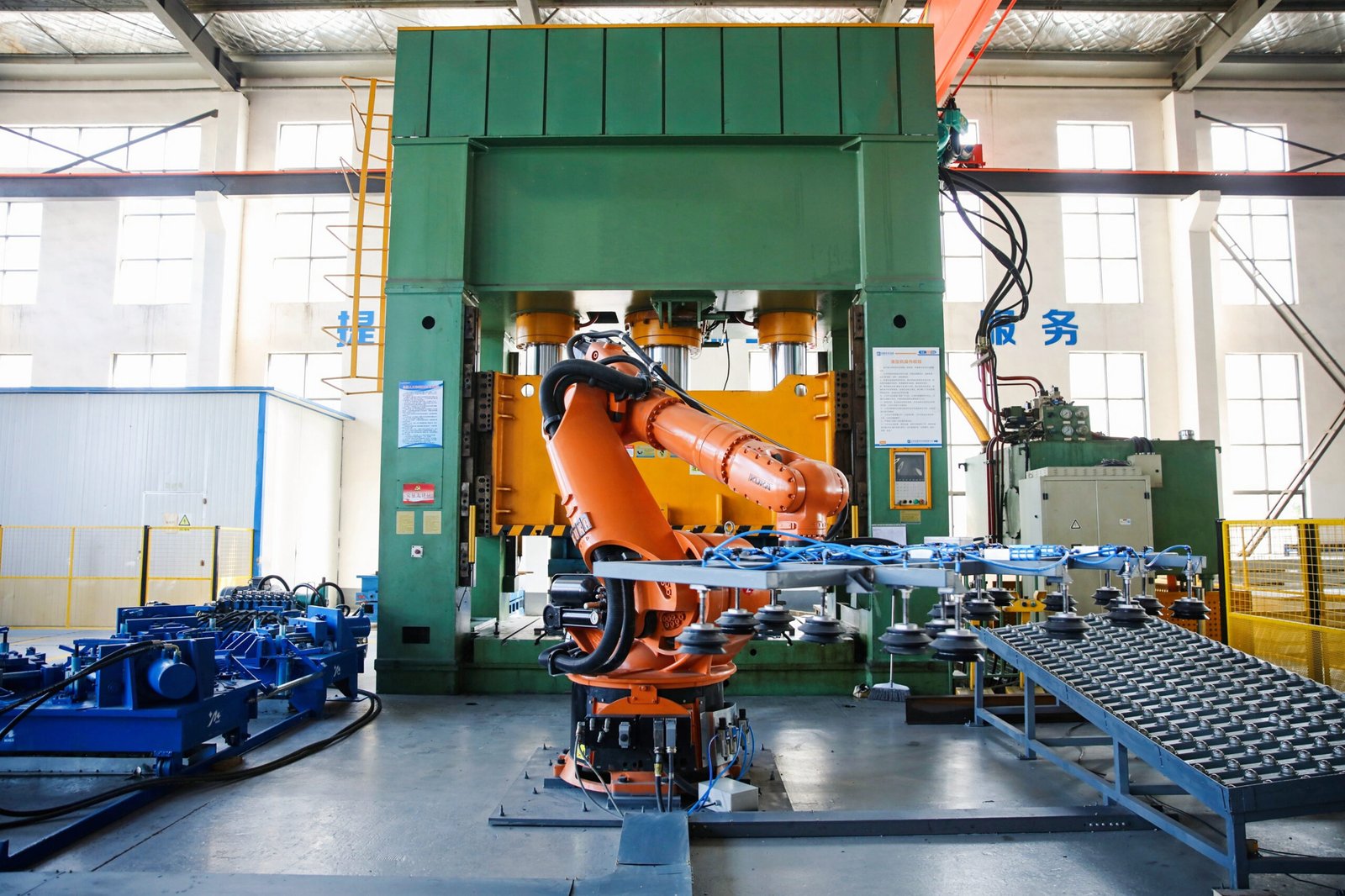
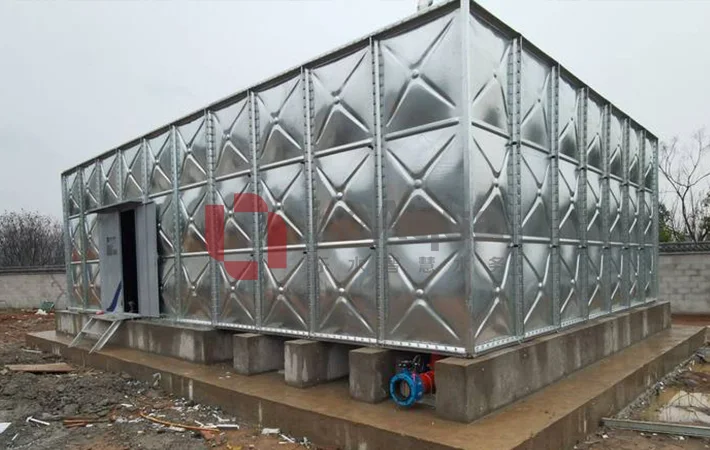
Pressed-panel structures can also use formed reinforcement geometry to improve panel rigidity.
The appropriate structure depends on the project.
There is no single water tank configuration that is automatically suitable for every disaster-prone location.
5. Water Quality Is Part of Disaster Resilience
Disaster resilience is not only about having enough water.
The stored water also needs to remain suitable for its intended use.
Flooding can introduce contaminants into water sources and surrounding infrastructure.
If a storage system is poorly designed or maintained, the tank itself can become a source of water quality problems.
Engineers should therefore consider:
- Tank material
- Internal surface condition
- Drainage
- Sediment accumulation
- Access for inspection
- Cleaning requirements
- Ventilation
- Protection against external contamination
For potable water applications, material selection and hygiene requirements become particularly important.
A stainless steel water tank may be considered where hygienic storage and corrosion resistance are important, while composite, FRP/GRP, or hot-dip galvanized solutions may be appropriate for other applications.
The right material depends on the water quality, environment, standards, and project requirements.
6. Modular Tanks Can Be Useful When Site Access Is Limited
Disaster recovery projects often face unusual transportation and construction conditions.
Roads may be damaged.
Large lifting equipment may not be available.
Temporary construction sites may have limited access.
In these situations, the ability to transport a tank as individual components can become an important engineering consideration.
Modular water tanks can be delivered as panels and assembled on site.
This can be particularly useful when:
- Access roads are narrow
- Large equipment cannot reach the site
- The project is located in a remote area
- Transportation routes are restricted
- The tank must be installed inside an existing facility
- Future expansion is expected
The advantage is not simply easier transportation.
A modular system can also provide greater flexibility when project conditions change during reconstruction.
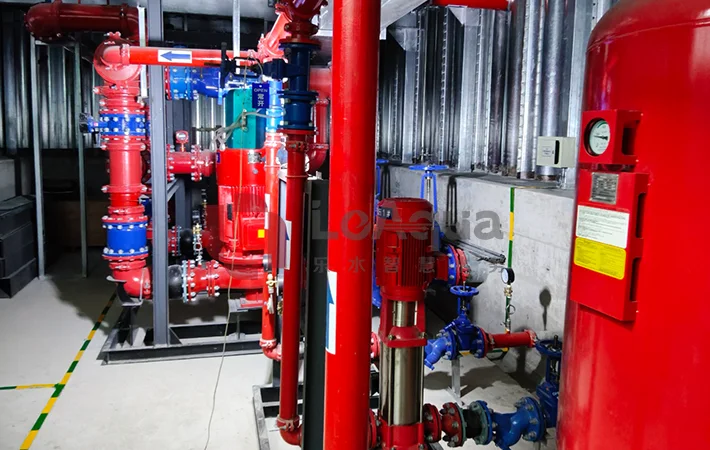
7. Water Storage Should Be Connected to the Pumping System
A water tank stores water.
It does not automatically guarantee that water will reach the users who need it.
During an emergency, this distinction becomes particularly important.
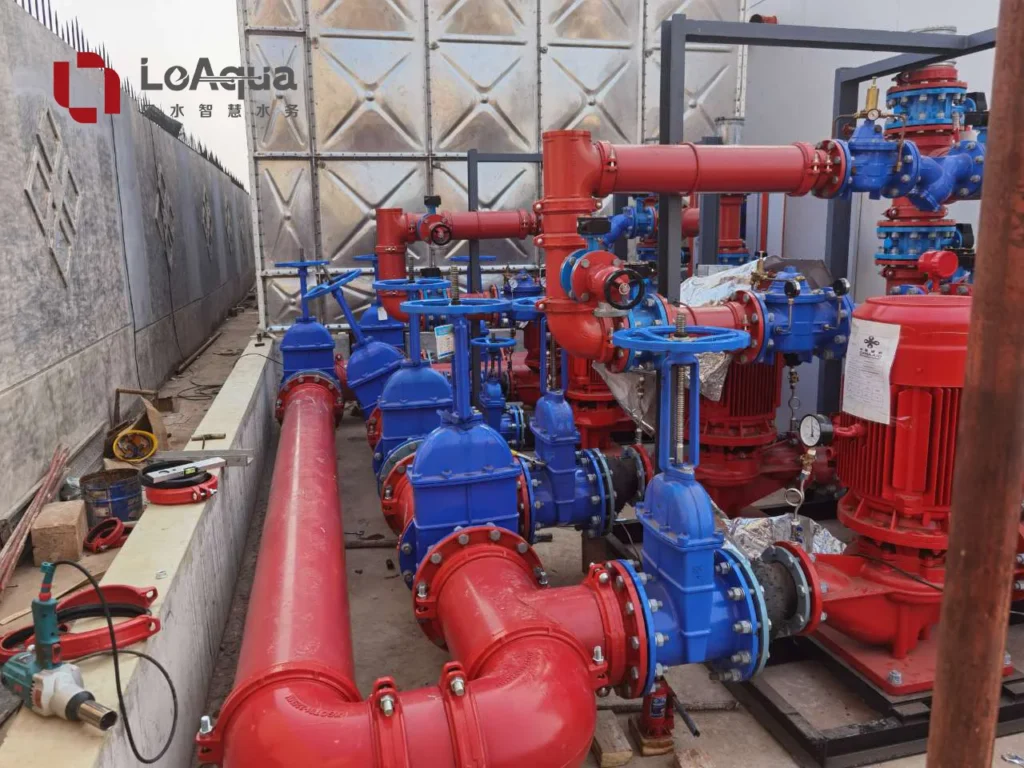
The complete system may include:
- Water storage tank
- Fire or domestic water pumps
- Control cabinet
- Valves
- Pipework
- Pressure monitoring
- Water level monitoring
- Backup power
- Remote monitoring
If the tank is full but the pump cannot operate, the stored water may not be available where it is required.
Similarly, a pump may have sufficient capacity but cannot operate effectively if the storage volume is inadequate.
This is why engineers should evaluate the storage and delivery systems together.
For critical infrastructure, an integrated approach can help ensure that tank capacity, pump duty, controls, and monitoring are designed around the same operating requirements.
8. Monitoring Can Improve Emergency Readiness
A water tank that is rarely inspected may not provide the expected emergency reserve when it is finally needed.
This is why monitoring and maintenance are important parts of resilience planning.
Depending on the application, a modern water storage system can monitor:
- Water level
- Pump operating status
- Pressure
- Equipment alarms
- Abnormal operating conditions
- Maintenance requirements
Remote monitoring can be particularly useful for distributed infrastructure or facilities that are difficult to inspect frequently.
Instead of discovering a problem only when emergency water is needed, operators can receive information about the condition of the system in advance.
For critical infrastructure, this changes the role of water storage from passive equipment into a monitored component of the wider water supply system.
9. Disaster Resilience Does Not Mean Building the Largest Possible Tank
A common misunderstanding is that disaster preparedness simply requires more storage.
In practice, resilience is more complicated.
A large tank may provide more reserve capacity, but it also requires:
- More installation space
- A stronger foundation
- Greater structural consideration
- Higher material consumption
- More transportation
- More maintenance
Engineers therefore need to balance:
Risk → Required reserve → Capacity → Installation → Cost → Maintenance
The correct tank size depends on the expected emergency scenario.
For example, a facility that can restore its municipal water supply within several hours may require a different reserve than an isolated facility where access could be interrupted for several days.
This is why emergency storage capacity should be calculated from the actual risk scenario rather than selected arbitrarily.
10. Designing for Recovery Is Different From Designing for Normal Operation
A water storage system designed only for normal operating conditions may not address the challenges created by a major disaster.
During reconstruction, engineers may need to ask:
- Can the tank still be accessed?
- Can water be delivered if the main pipeline is damaged?
- Can pumps operate during a power interruption?
- Can the tank be inspected after a flood?
- Can contaminated surrounding water enter the system?
- Can the storage capacity support critical users?
- Can the tank be repaired or expanded quickly?
- Can replacement components reach the site?
These questions shift the focus from equipment selection to infrastructure resilience.
The best solution is not necessarily the tank with the highest specification.
It is the system that continues to provide useful service when normal infrastructure is under stress.
11. Water Tanks Can Support Both Disaster Preparedness and Recovery
The role of a water tank does not end when an emergency begins.
It can contribute to both phases of disaster management.
Before a Disaster
Water storage can provide:
- Emergency reserve capacity
- Fire protection water
- Backup domestic supply
- Greater independence from continuous municipal supply
- Additional resilience for critical facilities
During a Disaster
The storage system can help maintain:
- Water availability
- Emergency response capability
- Firefighting resources
- Sanitation
- Critical facility operations
After a Disaster
Water storage can support:
- Temporary water supply
- Reconstruction activities
- Reestablishment of essential services
- Gradual restoration of the permanent distribution network
This makes water storage part of a longer infrastructure lifecycle rather than a single emergency measure.
12. How Engineers Can Evaluate Water Tanks for Disaster-Resilient Projects
When a project is located in a flood-, earthquake-, wildfire-, or landslide-prone area, engineers can evaluate a water tank using several key questions.
Application
What will the stored water be used for?
Domestic supply, fire protection, emergency response, industrial processes, and other applications may require different storage strategies.
Capacity
How much water is required during normal operation and under the defined emergency scenario?
Installation
Is the tank exposed to flooding, landslides, seismic activity, extreme weather, or restricted access?
Material
Does the selected material provide the required corrosion resistance, hygiene, durability, and service life?
Structure
Can the tank withstand the expected hydrostatic and environmental loads?
Foundation
Can the foundation support the filled tank under normal and extreme conditions?
Accessibility
Can the tank be inspected, cleaned, repaired, and reached by maintenance personnel after an emergency?
System Integration
How will the tank work with pumps, pipework, controls, monitoring, and backup power?
Recovery
Can the tank be transported, assembled, repaired, expanded, or replaced efficiently if infrastructure is damaged?
This type of evaluation provides a more realistic definition of resilience than simply increasing tank capacity.
What Does a Disaster-Resilient Water Storage System Look Like?
There is no universal design.
A disaster-resilient water storage system is usually one that has been designed around the specific hazards, users, and infrastructure conditions of the project.
For one project, the priority may be an elevated tank that reduces exposure to floodwater.
For another, it may be a modular tank that can be transported through restricted access routes.
For a hospital, reliable emergency water storage and backup pumping may be critical.
For an industrial facility, fire protection storage may be the primary concern.
For a remote community, maintaining water availability during infrastructure interruptions may be the main objective.
The engineering solution therefore needs to begin with the risk scenario rather than the tank material.
LeAqua’s Approach to Resilient Water Storage
LeAqua approaches water tank selection from the perspective of the complete project rather than treating the tank as an isolated product.
The selection process considers:
Application → Installation → Material → Structure → Capacity
These factors can then be evaluated together with pumping, control, monitoring, and maintenance requirements.
LeAqua provides modular water tank solutions including stainless steel, composite, FRP/GRP, hot-dip galvanized, and double-sided arc-rib reinforced water tanks for different project requirements.
For projects requiring coordinated water storage and water delivery, the tank can also be considered together with an integrated pump system.
This engineering approach is particularly relevant to infrastructure projects where reliability and recovery capability are more important than simply minimizing the initial equipment cost.
Final Thoughts
Natural disasters cannot always be prevented.
But the impact of infrastructure disruption can be reduced when essential services are designed with resilience in mind.
Water storage tanks can provide an important reserve between the water source and the end user, helping critical facilities and communities maintain access to water when pipelines, pumps, power systems, or other infrastructure are temporarily disrupted.
The value of a water tank in disaster-resilient infrastructure is therefore not simply the amount of water it can hold.
It depends on:
where it is installed, how it is structured, how much water it stores, how the water is delivered, how the system is monitored, and how easily it can be maintained or restored after an emergency.
For engineers planning resilient infrastructure, water storage should therefore be considered not as an isolated piece of equipment, but as part of the broader strategy for maintaining essential water services before, during, and after a disaster.