When purchasing a stainless steel water tank, price is usually one of the first questions engineers, contractors, and procurement teams ask.
However, there is no single price for a stainless steel water tank. Two tanks with the same nominal capacity can have significantly different costs because the final price depends on the stainless steel grade, panel thickness, tank structure, dimensions, connection method, accessories, installation conditions, and project requirements.
For this reason, comparing water tanks only by price per cubic meter can be misleading.
This guide explains the main factors that determine stainless steel water tank prices and what buyers should check when comparing quotations from different manufacturers.
What Is the Typical Price of a Stainless Steel Water Tank?
There is no reliable universal price for a stainless steel water tank because the tank is normally engineered according to its required capacity and application.
For example, a 100 m³ tank for general water storage may have very different specifications from a 100 m³ fire water tank. A 304 stainless steel tank may also have a different cost from a 316 stainless steel tank, even when the external dimensions are similar.
A practical quotation should therefore be based on the complete tank specification rather than only its capacity.
The following factors normally have the greatest influence on the final price:
- Water tank capacity
- Stainless steel grade
- Panel thickness
- Tank dimensions and configuration
- Bolted or welded construction
- Panel structure and reinforcement
- Roof and bottom design
- Water quality requirements
- Inlet, outlet, overflow and drainage connections
- Internal components
- Transportation
- Installation
- Project location
- Required standards and certifications
For a large engineering project, these factors can have a much greater impact on total cost than simply choosing a cheaper stainless steel sheet.
1. Stainless Steel Grade Is One of the Biggest Price Factors
The first specification to check is the stainless steel grade.
For water storage applications, 304 stainless steel is widely used because it offers a good balance between corrosion resistance, mechanical performance, availability, and cost.
316 stainless steel contains molybdenum and generally provides better resistance to chloride-related corrosion. It may therefore be considered for projects where the water, environment, or operating conditions require higher corrosion resistance.
A simplified comparison is:
| Material | Typical Position | Common Considerations |
|---|---|---|
| SUS304 | Cost-effective stainless steel option | General water storage |
| SUS316 | Higher-cost option | More demanding corrosion environments |
| Composite stainless steel | Depends on construction | Balancing performance and material cost |
However, choosing 316 simply because it is more expensive does not automatically make a tank better.
The correct material should be selected according to the actual water quality, environmental conditions, design requirements, and expected service life.
This is one reason a professional water tank quotation should clearly state the stainless steel grade rather than simply describing the product as a “stainless steel tank.”
2. Tank Capacity Directly Affects Material Consumption
Capacity is another obvious factor.
A 10 m³ tank and a 1,000 m³ tank require very different quantities of material, structural components, transportation resources, and installation work.
However, tank price does not always increase in a perfectly linear relationship with capacity.
A larger sectional tank may use standardized panels and modular components, allowing the manufacturer to optimize production and transportation.
For example, a project may require:
- 50 m³
- 100 m³
- 200 m³
- 500 m³
- 1,000 m³
The final configuration depends not only on the required volume but also on the available installation area and the required length, width, and height.
Therefore, when requesting a quotation, buyers should provide the required capacity together with the preferred dimensions whenever possible.
3. Panel Thickness Can Change the Price Significantly
A common mistake when comparing quotations is to compare only the stainless steel grade.
Two suppliers may both quote a “304 stainless steel water tank,” but the actual panel thickness may be different.
For example, a tank may use different thicknesses for:
- Top panels
- Side panels
- Bottom panels
- Different levels of side panels
The required thickness depends on the tank dimensions, water depth, structural design, loading conditions, and reinforcement system.
A manufacturer that quotes a thinner panel may appear cheaper, but the quotation is not necessarily equivalent to one using thicker panels.
For engineering procurement, the correct comparison should therefore be:
same capacity + same material grade + comparable thickness + comparable structure + comparable accessories
rather than simply:
Supplier A is cheaper than Supplier B.
4. Tank Structure Affects Both Price and Long-Term Cost
The structure of a stainless steel water tank is another important consideration.
Common configurations include:
- Bolted sectional tanks
- Welded stainless steel tanks
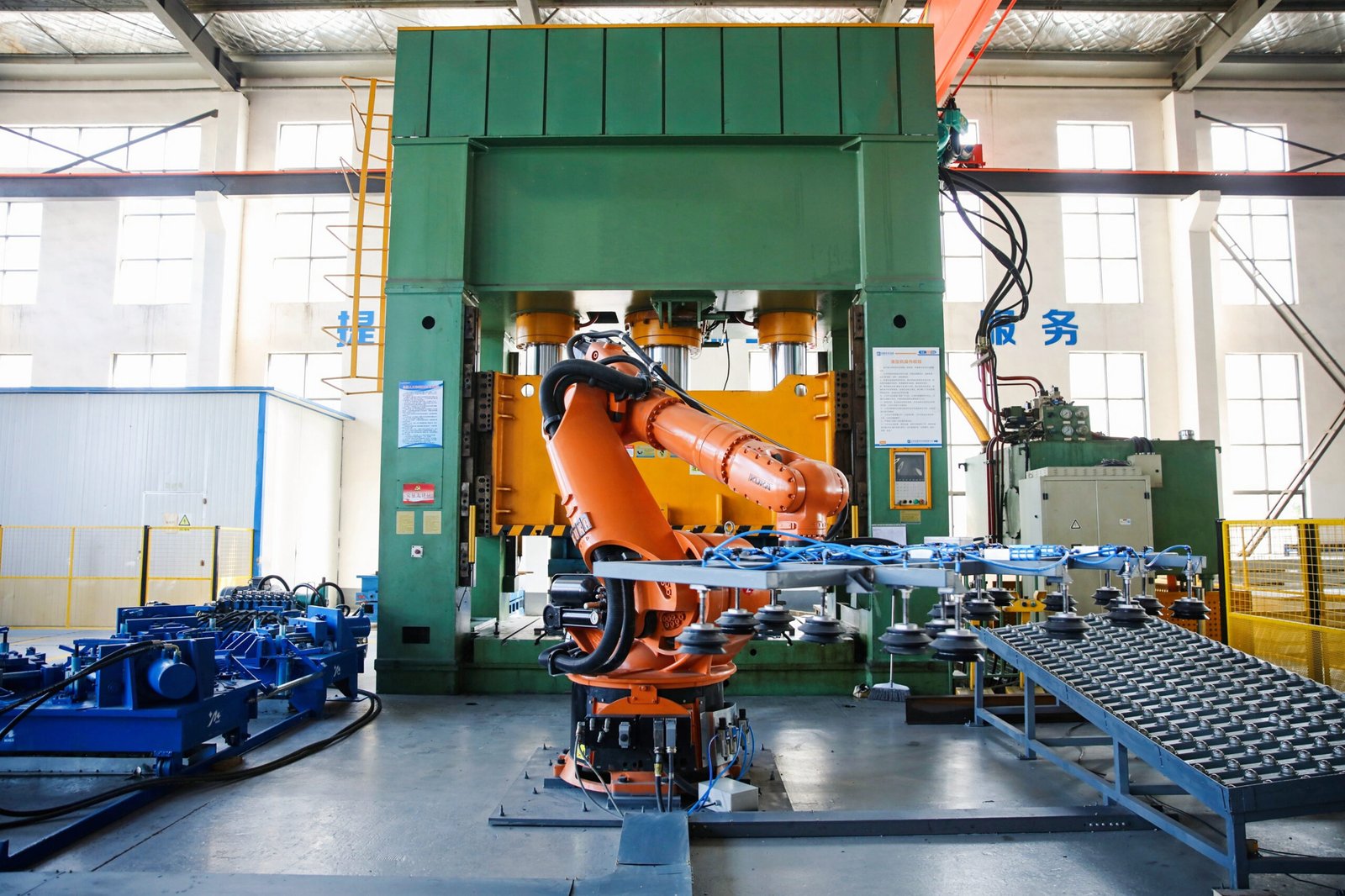
- Pressed-panel tanks
- Reinforced modular tanks
- Composite panel tanks
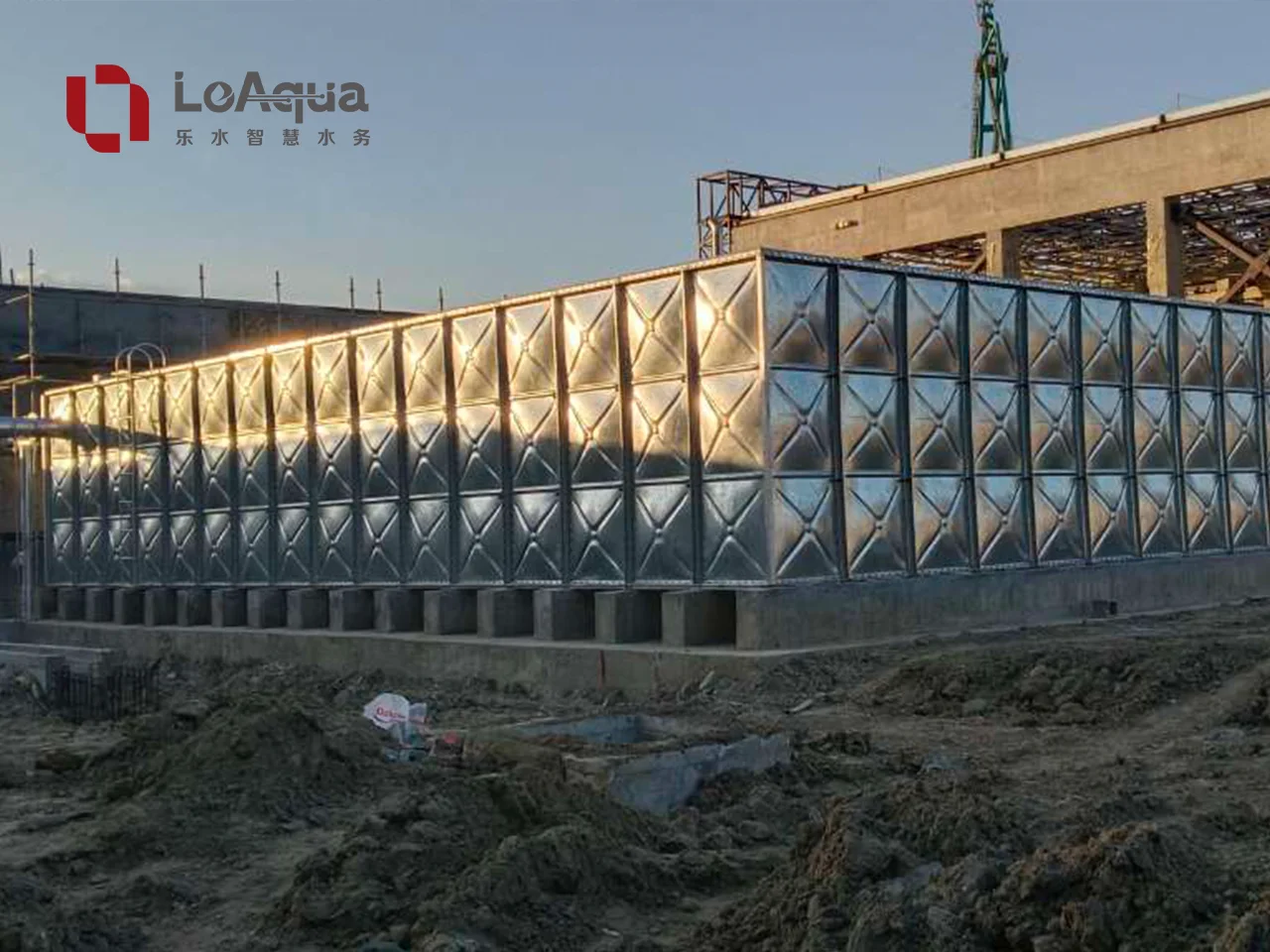
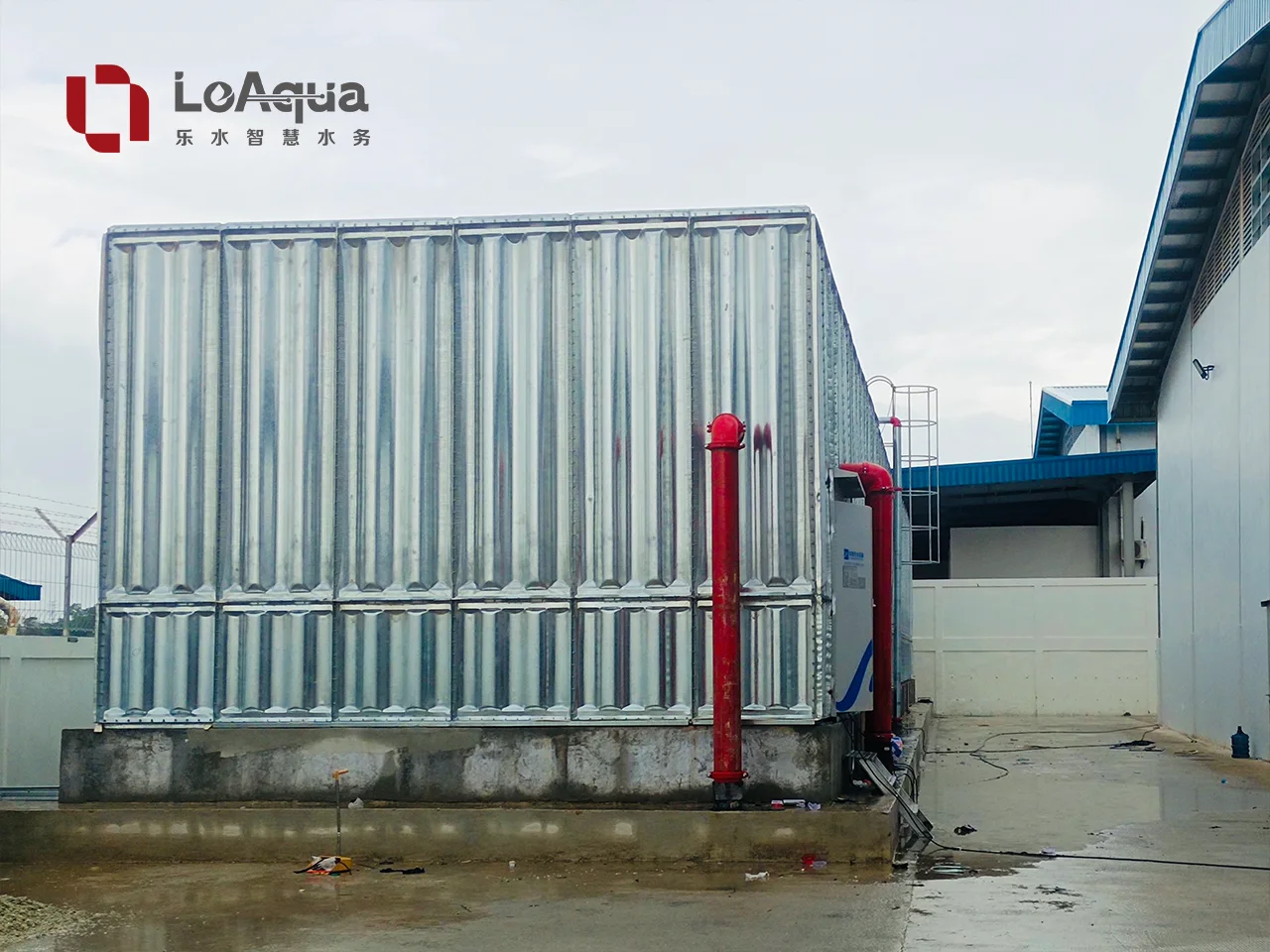
A bolted sectional tank, for example, is assembled from prefabricated panels at the project site.
This can provide advantages for projects where transportation, access, or on-site installation conditions are important.
Welded tanks may have different manufacturing and installation requirements.
The cheapest structure is therefore not necessarily the lowest-cost solution over the entire project lifecycle.
A better comparison includes:
Tank manufacturing + transportation + installation + maintenance + expected service life
rather than only the factory quotation.
5. Reinforcement Design Should Be Included in the Price Comparison
Water pressure increases with water depth.
As a result, the side panels of a large water tank must be designed to withstand hydrostatic pressure.
Different manufacturers may use different reinforcement systems.
Traditional sectional tanks may use internal tie-rods or other reinforcement components. Other panel designs can use formed ribs or structural profiles to improve panel stiffness.
For this reason, buyers should ask:
- How are the panels reinforced?
- Are internal tie-rods required?
- What is the panel thickness?
- How was the structural design verified?
- What loads were considered?
- Is engineering analysis available?
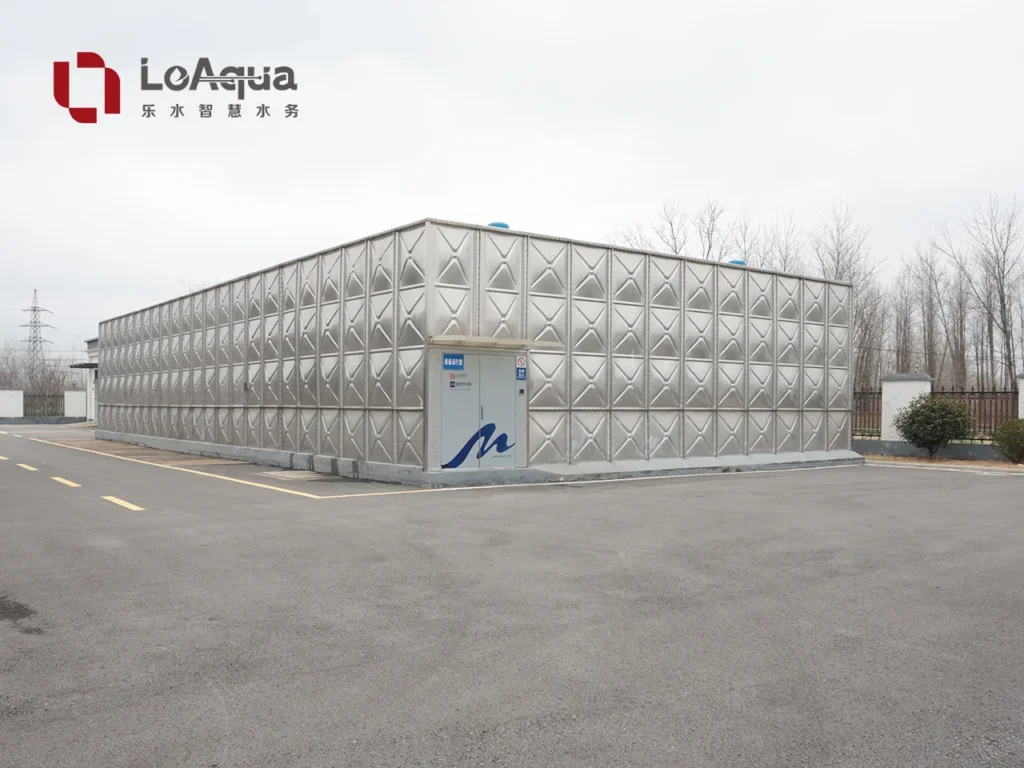
LeAqua’s double-sided arc-rib reinforced water tank uses a pressed-panel structure in which the reinforcement geometry is formed into the panel itself. The design is intended to increase panel rigidity while avoiding conventional internal tie-rods.
For projects where internal cleanliness and accessibility are important, this structural difference can be more significant than a small difference in initial purchase price.
6. Dimensions Can Affect the Final Cost
The same capacity can be achieved using different combinations of length, width, and height.
For example, a 100 m³ tank could be designed with different dimensions depending on the available space and project requirements.
This matters because the tank dimensions affect:
- Number of panels
- Panel configuration
- Water depth
- Structural loading
- Foundation requirements
- Roof configuration
- Pipe connections
- Transportation
- Installation
Therefore, a professional supplier should not provide a final quotation based only on “100 m³.”
The supplier should also understand where the tank will be installed and what dimensions are practical for the site.
7. Fire Water Tanks May Have Different Cost Requirements
A stainless steel water tank used for general domestic or industrial water storage is not necessarily equivalent to a tank used for fire protection.
Fire water storage systems may have additional requirements related to:
- Required storage volume
- Water level
- Inlet and outlet configuration
- Suction connections
- Overflow
- Drainage
- Fire pump system
- Inspection and maintenance
- Applicable local standards
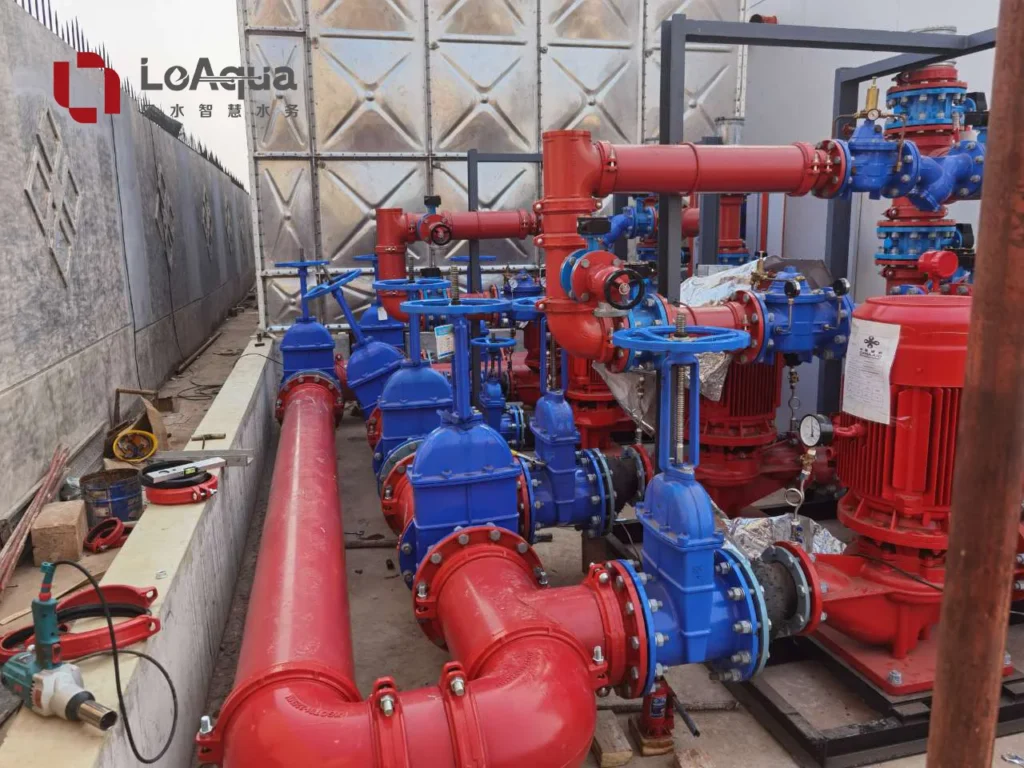
For a fire protection project, the tank should therefore be considered together with the pump and piping system.
This is particularly important for large facilities such as industrial plants, solar power plants, battery energy storage systems, data centers, and commercial buildings.
The lowest tank price may not result in the lowest overall system cost if the tank configuration does not match the fire protection system.
8. Accessories Also Contribute to the Final Water Tank Price
The tank body is only part of the quotation.
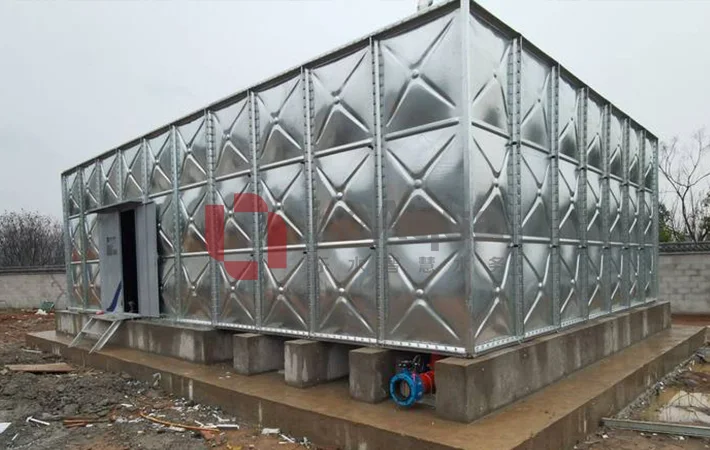
Depending on the project, a stainless steel water tank may require:
- Inlet flange
- Outlet flange
- Overflow
- Drain
- Manhole
- Air vent
- Internal ladder
- External ladder
- Level indicator
- Water level sensor
- Anti-vortex device
- Internal pipework
- Roof access
- Foundation-related components
Some suppliers quote the tank body separately and add accessories later.
Others provide a more complete package.
When comparing quotations, make sure the scope of supply is the same.
A quotation that appears cheaper may simply exclude several components that another supplier has already included.
9. Transportation and Installation Can Change the Total Project Cost
For international projects, the factory price is not the same as the final project cost.
The total cost may include:
Tank manufacturing
- Packaging
- Ocean or land transportation
- Import-related costs
- Site unloading
- Installation
- Testing and commissioning
A modular bolted water tank can be advantageous in some international projects because the tank is transported as individual panels and components rather than as one large fabricated vessel.
This can make transportation and site access easier, particularly for projects where large equipment cannot easily enter the installation area.
However, the actual logistics cost still needs to be calculated according to the project location and shipping conditions.
10. How Much Does a 1000m³ Stainless Steel Water Tank Cost?
The price of a 1000 m³ stainless steel water tank cannot be accurately determined from capacity alone.
A supplier would normally need information such as:
- Required capacity: 1,000 m³
- Material: SUS304 or SUS316
- Tank dimensions
- Water storage type
- Required panel thickness
- Structural design
- Roof type
- Foundation condition
- Connection sizes
- Accessories
- Installation location
- Applicable standards
- Delivery requirements
For example, a 1000 m³ fire water tank for a solar power plant may have different requirements from a 1000 m³ potable water tank for a residential development.
Therefore, a responsible manufacturer should confirm the technical requirements before giving a final quotation.
11. How to Compare Stainless Steel Water Tank Quotations
When you receive quotations from several manufacturers, create a specification comparison rather than comparing only the final price.
A useful comparison should include:
| Item | Supplier A | Supplier B | Supplier C |
| Capacity | |||
| Dimensions | |||
| Stainless steel grade | |||
| Panel thickness | |||
| Panel structure | |||
| Connection method | |||
| Reinforcement | |||
| Roof | |||
| Bottom | |||
| Manhole | |||
| Inlet/outlet | |||
| Overflow/drain | |||
| Accessories | |||
| Installation | |||
| Transportation | |||
| Warranty | |||
| Applicable standards | |||
| Total project cost |
This approach makes it much easier to identify why one quotation is higher or lower than another.
12. Should You Choose the Cheapest Stainless Steel Water Tank?
Not necessarily.
For a small, simple storage application, initial purchase price may be an important consideration.
For a large engineering project, however, the decision should consider the total lifecycle cost.
A tank that is slightly more expensive at the purchasing stage may provide better value if it offers:
- More suitable material selection
- Better structural design
- Easier installation
- Better internal accessibility
- Lower maintenance requirements
- Longer expected service life
- Better compatibility with the pumping system
- Better project documentation
The right question is therefore not:
“Which stainless steel water tank is cheapest?”
A better question is:
“Which tank provides the required performance at the lowest reasonable total project cost?”
13. What Information Should You Send a Manufacturer for a Water Tank Quote?
If you want an accurate quotation, provide as much of the following information as possible:
Basic information
- Required capacity
- Application
- Project location
- Required delivery date
Technical information
- Tank dimensions
- Stainless steel grade
- Water type
- Required water temperature
- Design water depth
- Inlet and outlet sizes
- Overflow and drain requirements
Project information
- Indoor or outdoor installation
- Ground or elevated installation
- Foundation condition
- Available installation space
- Site access
- Installation requirements
Documentation
- Required standards
- Drawings
- Technical specifications
- Inspection requirements
- Certification requirements
If the exact specifications are not yet available, a professional manufacturer should be able to help determine the appropriate tank configuration based on the application and required capacity.
How LeAqua Approaches Stainless Steel Water Tank Selection
LeAqua approaches water tank selection from an engineering perspective rather than treating capacity as the only specification.
The selection process considers five major factors:
Application → Installation → Material → Structure → Capacity
These factors are interconnected.
For example, a project requiring 500 m³ of fire water storage may need a different configuration from a 500 m³ industrial water tank. Similarly, a project with restricted access may benefit from a modular bolted structure, while a project with demanding corrosion conditions may require a different stainless steel grade.
LeAqua provides several water tank configurations, including stainless steel, composite, FRP/GRP, hot-dip galvanized, and double-sided arc-rib reinforced modular water tanks.
For projects involving fire protection, the water tank can also be evaluated together with the pump system rather than designed as an isolated component.
This approach can help engineers and contractors compare the actual project cost and technical performance before making a purchasing decision.
Final Thoughts: Look Beyond the Stainless Steel Water Tank Price
The price of a stainless steel water tank depends on much more than the number of cubic meters.
Material grade, panel thickness, dimensions, structural design, reinforcement, accessories, transportation, installation, and project requirements can all affect the final cost.
For this reason, the best way to compare suppliers is to compare equivalent technical specifications and total project cost.
If you are purchasing a stainless steel water tank for a commercial, industrial, fire protection, solar, wind, BESS, or other engineering project, providing the required capacity, application, dimensions, and site conditions will allow the manufacturer to prepare a much more meaningful quotation.
The goal should not be to find the cheapest water tank. It should be to find the most suitable water tank for the required performance, service life, and total project cost.