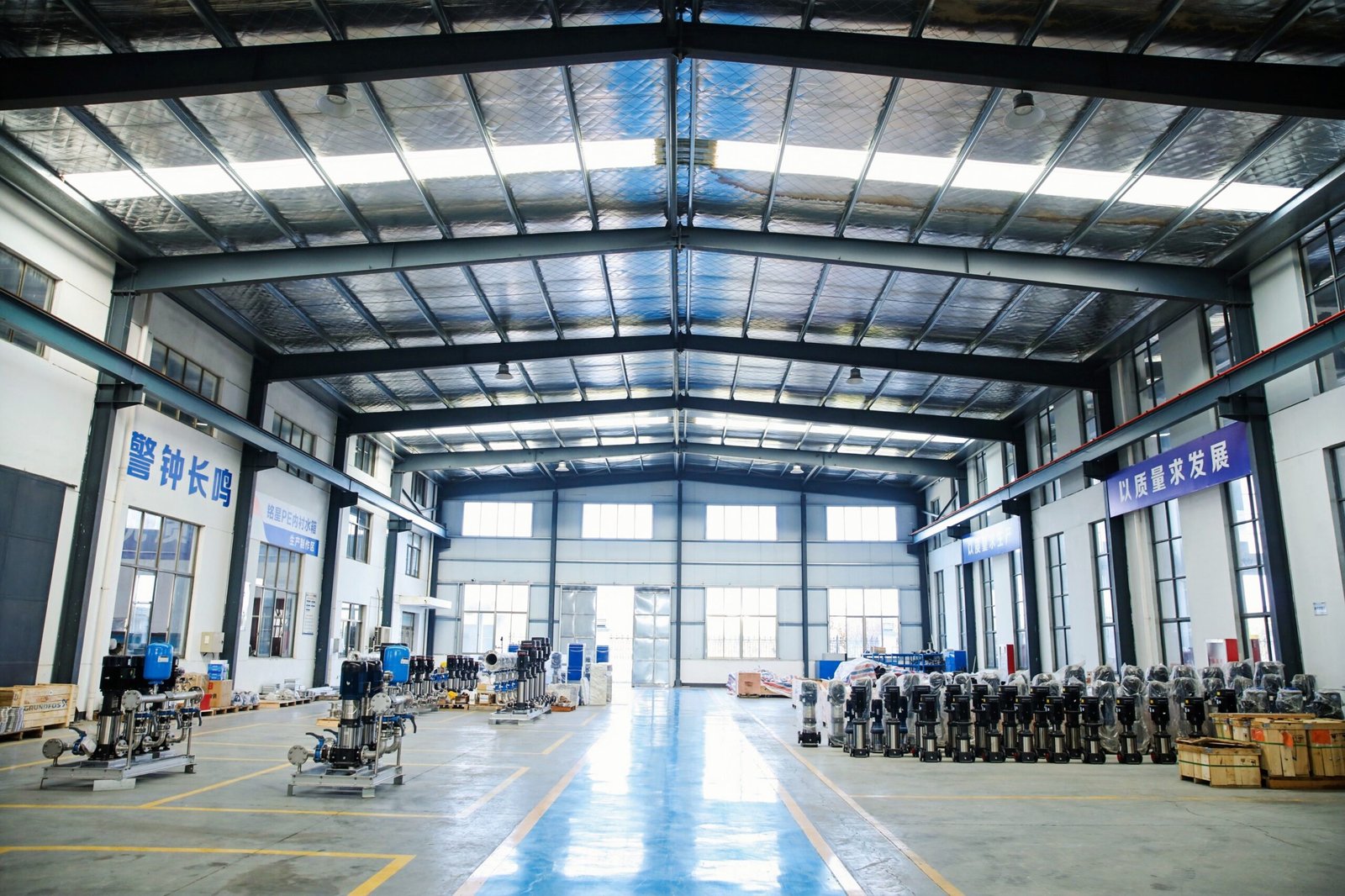
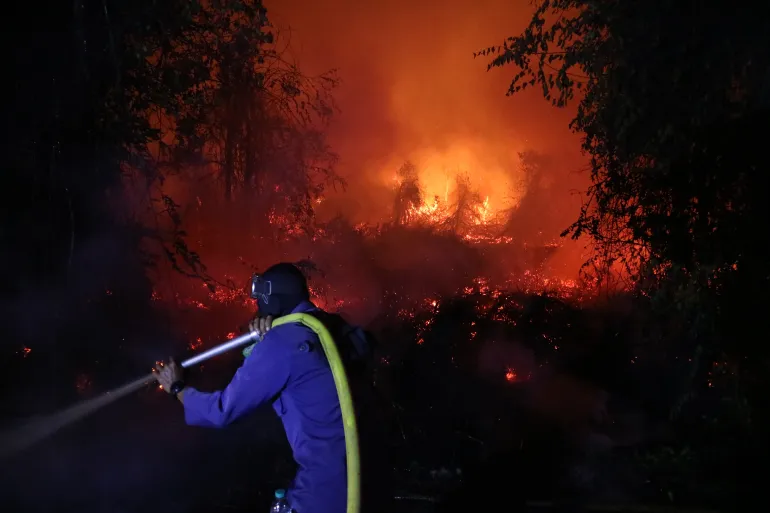
Indonesia has continued to deal with forest and land fires across several regions during August 2026.
Recent reports from Indonesia’s National Disaster Management Agency (BNPB) have documented fires in different parts of the country, including areas of Sumatra, Sulawesi, Papua and other regions. Firefighting has involved both ground and aerial operations, while dry conditions have also affected water availability in some areas.
At the same time, Indonesia’s government has announced plans to add more hydrant wells in peatland areas. The Indonesian Ministry of Forestry described these facilities as strategically important because they provide water sources that can be used during fires.
These developments point to a practical issue that applies well beyond forest fires:
When a fire occurs in an area without a reliable water network nearby, where does the firefighting water come from?
In some locations, the answer may involve natural water sources or hydrant wells.
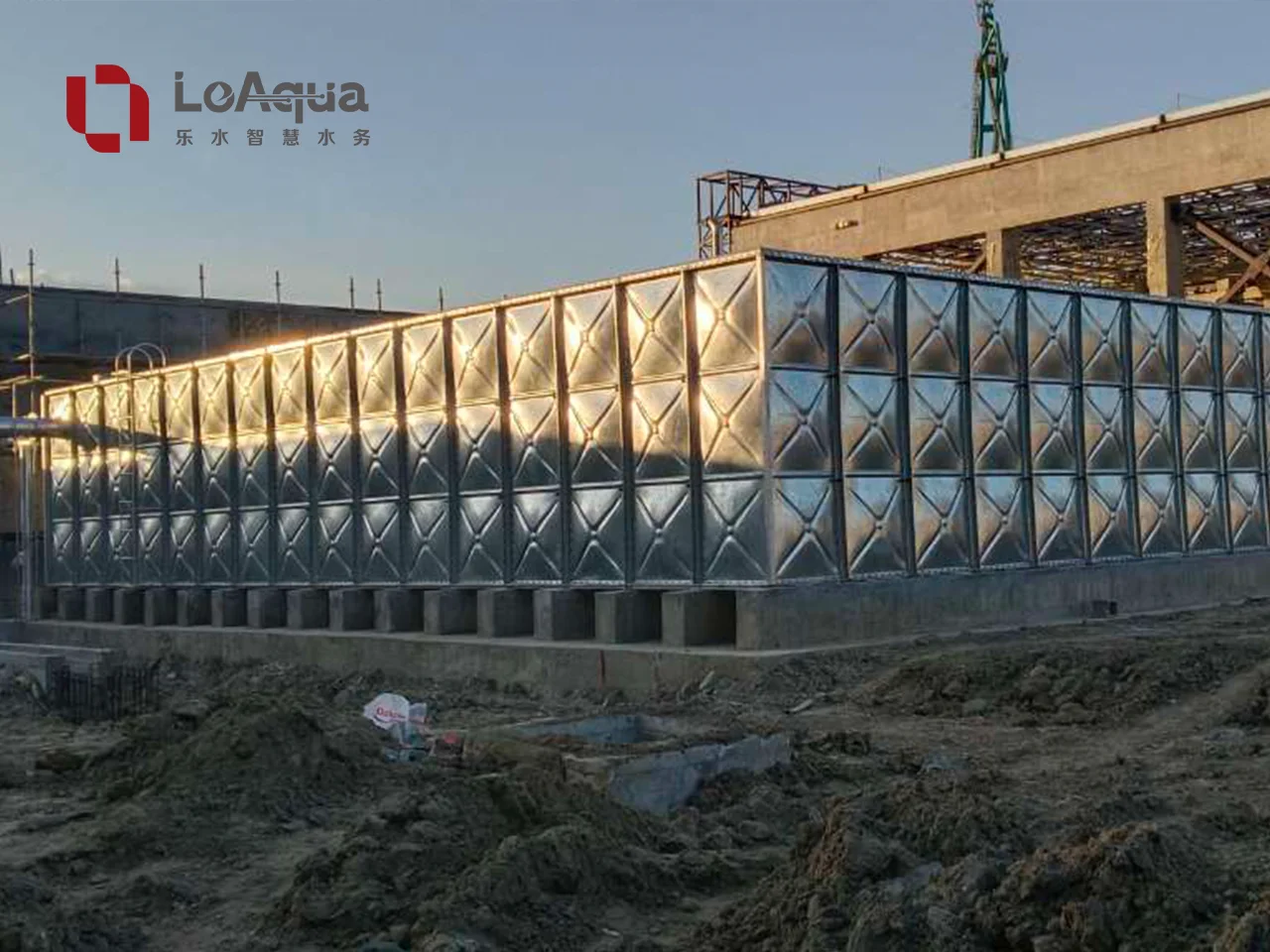
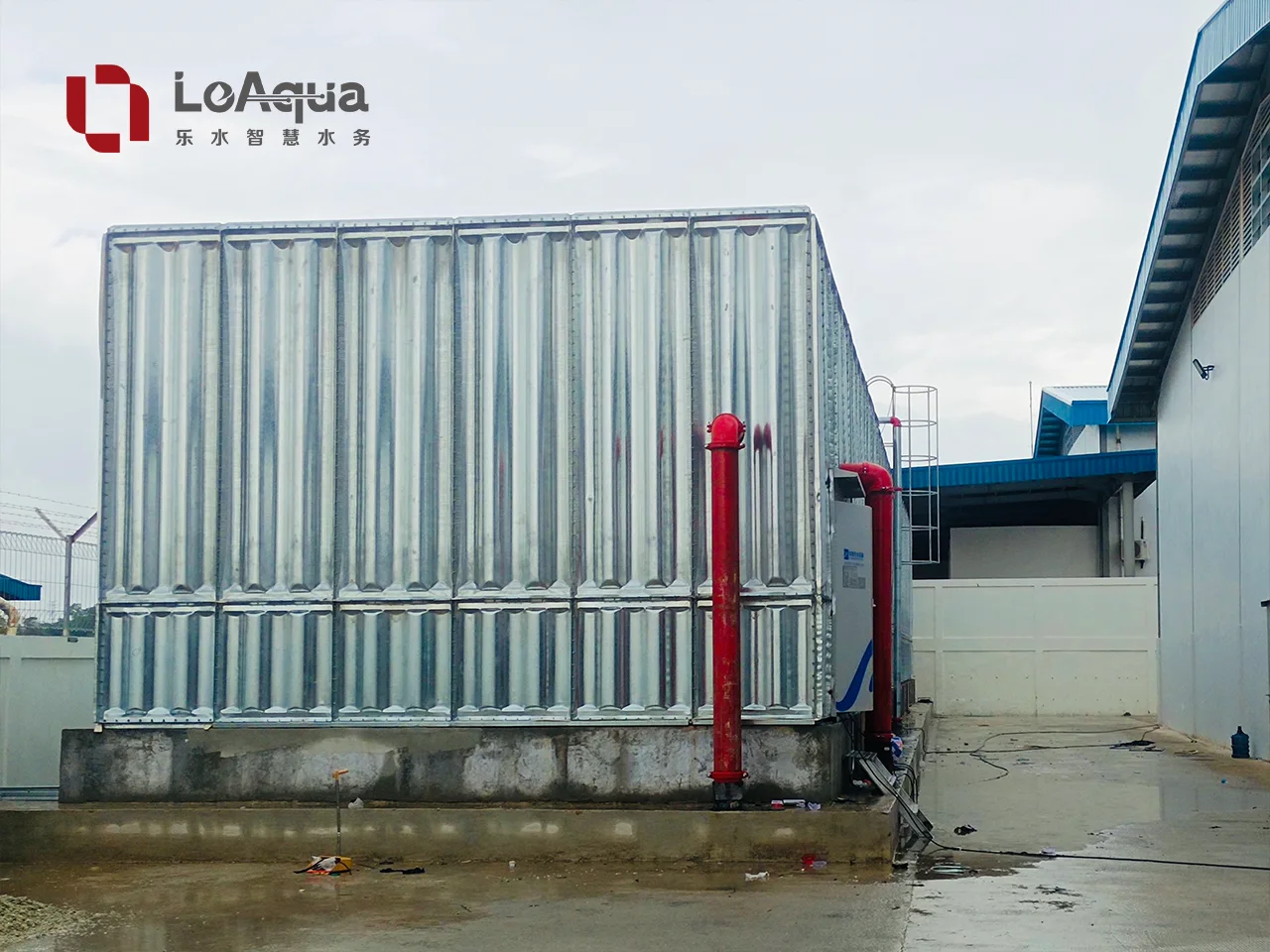
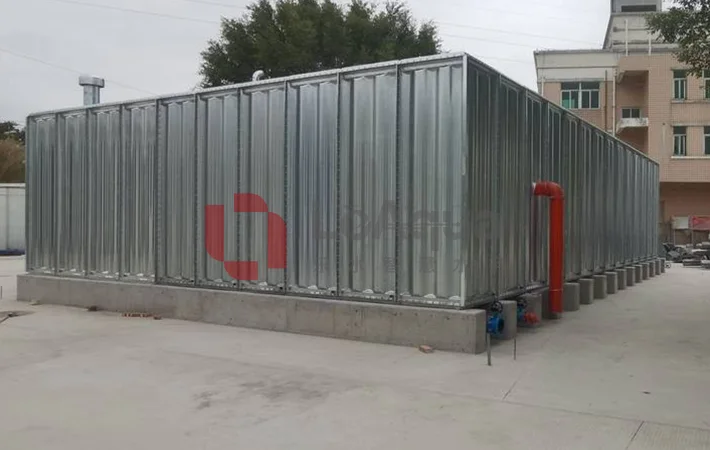
In others, a dedicated fire water tank can provide a more controlled and accessible reserve.
The tank itself does not put out the fire. Its role is to keep an adequate supply of water available for the equipment and people that actually carry out firefighting.
That distinction is important when planning any remote fire water system.
1. Why Water Availability Matters During a Fire
Firefighting depends on several things at the same time.
There needs to be:
- A source of water
- Enough available water
- A way to deliver it
- Sufficient pressure
- Access for firefighting personnel
In an urban area, these functions may be supported by a municipal hydrant network.
Remote areas are different.
A forest, agricultural site, solar farm, wind farm or industrial facility outside a major city may not have the same access to water infrastructure.
Even when water is available somewhere nearby, the source may not be positioned where firefighters need it.
This is why firefighting planning should consider not only the amount of water available, but also where that water is stored and how it can be delivered.
2. What Role Can a Fire Water Tank Play?
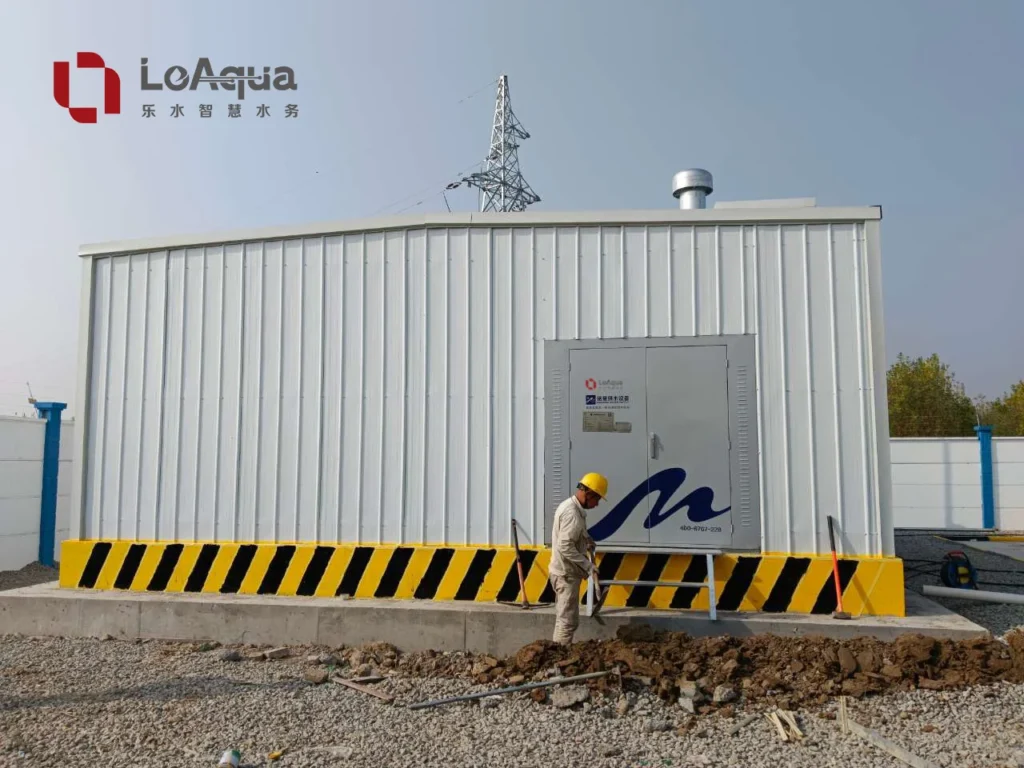
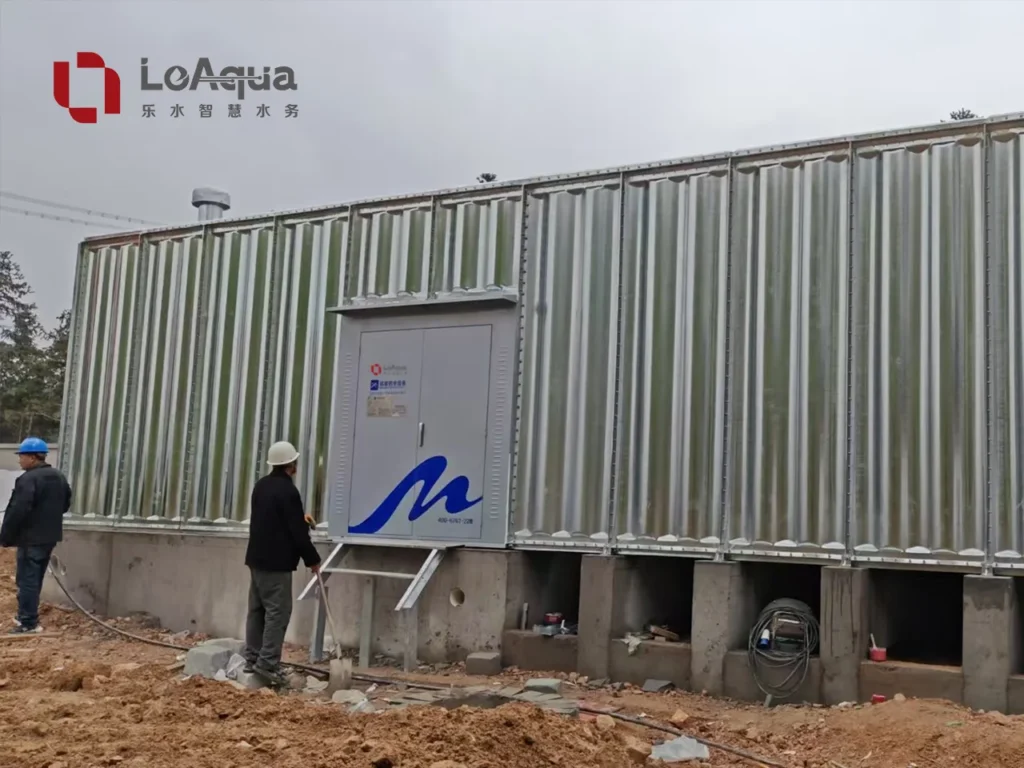
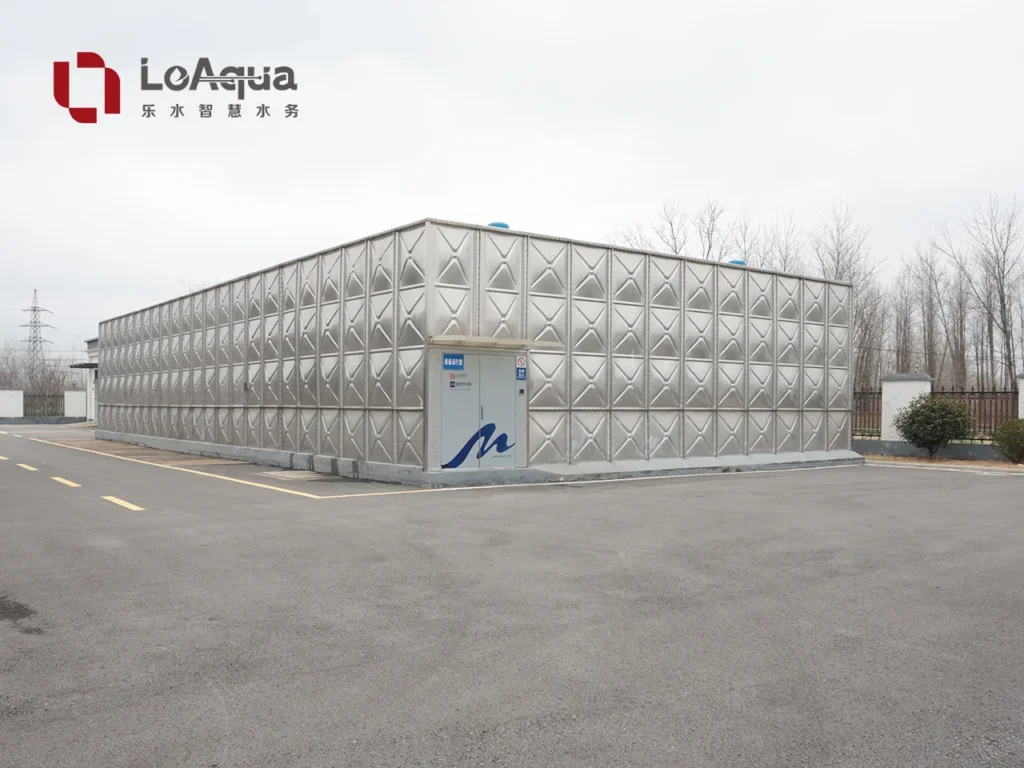
A dedicated fire water tank provides stored water that can be reserved for emergency use.
It can be used as part of a system serving:
- Fire hydrants
- Hose stations
- Fire pumps
- Water spray systems
- Other approved firefighting equipment
The basic arrangement is straightforward:
Fire Water Tank
↓
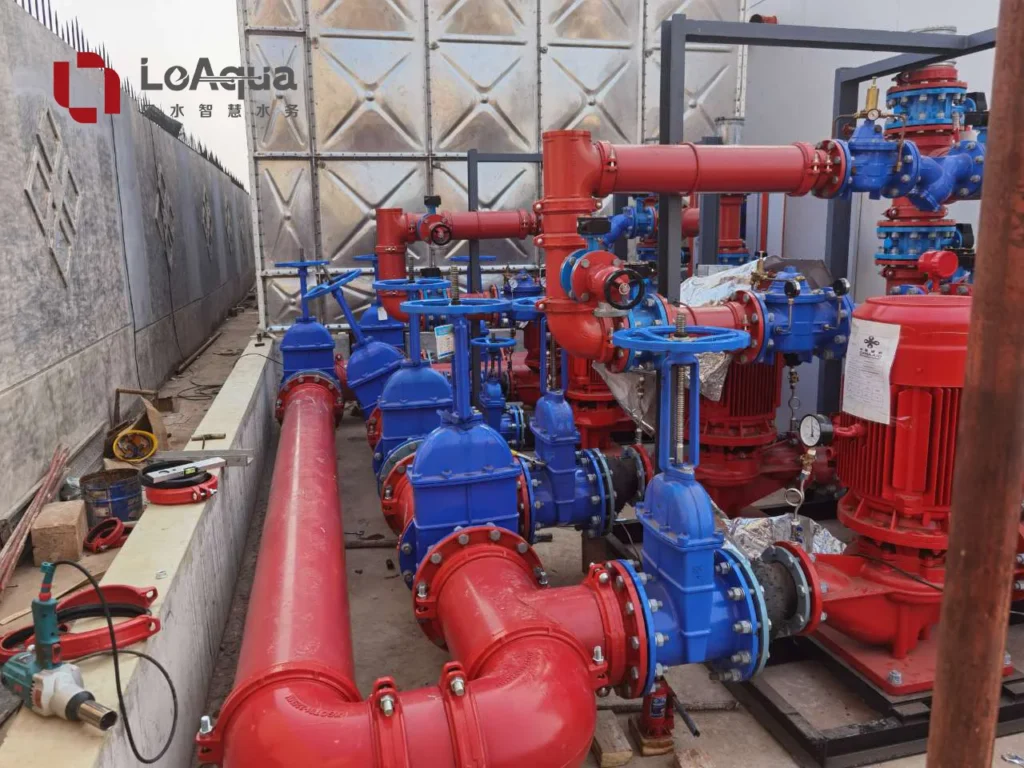
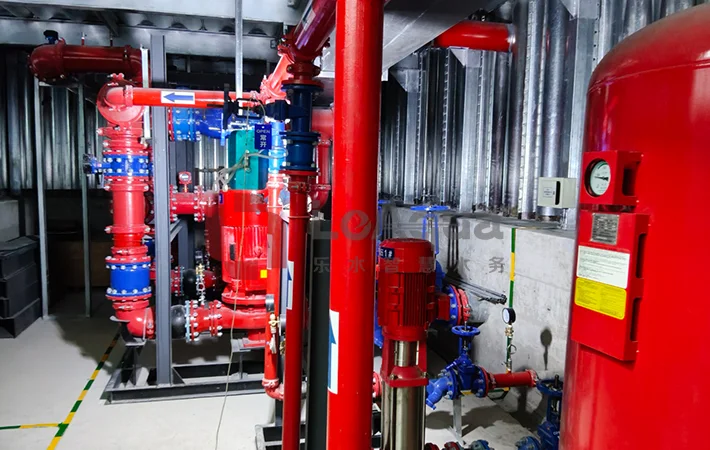
Fire Pump
↓
Fire Water Pipe Network
↓
Hydrant / Firefighting Point
The tank provides the reserve.
The pump creates the required flow and pressure.
The pipe network transfers the water.
The firefighting equipment delivers it where it is needed.
This is why a tank should not be viewed as a replacement for the rest of the fire protection system.
A large tank in the wrong location, without an appropriate delivery system, may not provide the intended benefit.
3. A Tank Can Be Useful Where Municipal Water Is Not Reliable
Remote sites are one of the clearest examples.
Consider a wind farm several kilometres from the nearest town.
Or a solar power plant located in a rural area.
Or an industrial facility built in a location where the local water network has limited capacity.
In these situations, a project may need to establish its own fire water reserve.
The storage system can provide a buffer between the site and the external water supply.
Engineers may consider:
- Dedicated fire water storage
- Water source reliability
- Refill arrangements
- Pump capacity
- Hydrant coverage
- Emergency vehicle access
The actual configuration depends on the site’s fire risk and applicable requirements.
A remote tank may also be useful when the normal water source cannot provide sufficient flow or pressure during an emergency.
4. One Large Tank Is Not Always the Best Arrangement
When a site is large, engineers need to think about where the water will actually be needed.
A central tank can be convenient because it simplifies:
- Monitoring
- Refilling
- Maintenance
- Pump installation
However, a very large site may have significant distances between the central storage point and the areas at risk.
In those situations, multiple strategically located tanks may be considered.
This approach can reduce the distance between stored water and firefighting points.
The decision depends on the site.
Engineers may compare:
| Centralized Storage | Distributed Storage |
|---|---|
| Fewer tanks to maintain | Water can be closer to risk areas |
| Simpler monitoring | More storage locations to monitor |
| Centralized pump equipment | Potentially shorter distribution distances |
| Easier refill planning | May improve access in large sites |
Neither arrangement is automatically better.
The important question is:
Where does firefighting water need to be available?
5. Location Can Be as Important as Tank Capacity
A fire water tank may contain plenty of water and still be difficult to use during an emergency.
The location should therefore be reviewed together with site access.
Engineers may consider:
- Fire access roads
- Vehicle turning areas
- Distance to fire-risk areas
- Connection points
- Tanker access
- Maintenance access
- Ground conditions
This is particularly important for remote facilities.
Indonesia’s recent decision to add hydrant wells in peatland areas illustrates the same basic principle: placing a water source strategically can make it more useful during firefighting operations. The government specifically described the new hydrant wells as firefighting water sources.
For a fixed industrial or infrastructure site, a dedicated tank can provide another way of creating a strategically positioned water reserve.
6. Storage Capacity Should Follow the Fire Scenario
It can be tempting to ask:
“How large should the fire water tank be?”
There is no universal answer.
Engineers normally determine the required capacity from factors such as:
- Fire scenario
- Required flow
- Required duration
- Protected area
- Available external water
- Fire protection system
- Local requirements
The relationship can be expressed simply:
Required storage ≈ Required fire flow × Required duration
But the actual design needs to follow the applicable fire protection requirements.
A tank intended for a remote industrial facility may have very different requirements from one serving a solar farm or wind farm.
This is why selecting a tank from a standard capacity catalogue without reviewing the fire protection design can lead to the wrong solution.
For more on this engineering process, see 【How Engineers Calculate Fire Water Tank Capacity and Pump Flow】.
7. The Pump Is What Makes Stored Water Useful
A tank stores water.
It does not automatically deliver water to a fire.
This is where the pump system becomes important.
Engineers need to review:
- Required flow
- Pump head
- Elevation
- Pipe losses
- Suction conditions
- Duty and standby arrangements
- Automatic starting
A tank close to the firefighting point may need a different pump arrangement from a tank supplying a long distribution network.
This is particularly important for remote sites.
The relationship can be summarized simply:
Storage capacity answers “How much?”
Pump selection answers “How can we deliver it?”
A useful fire water system needs both answers.
For projects where storage and pumping are developed together, see 【Water Tank With Pump System】.
8. Water Storage Is Only One Part of Fire Preparedness
It is also important not to overstate the role of a water tank.
A dedicated fire water tank cannot replace:
- Fire detection
- Fire access
- Firefighting crews
- Suppression systems
- Emergency planning
- Communication
- Evacuation procedures
For large fires such as forest and peatland fires, the situation can be much more complicated than a fixed fire protection system at an individual facility.
Wind, dry vegetation, terrain and the size of the burning area can all affect firefighting operations.
The value of dedicated water storage is more specific:
It provides a reliable source of water at a planned location for the firefighting system or response team to use.
That can be especially useful where conventional water infrastructure is limited.
9. The Same Thinking Applies to Renewable Energy Sites
The issue is not limited to forests.
Remote renewable energy projects can face similar water access questions.
A wind farm may cover a large area with turbines separated by long access roads.
A solar power plant may have equipment distributed across a large site.
A BESS facility may be located far from a municipal water network.
In these situations, fire water planning needs to consider:
Storage → Pumping → Distribution → Access
This is why we have recently looked at fire water storage for:
- Battery Energy Storage Systems
- Solar power plants
- Wind farms
- Data centers
Each application has different fire risks, but the underlying engineering question is similar:
Where will the firefighting water come from when it is needed?
10. What Engineers Should Ask Before Installing a Fire Water Tank
Before adding a dedicated tank, engineers should review a few practical questions:
| Question | Why It Matters |
| What fire scenario is being addressed? | Determines the required water supply |
| How much water is needed? | Establishes storage requirements |
| Where is the water source? | Determines the storage strategy |
| Where will the tank be located? | Affects access and distribution |
| How will water be delivered? | Determines pump and pipe requirements |
| How will the tank be refilled? | Supports long-term readiness |
| Who will inspect it? | Maintains system availability |
| What local requirements apply? | Determines the appropriate design basis |
The answers should come before the tank is ordered.
Final Thoughts
Recent fires in Indonesia are a reminder of something quite basic about firefighting:
Water needs to be available before the fire happens.
Indonesia’s decision to add hydrant wells in peatland areas is one example of creating more accessible firefighting water sources.
For fixed facilities and remote infrastructure projects, dedicated fire water tanks can serve a similar purpose by providing a planned reserve at a suitable location.
But the tank is only one part of the solution.
The practical system may include:
Fire Water Tank + Fire Pump + Pipe Network + Hydrant + Monitoring
The right arrangement depends on the fire scenario, site conditions, water availability and local requirements.
For engineers planning remote industrial or renewable energy sites, the more useful question is therefore not simply:
“How big should the tank be?”
It is:
“Will the required firefighting water actually be available where it is needed?”