Getting three or four quotations for the same water tank project sounds like a good way to find the best price.
Then the quotes arrive.
One supplier is 15% cheaper than another.
A third supplier is somewhere in between.
At first, the decision seems easy.
But before choosing the lowest number, there is a more important question:
Are the suppliers actually quoting the same thing?
A “500 m³ stainless steel water tank” can mean quite different things depending on the material grade, panel structure, accessories, connection details, installation scope and documentation included.
This is particularly important for overseas projects, where changing equipment after delivery can be expensive.
A useful quotation comparison therefore starts with the technical scope, not the final price.
1. Confirm That the Tank Capacity Is Actually the Same
The first item to compare is capacity.
But don’t stop at the number.
Check whether every supplier is quoting:
- The same nominal capacity
- The same usable capacity
- The same tank dimensions
- The same water level arrangement
This distinction can matter in projects where a certain volume of water must remain available for operation or fire protection.
For example, two suppliers may both quote a 500 m³ tank while using different dimensions or operating levels.
The numbers may look identical on a quotation comparison sheet, but the actual usable volume could be different.
If the capacity was determined by an engineering calculation, use that requirement as the common reference for every supplier.
See 【How Engineers Select Water Tank Capacity for Different Applications 】 for a more detailed discussion of capacity selection.
2. Check the Material Grade
The next step is to confirm exactly what material each quotation includes.
For stainless steel tanks, check whether the supplier is offering:
- 304 stainless steel
- 316 stainless steel
- Another specified grade
Also check where that material is actually used.
A quotation may describe the tank as a stainless steel tank while the complete structure contains other materials for supports, frames or accessories.
That is not necessarily a problem.
It simply needs to be clear.
For example, a project specification may require stainless steel for water-contact components while allowing other materials for supporting structures.
The important thing is that all suppliers are being compared against the same specification.
For a broader discussion of stainless steel selection, see 【How to Choose a Stainless Steel Water Tank in 2026 】.
3. Compare the Structure, Not Just the Plate Thickness
This is one of the easiest ways to make a misleading comparison.
Suppose Supplier A quotes a 3 mm panel and Supplier B quotes a 3.5 mm panel.
It would be tempting to conclude that B is offering the stronger tank.
But panel thickness is only one part of structural performance.
The comparison should also include:
- Panel dimensions
- Panel geometry
- Reinforcement method
- Tank height
- Connection method
- Internal supports
- Foundation requirements
For modular tanks, panel geometry can make a significant difference.
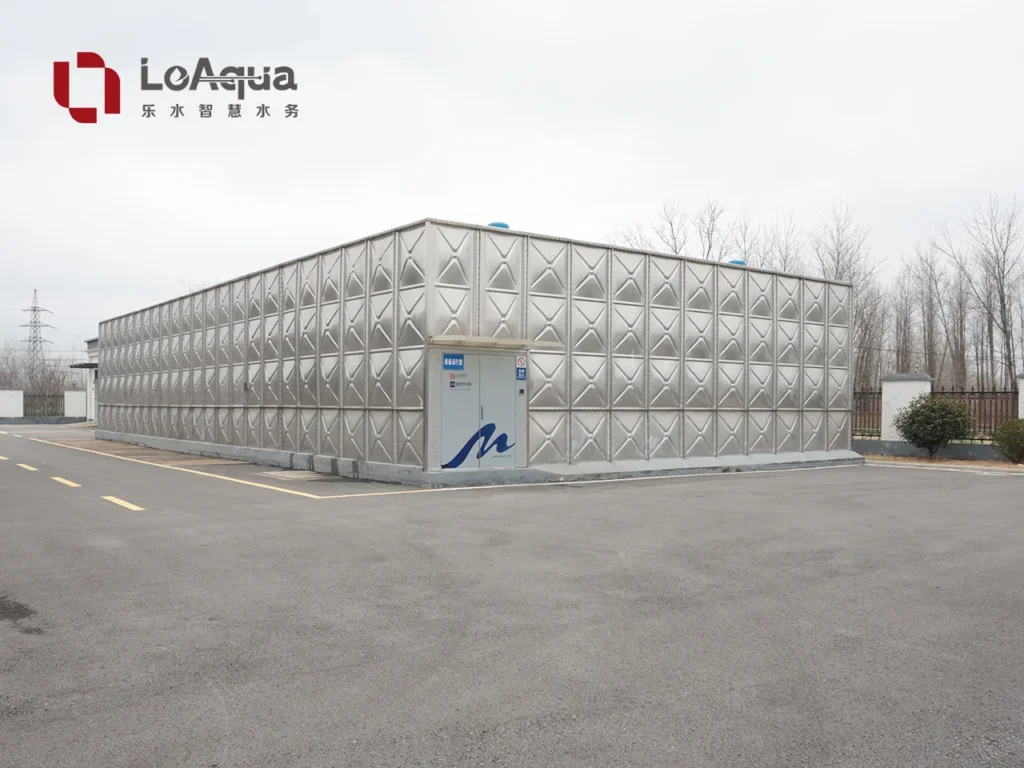
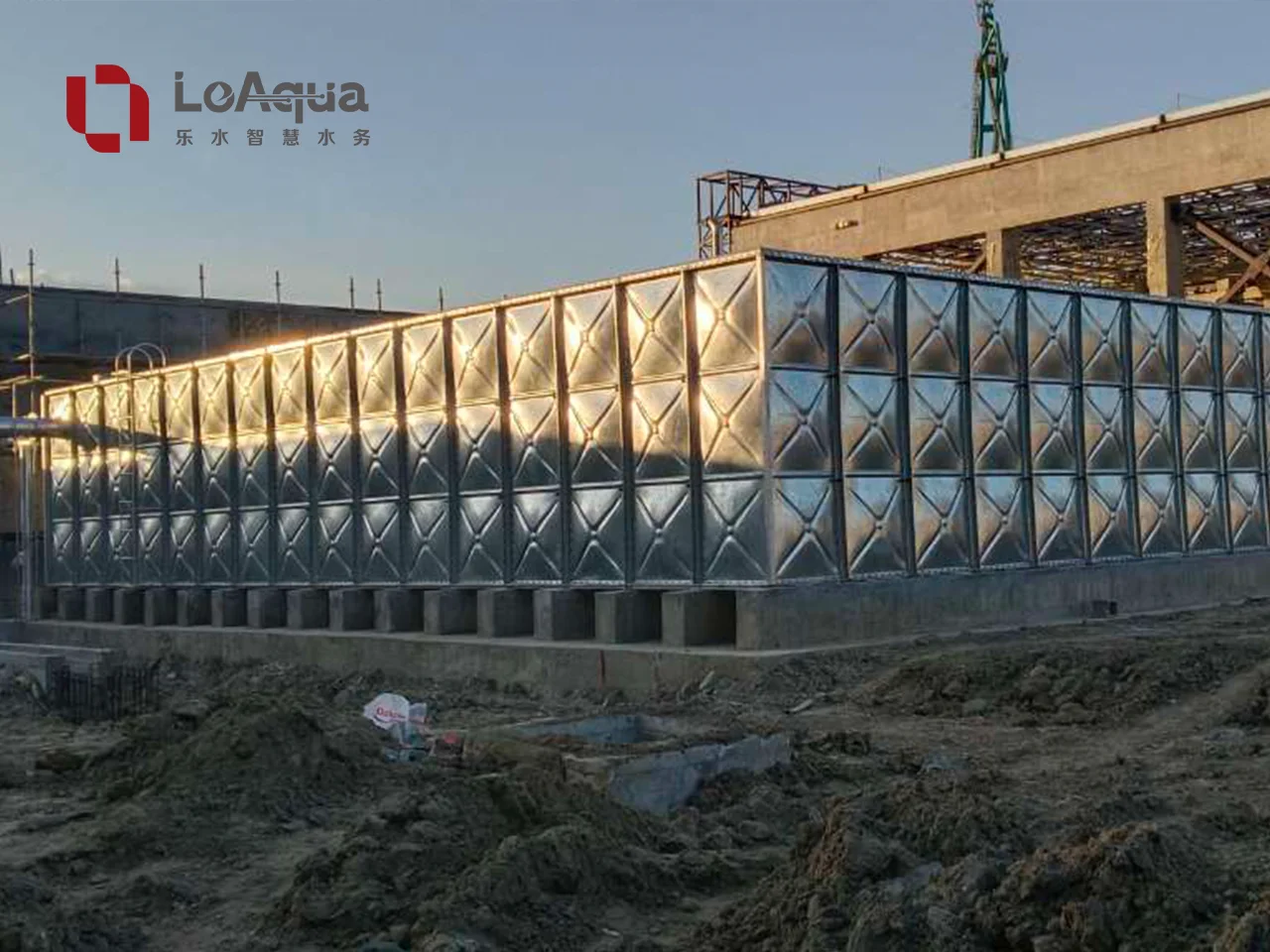
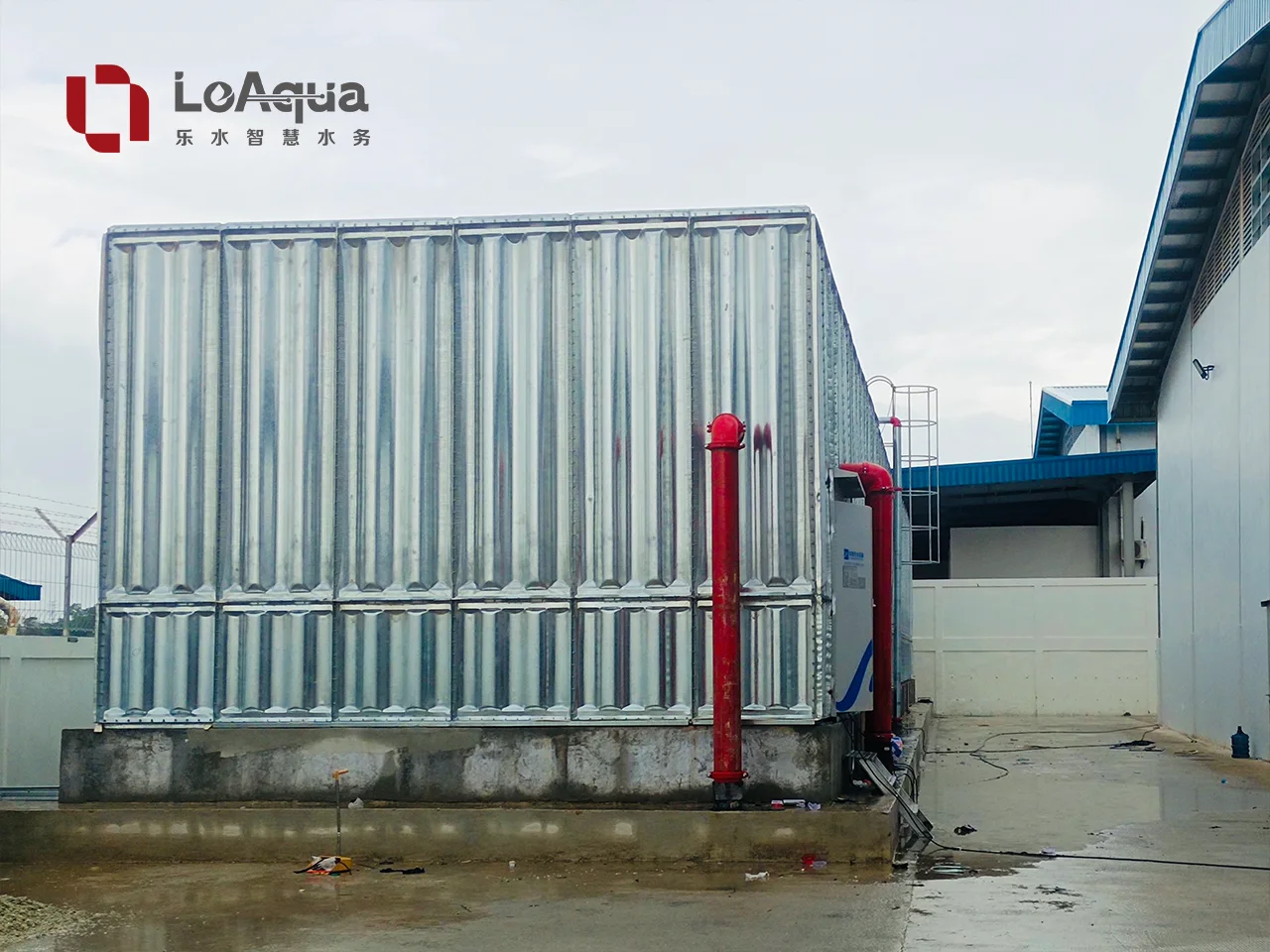
Mingxing’s current product range, for example, includes large-module stainless steel tanks using formed arc-rib panels and bolted assembly rather than treating the panel as a simple flat sheet. The company’s published specifications include several panel thicknesses and modular dimensions.
The practical lesson is simple:
Do not compare steel thickness without comparing the structure around it.
4. Check What Is Included in the Tank Price
This is where apparently similar quotations often start to look very different.
One quotation may include only the basic tank body.
Another may include:
- Bolts and fasteners
- Sealing gaskets
- Manholes
- Ladders
- Internal supports
- Flanges
- Level indicators
- Overflow connections
- Drain connections
Before comparing the prices, create a list of included items.
Then mark each quotation against the same list.
A supplier with a higher tank price may actually be offering a more complete package.
A lower quotation may simply exclude items that will need to be purchased later.
5. Look at the Installation Scope
Installation is another major source of price differences.
Ask each manufacturer:
Does the quotation include installation?
If it does, clarify what that means.
It could include:
- Site assembly
- Equipment positioning
- Sealing
- Pipe connections
- Testing
- Commissioning
Or it could mean only basic assembly supervision.
For modular tanks, this distinction can be particularly important because the panels are delivered separately and assembled at the project site.
The manufacturer may also need to provide installation drawings or technical guidance.
For an overseas project, ask whether the supplier can support the local contractor during installation.
A quotation that includes technical installation support may be more useful than one that simply offers a lower equipment price.
6. Check Whether Accessories Match the Project Drawing
The quotation should also be compared against the approved tank drawing.
Check:
- Inlet location
- Outlet location
- Drain
- Overflow
- Vent
- Manholes
- Ladder
- Level sensor connection
- Pump suction connection
For a project with an existing pipe network, nozzle location can be particularly important.
Changing a connection after manufacturing may require additional fabrication or site modification.
This is one reason technical drawings should be reviewed before the commercial comparison is finalized.
A quotation should describe equipment that can actually be installed in the intended location.
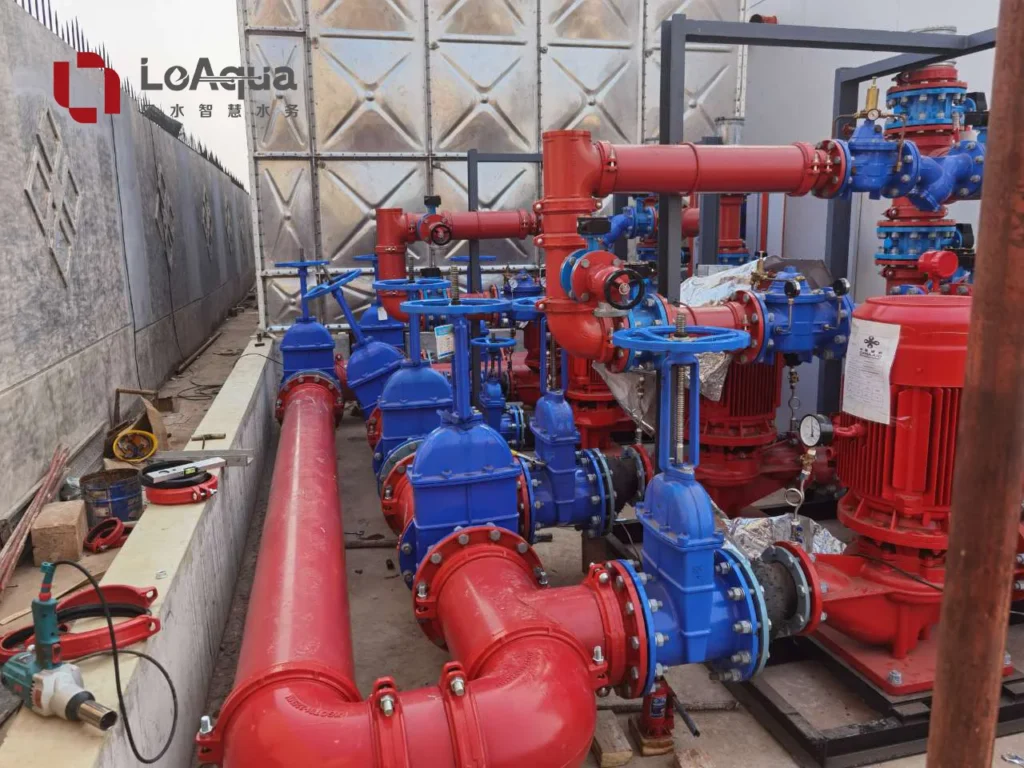
7. If There Is a Pump System, Compare It Separately
A water tank may be only one part of the project.
If the system also requires pumps, do not compare quotations only by tank price.
Check:
- Pump flow
- Pump head
- Number of pumps
- Duty and standby arrangement
- Motor power
- Control system
- Sensors
- Monitoring functions
A supplier offering a complete tank and pump package may appear more expensive than a tank-only quotation.
But the second quotation may require additional pumps, controls and integration work from another contractor.
This is why the correct comparison is often:
Total system cost
rather than:
Tank purchase price
For projects that combine storage and pumping, see 【Water Tank With Pump System 】.
8. Compare the Technical Documents
The quotation itself is only part of the supplier’s proposal.
Ask what documentation is included.
Depending on the project, this can include:
- General arrangement drawings
- Technical specifications
- Material information
- Foundation requirements
- Installation drawings
- Operation instructions
- Inspection records
- Test documentation
- Certificates
This matters particularly for international projects.
A contractor may need the foundation drawing before civil construction begins.
An engineer may need connection drawings for coordination with the pipe network.
The owner may need inspection and material documents for project records.
A quotation with a clear documentation package can therefore save time later.
9. Check the Delivery Terms Before Comparing Prices
For overseas orders, the number at the bottom of the quotation may not represent the final delivered cost.
Check:
- Incoterm
- Shipping scope
- Packing
- Container loading
- Port
- Inland transportation
- Insurance
- Delivery time
Modular tanks can have a different logistics profile from a completed tank because panels and components can be packed separately.
This should be reflected in the quotation.
A lower ex-works price may not remain lower after transportation and other project costs are included.
10. Compare the Supplier’s Engineering Response
There is another difference that does not always appear in a price table.
Look at the questions the supplier asks you.
A supplier that immediately sends a standard price after receiving only:
“500 m³ stainless steel water tank”
may have made several assumptions.
A more detailed engineering response may ask:
- Where will the tank be installed?
- What type of water will it store?
- What dimensions are available?
- What connection arrangement is required?
- Is the tank connected to pumps?
- What standards apply?
- When does the project need the equipment?
These questions are useful because they show whether the quotation is based on the actual project or simply on a catalogue configuration.
The Lowest Quotation Is Not Always the Lowest Project Cost
Consider three simplified quotations:
| Item | Supplier A | Supplier B | Supplier C |
|---|---|---|---|
| Tank | $30,000 | $34,000 | $37,000 |
| Accessories | Partial | Included | Included |
| Installation | Excluded | Included | Included |
| Drawings | Basic | Complete | Complete |
| Testing | Excluded | Included | Included |
| Pump integration | Separate | Included | Optional |
Supplier A appears to be the cheapest.
But once missing accessories, installation, testing and coordination are added, the difference may become much smaller.
This is why engineers and procurement teams should compare the scope behind the price, not just the price itself.
A Simple Water Tank Quotation Comparison Checklist
Before selecting a supplier, compare:
| Category | Questions to Ask |
| Capacity | Are the nominal and usable volumes equivalent? |
| Material | Is the grade and material scope the same? |
| Structure | Are panel geometry and reinforcement comparable? |
| Connections | Do nozzle sizes and locations match? |
| Accessories | Are all required components included? |
| Installation | Is assembly or supervision included? |
| Testing | What testing is included? |
| Documents | Are drawings and technical records provided? |
| Delivery | Are logistics and Incoterms comparable? |
| Pumps | Are pump and control requirements included? |
| Support | Can the supplier provide technical assistance? |
| Total cost | What additional costs remain after purchase? |
This makes the comparison much more useful than simply putting three quoted prices into a spreadsheet.
What a Good Quotation Should Help You Understand
A good quotation should answer more than:
“How much does the tank cost?”
It should help the project team understand:
What is being supplied?
How will it be installed?
How will it connect to the rest of the system?
What documentation is included?
What will the final project cost be?
If these questions cannot be answered, the quotation may not yet be detailed enough for a final purchasing decision.
Final Thoughts
Comparing water tank quotations is not simply a search for the lowest price.
The useful comparison is between complete technical scopes.
Capacity, material, structure, accessories, installation, documentation, transportation and pump integration can all change the real cost of a project.
For straightforward projects, this comparison may be relatively simple.
For large commercial, industrial or infrastructure projects, it becomes much more important.
At LeAqua, the quotation process can involve reviewing project conditions before finalizing the tank configuration. Mingxing’s product range covers stainless steel, composite, FRP and rib-reinforced modular tanks, as well as integrated pumping equipment, allowing storage and pumping requirements to be considered together when the project calls for it.
In the end, the best quotation is not necessarily the cheapest one.
It is the quotation that makes clear what you are buying, what you still need to provide, and how the equipment is expected to work once the project is complete.