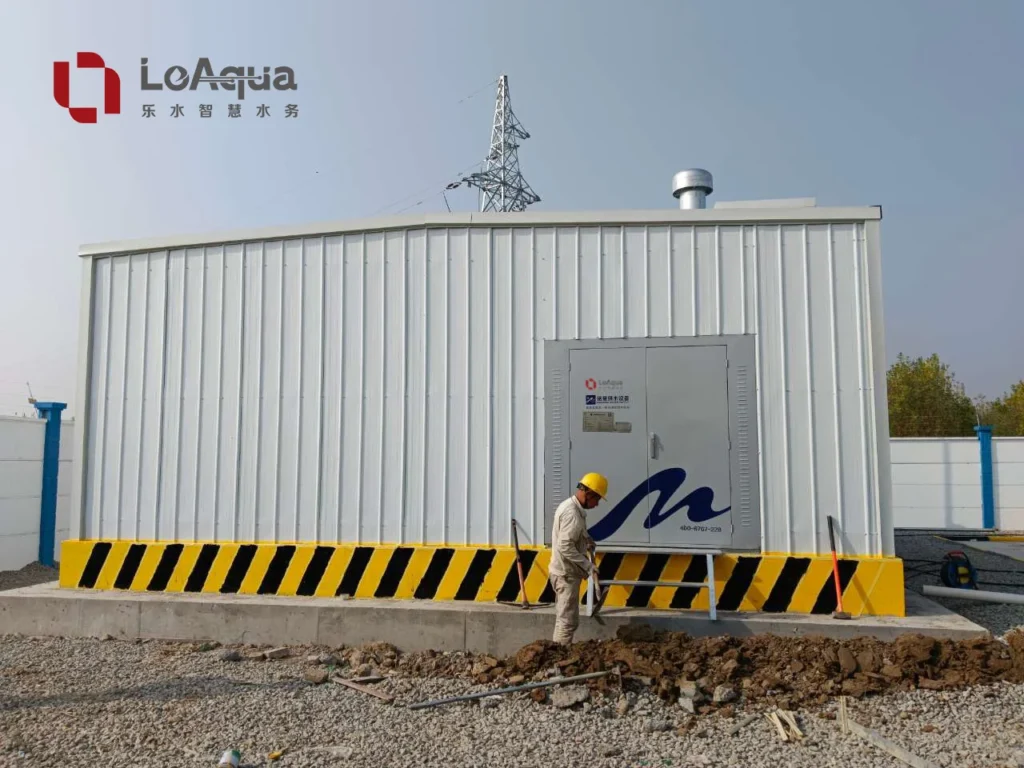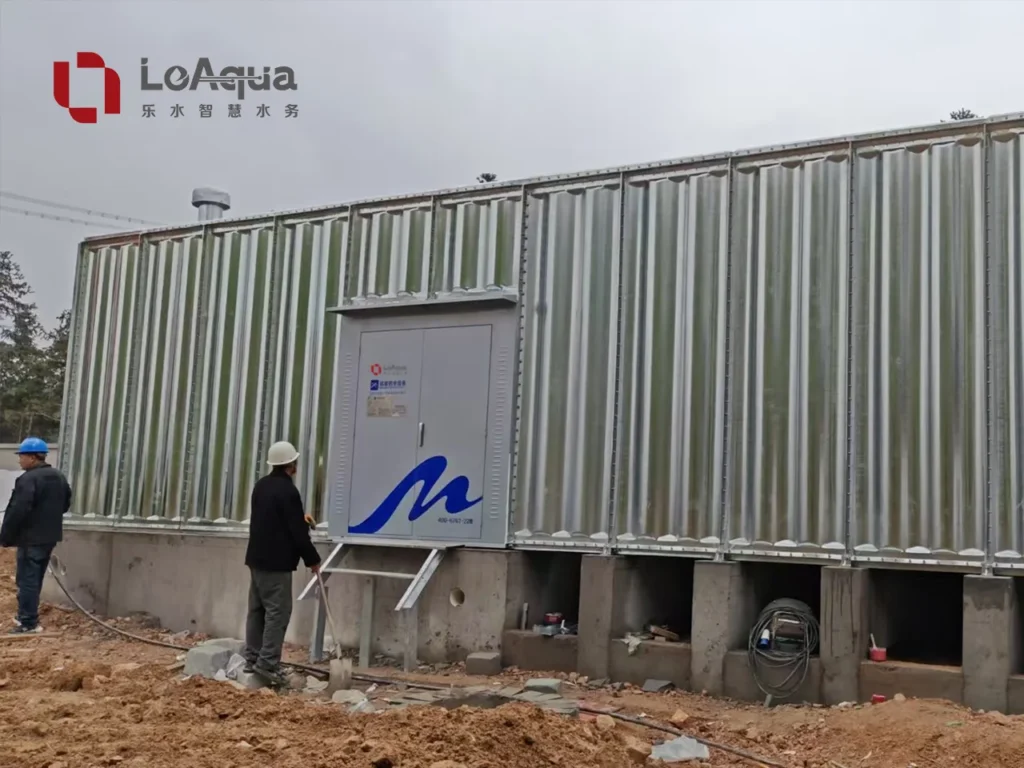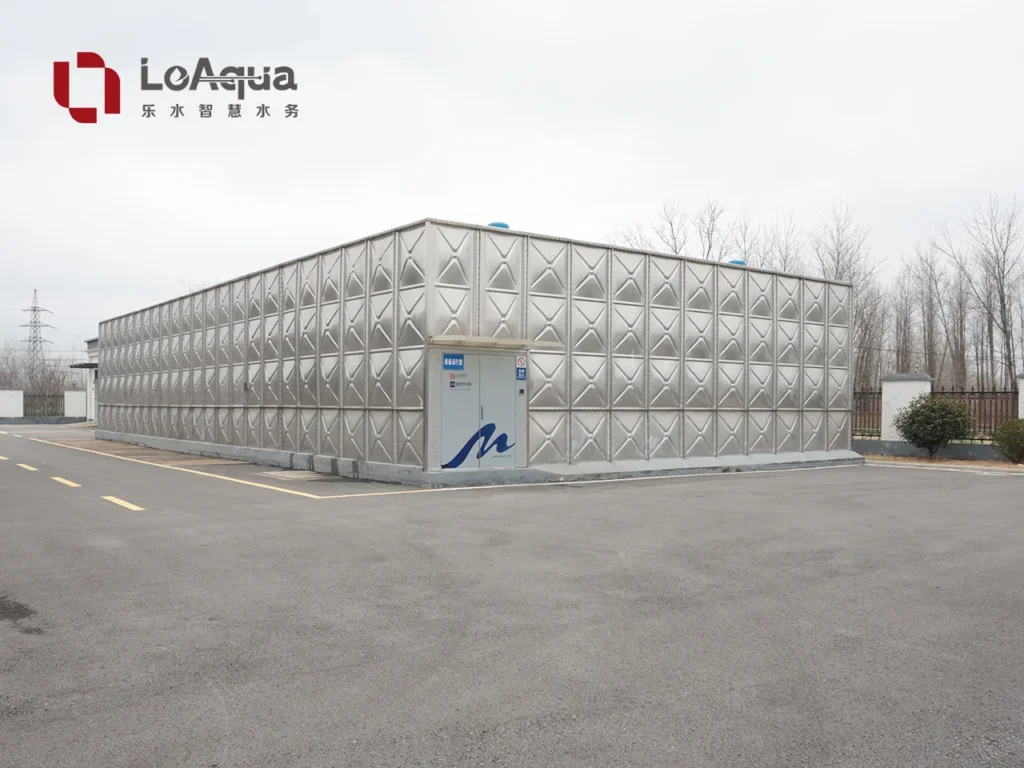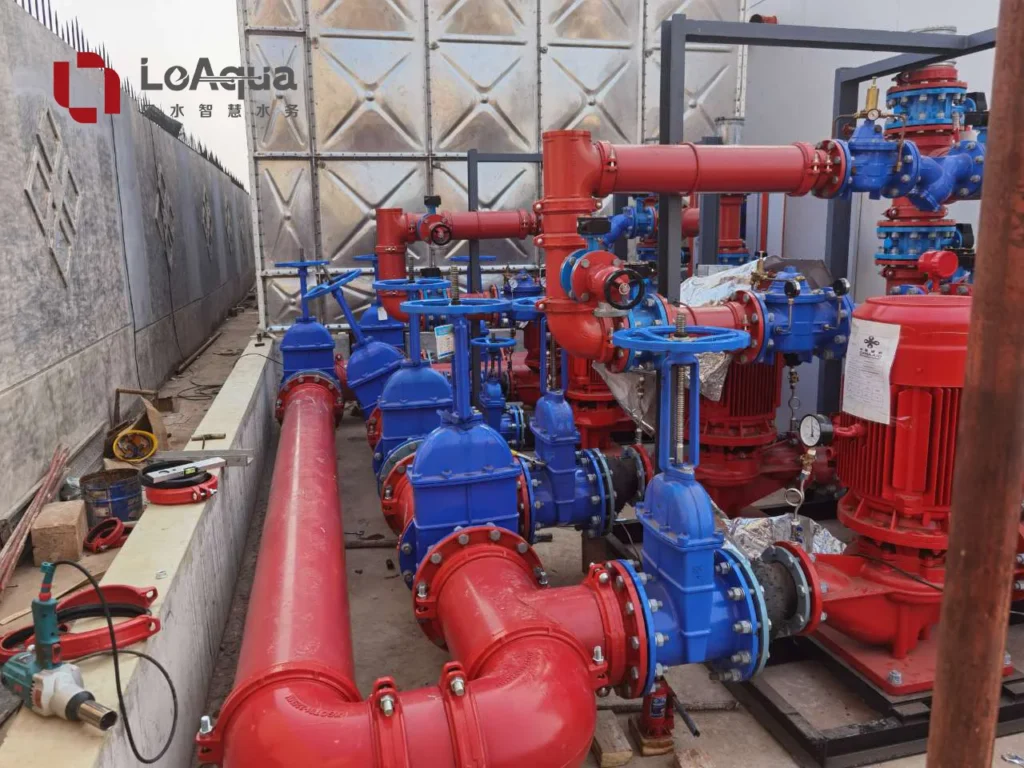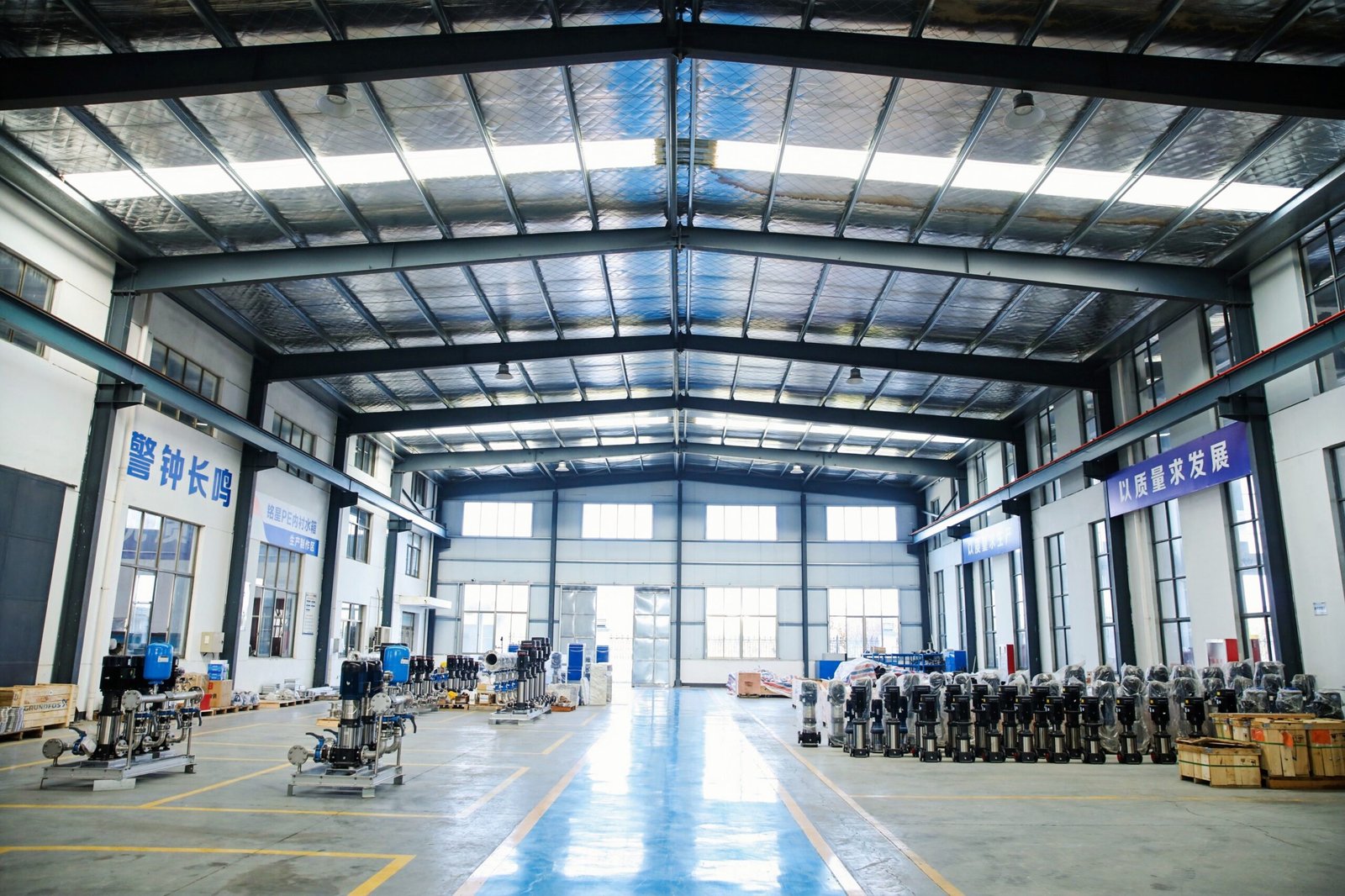
A large data center campus is very different from a single data center building.
Instead of one building with one fire protection system, a campus may contain:
- Multiple data halls
- Electrical buildings
- Generator facilities
- Cooling infrastructure
- Administrative buildings
- Substations
- Future expansion areas
As the site grows, the fire water system has to support more than one building and may need to operate across a large area.
This creates a practical engineering question:
Should a large data center campus use one central fire water storage system, or should storage be distributed across the site?
There is no universal answer.
The decision depends on the campus layout, fire protection strategy, hydraulic conditions, available water supply and future expansion plans.
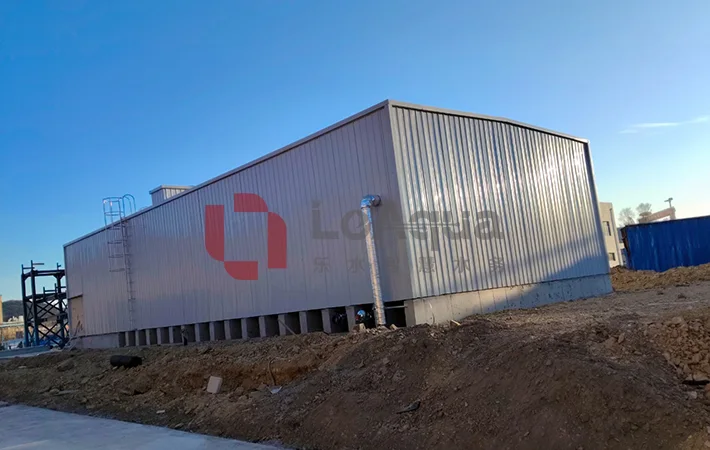
Why a Data Center Campus Needs a Different Approach
A conventional data center may have a relatively compact fire protection layout.
A large campus can have considerable distance between different facilities.
The fire water system may need to serve:
- Data halls
- Electrical equipment
- Cooling plants
- Backup generators
- Fire service access points
This changes the way engineers think about storage.
The tank is no longer simply connected to one building.
It becomes part of a site-wide infrastructure network.
The project therefore needs to consider not only storage volume, but also:
Where is the water stored?
How far does it need to travel?
What happens if one part of the system is unavailable?
1. Start With the Campus Fire Protection Strategy
Before selecting a fire water tank, engineers need to understand the fire protection strategy for the entire campus.
Different buildings may have different systems, such as:
- Automatic sprinklers
- Pre-action systems
- Hydrants
- Hose stations
- Water spray systems
- Fire detection and alarm systems
Some areas may use water-based protection while others use different suppression technologies.
This means the required fire water demand should be determined from the actual campus design rather than estimated from the total floor area.
For data center projects, NFPA 75 provides a fire protection framework for information technology equipment facilities, while water storage and private fire service infrastructure may involve standards such as NFPA 22 and NFPA 24 depending on the project’s design basis.
The applicable requirements should always be confirmed for the project location and contract specification.
2. Centralized vs Distributed Fire Water Storage
One of the main design decisions is whether the campus should use one central storage location or multiple storage points.
Centralized Storage
A central tank can simplify:
- Water level monitoring
- Refill operations
- Pumping equipment
- Maintenance
- System management
It can work well when the campus buildings are relatively close together.
However, the distribution network can become more complicated as the campus expands.
Longer pipe runs can increase hydraulic losses and make the system more dependent on the central infrastructure.
Distributed Storage
Multiple tanks can place water closer to different parts of the campus.
This may be considered when:
- The site is very large
- Buildings are widely separated
- Long pipe runs are undesirable
- Different campus zones have independent requirements
Distributed storage creates additional maintenance and monitoring requirements, but it can reduce the dependency on one central storage location.
The right solution depends on the actual campus layout.
3. Determine Fire Water Capacity From the Actual Demand
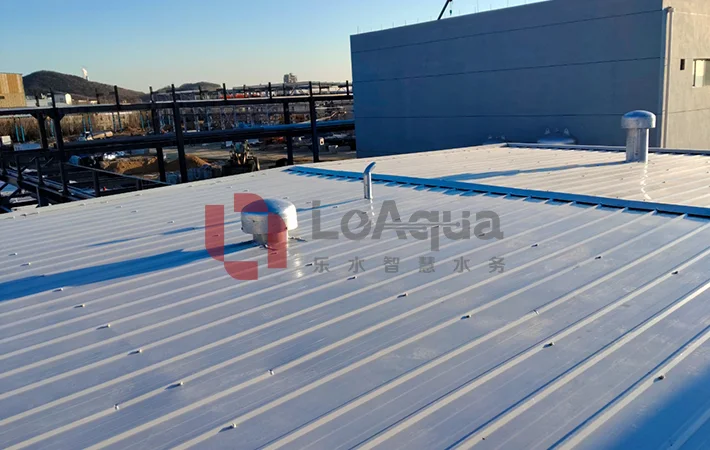
The tank capacity should follow the fire protection design.
Engineers may consider:
- Required fire flow
- Simultaneous demand
- Required duration
- Available external water
- Required reserve
A useful preliminary relationship is:
Required fire water volume = Required fire flow × Required duration
But this is only the starting point.
The actual design may need to account for operating levels, reserve requirements and the configuration of the protection system.
A larger campus does not automatically require a proportionally larger tank.
The number of buildings, protection systems and water sources all influence the final result.
For a broader explanation of fire water calculations, see 【How Engineers Calculate Fire Water Tank Capacity and Pump Flow 】.
4. Check the Available Water Supply
A campus may have access to municipal water, but engineers still need to determine whether the supply can support the fire protection design.
The review may include:
- Available flow
- Available pressure
- Water main size
- Reliability
- Emergency conditions
- Backup supply
A dedicated fire water tank can provide stored reserve when the external supply is not sufficient by itself.
This can be particularly important for campuses located in areas where utility infrastructure is still being developed.
The water storage system should therefore be designed around both:
the normal water source
and
the emergency water requirement.
5. Tank Location Should Be Coordinated With the Campus Layout
The location of the tank affects the rest of the system.
Engineers should consider:
- Distance to data halls
- Fire pump room location
- Fire service access
- Main pipe routing
- Maintenance access
- Refill access
- Future buildings
A tank located near the first phase of construction may become poorly positioned after the campus expands.
This is why the project team should look beyond the initial phase.
A suitable tank location should support the current campus and allow the fire water network to develop with future phases.
6. Pump Head Changes With Campus Size
As the distance between storage and protected buildings increases, the hydraulic calculation becomes more important.
Engineers may need to evaluate:
- Static elevation
- Pipe length
- Pipe diameter
- Fittings
- Valves
- Required residual pressure
A centralized tank may require a greater pump head when supplying distant buildings.
A distributed arrangement may reduce some distribution distances but require additional pump systems.
This means tank location and pump selection should be reviewed together.
The tank provides the stored water.
The pump determines how that water can be delivered through the network.
7. Plan for Redundancy
Reliability is a major consideration for critical facilities.
Engineers may need to consider what happens if:
- A fire pump becomes unavailable
- A power source fails
- A pipe section is isolated
- A tank requires maintenance
Depending on the project design, the system may include:
- Duty and standby pumps
- Multiple water sources
- Redundant equipment
- Separate distribution zones
- Additional storage capacity
The exact arrangement depends on the applicable fire protection requirements.
The important principle is that the system should be evaluated under both normal and failure conditions.
8. Future Expansion Can Affect the Original Tank Decision
Large data center campuses are often built in phases.
The first phase may include only a few buildings.
Later phases may add:
- More data halls
- Additional cooling facilities
- New electrical infrastructure
- Additional support buildings
This raises an important question:
Will the original fire water system still support the campus after expansion?
Engineers can consider whether the original infrastructure should accommodate future demand or whether later phases can be connected through planned expansion points.
The goal is not necessarily to build an oversized system on day one.
A better approach is to identify the parts of the system that must be sized from the beginning and the parts that can be expanded later.
9. Consider Above-Ground and Underground Storage
The choice between above-ground and underground storage depends on the site.
Above-Ground Tanks
Potential advantages include easier:
- Inspection
- Maintenance
- Level monitoring
- Refill access
The campus still needs to consider land use, weather exposure and foundation requirements.
Underground Tanks
Underground storage can preserve surface space for:
- Roads
- Equipment
- Cooling infrastructure
- Future buildings
But it also introduces additional engineering considerations such as:
- Groundwater
- Buoyancy
- Soil pressure
- Surface loading
- Waterproofing
- Access for inspection
The installation method should therefore be considered during campus planning rather than after the tank configuration has already been fixed.
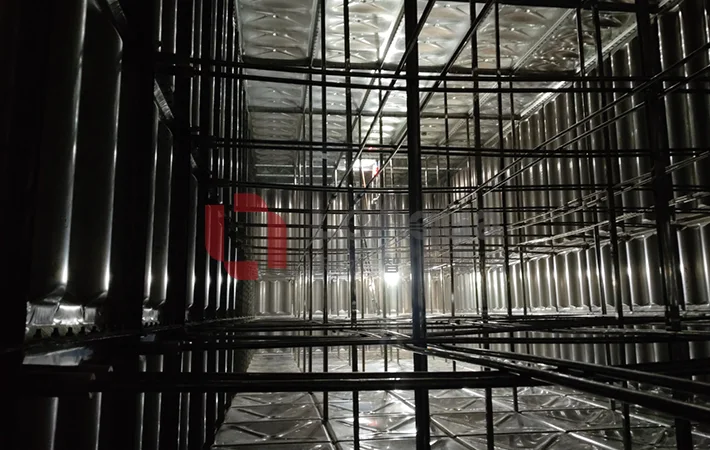
10. Monitoring Becomes More Valuable as the Campus Grows
A large campus may contain several water storage and pumping assets.
Monitoring can provide information about:
- Tank water level
- Pump status
- System pressure
- Power availability
- Alarms
- Equipment faults
This does not replace inspection and testing.
It gives operators a clearer picture of system conditions between physical inspections.
For large or geographically distributed campuses, centralized monitoring can also help operators understand the status of several remote assets without relying entirely on local checks.
A Practical Planning Checklist
Before approving a fire water storage system for a large data center campus, engineers should confirm:
| Item | What to Review |
|---|---|
| Campus layout | Existing and future buildings |
| Fire strategy | Sprinklers, hydrants, pre-action and other systems |
| Fire demand | Required flow and duration |
| Water source | Municipal and dedicated supplies |
| Storage | Centralized, distributed or combined |
| Tank location | Access, coverage and future expansion |
| Pump system | Flow, head and redundancy |
| Pipe network | Hydraulic losses and zoning |
| Installation | Above-ground or underground |
| Monitoring | Level, pressure and alarms |
| Expansion | Future data halls and infrastructure |
| Documentation | Drawings, calculations and approvals |
The final design should be developed by the project’s qualified fire protection and engineering teams.
Why Tank and Pump Planning Should Start Together
A large data center campus illustrates why a water tank should not be treated as an isolated product.
The tank provides storage.
The pump provides flow and pressure.
The distribution network delivers water to different parts of the campus.
The control system manages operation.
Monitoring gives operators information about system status.
When these elements are considered together, the project can evaluate the actual performance of the complete fire water system rather than individual pieces of equipment.
For projects requiring storage and pumping to be developed together, see 【Integrated Pump Station 】.
Final Thoughts
Planning fire water storage for a large data center campus is not simply a matter of choosing a larger tank.
The project needs to consider:
Fire demand + Water source + Tank location + Pumping + Distribution + Future expansion
A central tank may work well for one campus.
A distributed arrangement may make more sense for another.
The decision depends on the physical layout, fire protection strategy and long-term development plan.
For LeAqua, this type of project also highlights the connection between water storage and complete system engineering.
A successful fire water solution needs to make the required water available, move it to the right location and remain manageable throughout the life of the facility.