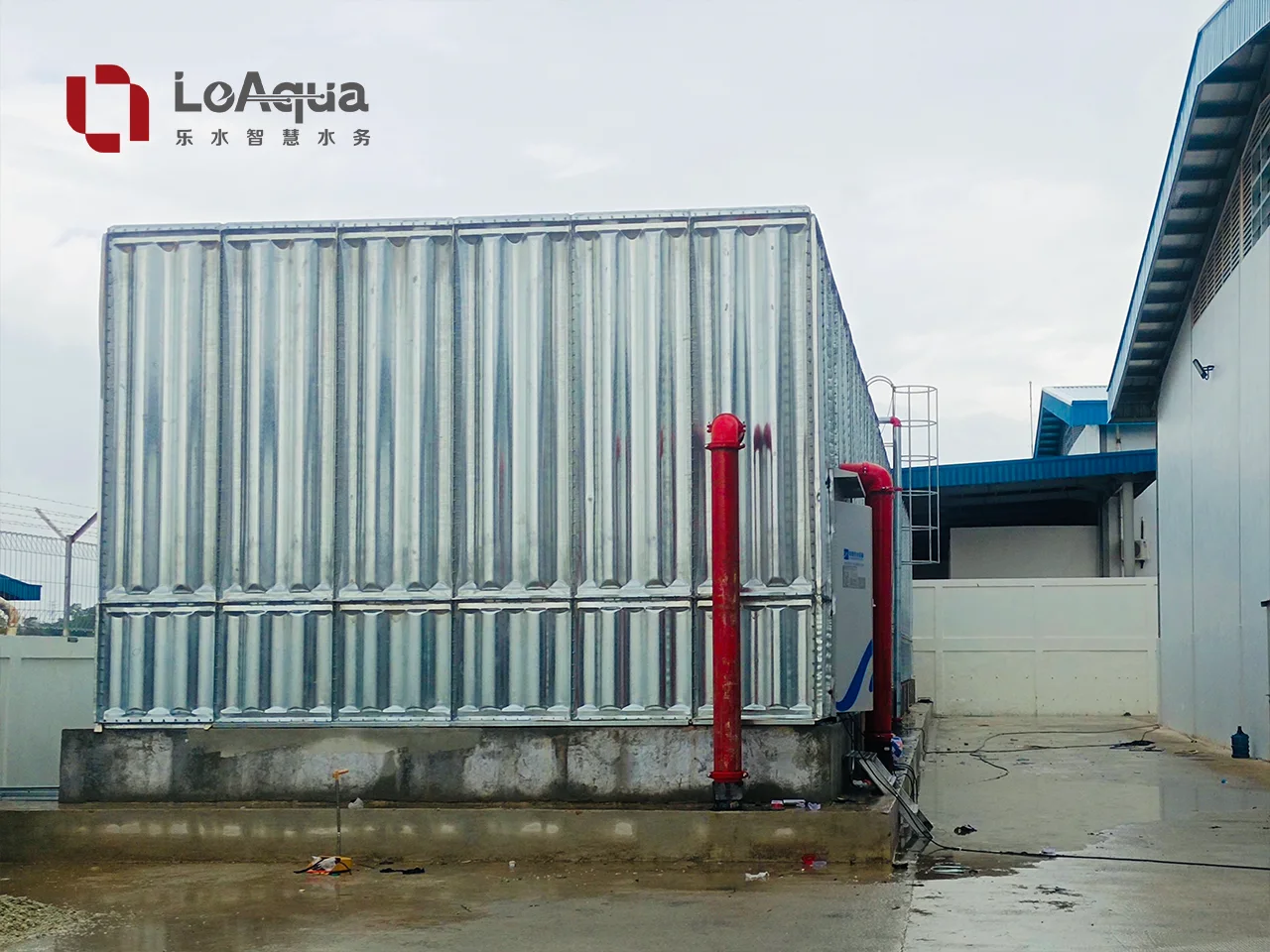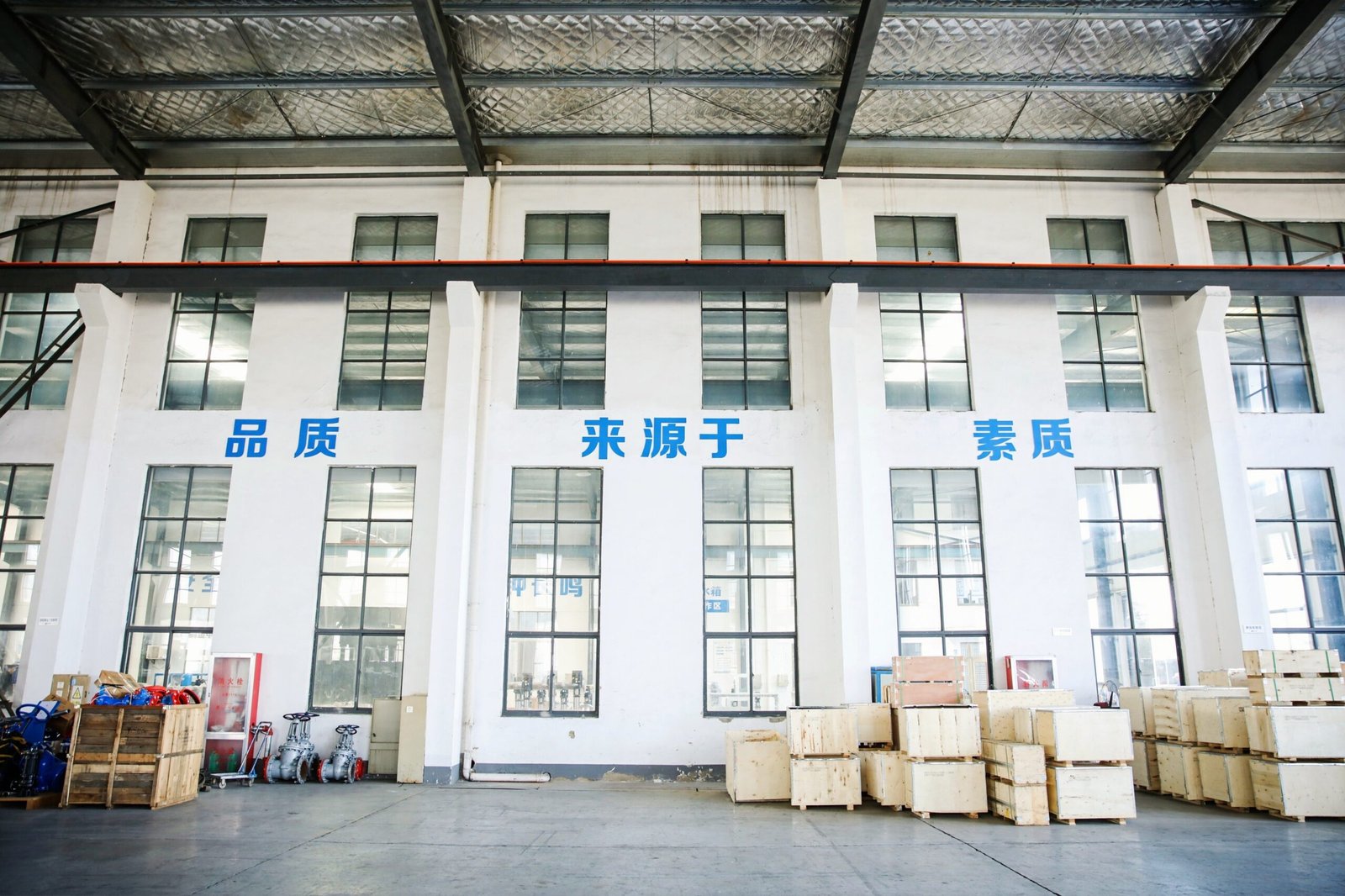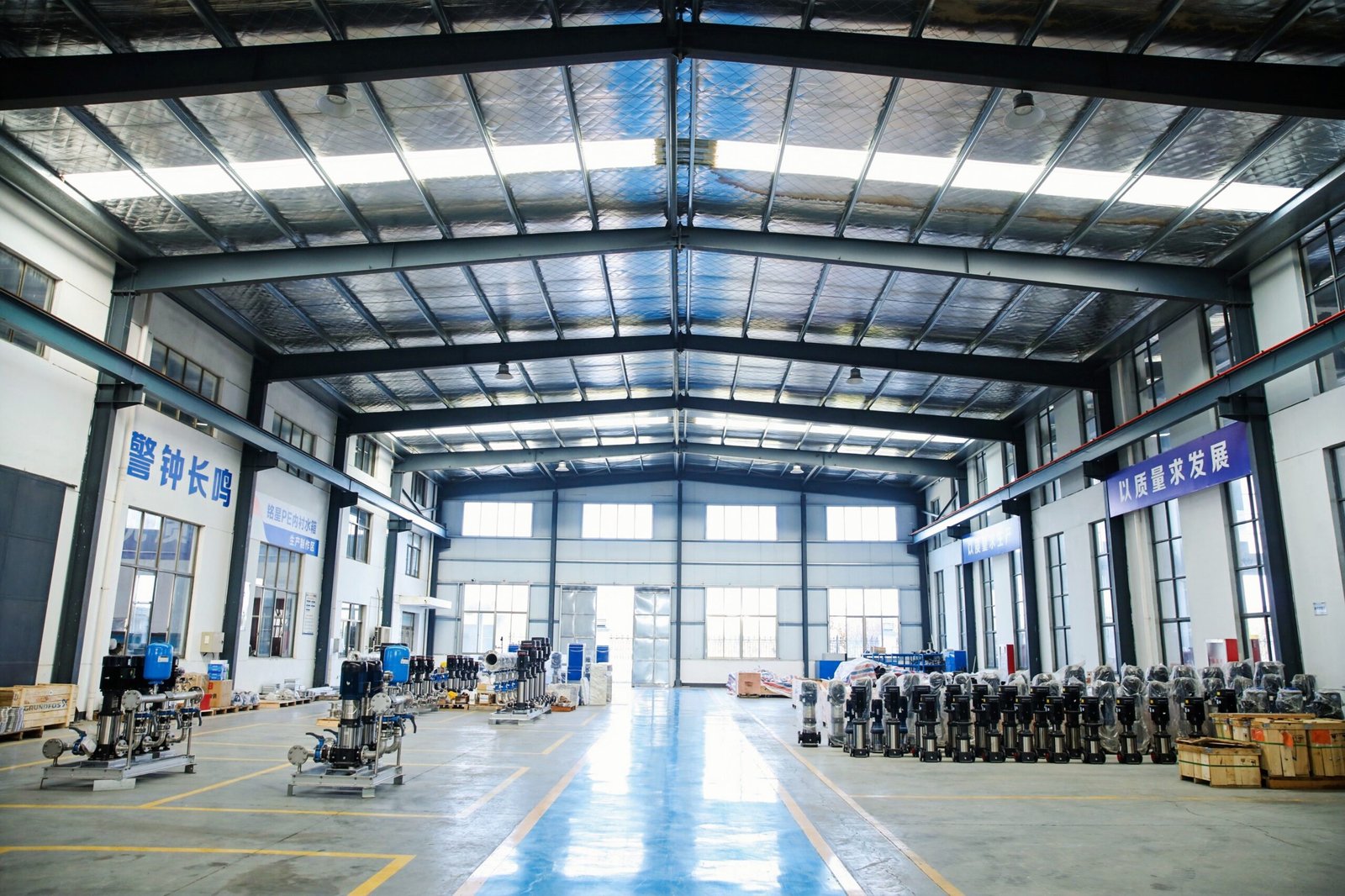
Shipping sectional water tanks from China involves more than placing tank panels in a container. The supplier and buyer must agree on the package breakdown, gross weight, dimensions, labels, shipping documents, delivery term, unloading method and site conditions before dispatch. These details determine whether the cargo can be identified, handled and installed without avoidable delays.
A sectional tank is shipped as panels, structural parts, fasteners, sealing materials and accessories rather than as a completed vessel. That makes overseas transport practical, but it also means the receiving team must know which parts belong together and what must be ready before installation starts.
This guide is written for international buyers, EPC contractors, freight coordinators and site teams. It explains how export packing, container planning and site readiness should connect from the purchase order to final receipt. Material and configuration decisions should first be confirmed through the LeAqua Water Tank Selection Guide, because packing cannot be finalized until the actual tank scope is known.
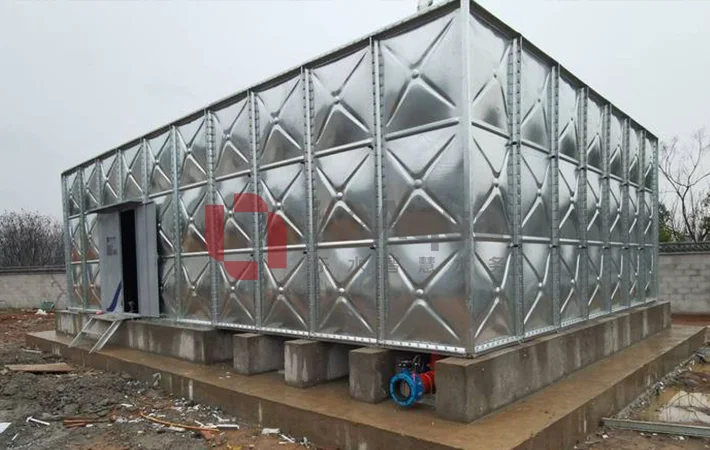
What Should Buyers Expect When a Sectional Water Tank Is Shipped?
A sectional water tank shipment should arrive as a traceable set of packages supported by a packing list. Panels may be placed on pallets, smaller accessories may be protected in wooden cases, and longer or grouped components may be secured as bundles. Each package should have a unique number that matches the shipping documents and identifies the relevant order or tank.
The number of packages, total volume and total weight are project-specific. They depend on the tank material, panel dimensions, capacity, structural system, accessories, number of tanks and packing method. A supplier should therefore issue the final packing information for the actual order rather than ask the buyer to estimate it from a catalogue.
Why Sectional Tanks Are Suitable for Overseas Projects
A completed large water tank is usually impractical to transport. A sectional system separates the tank into manufactured components that can be packed, transported and assembled at the project site. This approach is useful when the completed tank is much larger than the available road, port or building access.
- Panels can be grouped by type and size for handling and inventory control.
- Accessories can be separated from heavy panels and protected in cases or bundles.
- The final tank can be assembled inside a plant room or restricted-access area if the individual parts can reach the location.
- Several tanks can be shipped in one project, provided the packaging and labels clearly separate each tank and order.
Panelized transport does not remove logistics risk. The buyer still needs the package dimensions, weights, lifting points, storage requirements and installation sequence. The supplier should also confirm whether the quoted scope covers only the tank components or includes pumps, controls, supervision or installation. LeAqua’s water tank supply scope guide explains how these responsibilities should be separated in the quotation.
How Are Sectional Water Tanks Packed for Export?
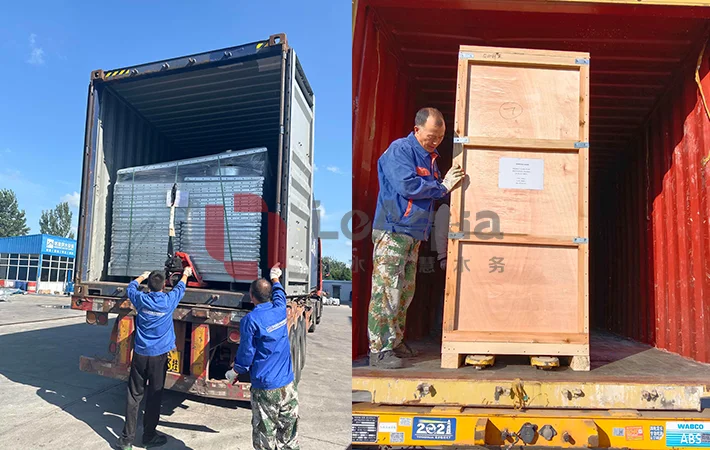
Export packing should protect the product while keeping every component identifiable and practical to handle. The final method depends on the product and route, but a typical shipment may combine pallets, wooden cases and bundles rather than use one packaging type for everything.
Panel Pallets
Tank panels are commonly grouped on pallets according to panel size, material or installation sequence. The pallet should support the load, protect panel edges and surfaces, and allow the planned lifting equipment to engage safely. Where appearance or hygienic surfaces matter, the packing method should prevent metal-to-metal movement and uncontrolled contact during transport.
Wooden Cases
Wooden cases are useful for smaller or easily misplaced accessories, instruments and connection components. The case contents should be listed clearly. When solid wood packaging is used for international trade, the parties should confirm whether the destination requires treatment and marking under ISPM 15 or another applicable phytosanitary rule. Plywood and other processed wood products may be treated differently, so the actual packaging material matters.
Bundles
Longer structural members, ladders, frames or grouped accessories may be packed as bundles when that method provides secure handling. A bundle still needs a package number, weight and contents description. Loose parts should not be added at the last moment without updating the packing list.
The packaging format is not a promise that every order will use the same mix. For example, an actual LeAqua label from one order described four pallets, two wooden cases and four bundles, giving ten packages in total. A different order used only four packages. The project packing list is the controlling document for that shipment.
Why Every Package Needs a Traceable Label
A package label links the physical cargo to the commercial and technical records. It is especially important when one shipment contains several tanks, repeated panel sizes or accessories that look similar. A label should remain legible through warehouse handling, inland transport and site storage.
| Label field | Purpose |
| Consignee or project | Directs the package to the intended receiving party or site. |
| Customer PO or contract reference | Connects the physical package to the buyer’s order records. |
| Product name | Distinguishes bolted water tank components from pumps, controls or unrelated cargo. |
| Package breakdown | Shows how many pallets, cases and bundles form the shipment. |
| Package number | Allows the receiver to confirm whether every package has arrived. |
| Tank or subsystem identifier | Separates components when one order includes more than one tank. |
One supplied label was marked as package 8 of 10 and identified the contents as part of the second tank. That detail is operationally useful: the site team can inventory the package against both the total shipment and the correct tank. The customer name and PO number do not need to be reproduced in a public article for this lesson to remain valid.
What a Real Packing List Can Tell the Buyer
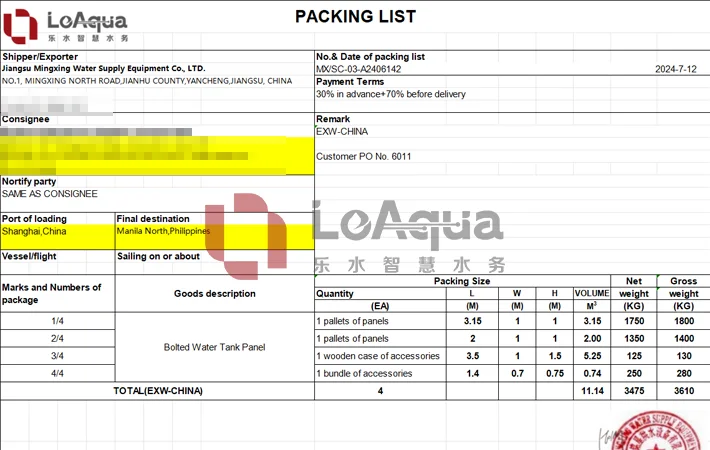
A packing list should describe the shipment at package level rather than show only a total weight. An anonymized LeAqua packing list dated 12 July 2024 covered a Manila-bound bolted water tank panel shipment under EXW terms. It recorded two panel pallets, one wooden case of accessories and one accessory bundle.
| Package | Description | Dimensions (m) | Volume (m3) | Net (kg) | Gross (kg) |
| 1/4 | Pallet of panels | 3.15 x 1.00 x 1.00 | 3.15 | 1,750 | 1,800 |
| 2/4 | Pallet of panels | 2.00 x 1.00 x 1.00 | 2.00 | 1,350 | 1,400 |
| 3/4 | Wooden case of accessories | 3.50 x 1.00 x 1.50 | 5.25 | 125 | 130 |
| 4/4 | Bundle of accessories | 1.40 x 0.70 x 0.75 | 0.74 | 250 | 280 |
| Total | 4 packages | Project total | 11.14 | 3,475 | 3,610 |
The totals reconcile with the individual rows: 11.14 m3 in stated package volume, 3,475 kg net weight and 3,610 kg gross weight. This makes the document useful for pickup planning, warehouse receipt and freight discussion.
How Is a Container Loading Plan Prepared?
A container loading plan converts the final package list into a safe and practical loading sequence. Total cubic volume alone is not enough. Long packages, concentrated weight, forklift access, container door dimensions, stacking limits and the unloading sequence can determine whether the planned load is workable.
- Freeze the shipment scope and issue a final package list with dimensions, net weight and gross weight.
- Confirm the container type, payload limit, internal dimensions and door opening with the freight provider.
- Check how each pallet, case or bundle will be lifted, positioned, restrained and removed.
- Distribute weight appropriately and avoid relying on theoretical volume utilization alone.
- Protect panels and accessories from movement, impact and moisture according to the route and storage period.
- Prepare photographs or a loading record showing package numbers and their positions when contractually required.
- Provide the verified gross mass and related shipping information through the responsible party and method required for the shipment.
The International Maritime Organization’s verified gross mass guidance explains the SOLAS requirement for a packed container’s verified gross mass before loading on a ship. The contract and freight arrangement should identify who obtains and submits that value. A product packing list and a container’s verified gross mass are related records, but they are not the same document.
EXW, FOB, DPU or DDP: What Changes?
LeAqua commonly works with EXW, FOB, DPU and DDP according to the customer’s requirements. The selected rule changes cost, risk and responsibility, so the quotation should state the rule, the named place or port and the applicable Incoterms edition. The International Chamber of Commerce publishes the Incoterms rules used to allocate delivery obligations between sellers and buyers.
| Term | Practical meaning for the shipment | Point to confirm |
| EXW | The buyer takes responsibility from the named seller location under the agreed rule, including most transport arrangements. | Confirm loading responsibility, export formalities and the exact pickup location. EXW can create practical export-clearance issues in cross-border trade. |
| FOB | Used for sea or inland waterway transport; the seller delivers when the goods are loaded on board at the named port under the agreed rule. | State the port and clarify origin charges. For containerized cargo delivered to a terminal before loading, ask the freight adviser whether FCA is more appropriate. |
| DPU | The seller delivers the goods unloaded at the named destination place. | Define the exact unloading point, access conditions, lifting method and who bears delay caused by an unready site. |
| DDP | The seller assumes extensive delivery obligations, including import clearance and duties under the agreed rule. | Use only after confirming that the seller can legally and practically complete destination import formalities, taxes and delivery. |
An Incoterm does not automatically define installation, foundation work, commissioning, storage after delivery or damage caused by unsuitable site handling. Those responsibilities still need to be written into the supply contract. The latest LeAqua water tank RFQ checklist helps buyers identify these interfaces before a final quotation is issued.
Which Documents Should Be Prepared for Shipment?
The required documents vary by country, product, contract and transport route. The buyer, seller and freight agent should agree on the document set before dispatch rather than discover a missing requirement after the cargo reaches the port.
- Commercial invoice with the agreed product description, value and trade term
- Packing list with package numbers, quantities, dimensions, net weight and gross weight
- Transport document, such as the applicable bill of lading or waybill
- Certificate of origin or other customs documents when required
- Wood-packaging treatment or marking evidence when applicable
- Product drawings, material documents, installation instructions and accessory lists required by the contract
- Inspection, testing or conformity records specifically required for the destination or project
Descriptions and quantities should be consistent across the invoice, packing list, labels and transport records. If one document says four packages and another says ten, the parties should first confirm whether the records belong to different orders, partial shipments or separate tanks. They should not revise one document merely to make the numbers look alike.
Site Readiness Should Be Confirmed Before Dispatch
Site preparation should begin before the shipment leaves the factory. A container can arrive on schedule while the project still loses time because the access road, unloading equipment, storage area or foundation is not ready.
| Site item | What to confirm before dispatch |
| Access route | Container truck or delivery vehicle access, turning space, height restrictions, road condition and site entry procedure. |
| Unloading equipment | Crane, forklift or other approved equipment with capacity and fork or lifting arrangement suitable for the heaviest and longest package. |
| Storage area | Dry, level and secure space that keeps packages identifiable and protects panels and accessories before installation. |
| Foundation | Approved dimensions, levelness, load basis, drainage and completion status, with unresolved civil interfaces recorded. |
| Installation access | Clear route from storage to the final tank location, including doors, corridors, roof access or restricted plant-room openings. |
| Labor and tools | Installer responsibilities, lifting tools, torque tools, sealant or gasket handling, temporary supports and safety controls. |
| Utilities | Temporary power, lighting, water for testing where required, drainage and communication with the supplier or supervisor. |
| Interface materials | External pipework, valves, flexible connections, electrical work and civil items assigned to the contractor or other suppliers. |
The tank supplier should issue the relevant drawings in time for civil and MEP coordination. However, a supplier drawing does not remove the need for the project’s responsible engineer to approve the foundation, structural loads and local installation method.
What Should the Receiving Team Check?
Receiving inspection protects both the buyer and supplier. The site team should compare the physical packages with the packing list before opening everything or moving components into several storage areas.
- Record the delivery date, vehicle or container reference and seal condition where applicable.
- Count the packages and confirm that the sequence is complete, such as 1/4 through 4/4 or 1/10 through 10/10.
- Check labels against the PO, project and tank identifier before mixing packages from different orders.
- Photograph external damage, wet packaging, deformation or missing labels before unloading or opening where practical.
- Confirm heavy-package handling requirements before lifting; gross weight should guide equipment selection.
- Open and inventory accessories in a controlled area, keeping small fasteners and instruments linked to their case or bundle list.
- Report shortages or damage through the contractual notification process and retain supporting photographs and records.
Who Is Responsible at Each Stage?
Responsibility varies with the Incoterm and contract. The following matrix is a discussion tool, not a replacement for the signed agreement.
| Activity | Responsibility to define |
| Final packing list | Who prepares, reviews and approves the package breakdown before dispatch? |
| Factory loading | Who provides labor and equipment, and at what point does risk transfer? |
| Export and freight | Who books transport, completes export formalities and supplies shipping instructions? |
| Import clearance | Who acts as importer and pays destination duties, taxes and customs charges? |
| Destination unloading | Who provides equipment, operators and an accessible unloading area? |
| Storage and preservation | Who protects packages between delivery and installation? |
| Installation and testing | Is the supplier installing, supervising, advising remotely or supplying equipment only? |
| Shortage or damage claim | What evidence, notification period and responsible contact are required? |
Common Shipping Mistakes to Avoid
- Assuming the tank capacity determines the number of containers without a final packing calculation
- Using a trade term without a named place, named port or agreed Incoterms edition
- Treating FOB as automatically suitable for every container movement without checking the handover point
- Publishing customer names, telephone numbers, payment terms or PO details in a case study without approval
- Failing to distinguish two tanks or two orders that share similar panel sizes
- Sending the shipment before confirming unloading equipment, access and storage space
- Comparing a packing-list gross weight with a container verified gross mass as though they were identical records
- Leaving installation, testing and by-others materials undefined because the delivery term appears comprehensive
Sectional Water Tank Export Checklist
- Approved tank drawings, material, dimensions, connections and accessory scope
- Final package count with unique labels for every pallet, case and bundle
- Package-level dimensions, net weight, gross weight and contents
- Container and loading plan confirmed by the responsible logistics party
- EXW, FOB, DPU, DDP or another agreed rule stated with its named place and edition
- Invoice, packing list, transport and destination documents checked for consistency
- Access, unloading equipment, storage area and installation route confirmed
- Foundation and civil interfaces approved by the responsible project engineer
- Installation, supervision, testing and shortage-reporting responsibilities documented
- Customer and commercial information removed from any shipping record used in public marketing
How LeAqua Supports Overseas Water Tank Shipments
LeAqua support project-specific sectional water tank supply rather than applying one packing quantity to every order. The product configuration, package breakdown, delivery term and documentation should be confirmed from the approved scope and destination requirements.
For stainless steel sectional tank configurations, review the stainless steel water tank page. For a shipping discussion, send the tank quantity, material, dimensions, delivery destination, required Incoterm, site access and requested installation support through the LeAqua contact page. The quotation should then state the assumptions, included documents and responsibilities that remain with the buyer or local contractor.
Conclusion
Successful sectional water tank shipping depends on traceability and preparation. Panels, accessories and structural parts must be packed in a way that protects them and allows the receiving team to identify every package. The packing list should reconcile package dimensions, volumes and weights, while the labels should connect each item to the correct project and tank.
The delivery term then determines who controls each logistics stage, but it does not replace a clear scope for unloading, storage, installation and testing. Before requesting a shipping quotation, provide LeAqua with the confirmed tank scope, destination, preferred Incoterm and site constraints so the packing and delivery plan can be prepared for the actual project.