A water tank RFQ should define the application, required capacity, water conditions, site constraints, connections, pump duty, applicable standards and supply scope. When an engineer or buyer sends only “500 m3 stainless steel water tank,” a supplier still has to guess the usable volume, water quality, connection arrangement, foundation conditions, installation responsibility and delivery point.
This checklist separates the information needed for a budget estimate from the information needed for a final technical quotation. For general material and application decisions, use the Water Tank Selection Guide as a companion reference.
The goal is not to make the first inquiry unnecessarily complicated. The goal is to provide enough context for the supplier to state its assumptions clearly, identify missing inputs and recommend a tank and pumping arrangement that can be compared with other proposals.
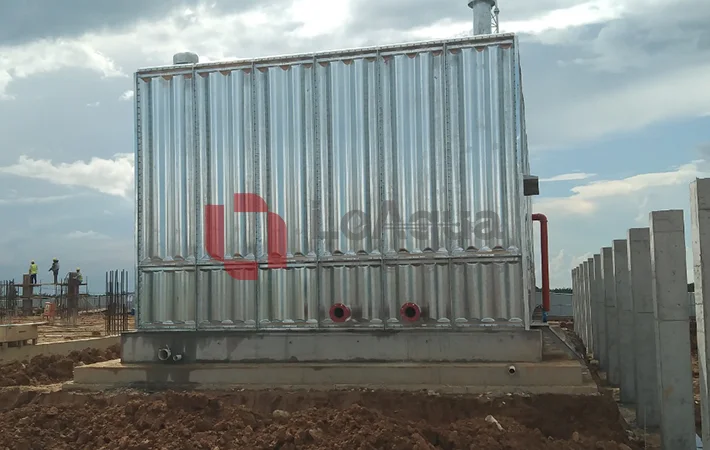
What Should a Water Tank RFQ Include?
A water tank RFQ should define the application, water type, required nominal and effective capacity, installation environment, water quality, site and foundation conditions, connection requirements, applicable standards, delivery location, installation scope and pump duty when pumping equipment is included. A supplier can usually prepare a budget estimate with fewer inputs, but a final technical quotation requires confirmed drawings, responsibilities and project specifications.
Why Incomplete RFQs Produce Difficult Quotations
A tank is not only a container. It is part of a water storage system that may include a foundation, inlet and outlet pipework, overflow and drain lines, level instruments, access equipment, pumps, controls, testing and local installation. If these interfaces are absent from the RFQ, each supplier may price a different system while using the same product label.
For example, one quotation may include only tank panels and fasteners. Another may include internal partitions, flanges, ladders, level sensors, drawings, packing and commissioning support. The lower total price is not necessarily the lower project cost. Before comparing offers, read LeAqua’s Water Tank Supply Scope guide and ask every bidder to state included items, exclusions and by-others work in the same format.
1. Start With the Project Application
The first RFQ field should explain what the stored water will be used for. Application affects material selection, hygiene requirements, capacity logic, operating conditions, inspection requirements and the documents expected from the supplier.
| Application | Information to state in the RFQ |
| Potable or domestic water | Whether the water is intended for drinking, domestic use or general building service; identify local hygiene or approval requirements. |
| Fire protection water | Fire protection system type, design basis supplied by the fire engineer, required duration or reserve, and the governing local code or standard. |
| Industrial or process water | Process description, water chemistry, temperature, solids, cleaning method and whether the tank is part of a production system. |
| Rainwater or non-potable reuse | Collection source, treatment level, intended reuse and whether the stored water can contact people or food-related systems. |
| Municipal or infrastructure supply | Demand pattern, operating levels, pressure zones, redundancy and the interface with the existing distribution system. |
Avoid combining several duties under one vague label such as “water storage.” A fire reserve and a domestic service tank may be physically adjacent but can have different control, testing and approval requirements. If the final application is not yet fixed, state the alternatives so the supplier can price them separately.
2. Confirm Nominal Capacity and Effective Capacity
Capacity is one of the most important water tank specification fields, but “capacity” can mean different things. Nominal capacity normally refers to the geometric or stated tank volume. Effective capacity refers to the usable volume available within the project operating limits. The two values should not be treated as interchangeable.
The RFQ should state whether the required number is nominal or effective and identify any reserved volume. The available volume may be affected by the minimum operating level, overflow level, inlet and outlet elevations, internal partitions, fire reserve, sediment allowance or operational separation between compartments.
Example: a project may request a 500 m3 tank but later clarify that 500 m3 must remain available above the minimum usable level. That clarification can change the tank dimensions and quotation. The number in this example is illustrative only and is not a design recommendation.
| Capacity field | What the buyer should provide |
| Required nominal capacity | State the requested geometric or nameplate volume, if already defined. |
| Required effective capacity | State the usable volume required during normal operation or emergency duty. |
| Reserve volume | Identify water that must remain reserved for fire, process continuity or other defined purposes. |
| Operating levels | Provide minimum, normal and maximum levels if they are known. |
| Design basis | Attach the demand calculation, fire engineer’s criteria or process requirement when available. |
A supplier should show both nominal and effective capacity on the technical offer when the distinction matters. If a project requires fire water, the tank supplier should not replace the fire engineer’s hydraulic or code calculation. The RFQ should identify the responsible designer and the applicable local requirements.
3. Describe the Water and Operating Conditions
Material selection should follow the stored water and the environment, not a default preference for one material. An RFQ should describe the water as accurately as possible, especially when the project involves potable water, industrial chemicals, coastal exposure or unusual temperatures.
- Water type and intended use
- Normal and maximum operating temperature
- pH, chloride, salinity or other available water analysis
- Whether the tank is exposed to sunlight, rain, sea air, chemicals or high humidity
- Cleaning, disinfection or inspection method
- Whether the water may freeze or experience unusual thermal changes
- Any hygienic, potable-water or local product approval requirement
If the water analysis is not available at the budget stage, say so. A supplier can identify a preliminary material option, but the final selection may need to remain conditional on the water chemistry and project specification. For a project-specific recommendation, send the available water data together with the site information rather than asking the material name alone to determine the design.
4. Provide Site and Installation Information
A sectional or modular tank can be manufactured in a factory and assembled at the destination, but the site still determines whether the proposed solution is practical. Access, lifting, foundation and local labor assumptions should be visible in the RFQ.
| Site item | Questions to answer |
| Location | Country, city, project address or port-to-site delivery point. |
| Installation position | Indoor, outdoor, roof level, ground level, underground or within a plant room. |
| Available space | Length, width, height, maintenance clearance and access route. |
| Foundation | Existing or new foundation, dimensions, levelness, load information and who designs or builds it. |
| Access and lifting | Door or gate size, road access, crane or forklift availability, and any height restrictions. |
| Local installation | Who will assemble, seal, connect, test and commission the tank. |
| Environment | Wind, seismic, flood, corrosion, temperature and other site conditions relevant to the design. |
Attach a site plan, foundation drawing, plant-room layout and photographs when available. If the project is still at concept stage, mark dimensions as preliminary instead of presenting them as confirmed. This allows suppliers to state the design assumptions and prevents a preliminary budget from being mistaken for a construction-ready quotation.
5. List Every Connection and Accessory Requirement
Interface details are a frequent source of quotation differences. The RFQ should include a connection schedule or, at minimum, a list of required openings and accessories. Each opening should have a size, elevation, orientation and connection standard when known.
- Inlet, outlet, overflow and drain connections
- Vent, manhole and inspection openings
- Internal partitions, anti-vortex arrangements or other internal components
- Ladders, platforms, handrails, supports and access equipment
- Level indicator, level switch, transmitter or remote monitoring point
- Flange standard, pipe material and mating connection responsibility
- Insulation, cladding, roof cover or weather protection if required
- Drainage, cleaning and disinfection provisions
Do not assume that an item is included because it appears in a product photograph. The buyer should ask the supplier to identify included, optional and excluded components. A drawing with numbered connections is often more useful than a long paragraph because the project team can compare the same positions across quotations.
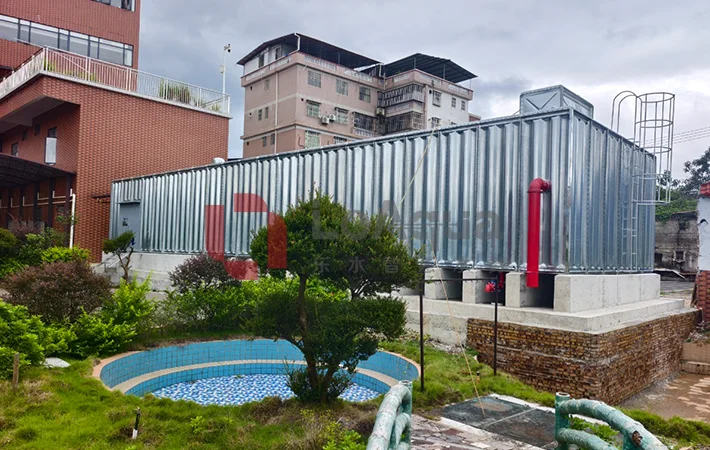
6. Add Pump and Hydraulic Data When the Tank Is Part of a System
If the project includes a booster set, fire pump, transfer pump or integrated pump station, the tank RFQ should include the hydraulic duty. Tank size alone does not determine pump selection. Flow, head, pipe losses, elevations, duty cycle and standby philosophy must be considered together.
| Pump or hydraulic field | Typical RFQ input |
| Required flow | Design flow and any separate normal, peak or emergency flow. |
| Total head | Required discharge pressure or calculated total dynamic head, including elevation and losses. |
| Suction conditions | Water level range, suction elevation, pipe arrangement and available net positive suction conditions when relevant. |
| Duty and standby | Number of duty pumps, standby pumps, jockey pumps or other defined arrangements. |
| Power supply | Voltage, frequency, phase, starting method and emergency power availability. |
| Control and monitoring | Local or remote control, automatic start, level signals, alarms and communication requirements. |
| Operating pattern | Continuous, intermittent, seasonal or emergency-only operation. |
For combined storage and pumping projects, review LeAqua’s pump systems and water tank with pump system explanation before finalizing the RFQ. If the pump data is not available, ask for a preliminary tank-only quotation and clearly state that pump selection is excluded or pending.
7. State the Applicable Standards and Approval Route
The RFQ should identify the codes, standards, project specifications and local approval requirements that the supplier must consider. A project should not simply list every familiar international standard. The responsible engineer or consultant should confirm which documents apply to the location, application and system.
- Local building, plumbing, water, fire and environmental requirements
- Consultant or owner technical specification
- Required material, welding, bolting, coating or testing standard
- Fire protection code and design responsibility for fire-water storage
- Required product approvals or material-contact documentation
- Language, format and certification requirements for the submittal package
For example, NFPA 22 describes a standard covering the design, construction, installation and maintenance of tanks and accessory equipment that supply water for private fire protection. The current NFPA page identifies the 2023 edition. This reference does not automatically mean that every project must use NFPA 22, and it does not replace local code review. The applicable edition and project interpretation should be confirmed by the responsible fire engineer.
Also separate management-system certificates from product approvals. An ISO management certificate may describe an organization’s management system; it should not be presented as proof that a particular tank is approved for drinking water or a specific fire system unless the certificate or approval explicitly covers that product and use.
8. Choose the Required Quotation Stage
Not every RFQ needs the same amount of information on day one. The request should state whether the buyer needs a budget estimate, a technical quotation or a final commercial offer. This prevents both sides from expecting the same level of certainty from different document sets.
| Quotation stage | Minimum useful information | Expected limitation |
| Budget estimate | Application, country, approximate capacity, material preference, installation location and delivery point. | Price is indicative and depends on later confirmation of dimensions, interfaces, documents and responsibilities. |
| Technical quotation | Effective and nominal capacity, water conditions, site information, connection list, standards and supply scope. | Some commercial and construction assumptions may still need confirmation. |
| Final quotation | Approved drawings, specifications, confirmed scope, delivery terms, installation responsibility and document requirements. | Offer can be compared against a defined technical and commercial basis. |
A good supplier should list open points instead of hiding them inside a single lump-sum price. Buyers should ask for an assumptions and exclusions page whenever the design is not final.
9. Use a Responsibility Matrix
A responsibility matrix turns an RFQ into a project interface document. It is especially useful when the tank supplier, EPC contractor, local installer, pump supplier and owner are different parties.
| Party | Items to clarify |
| Tank supplier | Tank design inputs, tank body, accessories, shop drawings, material documents, factory inspection and stated technical support. |
| EPC or main contractor | Civil works, foundation, lifting plan, site coordination, pipework interfaces and overall construction schedule. |
| Local installer | Assembly, sealing, field adjustments, local tools, testing, cleaning and commissioning support, if assigned. |
| Pump or controls supplier | Pump selection, motor and control panel data, sensors, programming, alarms and system testing, if separate. |
| Owner or consultant | Design criteria, approvals, applicable standards, witness points, acceptance requirements and final operation conditions. |
The exact allocation depends on the contract. The purpose of the matrix is not to impose one commercial model; it is to ensure that every item has an owner and that “by others” does not appear only after the purchase order is signed.
10. What the Supplier Should Return With the Quotation
A useful water tank supplier quotation should make the proposed solution easy to check. Ask for the following items according to the quotation stage:
- Technical offer, design basis, dimensions, nominal capacity and effective capacity
- Material, structure, connection schedule and accessory list
- General arrangement drawing or preliminary layout
- Included supply, optional items and exclusions
- Packing, delivery point, Incoterm and shipping assumptions
- Installation, supervision, testing and commissioning scope
- Inspection records, material documents, warranty basis and after-sales support
If the quote includes a certificate, the document should identify the certificate holder, issuing organization, validity period, product or management-system scope and any limitations. Avoid using a general certificate image as a substitute for the specific approval or material document required by the project.
A Practical Water Tank RFQ Template
The following template can be copied into an email or procurement form. Fields marked “if known” may be completed later, but the buyer should identify them as pending rather than leave the supplier to guess.
| RFQ field | Buyer response |
| Project name and location | [Enter project name, country, city and delivery point] |
| Application | Domestic / potable / fire / industrial / process / rainwater / other |
| Water type and analysis | [Enter water type, intended use and available pH, chloride or salinity data] |
| Required nominal capacity | [Enter value and unit, or write “to be confirmed”] |
| Required effective capacity | [Enter usable volume and unit, or write “to be confirmed”] |
| Water reserve or operating levels | [Enter fire reserve, minimum, normal and maximum levels if known] |
| Preferred material or reason for preference | [Enter material preference and the reason, or request supplier recommendation] |
| Installation location and available space | [Enter indoor or outdoor location, dimensions, clearances and access limits] |
| Foundation status | Existing / new / information pending |
| Inlet, outlet, overflow and drain data | [Enter size, elevation, orientation and flange standard if known] |
| Manhole, vent, ladder and level instrument requirements | [List required access, safety and level monitoring items] |
| Pump flow and head, if included | [Enter design flow, total head, power supply and operating duty] |
| Duty and standby arrangement | [Enter duty, standby, jockey or emergency pump arrangement if applicable] |
| Applicable standard or project specification | [Name the local code, consultant specification or project standard] |
| Required supply scope | Tank only / tank plus accessories / complete system |
| Installation or supervision required | Yes / no / to be confirmed |
| Delivery point and target date | [Enter port or site delivery point and required delivery date] |
| Required drawings, certificates and test records | [List required drawings, material documents, inspection and testing records] |
Common RFQ Mistakes to Avoid
- Sending only the tank capacity and material name without stating the application.
- Using nominal capacity when the project actually needs an effective usable volume.
- Comparing prices without comparing accessories, drawings, testing, packing and installation assumptions.
- Requesting a fire-water tank without identifying the fire engineer, applicable code or design basis.
- Choosing 304 or 316 only by country name without checking water chemistry and exposure conditions.
- Assuming the supplier includes civil works, pipework, electrical controls or local installation.
- Treating an ISO management certificate as a product approval for potable water or fire protection.
- Publishing a project capacity, certificate or performance result before checking the original project record.
When to Contact LeAqua for a Technical Review
A technical review is most useful when the RFQ includes the project location, application, water type, required effective or nominal capacity, installation conditions, connection requirements and supply scope. If the project also needs pumps, add the flow, head, power supply and duty arrangement.
LeAqua’s product options include stainless steel, composite and FRP/GRP water tank solutions, as well as pumping and integrated system equipment. The appropriate option depends on the project conditions rather than on one universal material ranking. Review the stainless steel water tank, FRP and GRP water tank and integrated pump station pages only after confirming the application and interface requirements.
For a project quotation, send the completed RFQ fields and available drawings through the LeAqua contact page. The supplier can then state what can be quoted immediately, what needs engineering confirmation and which items are excluded from the proposal.
Conclusion
The quality of a water tank quotation depends heavily on the quality of the information in the RFQ. A clear request should define the application, water conditions, nominal and effective capacity, site constraints, connections, pumping duty, applicable requirements, supply scope and delivery assumptions. It does not need to contain every final drawing on the first day, but it should distinguish confirmed data from pending information.
For buyers, this approach makes supplier quotations easier to compare and reduces late exclusions. For engineers and EPC contractors, it creates a clearer technical basis for drawings, procurement and site coordination. Use the checklist above as a starting document, then ask the selected supplier to return assumptions, exclusions and open technical points with the quotation.