What Should Be Included in a Water Tank Supply Scope? A water tank quotation can look straightforward.
The supplier lists a capacity, material, price and delivery time, and the buyer assumes the rest is understood.
That is often where problems begin.
Two suppliers can quote the same 500 m³ water tank while including very different scopes of supply.
One may include the complete set of tank components, accessories, drawings and testing.
Another may quote only the tank panels and leave several items for the contractor to purchase separately.
For this reason, a water tank should be purchased based on a clearly defined supply scope, not just a tank price.
A clear scope helps the project team understand:
- What the supplier will provide
- What the contractor will provide
- What is included in the price
- What is excluded
- Which responsibilities continue through installation and commissioning
1. The Tank Body and Structural Components
The first part of the scope is the tank itself.
Depending on the design, this may include:
- Tank panels
- Roof panels
- Bottom panels
- Internal structural components
- External framing
- Supports
- Bolts and fasteners
- Sealing materials
The specification should clearly identify the material and thickness of the relevant components.
For stainless steel tanks, this may include the specified grade, such as 304 or 316, and the applicable panel thickness.
For modular tanks, it is also useful to confirm the panel dimensions and structural arrangement.
This prevents a common problem where two quotations use the same tank capacity but are based on different construction systems.
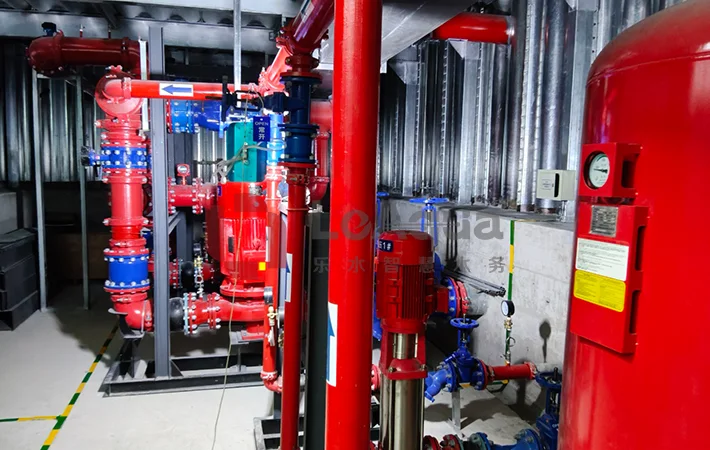
2. Connections and Tank Accessories
The tank body is rarely enough to complete an installation.
The supply scope may also need to include:
- Inlet connection
- Outlet connection
- Overflow
- Drain
- Vent
- Manhole
- Ladder
- Level indicator
- Flanges
- Inspection openings
For a project with a pre-designed pipe system, connection positions can be especially important.
The quotation should state the size, location and type of major connections where these have already been defined.
Otherwise, a buyer may discover later that additional fabrication or accessories are required.
3. Internal Equipment and Special Components
Some tanks require additional internal components.
Depending on the application, these may include:
- Anti-vortex arrangements
- Internal supports
- Suction connections
- Level sensors
- Sampling connections
- Internal piping
Fire water tanks may have different connection and suction requirements from domestic or industrial storage tanks.
The supply scope should therefore follow the approved project design instead of assuming that every tank requires the same accessories.
4. Drawings and Technical Documents
For a project-based water tank, drawings are part of the supply.
A useful technical package may include:
- General arrangement drawing
- Tank dimension drawing
- Connection details
- Foundation requirements
- Installation drawings
- Material specifications
- Component information
These documents allow the tank to be coordinated with civil works and pipework before installation starts.
For overseas projects, this becomes especially important.
A local contractor may need the foundation information before preparing the site.
The mechanical contractor may need the connection drawings before completing the pipework.
The project consultant may need the technical information before approving the equipment.
A quotation should therefore make clear which documents are included.
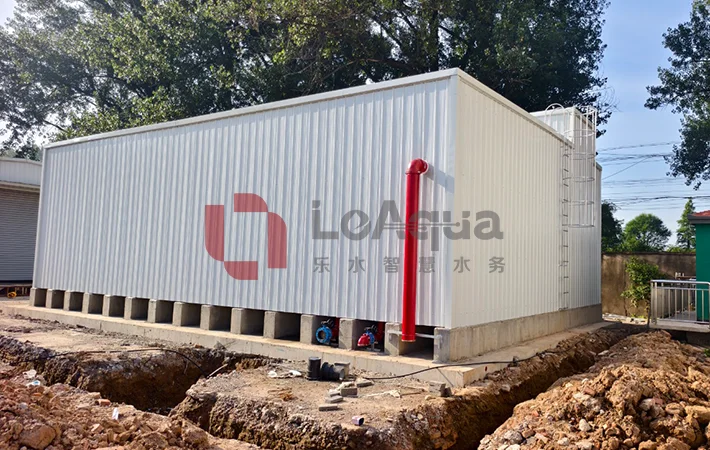
5. Installation Scope
The phrase “installation included” can mean different things.
A supplier may provide:
- Full site installation
- Site assembly
- Installation supervision
- Remote technical guidance
These are not equivalent.
For a modular tank, for example, the panels may be manufactured and shipped to the site, while a local contractor performs the actual assembly.
The supplier may only provide technical supervision.
The contract or quotation should therefore define:
Who assembles the tank?
Who provides labour and tools?
Who handles sealing and connections?
Who checks the completed tank?
Clear responsibility at this stage can prevent disputes later.
6. Testing and Inspection
Testing should also be defined in the supply scope.
Depending on the project, this may include:
- Visual inspection
- Dimensional inspection
- Material verification
- Water tightness testing
- Functional checks
- Final inspection
The exact requirements depend on the tank design and project specification.
For large international projects, it is useful to establish who is responsible for witnessing or approving the final test.
The important point is that testing should not be treated as an afterthought.
The buyer should know before the order is placed:
What will be tested, when will it be tested and who is responsible for it?
7. Documentation and Certificates
A water tank supply package may also require documentation.
Depending on the project, this can include:
- Material certificates
- Inspection records
- Test reports
- Product certificates
- Installation manuals
- Operation and maintenance documents
The exact documentation should be based on the project requirements.
For international projects, buyers should also confirm whether specific certifications or approvals are required in the destination market.
A certificate that is useful in one country may not automatically satisfy the requirements of another.
This is why compliance requirements should be stated before the quotation is finalized.
8. Delivery and Packaging
The supply scope should also define what happens before the equipment reaches the site.
For modular water tanks, this may involve:
- Panel protection
- Component packaging
- Labelling
- Container loading
- Shipping preparation
Sectional tanks are commonly transported as panels and separate components, which can make packaging and identification important during installation.
The project team should know whether the quoted price includes:
- Export packing
- Inland transportation
- Port handling
- Shipping
- Insurance
These items can otherwise create unexpected costs after the purchase order is issued.
9. What If the Tank Is Part of a Pump System?
A tank may also be supplied as part of a larger water supply package.
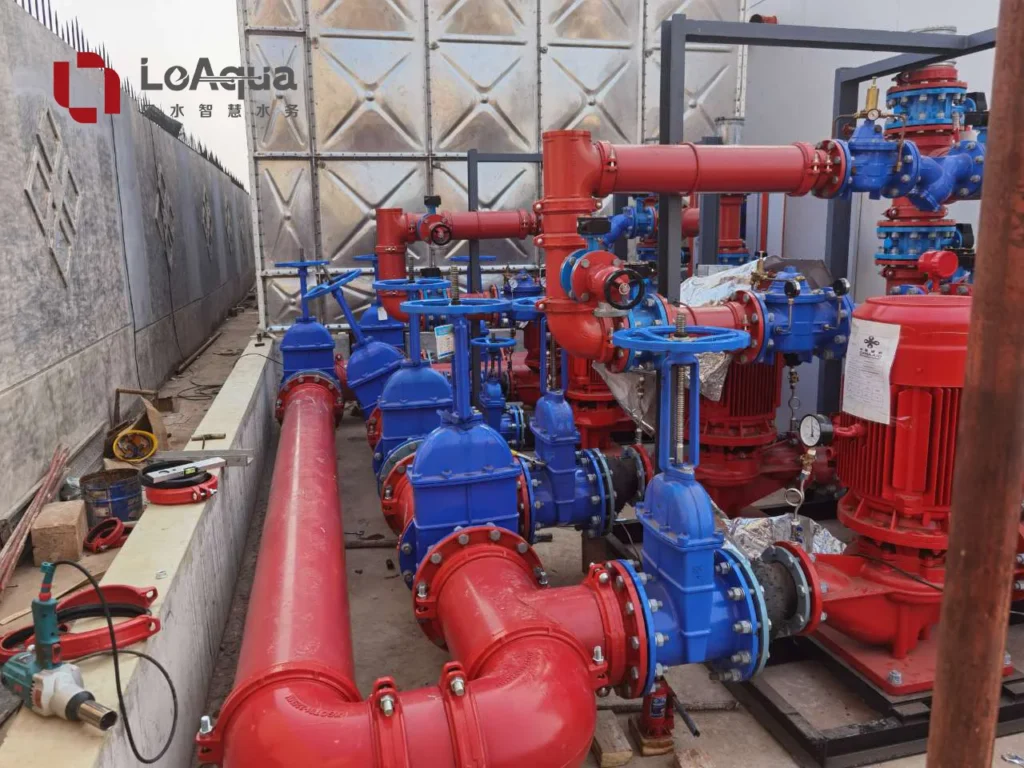
In this case, the scope may include:
- Pumps
- Control cabinet
- Valves
- Pipework
- Pressure instruments
- Level sensors
- Monitoring equipment
The project should clearly distinguish between:
Tank supply only
and:
Tank + pump system
or:
Complete integrated water supply system
This distinction is important because the responsibilities for equipment coordination, installation and commissioning can be very different.
For projects that require storage and pumping to be considered together, see 【Water Tank With Pump System 】.
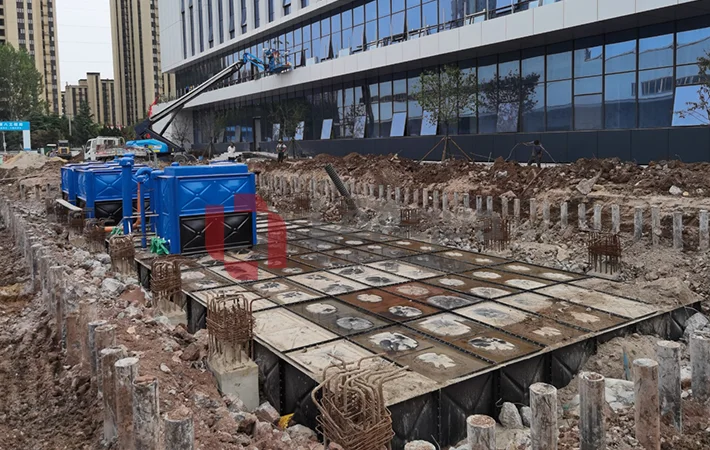
10. Make Exclusions Clear
A good supply scope does not only describe what is included.
It also states what is excluded.
Typical exclusions may include:
- Civil foundation work
- Excavation
- Building modification
- External pipework
- Electrical power supply
- Crane rental
- Local transportation
- Local labour
The exact exclusions depend on the project.
The important principle is:
An unclear exclusion can become an unexpected project cost.
For this reason, buyers should review the scope line by line before comparing supplier quotations.
Water Tank Supply Scope Checklist
Before placing an order, the buyer should confirm:
| Category | What to Check |
|---|---|
| Tank | Panels, structure and materials |
| Connections | Inlet, outlet, drain, overflow and vent |
| Accessories | Manhole, ladder, level device and others |
| Internal components | Supports, suction and special equipment |
| Drawings | GA, foundation and installation documents |
| Installation | Full installation, supervision or supply only |
| Testing | Inspection and water tightness requirements |
| Documentation | Certificates, reports and manuals |
| Delivery | Packing, shipping and transport |
| Pumps | Included or supplied separately |
| Controls | Included or excluded |
| Exclusions | Civil, electrical and other site work |
The final list should always be adjusted to the project specification.
Why a Clear Supply Scope Matters
A detailed supply scope does more than prevent misunderstandings.
It also makes supplier comparison easier.
If every manufacturer is asked to quote against the same scope, the project team can compare:
- Product
- Accessories
- Engineering
- Installation
- Testing
- Documentation
- Delivery
instead of comparing only the number at the bottom of the quotation.
This is particularly important for overseas projects, where adding a missing component after delivery can be much more expensive than including it in the original supply package.
Final Thoughts
A water tank supply scope should describe more than the tank’s capacity and material.
A complete specification should make clear:
What is supplied + how it will be installed + how it will be tested + what documents are provided + what remains the buyer’s responsibility.
This becomes even more important when the tank is part of a larger water supply system.
The clearer the scope is before the purchase order, the easier it becomes to compare suppliers and control the final project cost.
For LeAqua, this is also why a project quotation can extend beyond the tank itself when required, covering technical documentation, installation support, pumping equipment and integrated water supply requirements.
The goal is not simply to quote a tank.
It is to make sure the buyer knows exactly what the quoted scope will deliver.