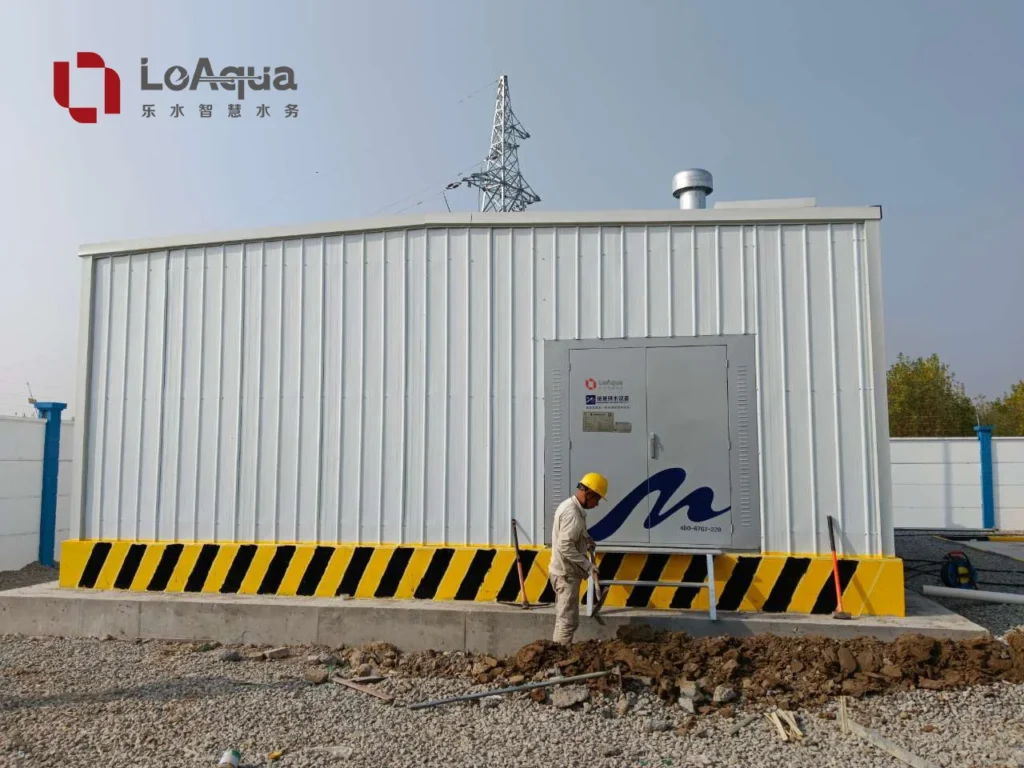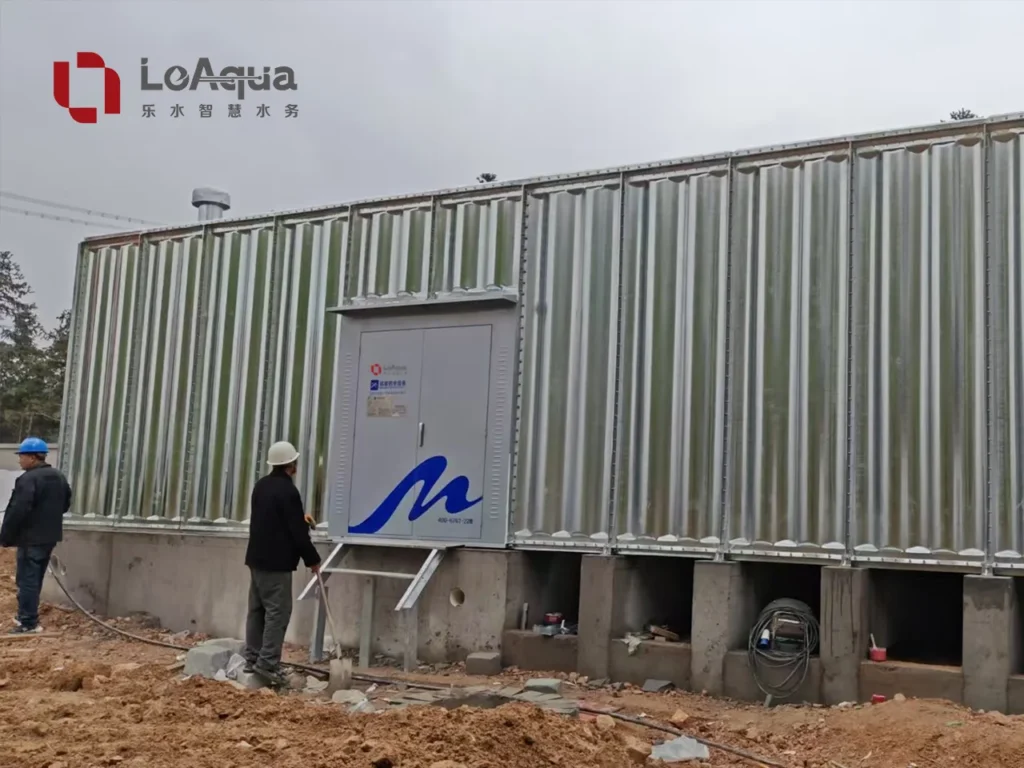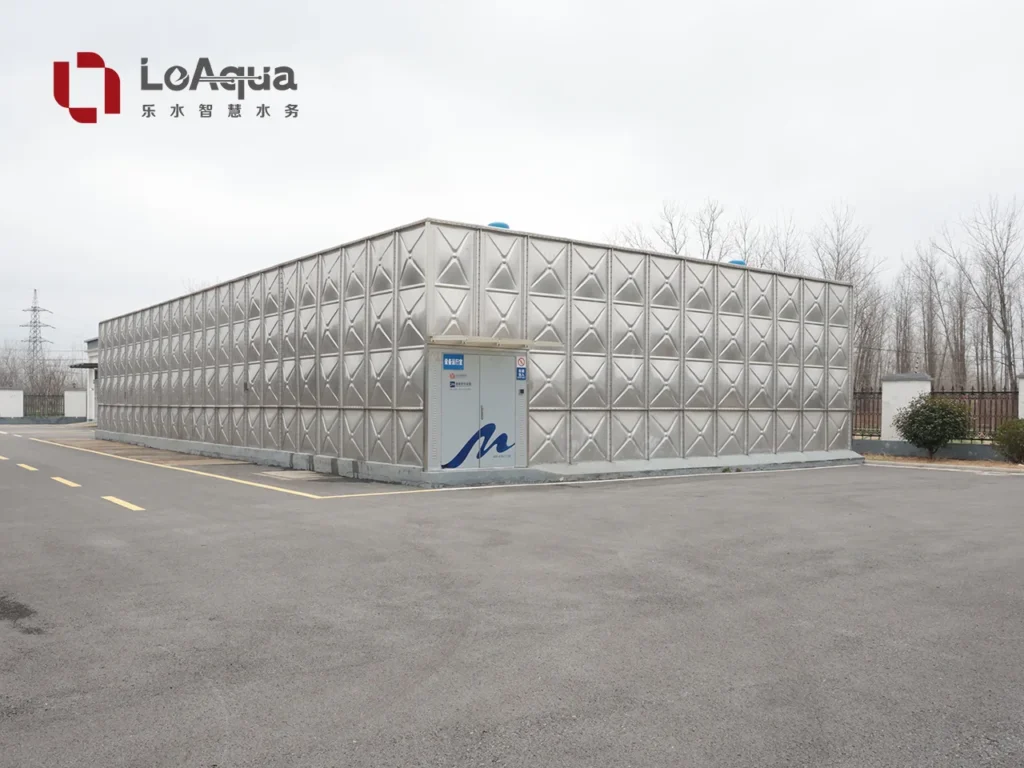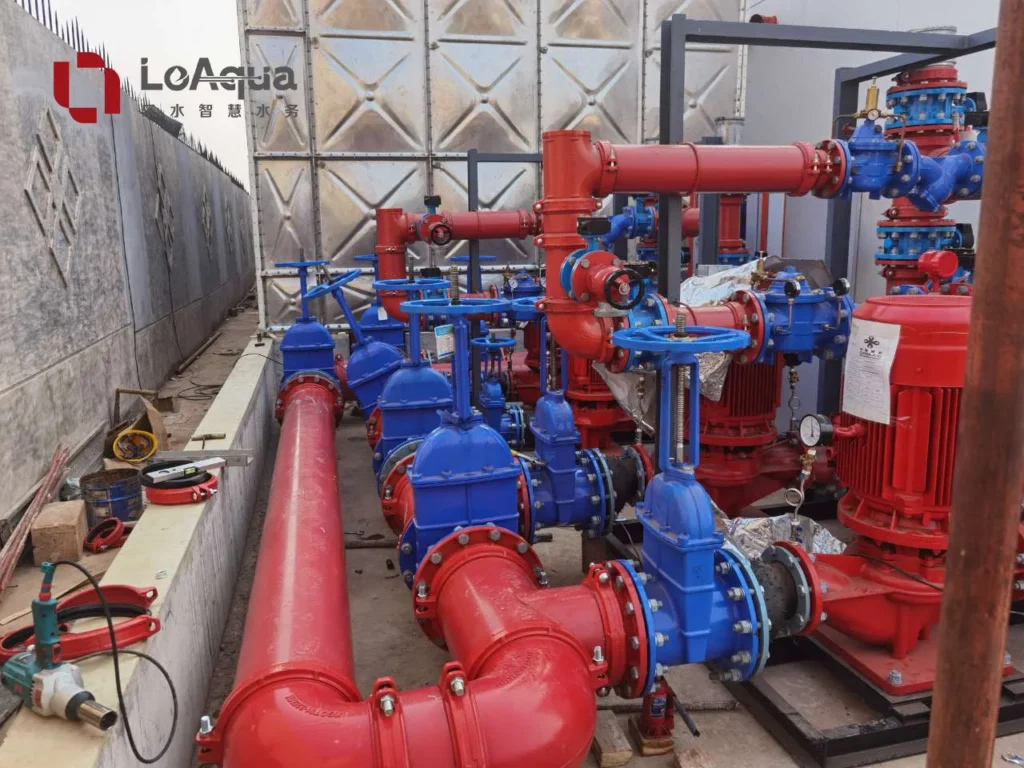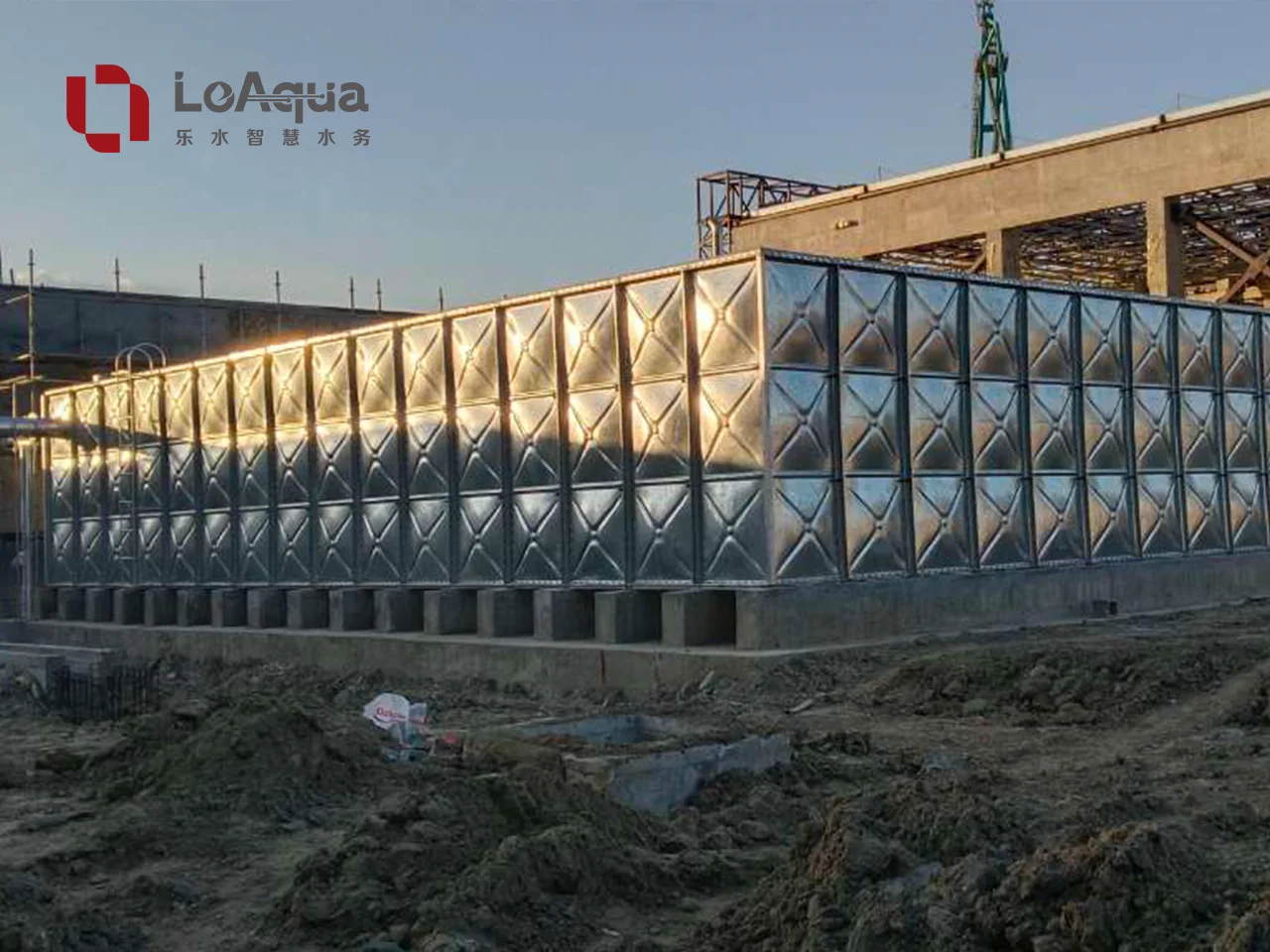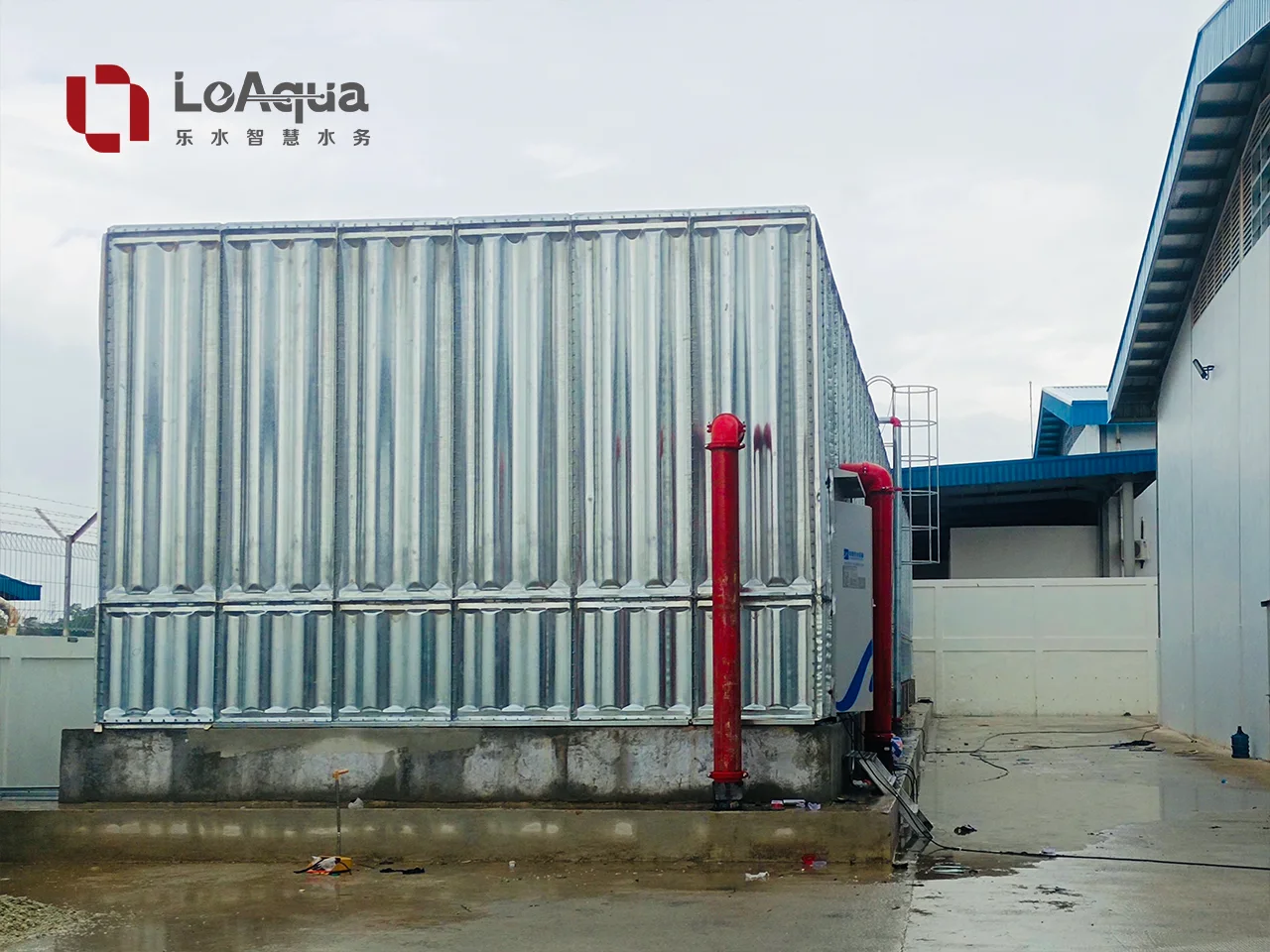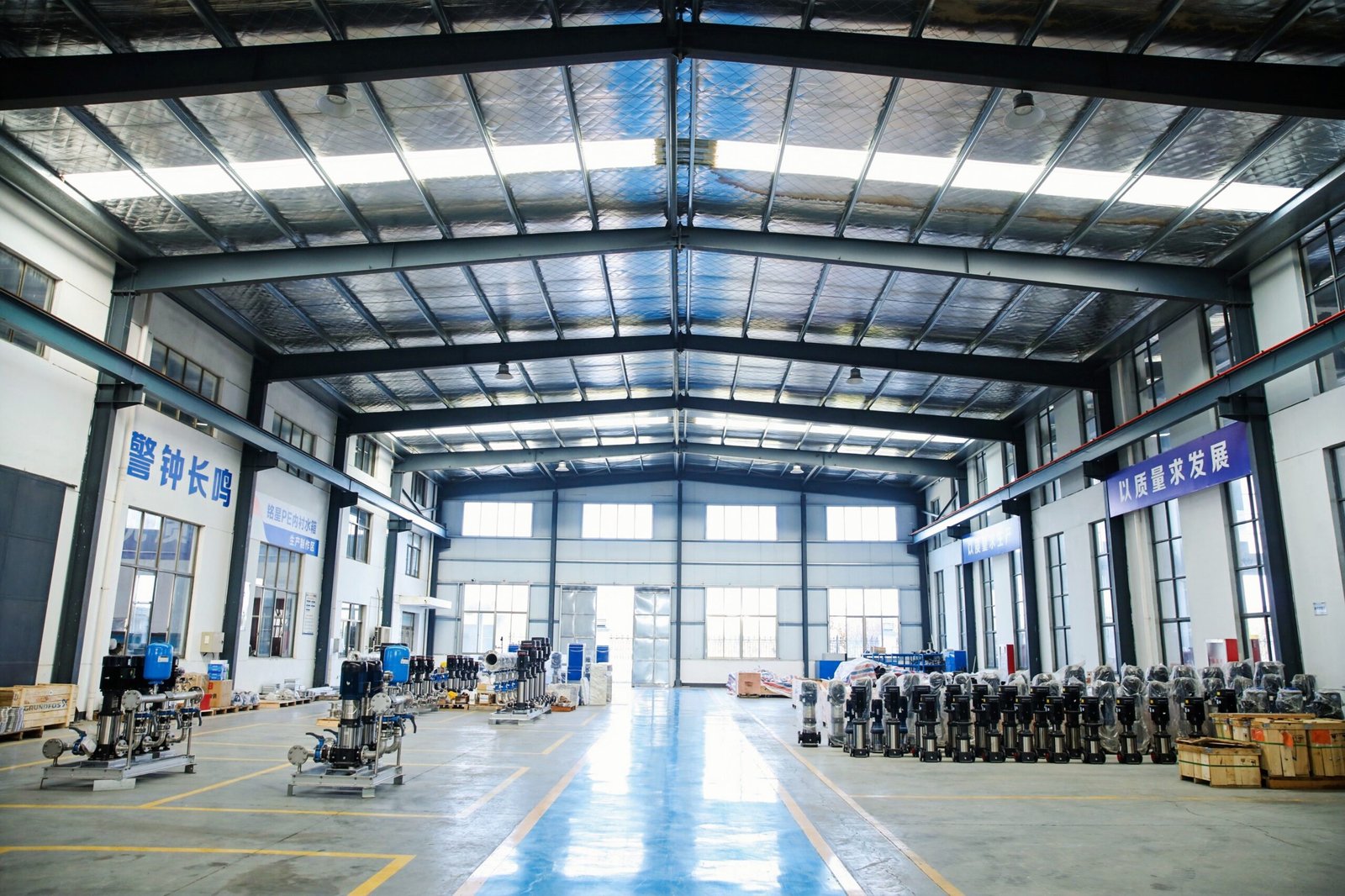
An integrated pump station is often described as a combination of a water tank, pumps, valves and a control cabinet. That description is technically correct, but it does not explain where the engineering work actually happens.
For a project engineer, the difficult part is not putting several pieces of equipment into one system. The difficult part is making the storage volume, pump duty, hydraulic layout, control logic, maintenance access and site conditions work together.
This becomes especially important when the pump station is supplied as a complete package. The water tank is no longer just a storage vessel, and the pump is no longer just a standalone machine. The two become parts of the same hydraulic system.
LeAqua approaches integrated pump station projects by combining modular water storage, different pump configurations, control equipment and monitoring functions according to the actual application rather than treating every project as the same standard package.
Start With the Duty of the Pump Station
Before selecting a pump model, an engineer needs to understand what the station is expected to do.
A building water supply system may need to maintain pressure as demand changes throughout the day. A fire protection system may require a defined flow and pressure during an emergency condition. An industrial system may need continuous circulation or process water transfer. A drainage system has a completely different duty because the pumped medium may contain solids.
These differences determine the basic architecture of the station.
Typical design information includes:
- Required flow rate
- Required pump head
- Water storage capacity
- Static elevation difference
- Pipe length and diameter
- Hydraulic losses
- Required outlet pressure
- Water temperature
- Water quality or solids content
- Operating hours
- Duty and standby requirements
- Available electrical power
- Installation environment
This is why pump selection cannot be based only on the nominal capacity of the water tank.
A 500 m³ tank, for example, does not tell an engineer whether the system needs a small booster pump, a high-head multistage pump, a large-flow double-suction pump or a submersible sewage pump.
The storage requirement and pumping duty have to be evaluated separately and then connected through the system design.
How the Water Tank Changes the Pump Station Design
When a water tank and pump system are supplied separately, the tank may be treated primarily as a storage product.
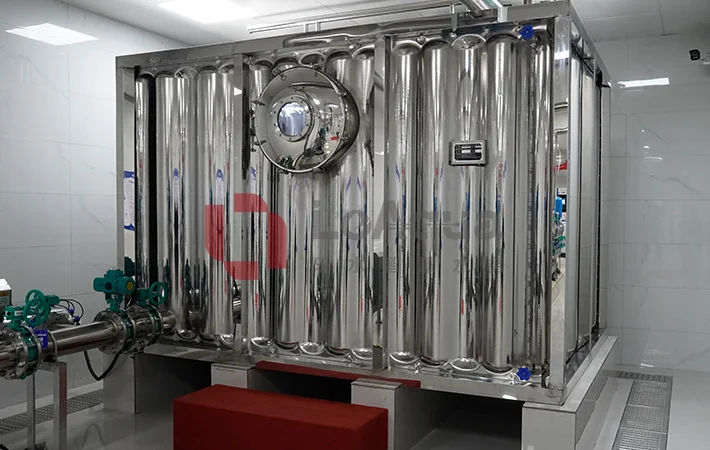
In an integrated pump station, the tank becomes part of the hydraulic arrangement.
Its dimensions influence:
- Pump suction conditions
- Available installation space
- Pipe routing
- Pump room layout
- Maintenance access
- Water level control
- Overflow and drainage arrangements
- Transportation and assembly
- Future inspection and servicing
The connection between the tank outlet and the pump suction is particularly important.
A pump may have the required flow and head on its datasheet, but poor suction conditions can still affect actual operation. Excessive pipe losses, unsuitable pipe routing, insufficient available suction head or unfavorable inlet arrangements can create problems that cannot be solved simply by increasing motor power.
This is one reason integrating the tank and pump station at the engineering stage can be useful.
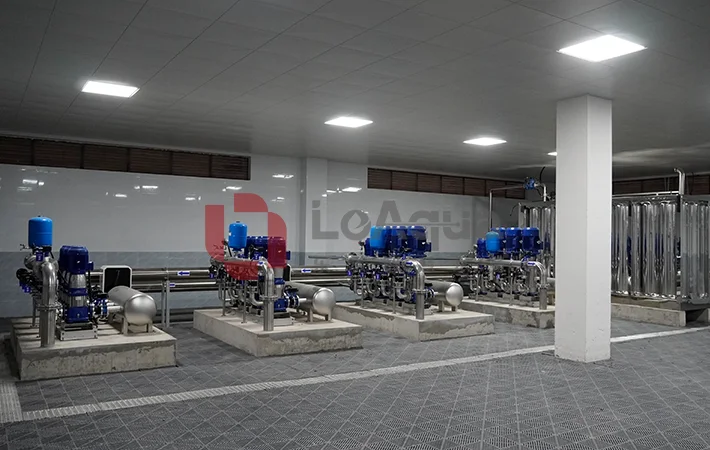
The tank dimensions, outlet arrangement, pump position and pipe layout can be considered together before the equipment reaches the construction site.
Selecting the Pump Type for the Application
There is no single pump type that is suitable for every integrated pump station.
LeAqua’s current pump range covers several operating principles, allowing the pumping equipment to be selected according to flow, head, fluid characteristics and installation conditions.
Vertical Multistage Pumps for Pressure Boosting
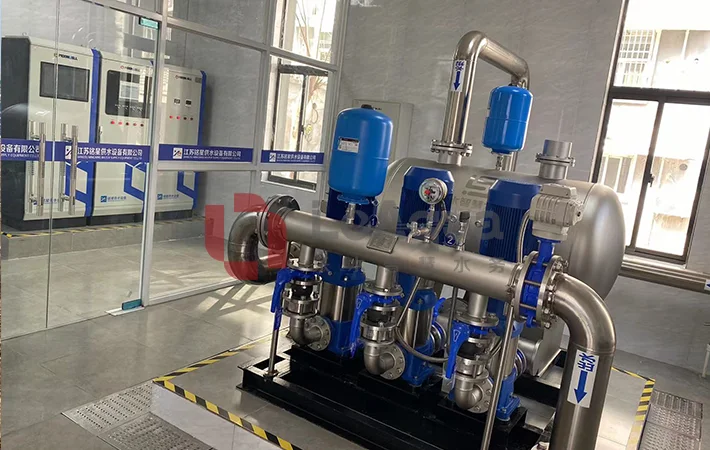
Vertical multistage centrifugal pumps are useful when a relatively compact installation needs higher pressure.
The LS/LC series listed by LeAqua covers flow ranges from approximately 0.4 to 240 m³/h, with heads up to 370 m depending on the model and number of stages. Stainless steel and cast-iron configurations are available, with options including SS304, SS316 and duplex 2205 for different operating conditions.
This type of pump can be considered for:
- High-rise buildings
- Industrial boosting
- Fire protection
- Irrigation
- Reverse osmosis
- Boiler feed
- HVAC systems
The vertical inline arrangement can also be useful when the pump room has limited floor area.
Horizontal Multistage Pumps for Compact Water Supply Systems
Horizontal multistage pumps provide another option for applications where a horizontal arrangement is more convenient.
The HL/HF/HC/HE series covers rated flows up to 28 m³/h and heads up to 56 m. The wetted components are specified in AISI 304 stainless steel, with flange or threaded connections depending on the configuration.
These pumps can be considered for:
- Industrial boosting
- Building water supply
- HVAC and cooling
- Reverse osmosis
- Irrigation
- Washing equipment
- Fire protection
The choice between vertical and horizontal arrangements should not be made simply from the appearance of the equipment. Pump head, flow, suction conditions, available space, piping arrangement and maintenance access all need to be considered.
Double-Suction Pumps for High-Flow Systems
When the required flow becomes much larger, a double-suction centrifugal pump can provide a different hydraulic solution.
LeAqua’s SBS/SBSL series uses a horizontally split casing and double-suction impeller arrangement. The listed range extends to very high flow duties, with models reaching up to 10,000 m³/h and heads up to 200 m.
This type of pump is particularly relevant to applications such as:
- Municipal water supply
- Large irrigation systems
- Power plant cooling
- Industrial circulation
- Raw water intake
- Flood control
- Large fire water systems
The split casing is also relevant to maintenance planning. The upper casing can be removed for inspection without requiring the same degree of disturbance to the connected piping and motor arrangement as some other pump configurations.
For a large integrated pump station, this can affect not only the pump selection but also the required maintenance space around the equipment.
Circulation Pumps for Closed or Recirculating Systems
Not every pump station is designed to transfer water from a storage tank to a distant user.
Some systems require continuous circulation.
LeAqua’s EC series vertical inline circulation pumps are designed for applications such as HVAC, cooling towers, district heating, boiler feed and industrial liquid circulation. The listed range extends to 750 m³/h with heads up to 55 m.
For these applications, the relationship between the pump and the rest of the circuit is different from a conventional tank-to-building booster system.
The engineer needs to consider the total circuit resistance, operating temperature, flow variation and control method rather than simply selecting the pump according to tank capacity.
Submersible Sewage Pumps for Drainage and Wastewater
A pump station that handles wastewater requires a different approach.
LeAqua’s WQW/WQ/WQF submersible sewage pump range is designed for wastewater, industrial drainage and stormwater applications. Depending on the configuration, the listed models reach flows up to 2,000 m³/h and heads up to 90 m, with solids passage up to 100 mm.
These pumps may be used for:
- Municipal wastewater
- Building drainage
- Industrial effluent
- Stormwater
- Sewage treatment plants
- Underground garages
- Flood control
In this type of system, the pump station design needs to account for solids, access for cleaning, automatic coupling or mobile installation, motor protection and the characteristics of the pumped medium.
This is fundamentally different from designing a clean-water booster station.
Pneumatic Diaphragm Pumps for Special Fluids
An integrated station does not always handle clean water.
Where the system involves chemicals, viscous liquids, coatings, wastewater or other difficult media, an air-operated double diaphragm pump can be considered.
LeAqua’s pneumatic diaphragm pump range includes PP, aluminum alloy and stainless steel configurations. The listed maximum flow is 41.7 m³/h, with discharge pressure up to 8.6 bar and self-priming capability.
Because the pump is driven by compressed air rather than a conventional electric motor, this type of equipment can be useful for certain hazardous or chemically demanding applications.
It should not be treated as a replacement for a conventional water-supply pump. Instead, it expands the range of fluids and operating environments that an engineered pumping package can address.
Why Integrating the Water Tank Can Simplify the System
A major advantage of integrating a water tank into a pump station is that the storage and pumping interfaces can be defined before installation.
Consider a conventional project where the tank, pump skid, control cabinet and pipework are supplied by separate companies.
The project team may need to coordinate:
- Tank outlet positions
- Pump suction connections
- Pipe diameters
- Flange standards
- Valve locations
- Control signals
- Sensor positions
- Cable routing
- Equipment foundations
- Maintenance clearances
Each individual component may be acceptable, but the interfaces between them can still create site problems.
With a coordinated tank-and-pump package, these interfaces can be considered as part of the same engineering scope.
That does not remove the need for site engineering. Civil works, electrical supply, external pipework and project-specific installation requirements still need to be completed by the relevant parties.
The difference is that the equipment supplied to site has already been developed around a defined system arrangement.
Factory Integration Can Be Valuable for Overseas Projects
The benefits of an integrated pump station are particularly relevant when equipment needs to be shipped to another country.
International projects may involve additional challenges such as:
- Long transportation distances
- Limited local fabrication capability
- Different site construction conditions
- Restricted installation space
- Difficult access to replacement equipment
- Language and communication barriers
- Local electrical requirements
- Different project documentation requirements
A factory-integrated package can reduce the amount of equipment coordination required after delivery.
For modular water tanks, the storage structure can be transported as components and assembled at the project site, while the pump system, control equipment and related connections can be prepared around the agreed configuration.
This approach is useful when the project location is remote or when construction time needs to be controlled carefully.
Control Equipment Is the Link Between the Hydraulic and Electrical Systems
A pump station is not complete simply because the correct pump has been selected.
The control system determines when the pump starts, when it stops, how multiple pumps operate together and how abnormal conditions are handled.
Depending on the application, the control system may monitor:
- Water level
- Flow
- Pressure
- Pump status
- Motor condition
- Fault signals
- Valve status
- Operating hours
Variable-frequency control can also be considered for systems where the demand changes over time.
For example, a building water supply system may have a large difference between low-demand and peak-demand periods. A control strategy that responds to actual pressure or flow requirements can be more appropriate than operating every pump at a fixed condition.
For fire protection systems, however, the control philosophy must follow the applicable project requirements and fire protection design rather than simply applying a general variable-speed water supply strategy.
Where IoT Monitoring Fits Into an Integrated Pump Station
IoT does not replace hydraulic engineering.
Its role is to provide better visibility into the equipment after the station has been commissioned.
LeAqua’s integrated pump station architecture includes equipment-level sensors, edge communication, network transmission, centralized monitoring and user-facing dashboards.
The potential information flow is:
Equipment → Sensors → Edge Device → Network → Monitoring Platform → Operator
This can allow operators to view information such as pressure, flow, vibration, pump status and alarms without relying entirely on local inspection.
For a remote industrial facility or infrastructure project, this can be useful because maintenance personnel may not be permanently located beside the pump station.
The most useful monitoring strategy is therefore not simply to collect as much data as possible. The data should be connected to an operating decision, such as an alarm, inspection requirement, maintenance action or performance review.
A Practical Way to Configure an Integrated Pump Station
For a new project, engineers can approach the configuration in several stages.
1. Define the water demand
Identify whether the system is intended for domestic water, fire protection, industrial use, circulation, drainage or a combination of functions.
2. Determine the storage requirement
Calculate the required water volume based on the applicable project conditions rather than selecting the tank capacity from the pump size.
3. Establish the hydraulic duty
Determine the required flow and pump head, including elevation difference, pipe losses and required pressure at the point of use.
4. Select the pump principle
Choose between multistage, end-suction, double-suction, circulation, submersible or pneumatic diaphragm pumping according to the actual duty and fluid.
5. Develop the tank-pump interface
Check tank outlet location, suction pipe arrangement, available suction conditions, valves, strainers and maintenance access.
6. Define the control sequence
Determine how pumps start and stop, how standby equipment is used, what signals are monitored and how faults are handled.
7. Plan installation and maintenance
The final arrangement should leave sufficient access for inspection, pump removal, valve operation, electrical maintenance and tank inspection.
8. Prepare the project documentation
An integrated package may require equipment schedules, pump curves, tank drawings, connection drawings, electrical information, control logic and commissioning documentation.
This information is particularly important when the equipment will be installed by a contractor who was not involved in the original design.
Integrated Pump Station or Separate Equipment?
An integrated pump station is not automatically the best choice for every project.
Separate procurement can make sense when the project already has:
- An established pump-room design
- A local mechanical contractor
- A specified pump manufacturer
- Existing tanks or reservoirs
- A standardized control system
- Strong local installation capability
An integrated solution becomes more attractive when the project owner or contractor wants closer coordination between storage, pumping and controls.
It can be especially useful for:
- Remote infrastructure
- Industrial facilities
- Commercial developments
- Fire water systems
- Renewable energy projects
- Regional water supply
- Projects with limited installation space
- Overseas projects requiring factory coordination
The decision should therefore be based on the total project scope rather than the purchase price of the individual pump.
The Real Value of an Integrated Pump Station
The value of an integrated pump station is not simply that several pieces of equipment are supplied by one company.
The more important benefit is the coordination between them.
A water tank determines where water is stored.
The hydraulic design determines how that water can be delivered.
The pump determines how flow and pressure are generated.
The control system determines how the equipment responds to changing conditions.
Monitoring provides information about what is happening after commissioning.
When these elements are designed around the same project requirements, the result is a more coherent water supply system.
For LeAqua, this is also why water tank manufacturing and pump system integration are treated as connected parts of the same engineering scope. The appropriate solution may use a stainless steel modular tank, a different tank structure, a vertical multistage pump, a high-flow double-suction pump, a circulation pump, a sewage pump or another configuration depending on the application.
The starting point is not a predefined package.
It is the project requirement.
Conclusion
An integrated pump station should be evaluated as a complete water system rather than as a collection of individual products.
The water tank, pump, piping, valves, controls and monitoring equipment each have a different function, but their interfaces determine how the finished system performs.
For this reason, an effective integrated pump station design begins with the required duty and works backward toward the equipment selection.
The right question is not simply:
“Which pump should we buy?”
It is:
“How should storage, pumping, control and monitoring be configured to meet the actual operating conditions of the project?”
That approach gives engineers more flexibility when dealing with different capacities, pump duties, installation environments and water applications, while also making the final system easier to coordinate from design through commissioning.
For projects requiring a water tank and pumping system as one coordinated package, LeAqua can develop the tank configuration, pump selection and system arrangement around the project’s technical requirements.