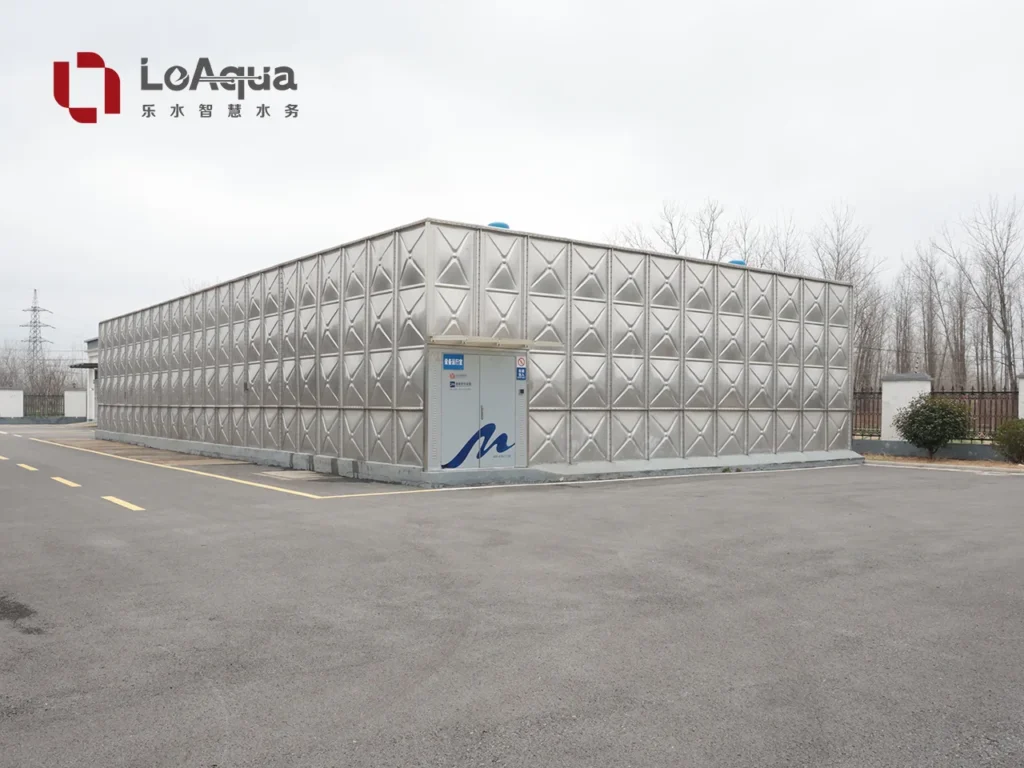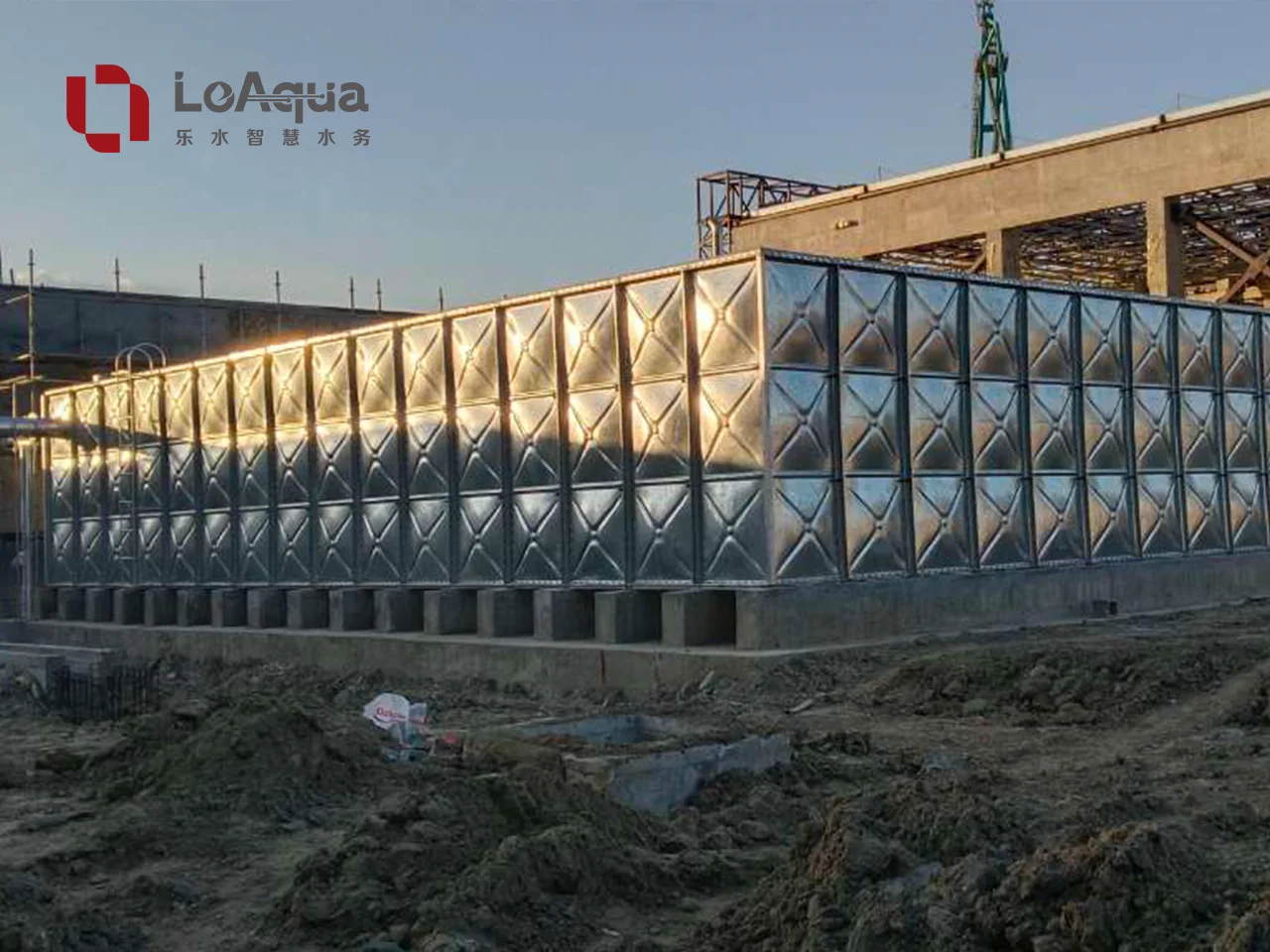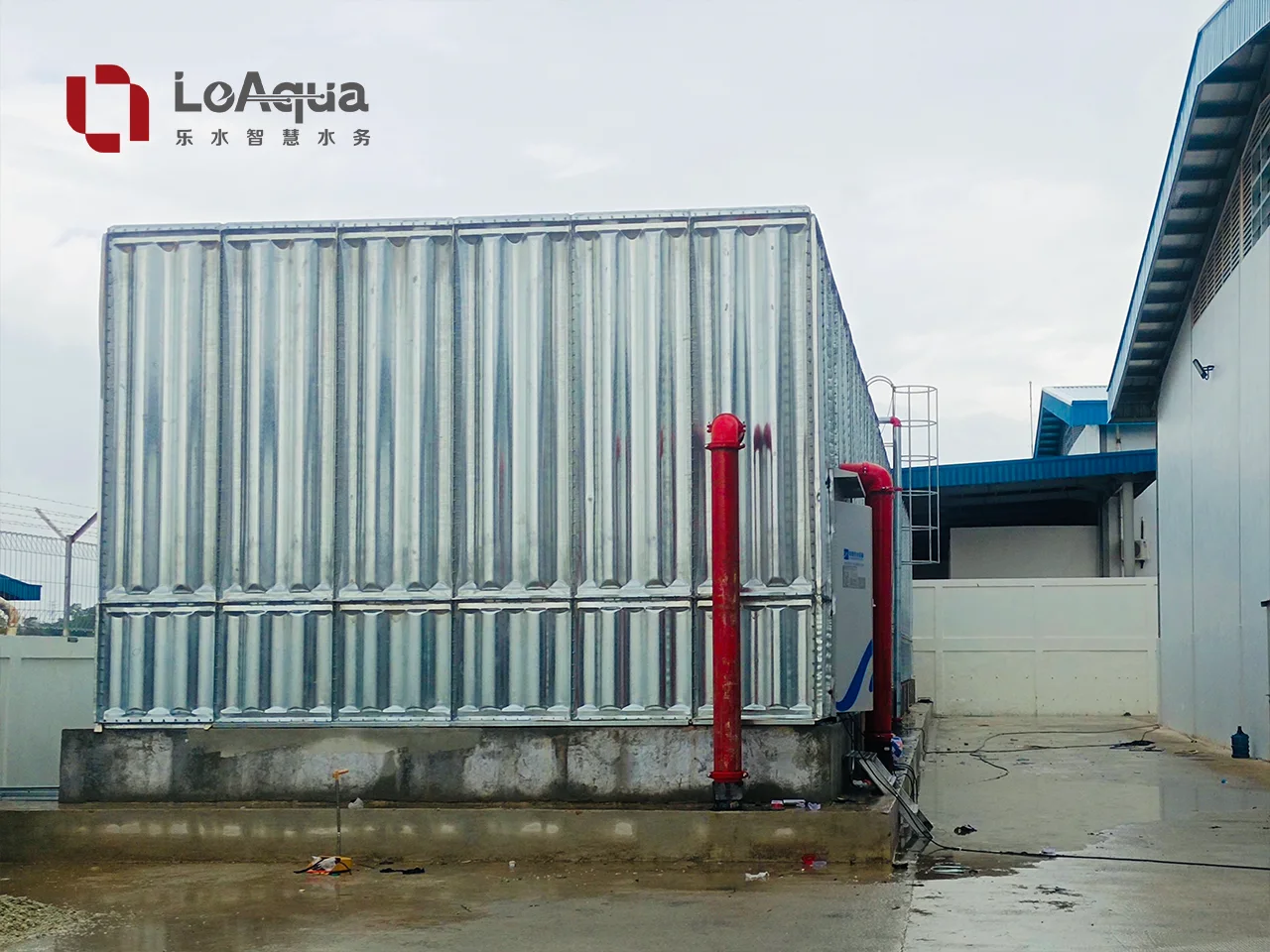
A potable water tank stores treated water for drinking, food preparation, washing and other domestic or building uses. Selecting one is not only a question of nominal capacity. The tank must protect water quality, provide the required effective volume, fit the building water supply system and remain maintainable throughout its service life.
Quick answer: Choose a potable water tank by confirming the demand profile, effective storage volume, water-contact materials, turnover, access, cleaning and disinfection method, connections, booster-pump interface and project approval requirements. A tank can be structurally strong and still be unsuitable for potable water if its internal materials or maintenance arrangement are not accepted.
This guide complements LeAqua’s Potable Water Tanks page. It focuses on the decisions buyers and project engineers should make before comparing quotations.
Potable and portable are different words
Potable means suitable for drinking or domestic water use. Portable means designed to be moved or deployed temporarily. A potable water tank may be fixed or modular, and a portable tank may hold water that is not suitable for drinking.
This distinction matters when searching, requesting quotations and preparing technical documents. If the project requires drinking or domestic supply, use “potable water tank”, “drinking water storage tank” or “domestic water supply tank”. Do not use “portable water tank” unless movement or temporary deployment is the actual requirement.
1. Start with the building water supply duty
Before selecting a tank, describe how the stored water will be used. A residential building, hotel, hospital, school, factory or public facility may have different peak demand, occupancy, operating hours and continuity requirements.
- What building or process uses will the tank serve?
- What are the normal and peak demand periods?
- Is the tank supplying fixtures directly, feeding a booster set or supporting a larger domestic water system?
- What incoming supply is available, and how reliable is the refill arrangement?
- What minimum service level must remain available during cleaning or maintenance?
- Does the project require separate domestic, process or fire-water storage?
The tank should follow the demand profile and building water supply design. A general building area or population estimate may be an input, but it is not a complete tank specification.
2. Confirm effective volume instead of comparing nominal size only
Nominal volume is the geometric capacity shown in a catalogue. Effective volume is the amount that can actually be used between the approved operating levels and the limits of the inlet, outlet, pump and control arrangement.
Ask each supplier to show:
- Nominal volume and effective operating volume
- Normal high and low water levels
- Minimum level required for the outlet or booster-pump suction
- Freeboard, overflow and drain arrangements
- Refill assumptions and recovery time
- Any volume lost to internal partitions, sediment zones or unusable geometry
This prevents two quotations with the same advertised capacity from being compared as if they provide the same usable water reserve. For divided tanks, also check the volume available while one compartment is isolated. The article Two-Compartment Water Tanks: Cleaning and Water Supply explains why partition design and operating procedure matter.
3. Plan turnover and hygiene, not only storage
Potable water storage needs a water-quality and maintenance plan. A tank that is much larger than the actual demand may hold water for longer than intended, while a tank that is too small may fail to provide the required continuity during refill or maintenance.
Review the relationship between:
- Daily and peak demand
- Refill rate and incoming supply reliability
- Tank volume and expected turnover
- Water temperature and the site environment
- Inlet and outlet arrangement
- Cleaning, inspection and disinfection intervals
Where two compartments are used, each section should be included in normal operation when the water-management plan requires regular turnover. Keeping one compartment isolated and full for long periods can create a different maintenance and water-quality condition from the one shown in the design drawing.
4. Select water-contact materials for the project
Stainless steel, GRP/FRP and composite sectional tanks may all be evaluated for potable water storage. The material name alone is not enough. Review the exact grade, resin or lining, seals, fasteners, internal surfaces, cleaning method and project acceptance route.
| Option | Review before approval |
|---|---|
| Stainless steel | Grade, welded or bolted construction, internal finish, water chemistry, fabrication details, seals and inspection access |
| GRP / FRP | Water-contact resin or liner, temperature limits, panel system, supports, seals and documented suitability for the intended water service |
| Composite sectional tank | Water-contact layer, panel build-up, external protection, joint details, structural configuration and supporting documents |
Use the product pages for stainless steel water tanks, GRP/FRP water tanks and composite water tanks as starting points, then request the documents required for the actual project.
5. Decide between a standalone tank and a coordinated supply package
A potable water tank can be supplied as a tank package or coordinated with booster pumps, controls and the building water supply system. The correct scope depends on how the project has divided design and procurement responsibility.
| Configuration | May suit | Confirm before quotation |
|---|---|---|
| Standalone potable water tank | The booster set, plant room and building pipework are specified separately | Inlet and outlet levels, pump suction, foundation, access, overflow, drain, vent and supplier interfaces |
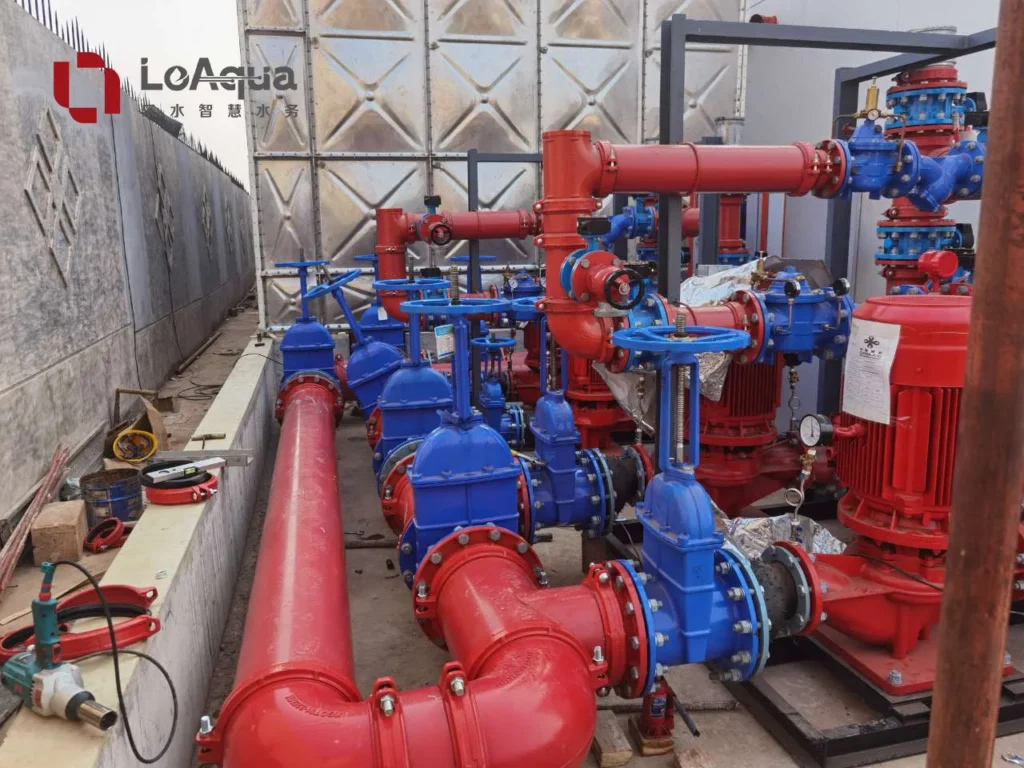
| Tank and building water supply package | Storage, pressure boosting and controls need to fit one coordinated layout | Flow, head, duty and standby pumps, controls, power, service access, testing and site responsibilities |
An integrated package does not automatically include building pipework, electrical work, civil works, cleaning, disinfection or commissioning. List each item as included, excluded or supplied by others. The related article How to Select the Right Pump for an Integrated Pump Station can help frame the pump interface questions.
6. Coordinate connections, access and maintenance
Potable water tank performance depends on how the tank is connected and maintained. A suitable shell with poorly planned connections can create dead zones, difficult cleaning or an impractical maintenance procedure.
Review the following on the general arrangement and piping drawings:
- Inlet, outlet, overflow, drain and vent positions
- Water levels and the relationship between inlet and outlet
- Access covers, ladders, internal inspection and safe working space
- Drainage and wash-down route
- Isolation valves and bypass arrangement
- Pipe supports, flexible connections and movement allowance
- Space for cleaning equipment and component replacement
For connection details, see Water Tank Connections: Inlet, Outlet, Overflow, Drain and Vent Specification Guide. The connections should be reviewed together with the cleaning and disinfection procedure, not after the tank has already been ordered.
7. Check documents and approval requirements
Potable water approval is project- and market-specific. Before manufacturing, identify the water-contact, building-plumbing, hygiene, inspection and documentation requirements that apply at the destination.
A useful document package may include:
- General arrangement and connection drawings
- Material grades and water-contact component information
- Seal, liner, resin and fastener data where applicable
- Effective volume and operating-level information
- Foundation, support and load data
- Inspection and test records included in the supply scope
- Cleaning, disinfection and maintenance instructions
- Clear identification of certificates, approvals or test reports that are actually required
- Exclusions for installation, civil works, pipework, power and commissioning
The existing article Potable Water Tank Procurement: Certification and Document Checklist focuses specifically on document verification. It should be used after the project has identified the intended potable-water service and the supplier has proposed a defined configuration.
Common potable water tank selection mistakes
Choosing by nominal volume alone
Nominal capacity does not show the usable volume, operating levels, refill assumptions or maintenance reserve. Require effective-volume information.
Assuming stainless steel automatically means potable approval
Stainless steel is a material category, not a complete approval statement. Grade, fabrication, seals, internal components and project requirements still need review.
Ignoring turnover and cleaning
Storage, demand, refill and maintenance must be considered together. A tank that cannot be isolated, drained or cleaned as planned creates an operational problem even when its capacity is correct.
Mixing potable and fire-water requirements without a defined design
Domestic water and fire water may have different demand, hygiene, refill, controls and approval requirements. If a project combines or shares infrastructure, the responsible designer must define how the systems remain compliant and maintainable.
Comparing different supply boundaries
A tank-only quotation is not directly comparable with a package that includes pumps, controls, transport, installation, testing or commissioning. Write the boundary into the request for quotation.
Frequently asked questions
What is a potable water tank?
A potable water tank stores treated water intended for drinking, food preparation, washing or other domestic and building uses. Its water-contact materials, construction and maintenance arrangement must be suitable for the project requirements.
How do I choose the right potable water tank size?
Start with the building demand profile, refill arrangement, required continuity and maintenance scenario. Then establish the effective operating volume after accounting for levels, outlets, pump suction, freeboard and unusable zones.
Is a stainless steel tank always the best potable water tank?
No. Stainless steel may be suitable for many projects, but the correct choice depends on the exact construction, water-contact components, water conditions, maintenance plan and project approval route. GRP/FRP and composite sectional options may also be evaluated.
Should the potable water tank include booster pumps?
It depends on the procurement boundary and building water supply design. A standalone tank may suit a project with an independently designed booster set. A coordinated package may be useful when storage, pressure boosting and controls need to fit one layout.
What documents should I request from a supplier?
Request drawings, effective volume, material and water-contact information, seals or liner data, foundation and load data, inspection records, cleaning instructions and a clear list of included and excluded work. The required certificates and approvals depend on the destination and project specification.
Conclusion
A potable water tank should be selected as part of a hygienic and maintainable building water supply system. Define the demand, effective volume, turnover, water-contact materials, connections, cleaning method, booster-pump interface and approval route before comparing suppliers.
To compare the application and supply options, visit Potable Water Tanks or send the project information through LeAqua’s contact page.