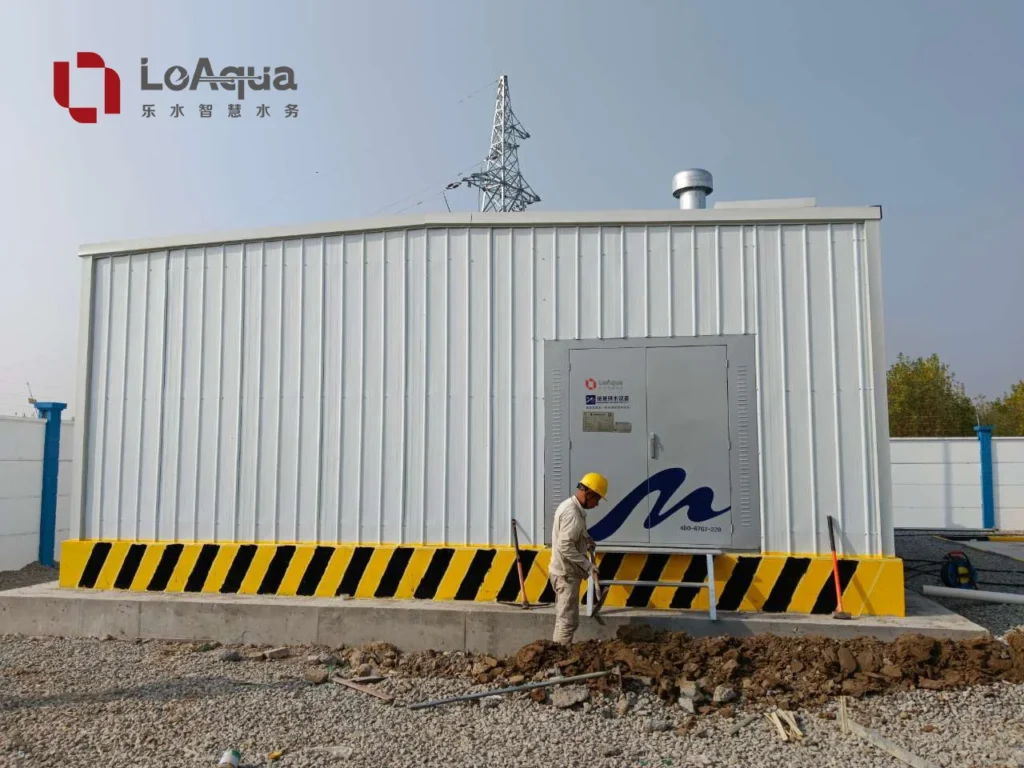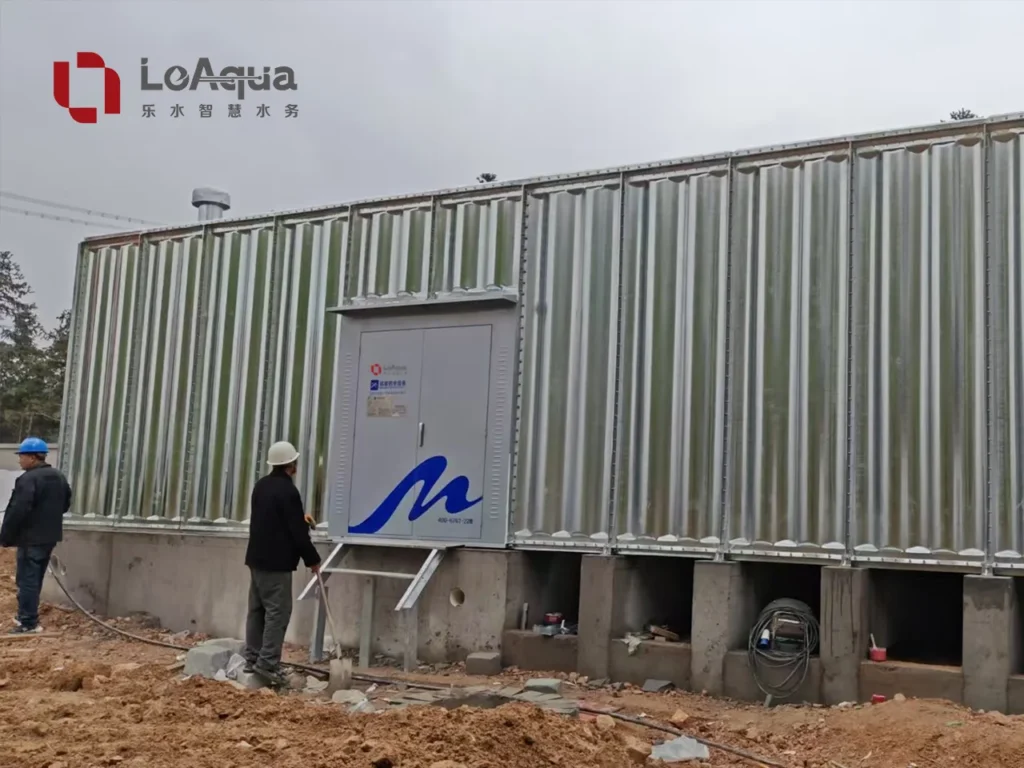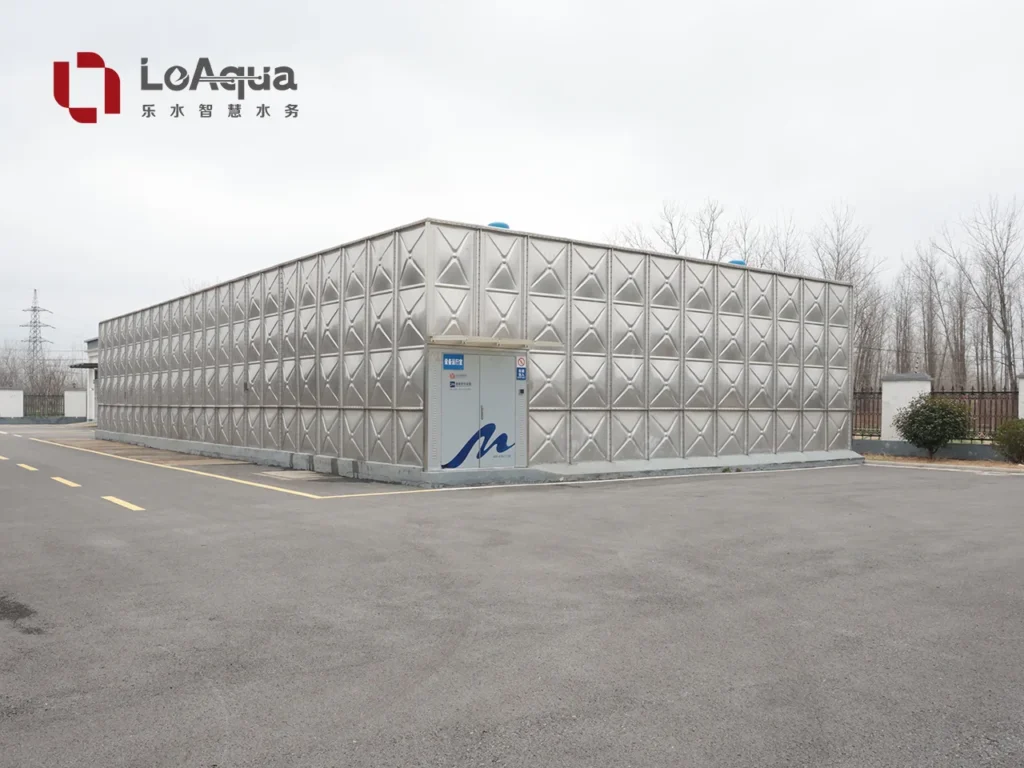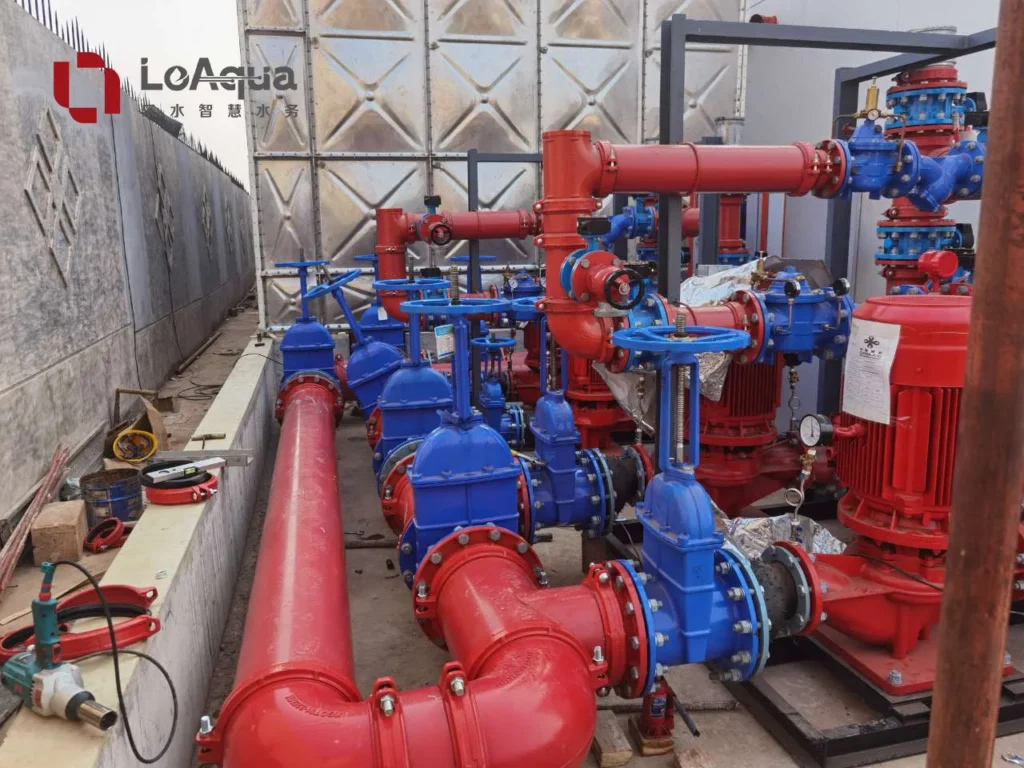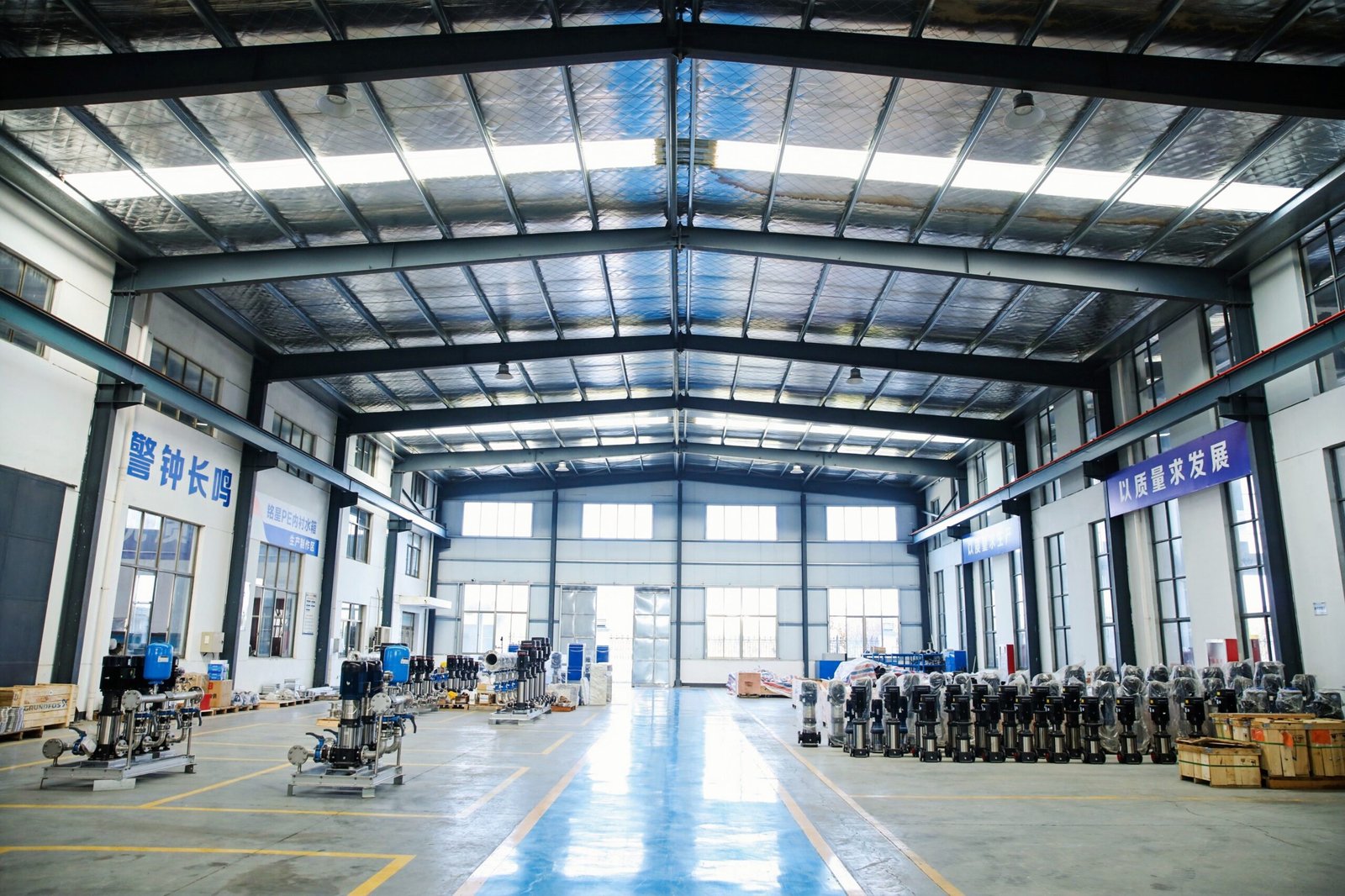
A wastewater storage tank is selected from the wastewater duty, not from capacity alone. The project team needs to understand what the tank will receive, how long the liquid will remain in storage, what solids and chemicals are present, and how the tank will connect to the downstream process.
Quick answer: Choose a wastewater storage tank by defining the storage duty, wastewater characteristics, effective operating volume, material or lining compatibility, access and ventilation needs, level control, and the boundary between tank supply and wastewater treatment. A storage tank is not automatically a treatment system.
This guide complements LeAqua’s Wastewater Storage Tanks page, which covers tank-only and coordinated storage configurations.
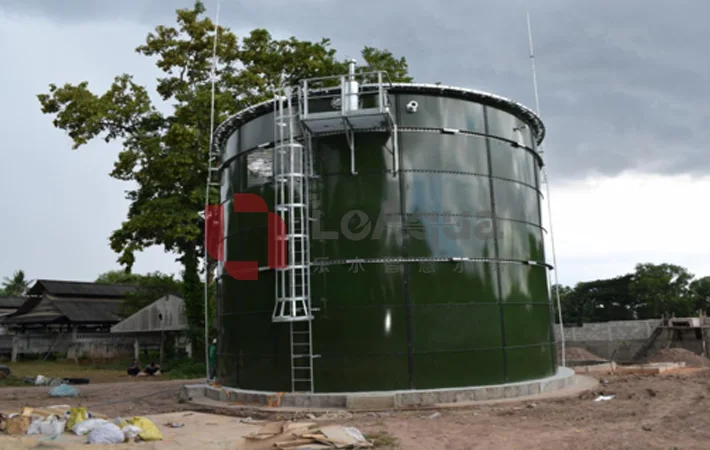
What does a wastewater storage tank do?
A wastewater storage tank can collect, buffer or equalize wastewater before a defined downstream step such as transfer, treatment, discharge or reuse. The exact duty matters because the same geometric tank volume may perform very differently under short-term collection, flow equalization or longer retention.
The tank should be specified together with the operating method. Inlet and outlet levels, mixing or solids management, overflow protection, ventilation, cleaning access and level controls can affect whether the proposed configuration works in practice.
Wastewater storage should be separated from process design. A tank supplier may coordinate storage and selected transfer interfaces, while the downstream treatment process, discharge responsibility and environmental approvals may belong to another party. Define that boundary before asking for a package price.
1. Classify the storage duty before choosing a tank
Start by writing one clear sentence describing what the tank must do. Common duties include:
- Collection before transfer to a treatment or discharge point
- Equalization of variable flow or concentration before a downstream process
- Buffer storage between process stages
- Temporary storage during maintenance, replacement or abnormal operation
- Storage for a specified reuse or recovery process
These duties can require different operating levels, turnover assumptions, access arrangements and control logic. “Wastewater tank” is a category; it is not a complete design brief.
2. Record the wastewater characteristics
Material selection should follow the liquid that will be stored and the way the tank will operate. At the enquiry stage, provide the most representative available information rather than describing the stream only as “industrial wastewater” or “sewage”.
- Wastewater source and process description
- pH range and temperature range
- Expected chemical exposure and corrosive constituents
- Solids, sludge, fibres, grease or sediment content
- Normal and peak flow
- Required retention or equalization time
- Cleaning chemicals and maintenance method
- Odour, ventilation and worker-safety constraints
When the analysis is incomplete, identify which values are measured, which are design assumptions and which still need confirmation. A technically polished tank quotation cannot remove uncertainty in the wastewater data.
3. Size the tank by effective operating volume
Nominal volume is the tank’s geometric capacity. Effective operating volume is the portion available between the approved working levels and operating limits. The project design should identify those levels rather than treating the entire shell volume as usable.
Ask the supplier to show:
- Normal low and high operating levels
- Alarm and shutdown levels
- Overflow and emergency drainage arrangements
- Freeboard assumptions and access above the liquid level
- Required volume for collection, equalization or temporary storage
- Whether solids accumulation or unusable zones reduce the effective volume
For a broader tank procurement framework, see the Water Tank Selection Guide. Wastewater projects need an additional compatibility and process review on top of the general tank selection questions.
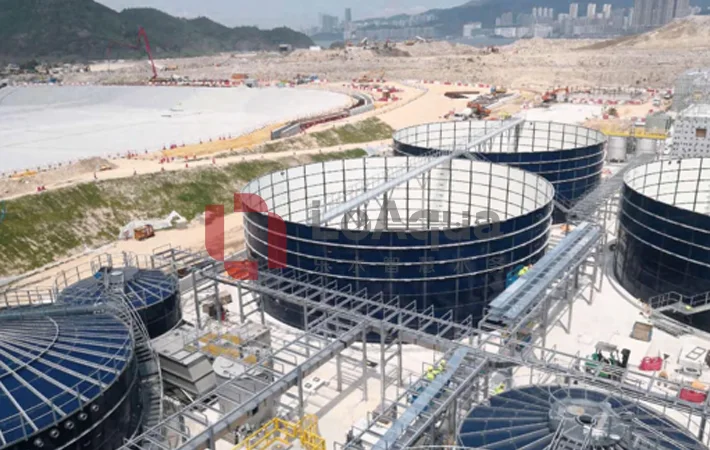
4. Compare material and construction options against the duty
Stainless steel, GRP/FRP and composite sectional tanks may all be considered for wastewater storage, but no material is universally correct. The exact grade, resin or lining, seal, fastener, panel build-up and external protection must be reviewed against the wastewater characteristics and temperature.
| Option | Review points |
|---|---|
| Stainless steel | Grade, weld or bolted construction, water chemistry, crevices, fabrication details, cleaning method and maintenance access |
| GRP / FRP | Resin or lining compatibility, temperature limits, panel system, supports, seals, solids exposure and inspection requirements |
| Composite sectional tank | Water-contact layer, panel build-up, external protection, structural configuration and compatibility evidence |
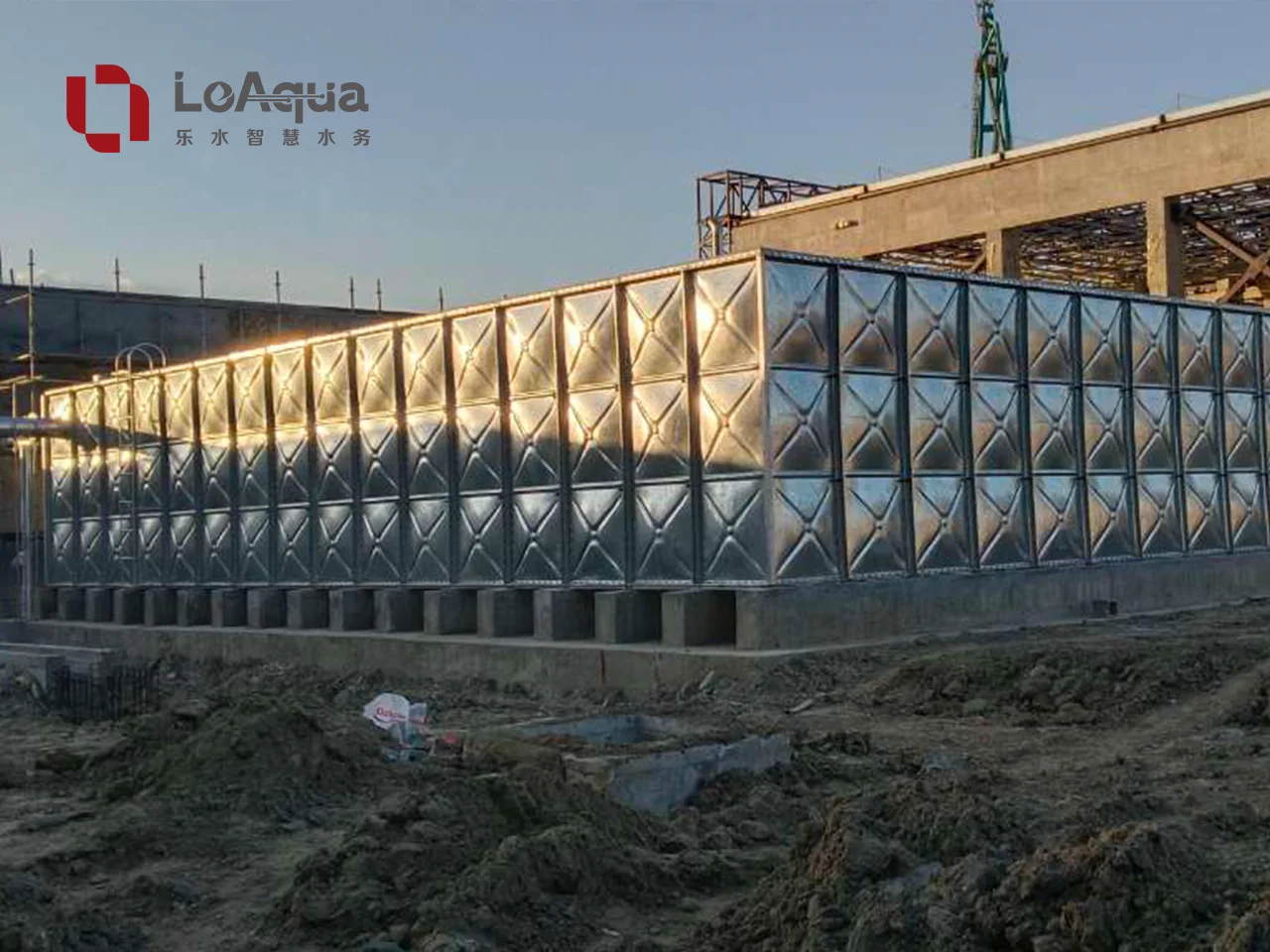
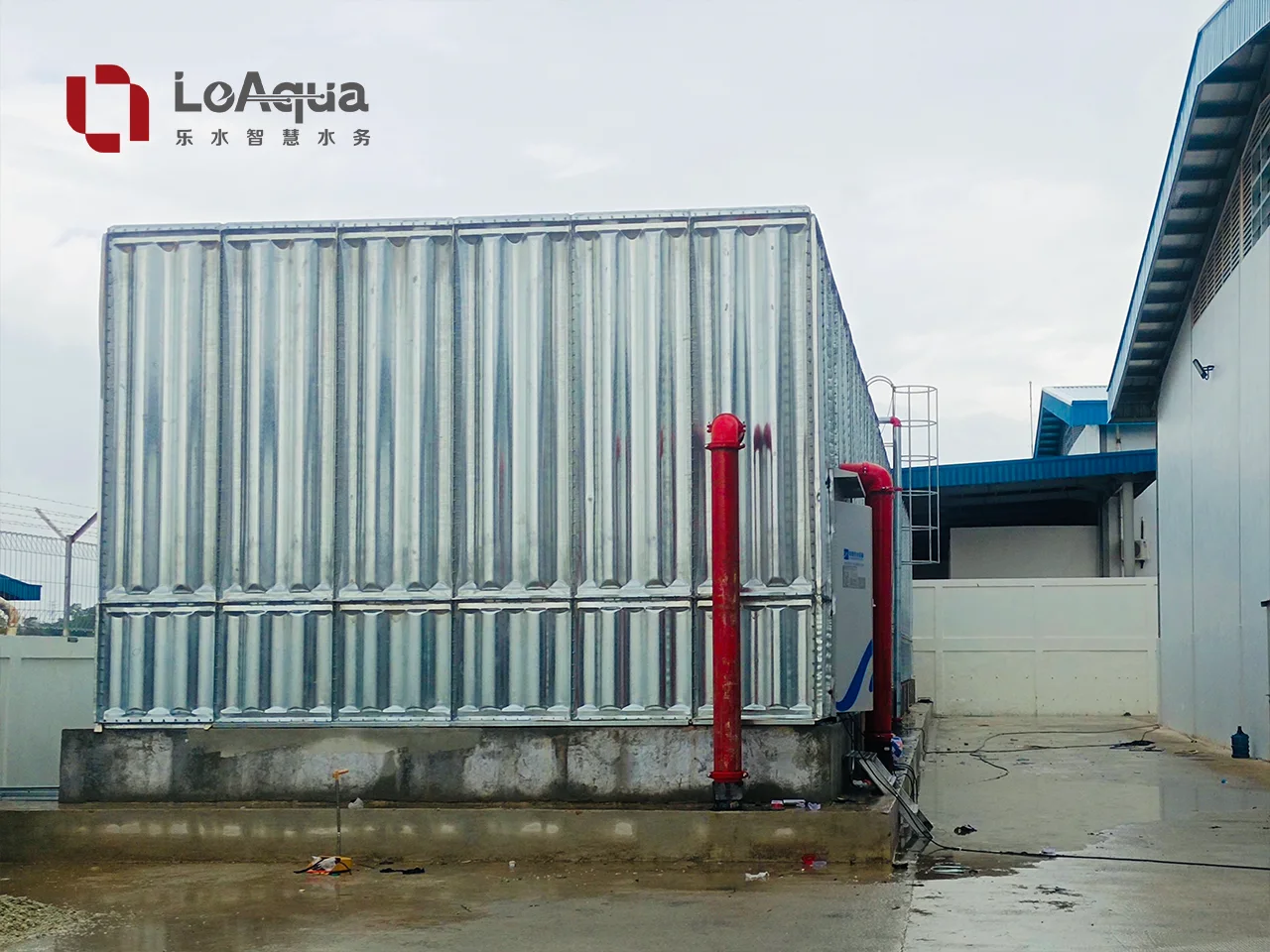
Construction form is also a separate choice. A sectional tank can help with access and site assembly in some projects, while a welded or other configured tank may suit a different site or duty. The correct comparison is between complete proposed configurations, not material labels alone. Relevant product options are listed on LeAqua’s stainless steel, GRP/FRP and composite water tank pages.
5. Decide how much process equipment belongs in the package
Some projects need only the tank. Others need the tank coordinated with transfer pumps, mixers, level instruments or a downstream process interface. The scope should be stated in terms of the operating duty.
| Configuration | May suit | Confirm before quotation |
|---|---|---|
| Standalone wastewater storage tank | The transfer system and treatment process are designed separately | Connection levels, overflow, drain, vent, solids handling, foundation and the responsibility of the pump supplier |
| Tank and transfer interface package | Storage, pumps and level controls need to be coordinated in one layout | Flow, head, redundancy, controls, power, ventilation, access and which downstream equipment is excluded |
Calling a package “integrated” does not automatically include wastewater treatment, external pipework, civil work, power, cleaning or commissioning. List each item as included, excluded or supplied by others.
6. Plan access, ventilation and solids management
Wastewater storage creates maintenance requirements that are easy to miss on a general arrangement drawing. The team should confirm how operators will inspect, clean, isolate and return the tank to service.
- Safe access to roof, manways, valves and instruments
- Ventilation appropriate to the liquid and operating environment
- Drainage and wash-down arrangements
- Solids, sludge, grease or sediment removal method
- Level alarms and overflow response
- Isolation points for tank, pumps and downstream equipment
- Confined-space and hazardous-atmosphere controls where applicable
The need for a safety review depends on the wastewater and site. Potentially hazardous gases and oxygen-deficient atmospheres may be relevant in some wastewater environments, so the operating procedure should be reviewed by the responsible safety team rather than assumed from the tank material.
7. Confirm environmental and project acceptance requirements
Wastewater storage is governed by the project’s process design, environmental requirements, safety rules and local approval route. A tank’s general suitability does not prove that the stored liquid can be discharged, treated or reused under the project permit.
Before ordering, confirm:
- Which party owns the wastewater process design
- Which party is responsible for discharge or reuse approval
- What inspection and test records are required
- Whether the tank needs compatibility evidence for the actual wastewater
- Which environmental, occupational-safety and construction requirements apply at the site
LeAqua’s Engineering Standards & Technical References page can help start a technical discussion. It does not replace the project-specific review by the process designer and responsible authority.
8. Documents to request from the supplier
A useful wastewater storage submittal should let the project team check both physical fit and compatibility. Ask for:
- General arrangement drawing with operating levels and all connections
- Effective volume, alarm levels and overflow assumptions
- Material, lining, resin, seal and fastener information
- Compatibility information for the stated wastewater duty
- Foundation, support and load data
- Ventilation, access and solids-management arrangement
- Pump, mixer, instrument and control interface schedule where included
- Inspection, testing, cleaning and maintenance documents
- A written scope boundary for treatment equipment, civil work, external pipework, power, freight and commissioning
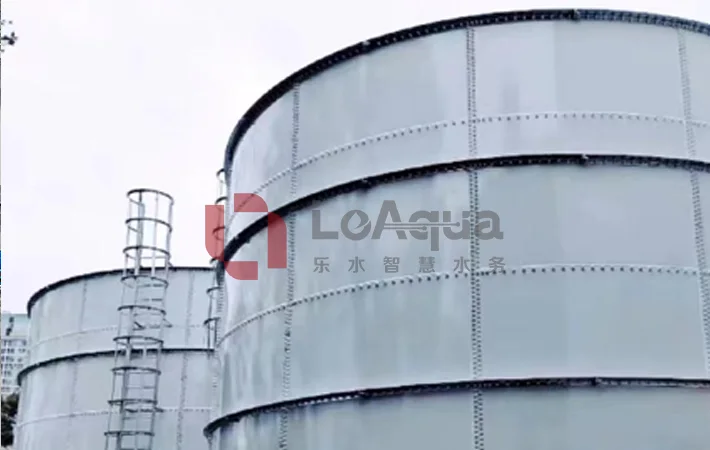
Common wastewater storage tank selection mistakes
Using “wastewater” as the only process description
Different wastewater streams can have very different chemistry, solids, temperature and operating risks. Provide analysis or clearly label assumptions.
Buying a tank by volume without checking the duty
Collection, equalization and temporary storage can require different operating levels and control logic. Confirm the effective volume and retention basis.
Assuming stainless steel or FRP is automatically compatible
Compatibility depends on the exact liquid, temperature, concentration, construction and maintenance method. Require evidence for the proposed configuration.
Confusing storage with treatment
A tank may hold or equalize wastewater, but it does not automatically provide biological treatment, separation, disinfection, filtration or discharge compliance.
Ignoring solids, ventilation and cleaning
These items affect access, operating reliability and safety. Include them in the initial layout and supply boundary.
Frequently asked questions
What is the difference between a wastewater storage tank and a wastewater treatment tank?
A wastewater storage tank holds or equalizes liquid before a defined downstream step. Treatment equipment changes the wastewater through a process such as separation, biological treatment or disinfection. Some projects coordinate both, but they should be specified as separate duties and scope items.
Which material is best for a wastewater storage tank?
There is no universal best material. The selection depends on pH, temperature, chemicals, solids, cleaning method, structural requirements and project acceptance. Review the exact construction and compatibility information for stainless steel, GRP/FRP or composite options.
How much wastewater can the tank hold?
The answer should be based on the required collection, equalization or temporary-storage duty and the approved operating levels. Ask for both nominal and effective volume, including alarm, overflow and unusable-volume assumptions.
Can the tank supplier also provide pumps and controls?
Some projects can use a coordinated tank-and-transfer package. Confirm flow, head, redundancy, control logic, power, ventilation, access and the boundary between storage, transfer and downstream treatment before comparing quotations.
Conclusion
A wastewater storage tank is easier to select when the project defines the liquid, duty, effective volume, compatibility, access and process boundary before choosing a material. Use the Wastewater Storage Tanks page to compare tank-only and coordinated configurations, then send the available wastewater analysis and site information through LeAqua’s contact page.