Choosing a fire water tank should begin with the approved fire protection design, not with a catalogue volume. The tank has to preserve the required water reserve, connect reliably to the fire water system and fit the project’s structural, hydraulic and approval requirements.
Quick answer: A fire water tank is selected by working from the fire scenario to the required flow, duration, effective storage volume, pump arrangement, tank configuration and project acceptance route. Nominal capacity alone is not enough to compare two quotations.
This guide explains the information engineers, contractors and buyers should confirm before requesting a fire water tank quotation. For the product scope, see LeAqua’s Fire Water Tanks page.
What is a fire water tank?
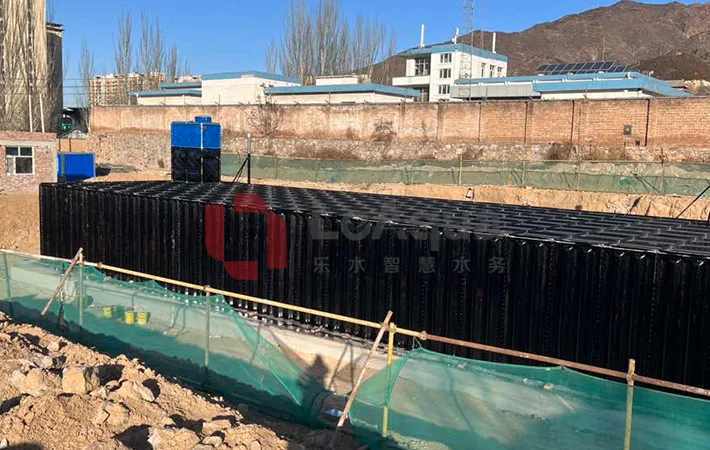
A fire water tank stores a dedicated water reserve for a building, campus or industrial site’s water-based fire protection systems. Depending on the approved design, the reserve may serve hydrants, hose systems, sprinklers, water spray systems, fire monitors or other specified equipment.
The tank is one part of the fire water supply. The usable volume, refill arrangement, suction or outlet connections, pump duty, controls and distribution pipework must work together. A tank that looks suitable by external dimensions can still be unsuitable if its effective operating volume, connection levels or supply boundary do not match the design.
1. Establish the fire protection design basis first
The first question is not “How many litres does the tank hold?” It is “What fire protection demand must the water supply support, and for how long?” The project team should document the design basis before comparing tank manufacturers.
- Which fire scenarios and protected areas govern the water demand?
- Which systems operate together: hydrants, sprinklers, monitors, hose reels or other water-based systems?
- What flow and operating duration are required by the approved design?
- What incoming water source and refill time are available?
- What minimum operating level must remain available to the pump suction?
- Is future expansion part of the design brief?
The calculation method and acceptance criteria depend on the project location, system design and applicable requirements. A useful background discussion is How Engineers Calculate Fire Water Tank Capacity and Pump Flow, but the project’s fire protection designer remains responsible for the approved demand.
2. Separate nominal capacity from effective fire water volume
Nominal capacity describes the geometric volume of a tank. Effective fire water volume is the portion that the approved system can actually use while maintaining the required suction conditions and operating limits.
When reviewing a quotation, ask the supplier to identify:
- Nominal volume and effective operating volume
- Normal high and low water levels
- Minimum level required for the pump suction arrangement
- Freeboard, overflow and drain provisions
- Refill connection and expected refill assumptions
- Whether the quoted volume includes unusable volume below the outlet or above the operating level
This distinction prevents a common procurement error: comparing a tank by its advertised size while each quotation counts a different amount of water as available for fire protection.
3. Decide whether you need a tank package or a coordinated system
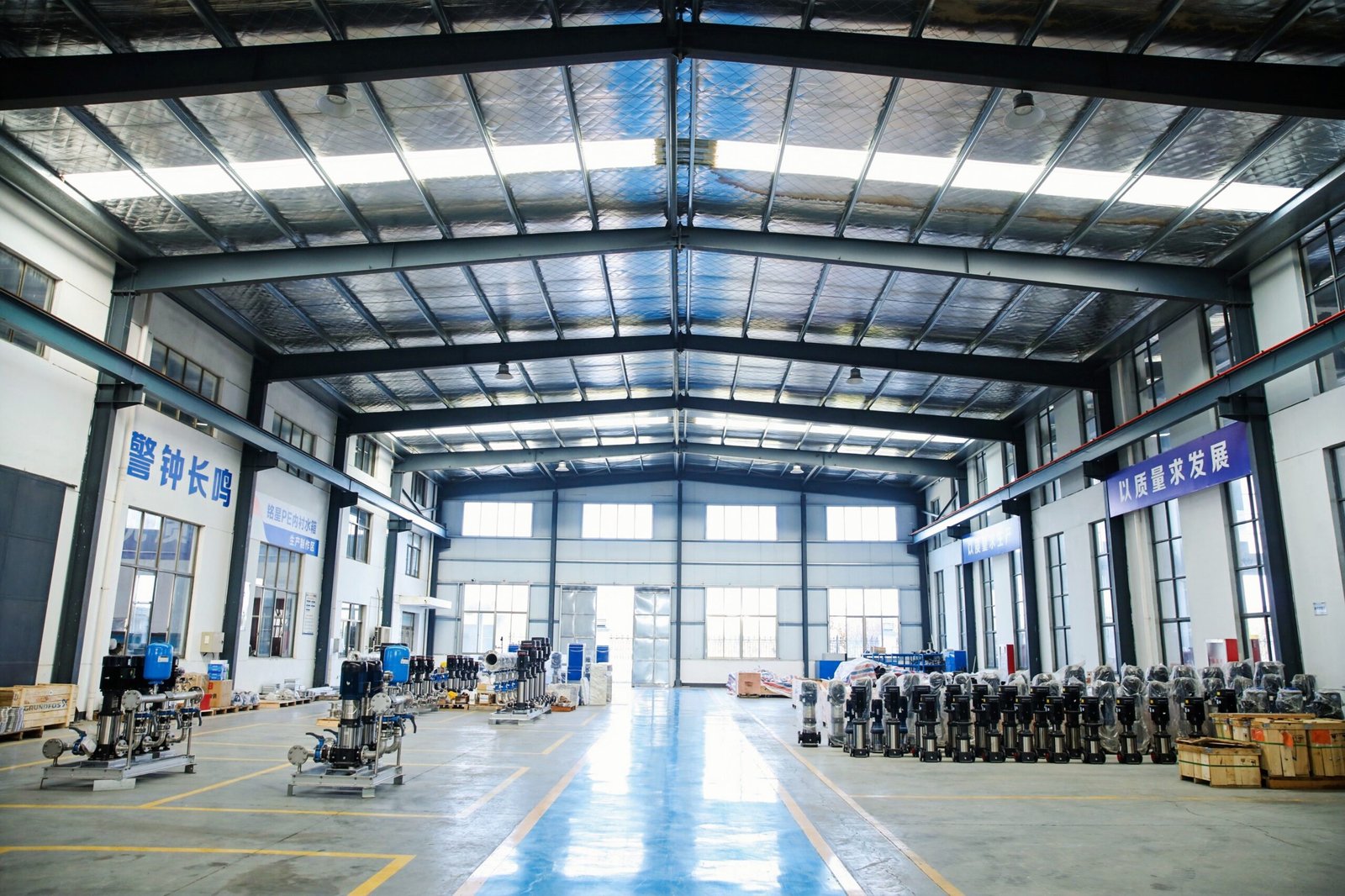
Fire water storage can be supplied as a standalone tank or as part of a coordinated tank-and-pump arrangement. The better choice depends on the project’s existing design responsibility and the package boundary.
| Configuration | Usually suits | Confirm before quotation |
|---|---|---|
| Standalone fire water tank | A separate pump room or an independently specified fire pump system | Suction location, connection levels, foundation, access, overflow, drain and the interface with the pump supplier |
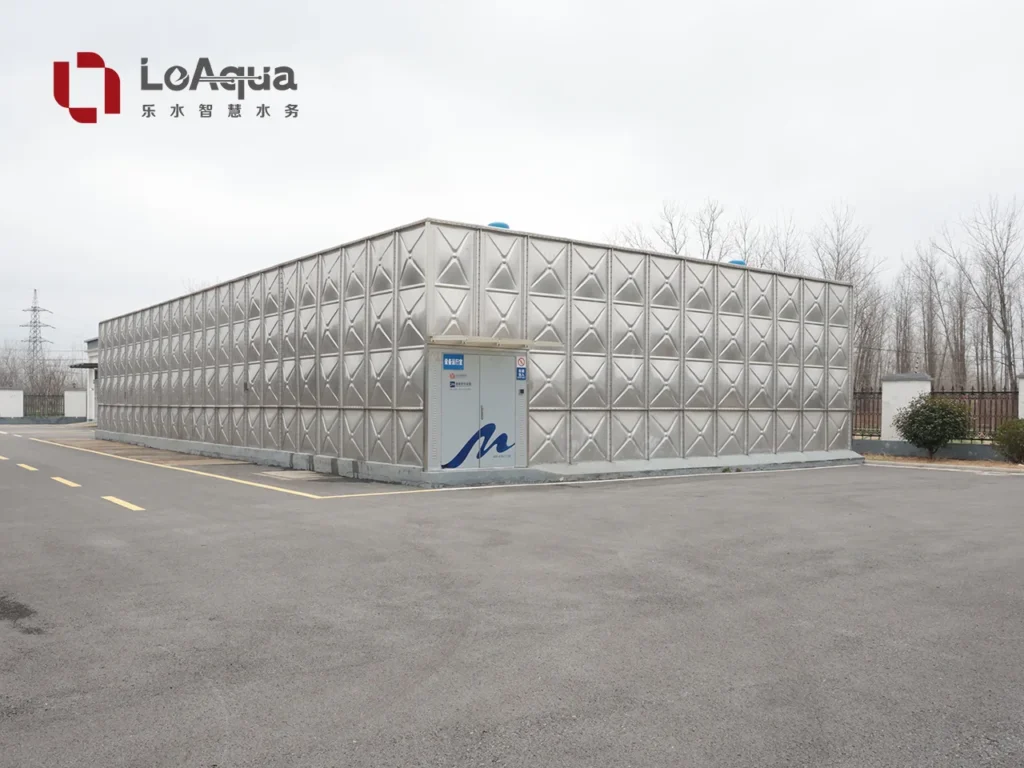
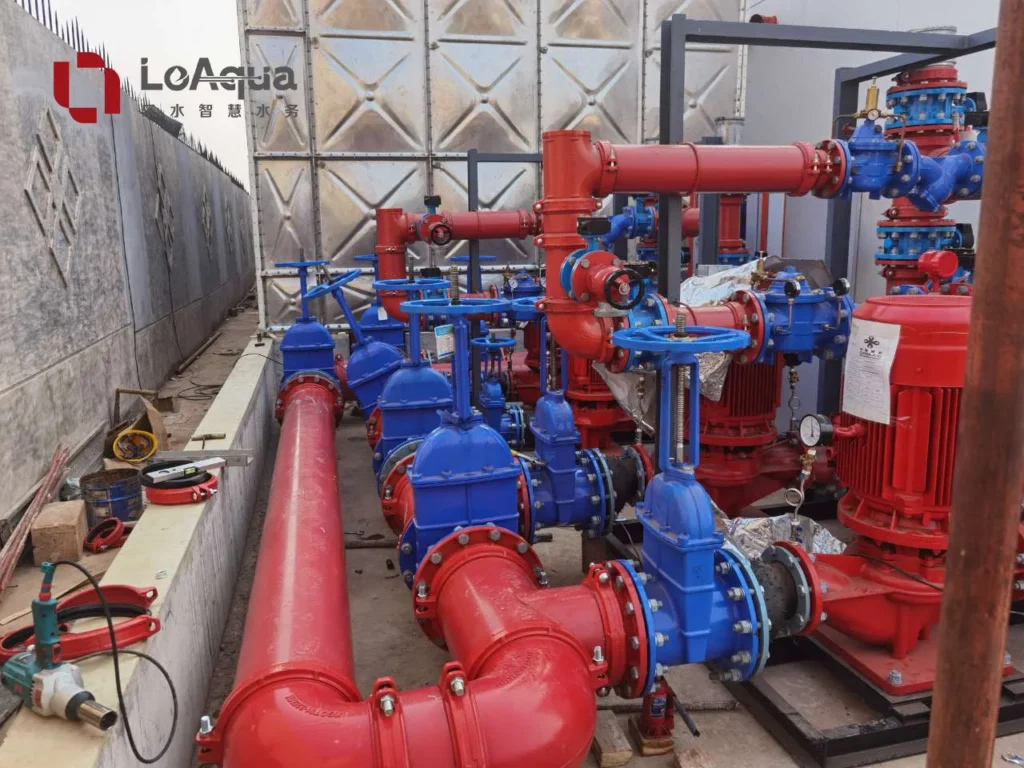
| Integrated tank and pump station | A project that wants storage, pumps and controls coordinated in one layout | Pump duty, power supply, equipment approvals, controls, access, delivery split and site commissioning responsibility |
An integrated package does not automatically include foundations, external pipework, power connections, installation or commissioning. These items should be listed separately in the quotation so a tank-only price is not compared with a complete system price.
For a related discussion of pump interfaces, see How to Select the Right Pump for an Integrated Pump Station.
4. Compare materials against the actual duty
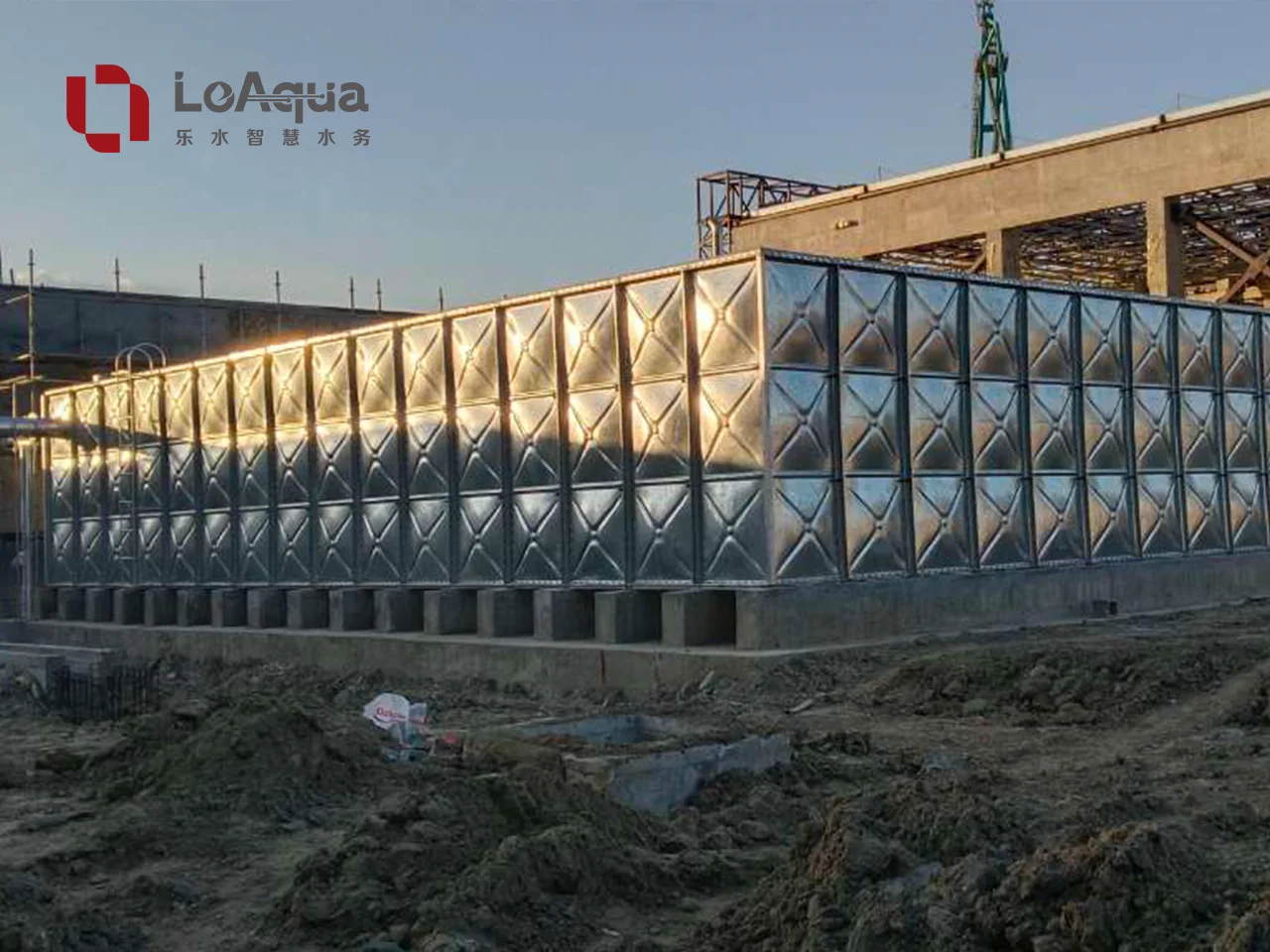
Stainless steel, GRP/FRP and composite sectional tanks can each be considered for water storage, but the material name alone does not establish suitability. Review the exact construction, water conditions, panel or shell system, seals, support arrangement and project acceptance requirements.
| Option | Questions to ask |
|---|---|
| Stainless steel | Which grade and construction are proposed? How are water chemistry, fabrication details, access and inspection addressed? |
| GRP / FRP | What panel system, resin or lining, temperature limits, supports and seals apply to the specified fire-water duty? |
| Composite sectional tank | What is the panel build-up, water-contact layer, external protection and structural configuration? |
Construction form is a separate decision from material. A bolted sectional arrangement, welded tank or rib-reinforced configuration may have different installation, inspection and maintenance implications. Compare the complete proposed configuration rather than selecting from the material label alone. LeAqua’s Water Tank Selection Guide provides a broader framework.
5. Resolve the tank, pump and site interfaces
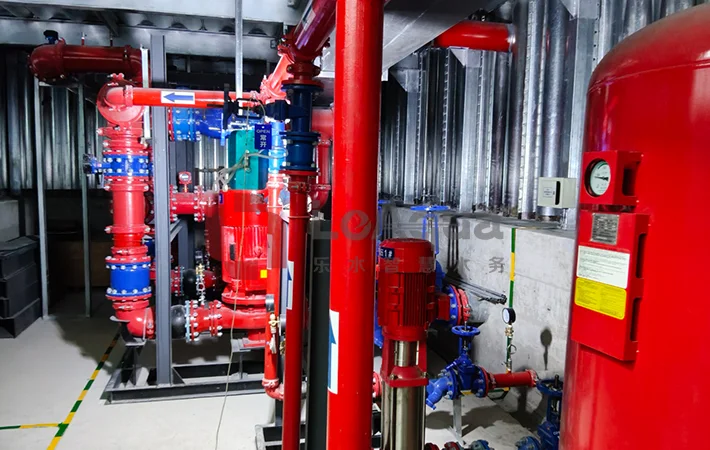
Many problems appear at interfaces rather than in the tank shell itself. The quotation package should show how the tank connects to the rest of the fire water system.
- Inlet, outlet, suction, overflow, drain and vent locations
- Pipe sizes, elevations and connection standards
- Foundation loads, base arrangement and seismic or wind requirements where applicable
- Access for inspection, cleaning and maintenance
- Pump-room layout, service clearance and equipment removal route
- Electrical, instrumentation and control responsibilities
- Transport, lifting, assembly and site testing responsibilities
For larger campuses, storage location and distribution distance can affect the overall system layout. The article How Engineers Plan Fire Water Storage for Large Data Center Campuses discusses why a site-wide fire water strategy may need more than a single-tank volume decision.
6. Confirm the approval route without overclaiming certification
Fire water tank requirements are controlled by the project specification, applicable local regulations, insurer requirements and the authority having jurisdiction. When a project uses an NFPA-based specification, NFPA 22 may be relevant to water tanks for private fire protection, while NFPA 20 may be relevant to stationary fire pump arrangements. The project team must confirm the applicable edition, scope and acceptance route.
Referencing a standard is not the same as proving that a particular tank or pump is certified to it. Ask for the actual drawings, calculations, material records, test documents and approval evidence required by the project. LeAqua’s Engineering Standards & Technical References page can be used as a starting point for discussing technical references, but it does not replace destination-market approval.
7. Documents to request before placing an order
A practical fire water tank submittal should make the design review possible before manufacturing. Depending on the project, request:
- General arrangement drawing with dimensions, levels and connections
- Effective-volume and operating-level information
- Material, panel, lining, seal and fastener information
- Foundation, support and load data for coordination
- Pipe and pump interface schedule
- Inspection, testing and quality records included in the supply scope
- Installation, maintenance and cleaning instructions
- Clear exclusions for freight, site assembly, external pipework, power and commissioning
Common fire water tank selection mistakes
Choosing capacity from building area alone
Building area may be an input to the fire protection design, but it does not replace the approved demand, duration and system interaction review.
Comparing nominal volume as if it were usable volume
Different connection levels and pump operating limits can leave different amounts of water available. Require both nominal and effective values.
Choosing the tank and pump independently
The tank outlet, minimum level, pump suction arrangement and required flow must be coordinated. A correct tank volume does not guarantee a correct pump interface.
Assuming an integrated package includes every site activity
Installation, foundations, external pipework, power and commissioning should be assigned explicitly to the supplier, contractor or owner.
Frequently asked questions
How do I choose the right fire water tank size?
Start with the approved fire protection demand and required duration, then calculate the effective storage volume after accounting for operating levels, refill assumptions and pump suction conditions. Do not choose only from a nominal catalogue volume.
Is a stainless steel fire water tank always the best option?
No. Stainless steel may be suitable for some projects, but the choice depends on water conditions, construction, structural requirements, maintenance expectations and the project’s acceptance route. GRP/FRP and composite sectional tanks may also be evaluated.
Should the tank and fire pump be supplied together?
Not always. A standalone tank can suit a project with an independently designed pump room. A coordinated package may be useful when the tank, pumps and controls need to fit one layout. The supply boundary should be defined before comparing quotations.
Does mentioning NFPA 22 prove that a tank is NFPA certified?
No. A standard reference identifies a design or specification route; it does not certify a particular product. Ask the project designer and authority having jurisdiction what documents and approvals are required.
Conclusion
A fire water tank quotation is easier to review when it connects the fire scenario, effective volume, material, pump interface, structural coordination and approval route in one documented scope. Use the Fire Water Tanks page to compare standalone storage with integrated tank-and-pump configurations, then send the project inputs needed for a configuration review through LeAqua’s contact page.