Potable water tank certification works through a market-specific document package. Buyers need to link the proposed tank, its water-contact materials and its manufacturer to the requirements at the project destination.
A useful review therefore checks more than a certificate logo. It confirms the document holder, product name, material, model range, issuing body, validity and accepted use. It also checks approved drawings, material records, inspection documents and cleaning instructions before production and delivery.
For the earlier choice of material, application and tank structure, use the LeAqua Water Tank Selection Guide. This procurement checklist begins after the project has identified potable-water service and needs to verify what the supplier must submit.
What Documents Should Buyers Request for a Potable Water Tank?
| Direct answer: Request the destination approval requirements, product hygiene or water-contact approval, material certificates, approved tank drawings, component schedule, inspection and test records, installation instructions, and cleaning and maintenance guidance. Match every document to the quoted product and contract scope. |
| Document group | What it should confirm | When to review |
| Destination requirements | Applicable authority, standard, language, submission route and required product approval | Before RFQ |
| Product hygiene / water-contact approval | Holder, named product, material, model or size scope, use, issuer and validity | Before supplier approval |
| Material records | Grades and specifications for panels, fasteners, seals and other water-contact parts | Before production and with handover file |
| Approved drawings | Capacity, dimensions, connections, access, water levels, compartments and foundation interface | Before production |
| Inspection and test records | Agreed visual, dimensional, material and watertightness checks with acceptance status | During manufacture, installation or handover |
| Installation and hygiene instructions | Handling, assembly, protection, flushing, cleaning and disinfection responsibilities | Before shipment and site work |
| Operation and maintenance information | Inspection intervals, cleaning method, replaceable components and record keeping | Before handover |
Certification, Material Records and Management Systems Are Different
A product approval addresses a defined product and use. A material certificate identifies material supplied for production. An inspection record shows what a party checked for a particular order or installation. A quality-management certificate covers an organization’s management system within its stated scope.
Each document supports a different decision. ISO 9001 can support confidence in quality-management processes, for example, while the buyer still needs the product and water-contact evidence required for the destination market. This distinction gives consultants and procurement teams a clear basis for technical approval.
Start With the Destination Approval Route
Ask the project consultant, local water authority or approval body which rules apply before requesting quotations. The answer may depend on the country, building use, public or private water source, tank material and whether the system stores treated drinking water or water awaiting treatment.
The World Health Organization Guidelines for Drinking-water Quality provide a widely used risk-based reference for drinking-water safety. They help frame water-safety decisions, while the destination authority defines the approvals that the project must obtain. In the European Union, the European Commission drinking-water framework leads to national implementation and project-specific requirements.
- Name the destination country and authority in the RFQ.
- State whether the project requires approval before bid, manufacture, import or commissioning.
- List required document languages, legalization or certified translation requirements.
- Confirm whether the authority evaluates the complete tank or individual water-contact materials.
How to Verify Potable Water Tank Certification
A certificate becomes useful when its scope matches the equipment in the quotation. Buyers can complete this check quickly by reading the document itself and comparing it with the technical submittal.
- Confirm the legal certificate holder and its relationship to the proposed manufacturer or supplier.
- Match the product name and construction type to the quotation.
- Check the material, model, size or capacity range covered by the document.
- Read the intended use and any operating limitations.
- Confirm the issuing authority, approval number, issue date and expiry date.
- Record what the destination authority still needs for project acceptance.
How a Product-Specific Hygiene Permit Defines Scope
LeAqua’s supporting product documentation includes a Jiangsu provincial hygiene permit for the named no-weld bolted-assembly SUS304 potable water tank. The permit identifies the covered construction, model range, principal water-contact components, intended use and validity.
| Permit field | Document entry |
| Document type | Jiangsu Province hygiene permit for a domestic product involving drinking-water hygiene and safety |
| Product | Named no-weld bolted-assembly SUS304 stainless steel potable water tank |
| Category | Water transmission and distribution equipment; water storage container |
| Model range | 1-500 m3 |
| Principal components | SUS304 stainless steel plate, EPDM sealing strip and SUS304 stainless steel bolts |
| Use | Storage of normal-temperature domestic drinking water |
| Approval number | (Su) Wei Shui Zi (2023) No. 3209-0011 |
| Approval and validity | Approved 15 March 2023; valid through 14 March 2027 |
The permit names Jiangsu Mingxing Water Supply Equipment Co., Ltd. as the legal certificate holder.
This document can form part of the technical file for the named product. For an export project, LeAqua can submit the relevant available records and map them against the documents requested for the destination. That process helps the buyer identify any additional approval work before manufacturing begins.
Check Every Water-Contact Material
Tank panels are only one part of the wetted system. The review should cover every component that contacts stored water, including fasteners, sealing strips, coatings or linings, internal pipework, fittings and repair materials. Ask the supplier to identify each item in a component schedule and connect it to the relevant material or product record.
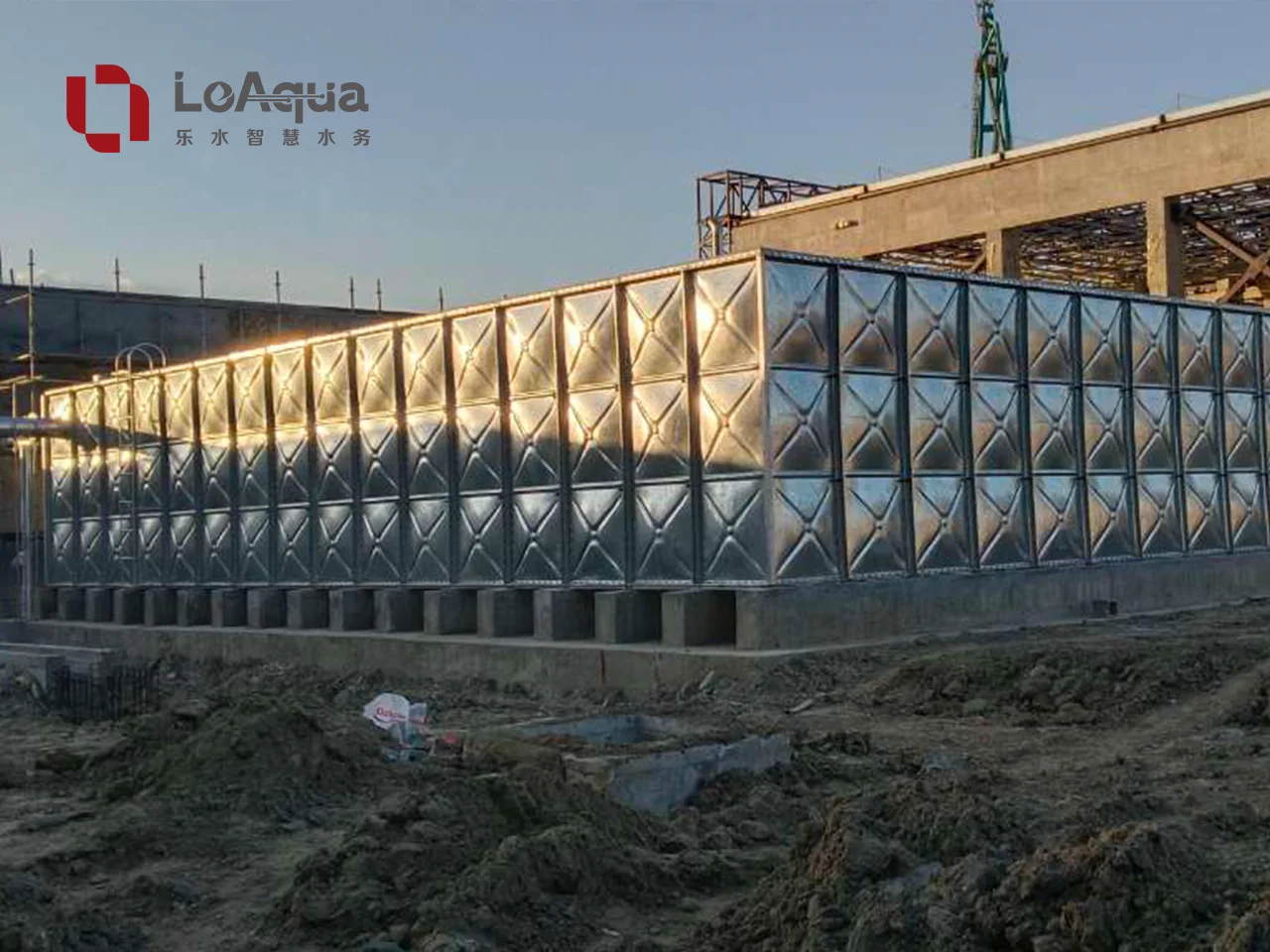
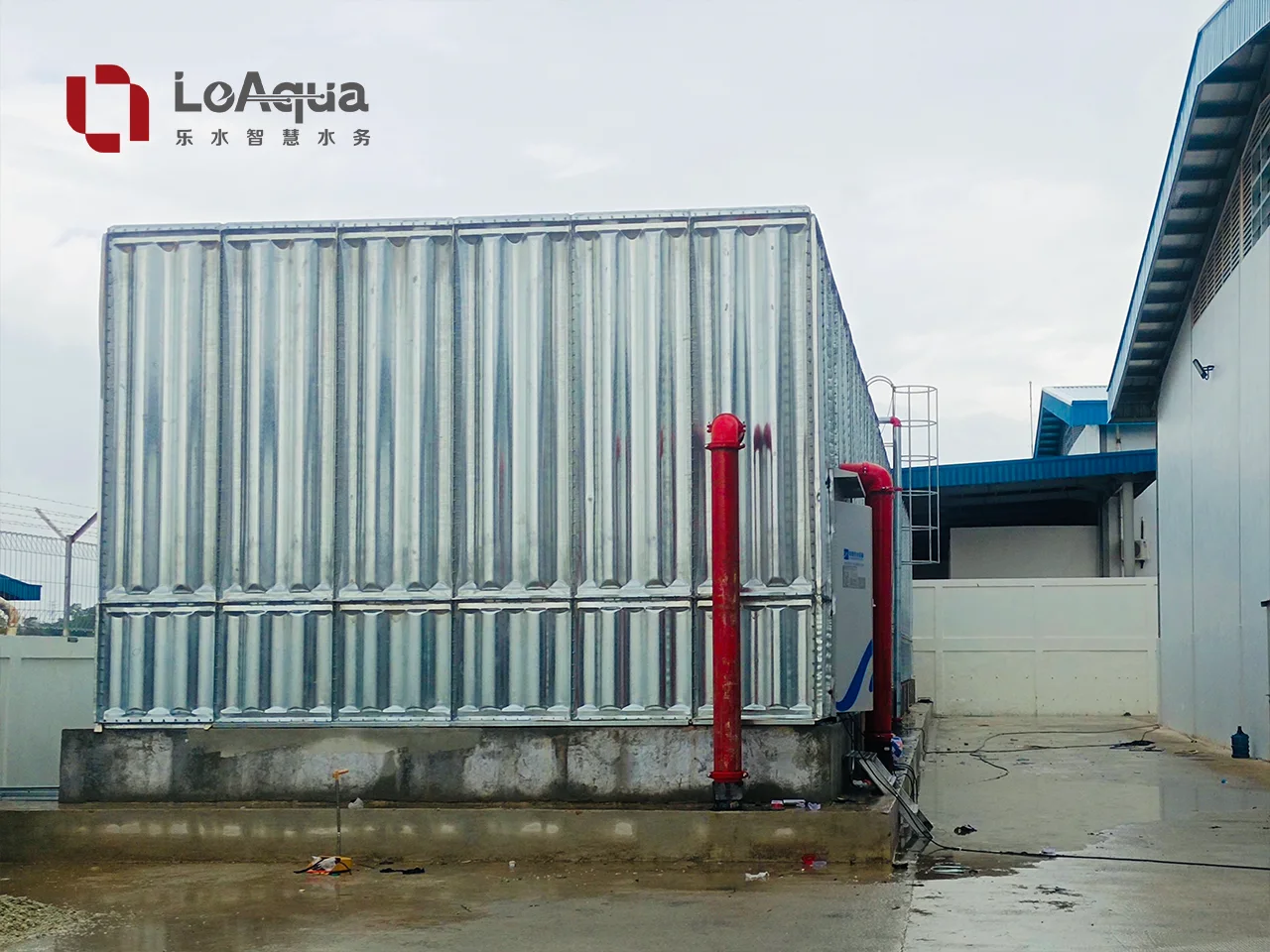
Material selection should also reflect water chemistry, temperature, cleaning agents and the external environment. The LeAqua stainless steel water tank page and FRP/GRP water tank page describe different construction families, but the approved project specification must identify the actual water-contact system.
Use Three Document Checkpoints
| Checkpoint | Buyer action | Expected output |
| Before order | Confirm destination requirements and compare the offered document package with the specification | Approved supplier and agreed document register |
| Before production | Approve tank material, drawings, connections, components and inspection plan | Released-for-production drawing and submittal status |
| Before shipment / handover | Collect agreed material, inspection, installation and maintenance records | Order-specific document dossier with open items identified |
Place these checkpoints in the purchase order or document schedule. The water tank supply scope guide can help the buyer assign who prepares, reviews and approves each item. This approach keeps documentation connected to procurement rather than leaving it for the final shipping week.
Common Procurement Mistakes
- Accepting a certificate logo without reading the holder, product scope and validity
- Treating an ISO management-system certificate as potable-water product approval
- Requesting material certificates without defining which tank components they must cover
- Approving the tank before confirming destination language and submission requirements
- Allowing the quoted construction to change without reviewing the certificate and material impact
- Collecting generic brochures instead of order-specific drawings and inspection records
Frequently Asked Questions
What certification does a potable water tank need?
The destination authority and project specification determine the required approval. Buyers should identify that route first, then select a tank whose product and material documents match the required scope.
Is ISO 9001 enough for a drinking-water tank?
No. ISO 9001 addresses a quality-management system, while potable-water approval concerns a defined product, its water-contact materials and its accepted use. A project may request both, but they answer different questions.
Should buyers request a material certificate for every component?
The project specification should identify which components need traceable material records. Prioritize the tank panels and other water-contact parts, then include structural or accessory records when the contract or approval route requires them.
What should buyers send with the RFQ?
Send the application, effective capacity, water analysis, project country, applicable standard, required approval, tank location, material preference, document list and installation scope. Use the LeAqua water tank RFQ checklist to organize the complete technical and commercial enquiry.
Conclusion
A strong potable-water tank submission connects the destination requirements to a specific product, manufacturer, material system and order. Buyers can make that connection by checking certificate scope, water-contact components, approved drawings and order-specific records at defined procurement stages.
For a document review or project quotation, send LeAqua the destination country, potable-water requirements, water analysis, tank capacity, site conditions and required submittal list through the LeAqua contact page. LeAqua can then align the proposed tank and available technical records with the project’s stated approval route.