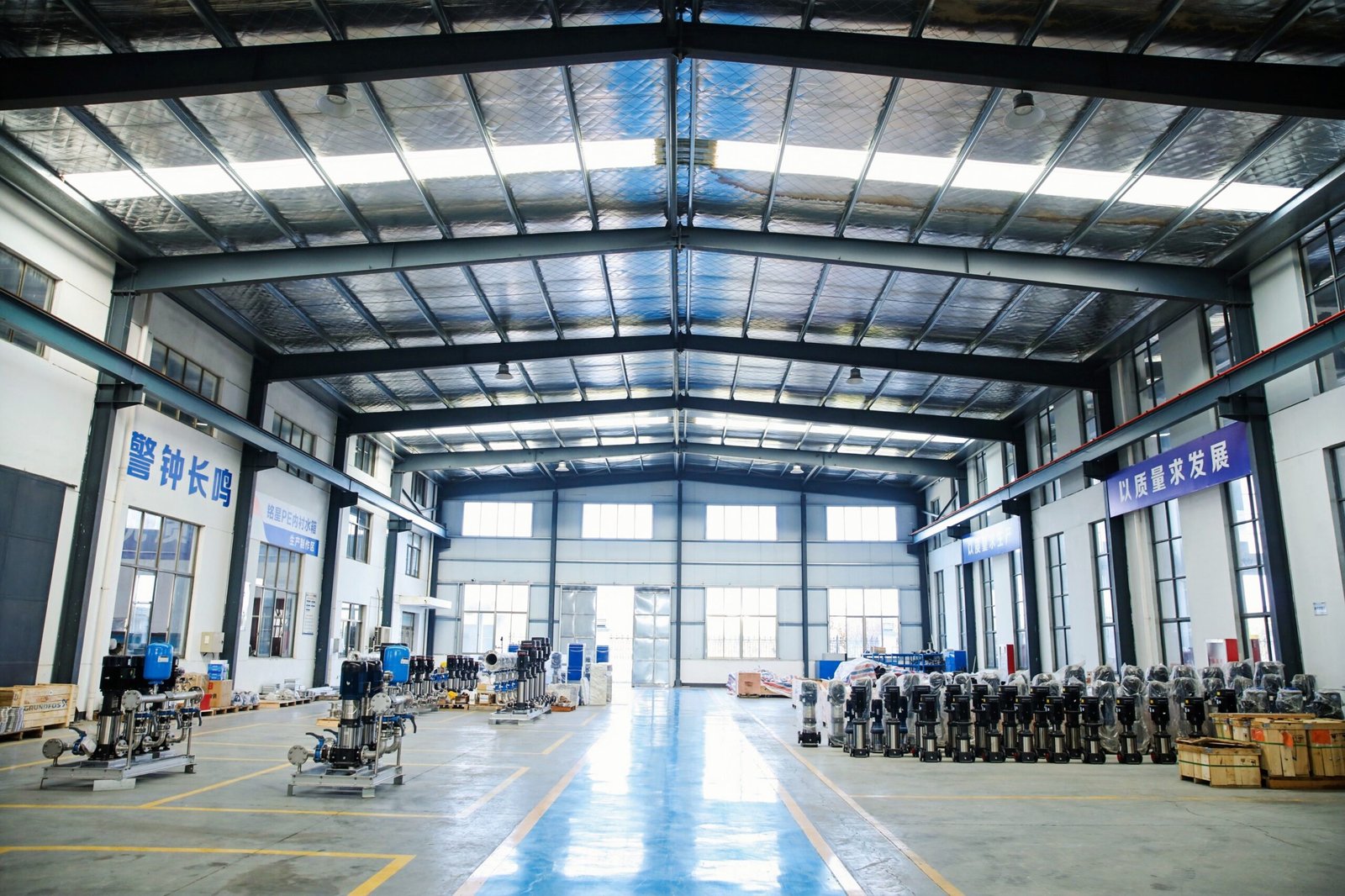
Battery Energy Storage Systems (BESS) are being installed at an increasing number of renewable energy and grid infrastructure projects.
They also introduce a fire protection problem that is different from many conventional buildings.
Battery modules can be distributed across a large outdoor site or arranged inside dedicated containers and rooms. The appropriate fire protection strategy therefore depends on the battery technology, site layout, separation distances, fire detection and suppression systems, and the requirements of the local authority.
One question often appears during project planning:
How large should the fire water tank be?
There is no single answer.
Engineers first need to understand how the BESS site is arranged and what fire protection system the project is required to provide. Only then can the required fire water demand and storage capacity be established.
This is an important distinction when selecting a fire water tank for a BESS project.
The tank should be selected to support the fire protection system—not the other way around.
1. Start With the BESS Fire Protection Strategy
The first step is not selecting the tank.
It is understanding how the battery energy storage system is expected to be protected during a fire event.
Engineers may need to review:
- Battery chemistry
- Container or building arrangement
- Total installed capacity
- Separation between battery units
- Fire detection system
- Fire suppression system
- Fire hydrant or hose coverage
- Local fire service requirements
BESS fire behavior can also create challenges that need to be considered during emergency planning.
The U.S. EPA notes that lithium-ion battery fires can be difficult to extinguish and may reignite, and its current BESS guidance recommends considering site-specific requirements, monitoring, emergency planning and consultation with local responders.
That is why the fire water tank should be treated as one component of the overall fire protection strategy.
2. Determine Fire Water Demand Before Selecting Tank Capacity
Once the fire protection strategy is established, engineers can determine the required water demand.
This may involve several parameters:
- Required flow rate
- Number of hydrants or outlets operating simultaneously
- Required operating duration
- Fire scenario
- Available mains water
- Required emergency reserve
The final storage volume is then established from the applicable project requirements.
For example, guidance issued by Victoria’s Country Fire Authority for renewable energy facilities provides specific requirements for BESS fire water supplies where reticulated water is unavailable, but those requirements depend on the BESS arrangement and applicable fire protection provisions.
CFA also states that fire water calculations for bespoke systems should consider the actual fire scenarios and that generalized standards should not simply replace project-specific assessment.
This is an important lesson for international projects:
Do not choose a BESS fire water tank simply because another project used the same capacity.
The calculation needs to follow the requirements applicable to the actual project.
3. Check Whether the Site Has a Reliable Water Source
The next question is where the fire protection water will come from.
Some BESS sites have an adequate mains water supply.
Others are located at remote solar or wind facilities where municipal water infrastructure may not be available.
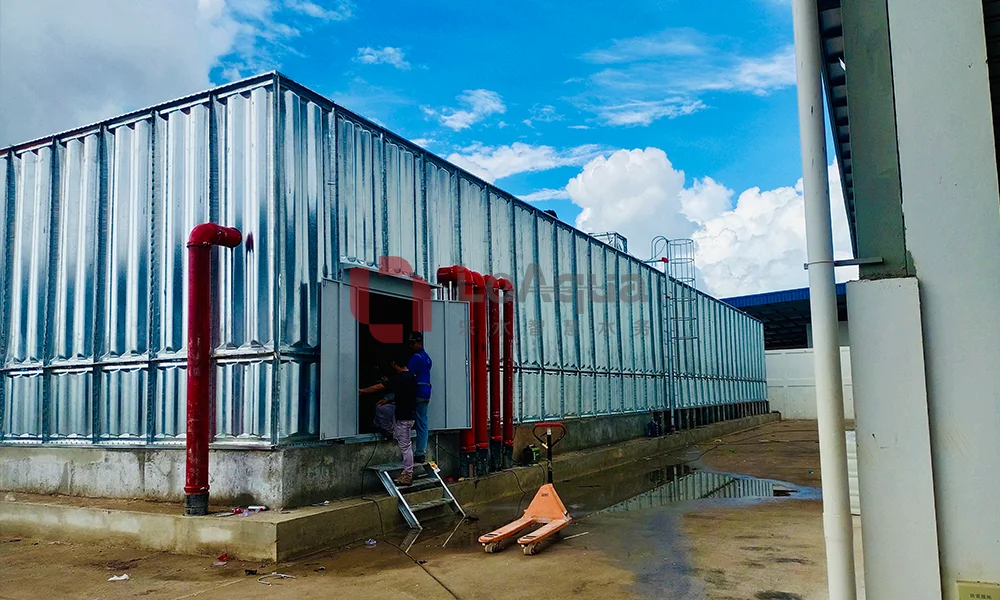
If the available water supply cannot provide the required flow or duration, dedicated static storage may be necessary.
The tank therefore needs to be considered together with:
- Fire pumps
- Hydrant system
- Pipework
- Water source
- Emergency access
For a remote renewable energy project, the tank may effectively become the primary water reserve for the entire fire protection system.
This makes the relationship between fire water tank and fire pump system particularly important.
4. Consider the BESS Site Layout
BESS projects are often spread over large areas.
The location of the fire water tank can therefore be as important as its capacity.
Engineers may review:
- Distance to battery containers
- Fire hydrant coverage
- Emergency vehicle access
- Tank accessibility
- Distance from electrical equipment
- Maintenance access
For example, the Victorian CFA guidance for centralized BESS specifies considerations for the location and accessibility of static fire water supplies, including positioning relative to infrastructure and site entrances.
This illustrates why fire water tank selection cannot be separated completely from site planning.
A tank with sufficient volume may still be unsuitable if firefighters cannot access the water supply efficiently during an emergency.
5. Choose the Tank Structure for the Site Conditions
Once capacity and location have been established, engineers can evaluate the tank structure.
For BESS projects, practical considerations may include:
- Above-ground or underground installation
- Available footprint
- Transportation access
- Construction schedule
- Environmental exposure
- Maintenance requirements
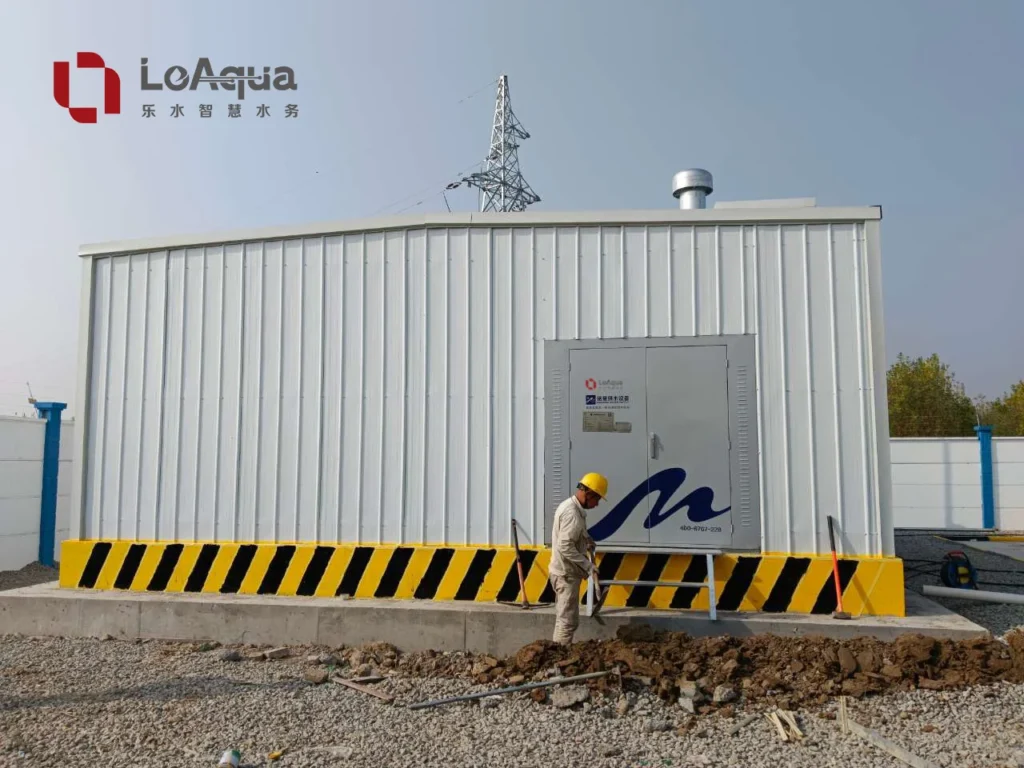
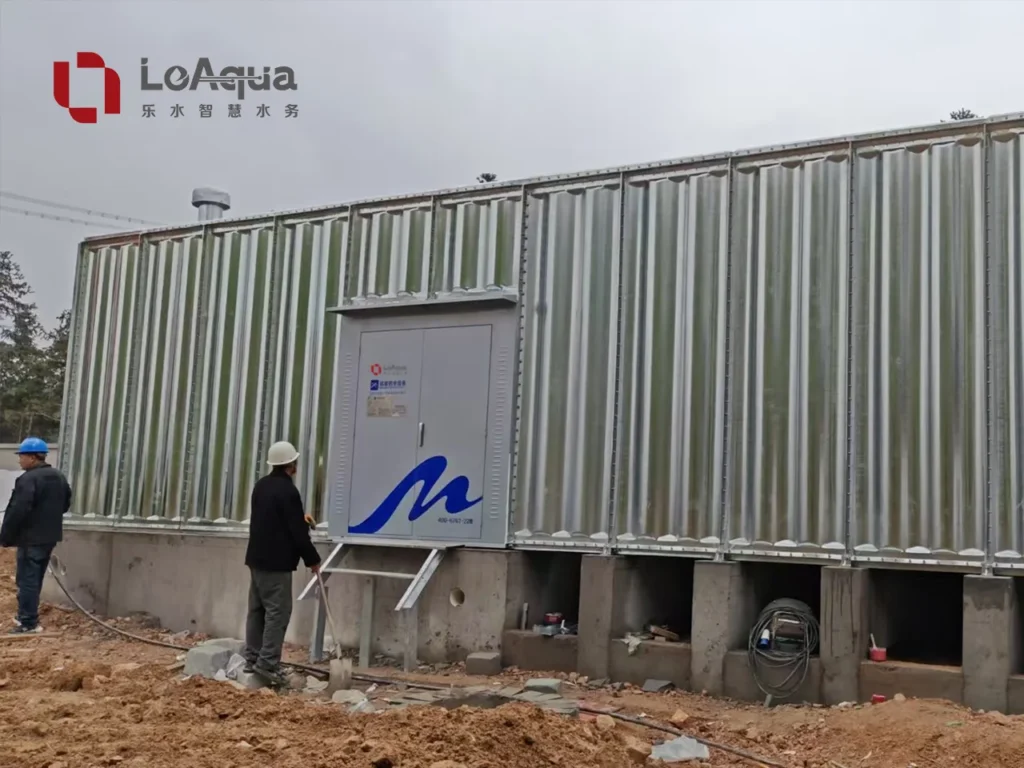
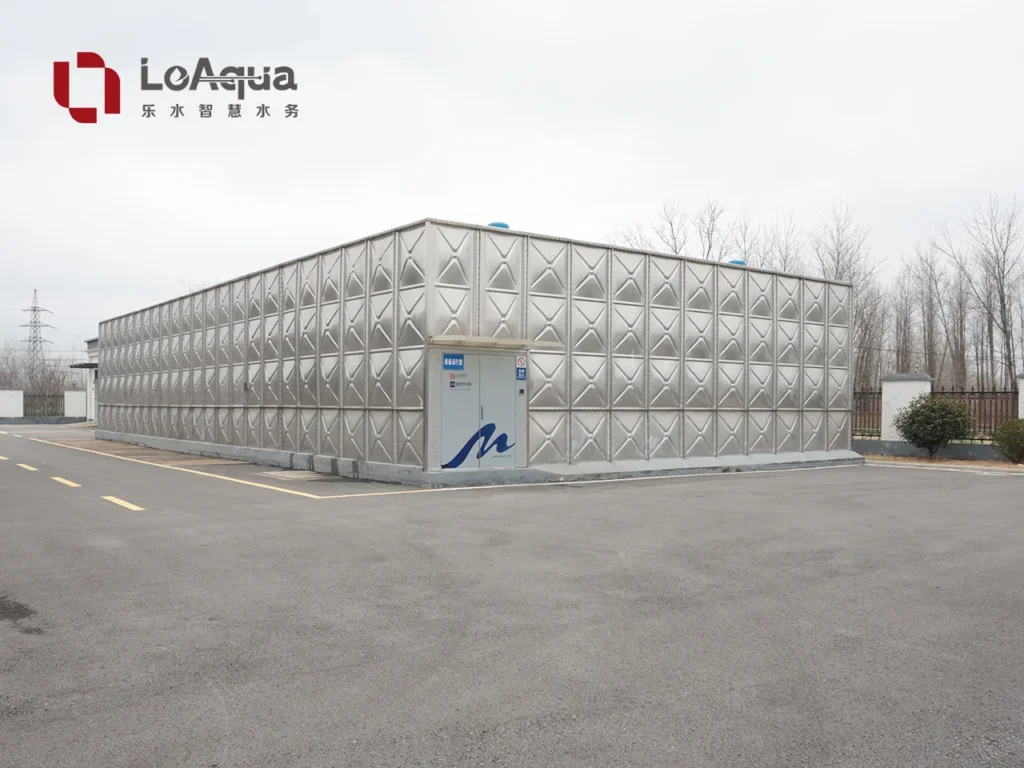
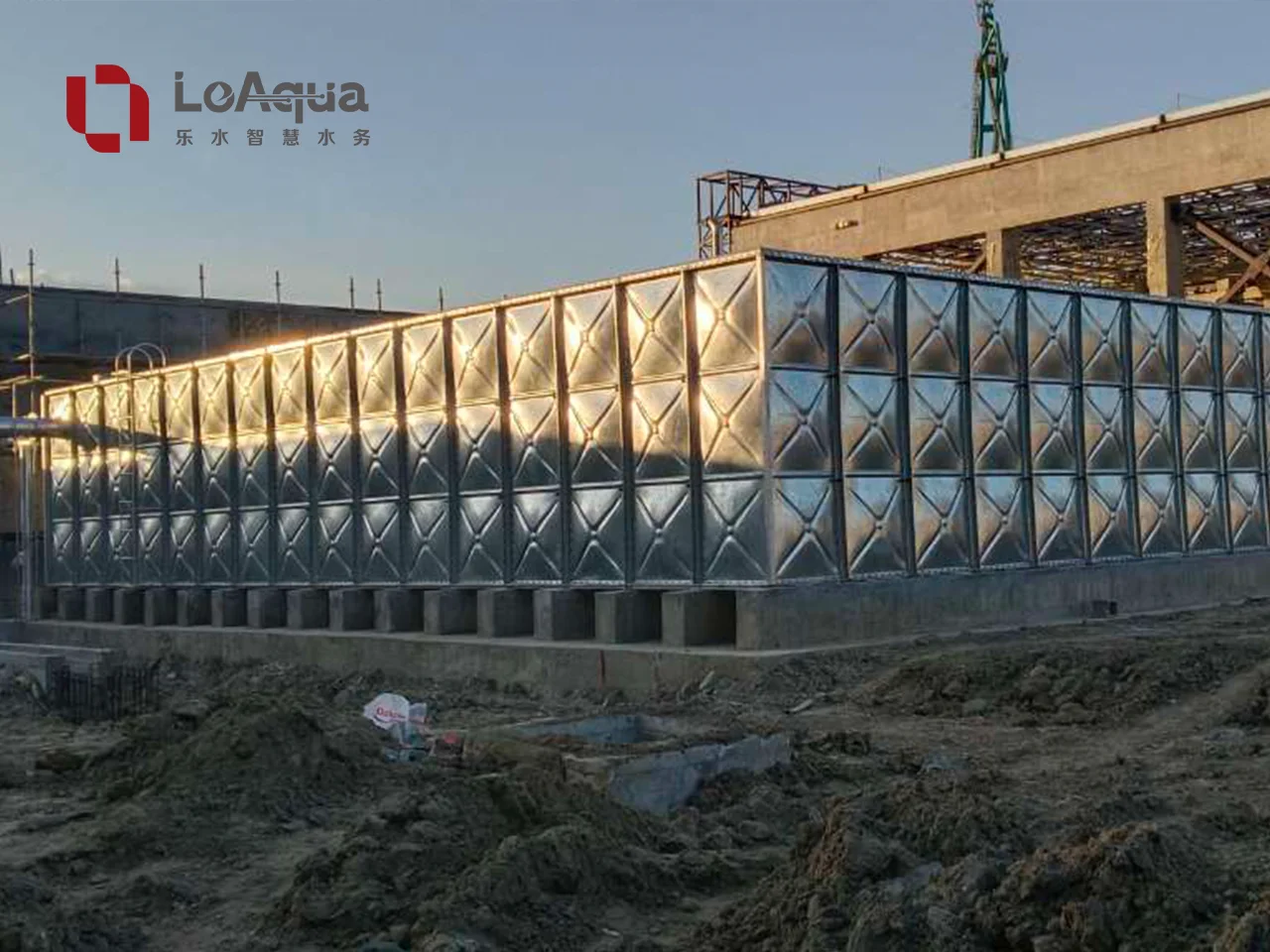
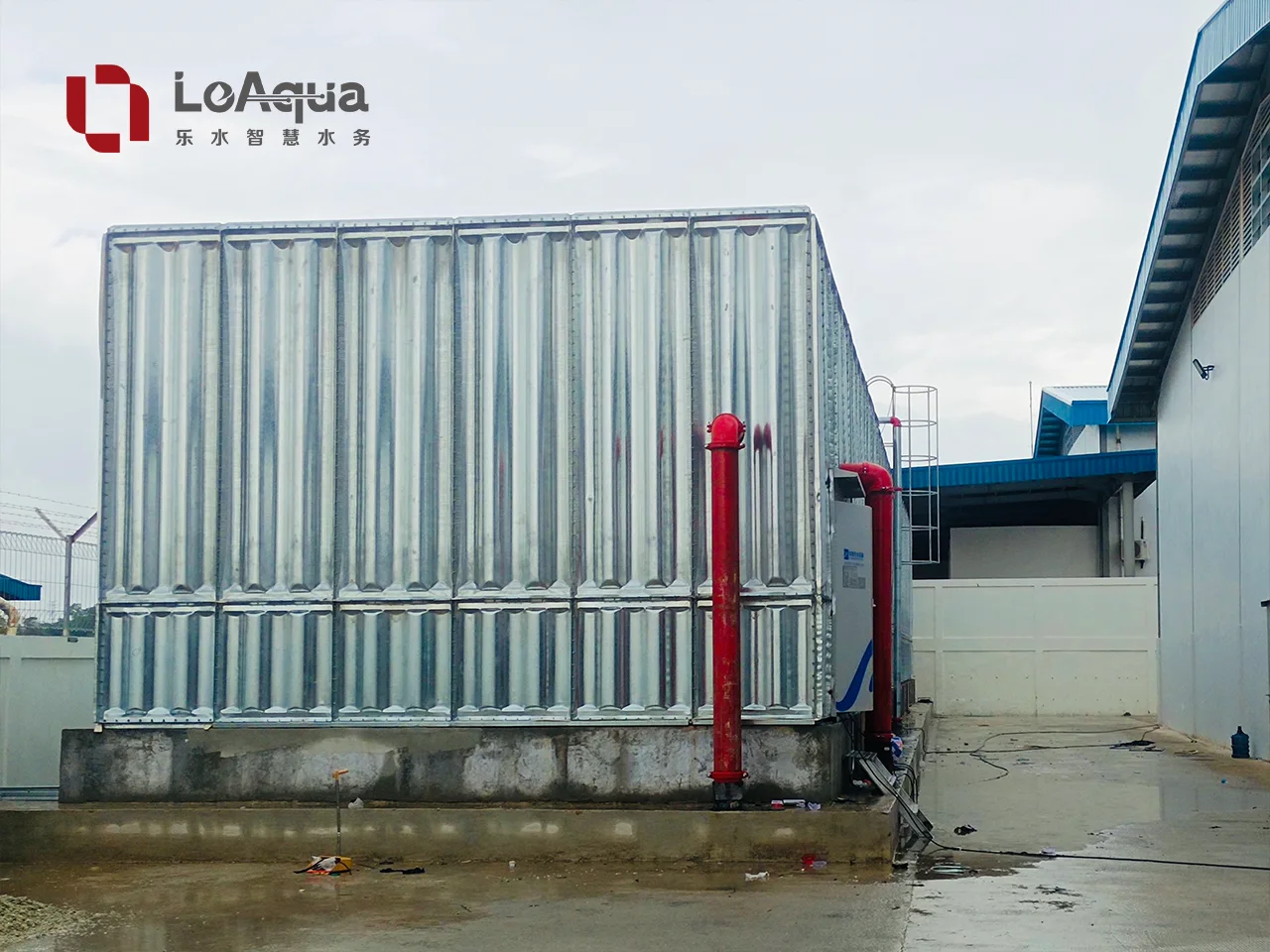
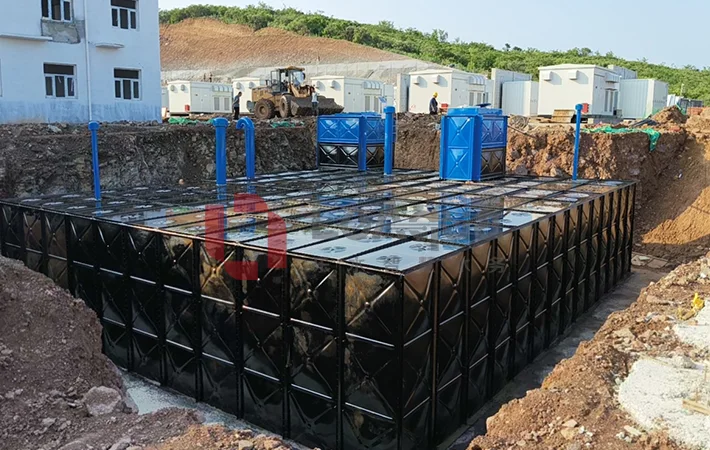
Modular water tanks can be useful for remote or restricted sites because the individual panels can be transported separately and assembled at the project location.
This can be particularly relevant where transporting a large completed tank would create logistical difficulties.
The tank structure should also be reviewed for the expected environmental and loading conditions rather than selected from a standard catalogue without further analysis.
6. Match the Fire Water Tank With the Pump System
A fire water tank is only useful during an emergency if the required water can be delivered to the fire protection network.
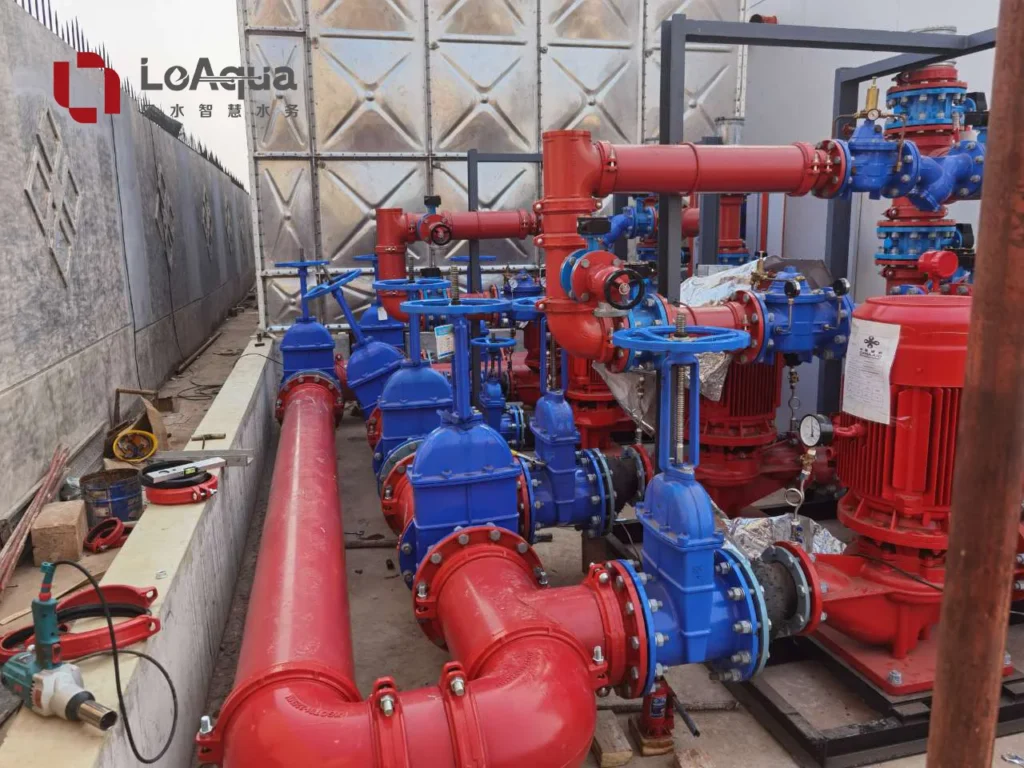
Engineers therefore need to consider the tank and pump system together.
The review may include:
- Required pump flow
- Required pump head
- Suction arrangement
- Available water level
- Pipe losses
- Duty and standby pumps
- Emergency power supply
- Automatic control
The storage volume and pump performance serve different functions.
The tank provides the available reserve.
The pump provides the flow and pressure needed by the fire protection system.
Both need to satisfy the project’s fire protection requirements.
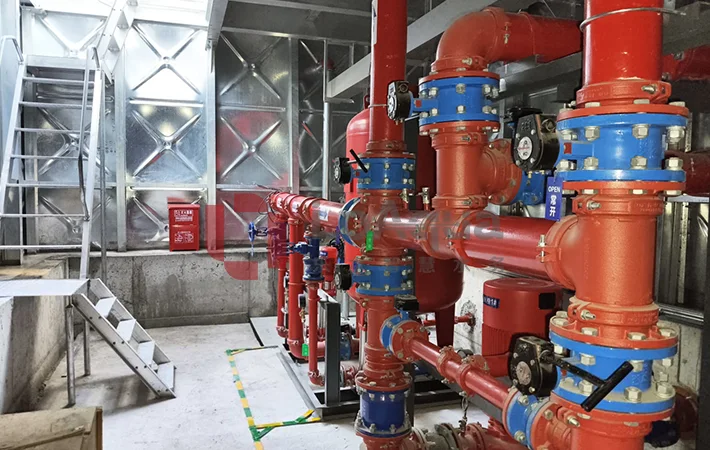
This is one reason BESS projects can benefit from a coordinated fire water storage and pumping system, rather than selecting the tank and pumps independently.
7. Consider Monitoring and Remote Operation
Many BESS sites are remote or only lightly staffed.
That makes monitoring particularly useful.
The BESS itself may already use battery management, thermal and fire detection systems, while the fire water system can also provide information such as:
- Tank water level
- Pump status
- Pressure
- Alarm status
- Power availability
- Equipment faults
The U.S. EPA specifically recommends remote sensing and monitoring as part of proactive BESS site safety planning.
For a remote renewable energy site, integrating fire water monitoring with the wider site management system can help operators identify problems before an emergency occurs.
BESS Fire Water Tank Selection Checklist
Before approving a tank, project engineers should confirm:
| Item | What to Review |
|---|---|
| BESS configuration | Containerized, centralized or other arrangement |
| Fire scenario | What scenario is the system designed to manage? |
| Required flow | Hydrant, monitor or suppression demand |
| Required duration | How long must the water supply be available? |
| Water source | Mains supply or dedicated storage |
| Tank capacity | Based on the applicable project calculation |
| Tank location | Access, coverage and emergency response |
| Tank structure | Environmental, structural and installation conditions |
| Fire pumps | Flow, head and standby arrangement |
| Monitoring | Level, pressure, pump and alarm status |
| Local requirements | Fire authority, building code and project specification |
| Documentation | Calculations, drawings and equipment data |
The checklist is not a substitute for a fire engineering assessment.
It is intended to make sure the important questions are addressed before equipment is ordered.
Final Thoughts
Selecting a fire water tank for a Battery Energy Storage System is different from selecting a general-purpose storage tank.
The required capacity depends on the fire protection strategy, water demand, required duration, site arrangement and applicable local requirements.
The tank also needs to work with the fire pump, hydrant network, controls and monitoring system.
For LeAqua, this type of project connects several areas of engineering capability: water tank manufacturing, pump system integration and intelligent monitoring.
The most important decision is therefore not simply choosing a tank with a certain capacity.
It is designing a fire water storage system that matches the actual BESS site, fire protection strategy and regulatory requirements.