A utility-scale solar power plant can cover a large area, with photovoltaic arrays, inverters, transformers, substations and other electrical equipment distributed across the site.
That makes fire protection a little different from a conventional building.
The question is not simply:
“How large should the fire water tank be?”
Engineers first need to understand what parts of the solar facility require water-based fire protection, what fire scenarios are being considered, how the fire protection network will operate, and what requirements apply at the project location.
Only then can the required fire water flow, storage duration and tank capacity be established.
The U.S. Department of Energy notes that PV installations create specific considerations for firefighters because electrical components may remain energized and water application can introduce electrical hazards. It also emphasizes the importance of planning, labeling and coordination with emergency responders.
For this reason, a fire water tank for a solar power plant should be treated as part of the complete fire protection system, rather than as an isolated storage product.
1. Start With the Solar Plant Fire Protection Strategy
Before selecting the tank, engineers first identify the plant’s fire protection strategy.
The system may involve different protection measures depending on the site, equipment and applicable requirements.
These can include:
- Fire hydrants
- Hose stations
- Water spray systems
- Sprinkler systems
- Fire detection and alarm systems
- Portable firefighting equipment
- Emergency response provisions
A large solar plant can contain several distinct fire hazards rather than one single risk area.
Potential areas of consideration may include:
- Transformers
- Inverters
- Electrical rooms
- Substations
- Cable areas
- Energy storage equipment where present
The appropriate water supply therefore depends on the specific fire protection design.
For example, one documented large solar generation project used fire water storage tanks and fire pumps to supply a fire water loop serving yard hydrants, hose stations, water spray and sprinkler systems. The design basis established the required fire demand according to the applicable building and NFPA requirements.
The important lesson is simple:
The tank follows the fire protection system design.
2. Determine Fire Water Demand Before Tank Capacity
Once the protection strategy has been established, engineers determine the required water demand.
The calculation can involve:
- Required fire flow
- Number of simultaneous outlets
- Sprinkler or water spray demand
- Hose stream demand
- Required duration
- Existing water supply
- Emergency reserve
A fire water tank should not be selected simply from the size of the solar plant.
A 50 MW and a 500 MW project can have very different site layouts and fire protection arrangements.
Similarly, two projects with the same installed capacity may require different water storage because of differences in equipment arrangement, local requirements and available water infrastructure.
A useful engineering approach is therefore:
Fire scenario → Required flow → Required duration → Storage volume
rather than:
Plant capacity → Tank capacity
Some established fire protection design guidance also evaluates storage against the highest estimated fire water demand and required duration, rather than using facility size alone.
3. Check Whether the Solar Plant Has a Reliable Water Source
The next question is where the fire protection water will come from.
A solar power plant may be located far from urban infrastructure.
Some sites have a reliable municipal or utility water connection.
Others may depend on wells, private water systems or dedicated fire water storage.
Where the available water supply cannot reliably provide the required fire flow and duration, a dedicated fire water tank may become necessary.
Engineers should therefore review:
- Available flow
- Available pressure
- Reliability of the water source
- Water supply redundancy
- Required reserve volume
The tank then acts as a dedicated source that allows the fire pump system to deliver the required water even when the external supply is insufficient.
A recent U.S. Department of Energy fire protection water tank project illustrates the same design principle in another facility: the project was intended to reduce reliance on a municipal supply whose conditions could change, using a dedicated fire protection water tank connected to the fire pump system.
4. Consider the Site Layout Before Selecting the Tank Location
A solar power plant can extend across a substantial area.
The tank location therefore needs to be considered together with the fire water network.
Engineers may review:
- Distance to protected equipment
- Fire hydrant locations
- Fire water loop arrangement
- Emergency vehicle access
- Pump room location
- Tank maintenance access
- Site roads and equipment clearances
The objective is not simply to find an open area for the tank.
The tank, pumps and distribution network need to form a practical fire protection system.
Access is also important.
Firefighters and maintenance personnel need to be able to reach the relevant equipment without unnecessary obstacles.
The DOE’s solar fire safety guidance emphasizes the importance of firefighter awareness and access to PV equipment, while its resilience guidance also recommends considering fire mitigation, access and emergency response during site planning.
5. Above-Ground or Underground Fire Water Tank?
Once the capacity and general location have been established, engineers can consider the tank installation method.
Above-Ground Installation
Above-ground fire water tanks may provide advantages for inspection, maintenance and straightforward access.
However, engineers still need to consider:
- Available footprint
- Structural support
- Weather exposure
- Transportation
- Equipment access
Underground Installation
Underground storage can be useful where surface space is limited or the project requires the area above the tank to remain available for roads, parking or landscaping.
However, the design becomes more involved.
Engineers may need to consider:
- Soil pressure
- Groundwater
- Surface loads
- Buoyancy
- Waterproofing
- Inspection access
For solar plants, where large outdoor areas are already occupied by PV arrays and equipment, the choice between above-ground and underground storage may depend heavily on site planning.
The installation method should therefore be decided together with the civil and fire protection design.
6. Select the Tank Structure for the Project Environment
The tank material and structure also need to match the project conditions.
Depending on the project, engineers may consider:
- Stainless steel tanks
- Composite water tanks
- FRP/GRP tanks
- Hot-dip galvanized tanks
- Other project-specific storage structures
The decision can involve:
- Corrosion environment
- Structural requirements
- Transportation
- Installation method
- Maintenance expectations
- Project specifications
For large solar facilities, site location can be particularly important because projects may be exposed to:
- High temperatures
- Strong sunlight
- Heavy rainfall
- Coastal air
- Dust
- Remote-site conditions
The material choice should therefore be based on the actual environment rather than simply selecting the most expensive material.
7. Match the Fire Water Tank With the Pump System
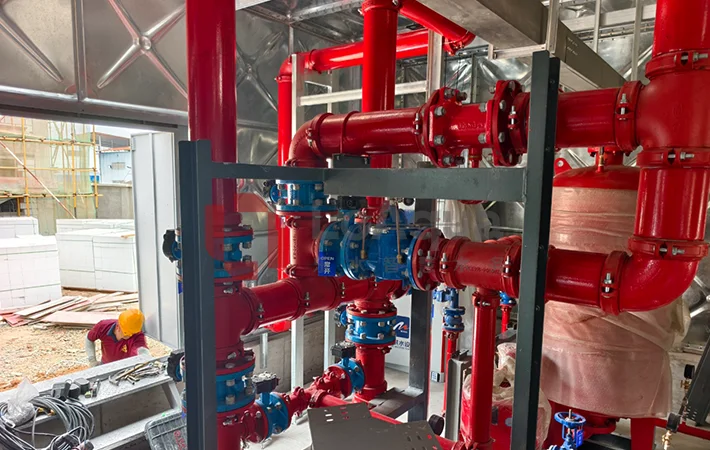
A fire water tank only provides reserve capacity.
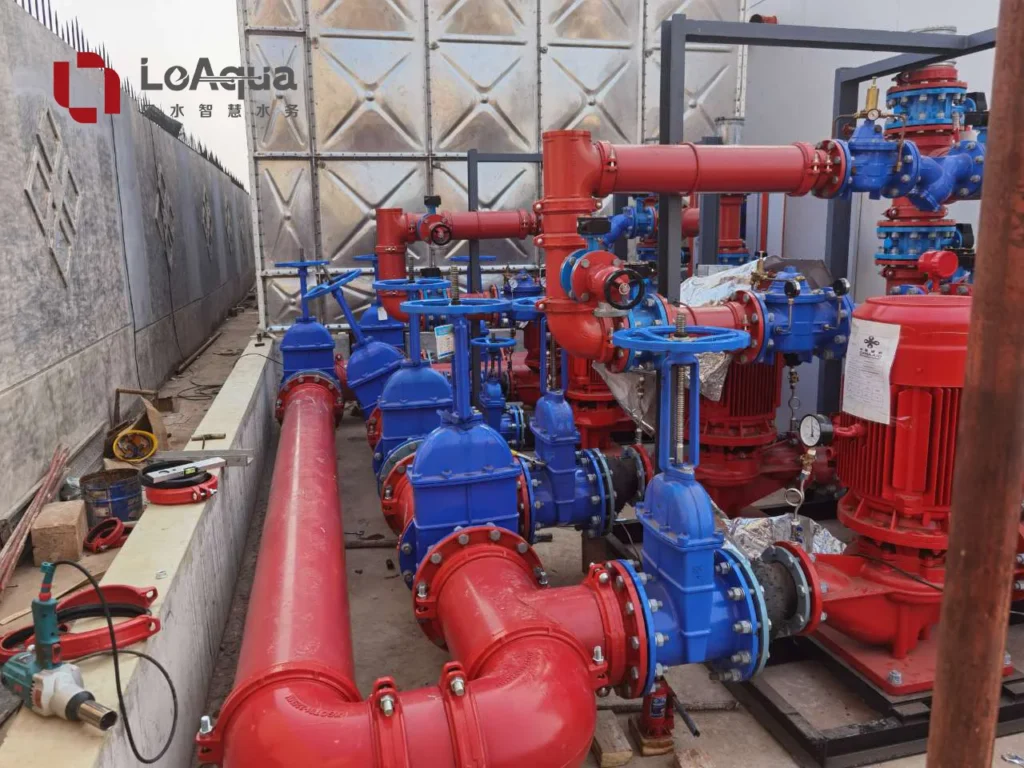
The fire pump system is what delivers that water to the protection network at the required pressure and flow.
Engineers therefore review the tank and pump system together.
Important parameters can include:
- Fire pump flow
- Pump head
- Suction conditions
- Water level
- Pipe losses
- Duty and standby arrangement
- Power supply
- Automatic start sequence
One documented solar generation project used two main fire pumps, one electric-driven and one diesel-driven, together with a jockey pump, while the storage tank included dedicated fire water capacity.
The exact configuration obviously depends on the project.
The important point is that fire water storage and fire pumping cannot be designed independently.
This is especially relevant for remote renewable energy facilities, where the fire water system may need to remain operational without depending on a conventional municipal network.
A Practical Solar Power Plant Fire Water Tank Checklist
Before approving a tank, engineers should confirm:
| Item | What to Review |
| Plant configuration | PV layout, substations, transformers and other protected areas |
| Fire strategy | Hydrants, hose stations, sprinklers, sprays or other systems |
| Fire demand | Required flow and simultaneous demand |
| Storage duration | Required duration under the applicable design basis |
| Water source | Municipal, private or dedicated fire water supply |
| Tank capacity | Based on the project fire water calculation |
| Tank location | Coverage, access and maintenance |
| Installation | Above-ground or underground |
| Material | Corrosion and environmental requirements |
| Fire pumps | Flow, head, redundancy and power |
| Controls | Automatic starting and alarm functions |
| Documentation | Drawings, calculations and project approvals |
The checklist is not a substitute for a fire protection engineer’s design.
It is simply a practical way to make sure the main questions are answered before the tank is ordered.
A LeAqua Project Perspective
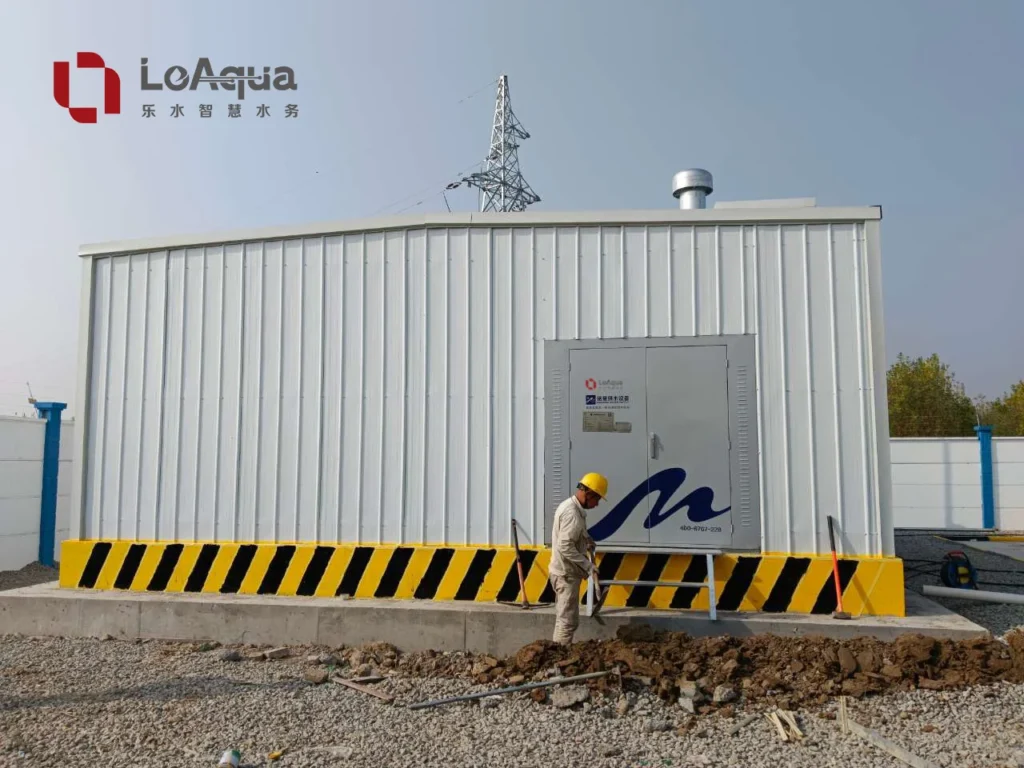
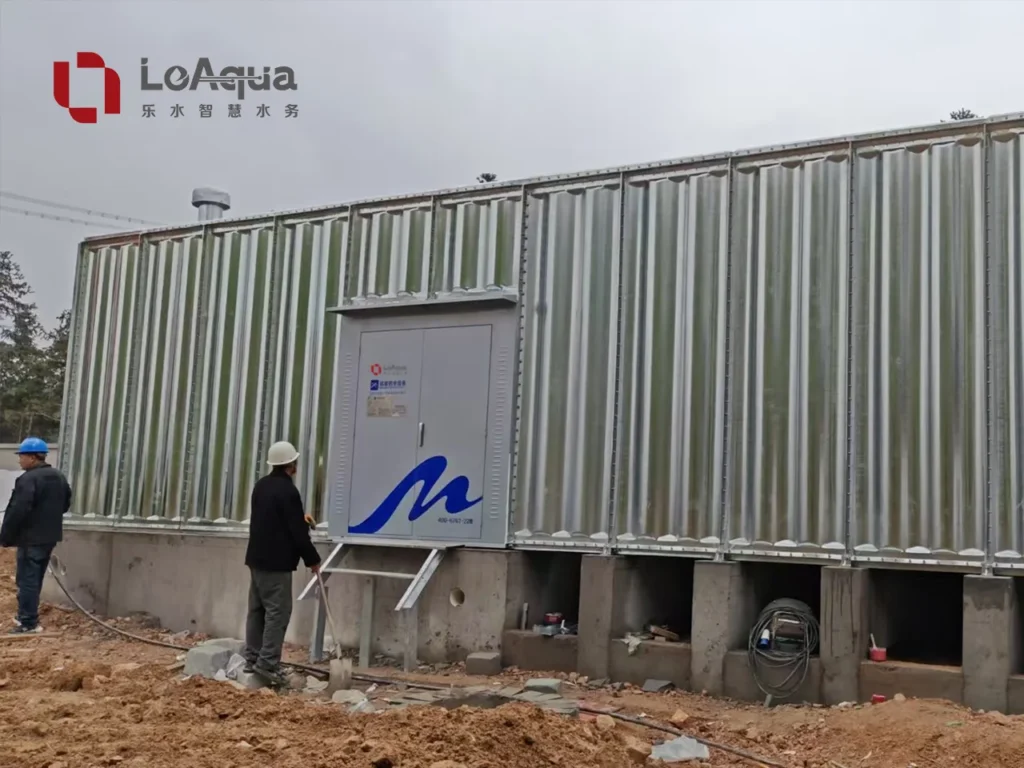
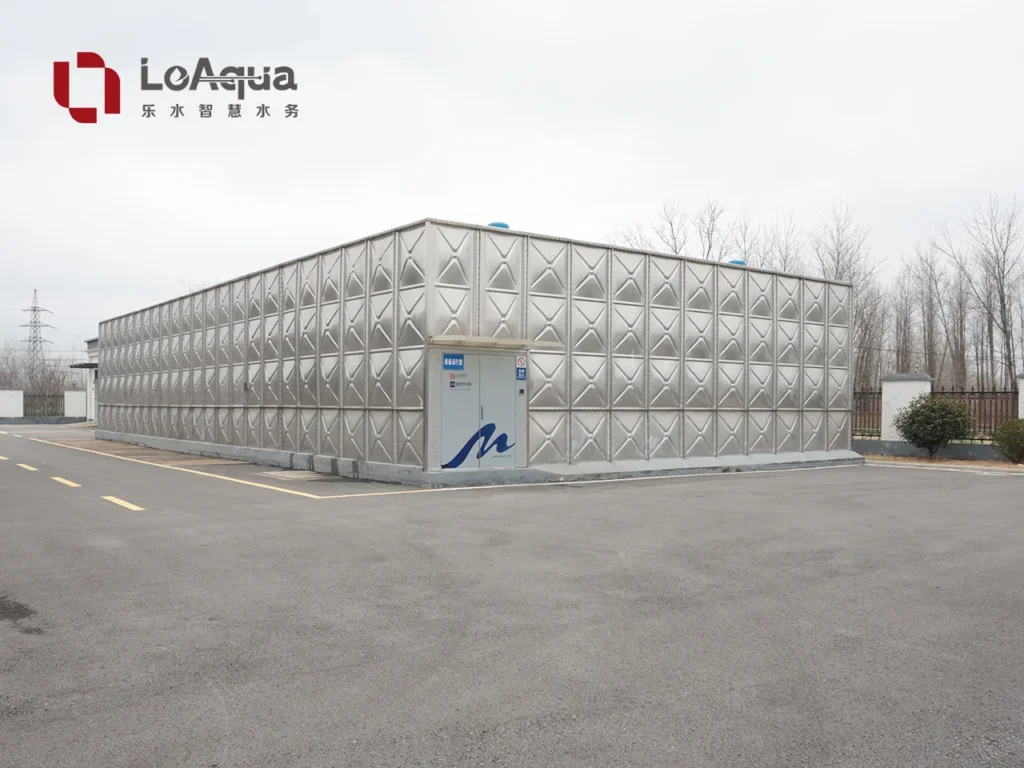
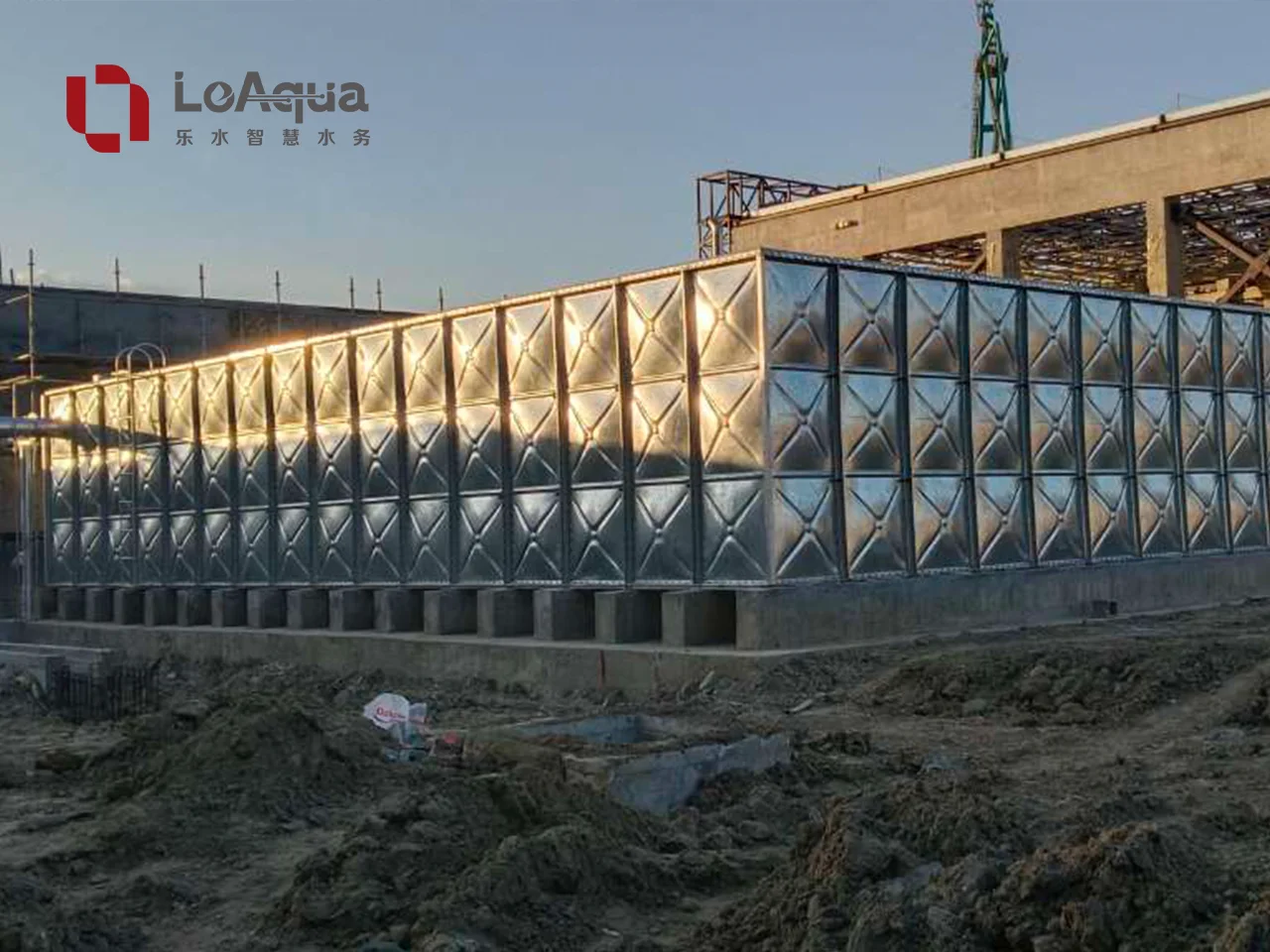
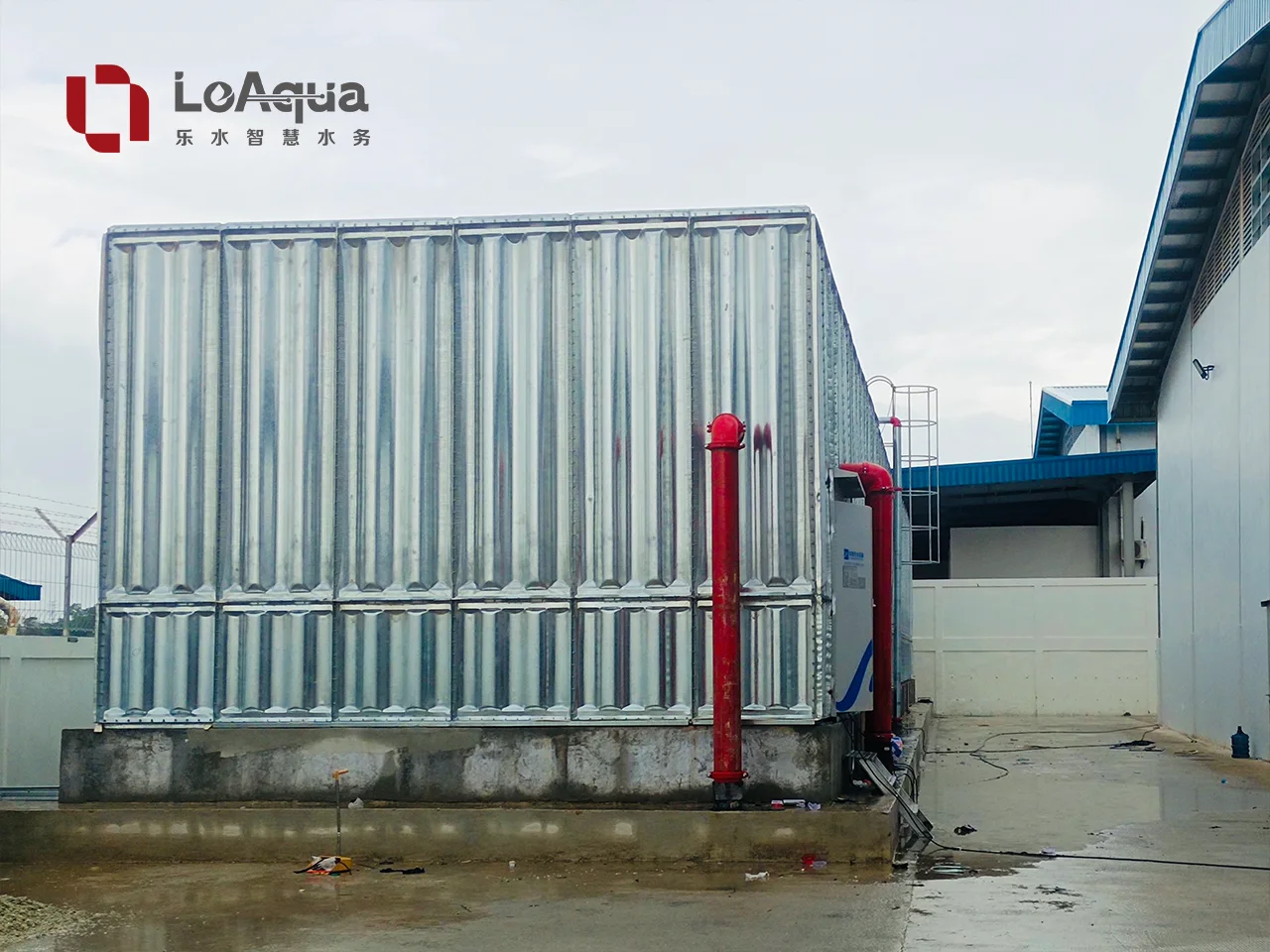
LeAqua has supplied integrated fire protection equipment for renewable energy projects, including a 100 MW photovoltaic plant project.
The value of this type of project is not simply the water tank itself.
The fire water system needs to be considered together with pumping equipment, controls, site layout and the operating conditions of the power plant.
That is the same principle used in other water storage projects:
Storage → Pumping → Distribution → Monitoring
The tank is an important part of the system, but it is not the entire system.
Final Thoughts
Selecting a fire water tank for a solar power plant begins with the fire protection strategy, not the tank catalogue.
Engineers need to establish the relevant fire scenarios, water demand, storage duration and applicable project requirements before deciding the tank capacity.
They then need to consider the site, tank structure, installation method, fire pumps and system controls together.
For LeAqua, renewable energy projects are another example of why water storage is increasingly becoming part of a broader engineering solution.
A well-selected fire water tank is not simply a large container of water.
It is one component of a fire protection system designed to provide the required water when the project needs it.