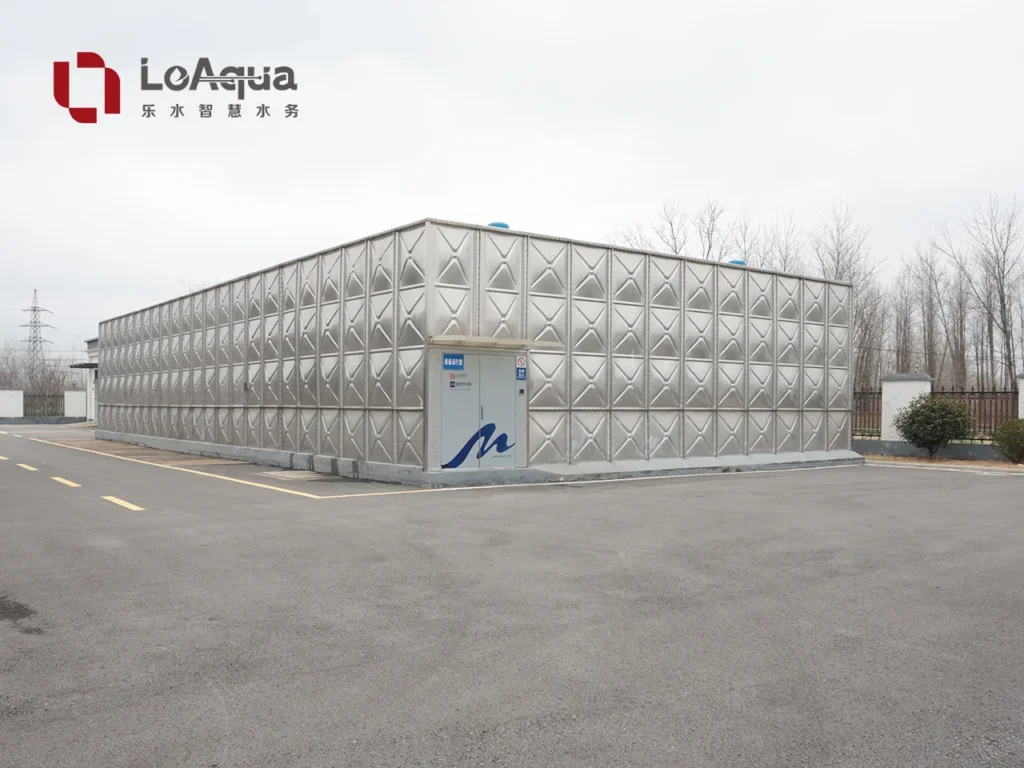
Choosing a stainless steel water tank is often associated with one common question:
Should the tank use SS304 or SS316?
At first glance, the answer may seem straightforward. However, experienced engineers understand that material selection should be based on project conditions rather than assumptions or specifications alone.
Both SS304 and SS316 are widely used stainless steel materials and both play important roles in modern water storage applications. The most suitable option depends on installation conditions, operating expectations, environmental exposure, and long-term project objectives.
LeAqua develops stainless steel water tank solutions designed to support different project requirements through practical engineering and application-based material selection.
Understanding the Difference Between SS304 and SS316
SS304 and SS316 belong to the austenitic stainless steel family and are both widely used for water storage applications.
SS304 is commonly selected for general water storage projects due to its balance of durability, corrosion resistance, and broad applicability.
SS316 contains additional alloy elements that may improve resistance in environments with more demanding exposure conditions.
Rather than viewing one as universally better, it is more useful to understand where each material may fit.
Installation Environment Often Drives Material Selection
Water quality and environmental conditions can influence long-term performance.
Project planners often evaluate:
- Indoor or outdoor installation
- Climate conditions
- Humidity exposure
- Water characteristics
- Maintenance strategy
For many commercial and municipal applications, SS304 may provide an appropriate solution.
For projects operating under more demanding environmental conditions, engineers may evaluate whether SS316 aligns better with long-term objectives.
Selecting material based on actual operating conditions often creates stronger lifecycle value.
Long-Term Planning Matters More Than Initial Decisions
Material selection should support long-term operation rather than short-term optimization.
Project owners increasingly evaluate:
- Expected service life
- Inspection requirements
- Maintenance planning
- Operational continuity
- Lifecycle performance
Choosing a stainless steel water tank without considering future operating conditions may lead to unnecessary modifications later.
Avoid Over-Specification
A common misconception is assuming that selecting the higher-grade material automatically creates the best outcome.
In reality, infrastructure decisions typically balance:
- Technical requirements
- Operating conditions
- Cost efficiency
- Long-term reliability
Selecting the most appropriate material is often more effective than selecting the most advanced specification.
LeAqua approaches stainless steel water tank selection through practical engineering principles intended to support real project requirements.
How to Make the Final Decision
When selecting between SS304 and SS316, consider:
- Project environment
- Expected operating life
- Water storage conditions
- Maintenance expectations
- Future operational plans
These considerations often provide a clearer basis for decision-making than material designation alone.
Conclusion
SS304 and SS316 stainless steel water tanks each support different project requirements.
The most effective solution depends on how the system will operate over time rather than choosing a material solely based on specification hierarchy.
Selecting the right stainless steel water tank starts with understanding the project itself.