Fire water planning for a wind farm is different from planning fire protection for a typical commercial building.
A wind farm may contain dozens of turbines spread across a large area, with substations, transformers, electrical equipment and operations facilities located at different points on the site.
Some projects are also far from municipal water infrastructure.
That creates a practical question:
Where should the firefighting water come from, and how can it reach the areas where it may actually be needed?
The answer is not always a single large water tank.
Depending on the project, engineers may consider a central fire water supply, remote water tanks, multiple storage points or a combination of these arrangements.
The appropriate solution depends on the fire risk assessment, local requirements, site layout and the capabilities of the responding fire service.
A useful starting point is therefore not:
“How much water does a wind farm need?”
It is:
“What fire scenarios need to be supported, and where does the water need to be available?”
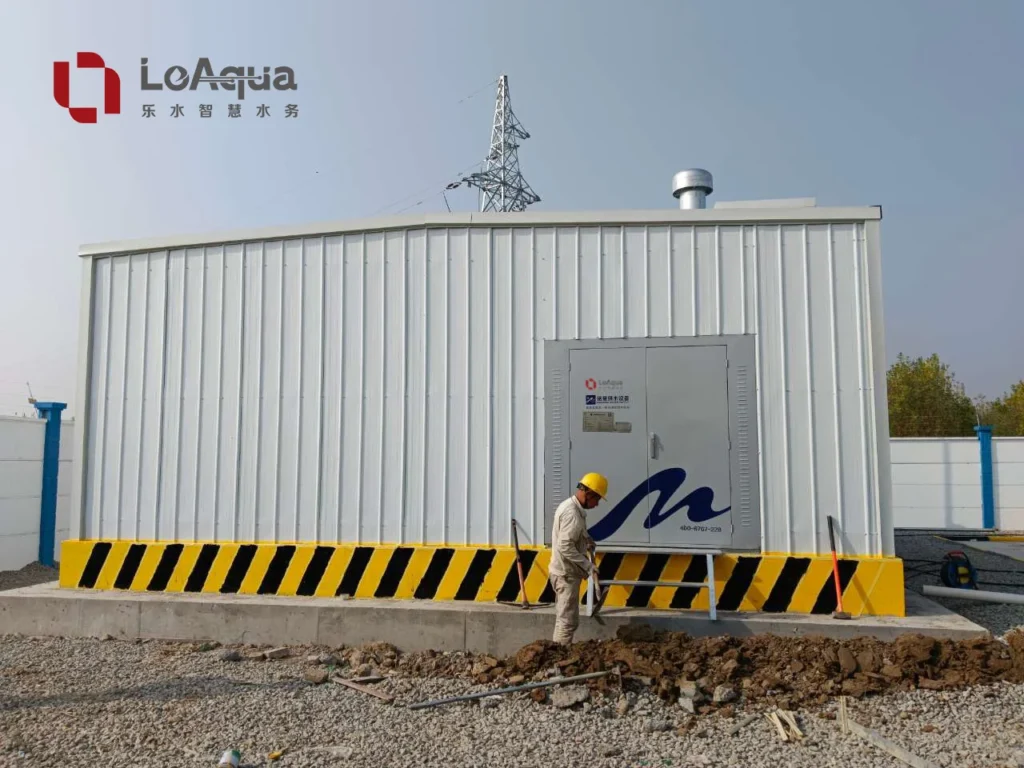
1. Start With the Wind Farm Fire Risk
Before selecting a tank, engineers first identify the areas that require fire protection.
A wind farm can contain several different fire risks, including:
- Wind turbine equipment
- Nacelles and electrical components
- Transformers
- Substations
- Switchgear
- Operations and maintenance buildings
- Battery or energy storage equipment, where present
The risks are not necessarily the same.
A turbine located several kilometres from the main substation presents a different access problem from an operations building next to the site entrance.
Wind turbine height creates another challenge.
Firefighters may not be able to reach a fire inside a nacelle directly, and some turbine fire protection strategies rely on fixed suppression or detection systems rather than conventional firefighting from ground level. Fire protection suppliers also note that turbine height and remote locations can make conventional fire brigade response difficult.
For this reason, the fire water plan needs to be developed together with the overall emergency response strategy.
2. Determine Where Fire Water Is Actually Needed
Once the major hazards have been identified, engineers can look at where water needs to be available.
This may include:
- Substation areas
- Transformers
- Operations buildings
- Access roads
- Fire hydrant locations
- Dedicated firefighting points
The important point is that the whole wind farm does not necessarily require the same level of water protection everywhere.
A project may use a central fire water system for some facilities while providing separate or remote water storage in strategically important locations.
This type of arrangement can be especially useful where turbines or electrical facilities are widely dispersed.
A documented U.S. wind project, for example, required multiple strategically located water tanks because the wind turbines represented a higher fire risk and local firefighting water access was limited. The project specified four 10,000-gallon fire tanks with direct road access for firefighting services.
The lesson is straightforward:
Water storage location can matter just as much as storage volume.
3. Central Fire Water Tank or Remote Tanks?
This is one of the more interesting decisions for a large wind farm.
Centralized Fire Water Storage
A central tank can simplify:
- Pumping equipment
- Water level monitoring
- Maintenance
- Refill arrangements
It may work well when protected facilities are relatively close together and the fire water network can provide adequate pressure and flow throughout the site.
However, a very large site can make a centralized arrangement less practical.
Long pipe runs increase hydraulic losses, while remote turbine locations may also require additional infrastructure.
Remote Fire Water Storage
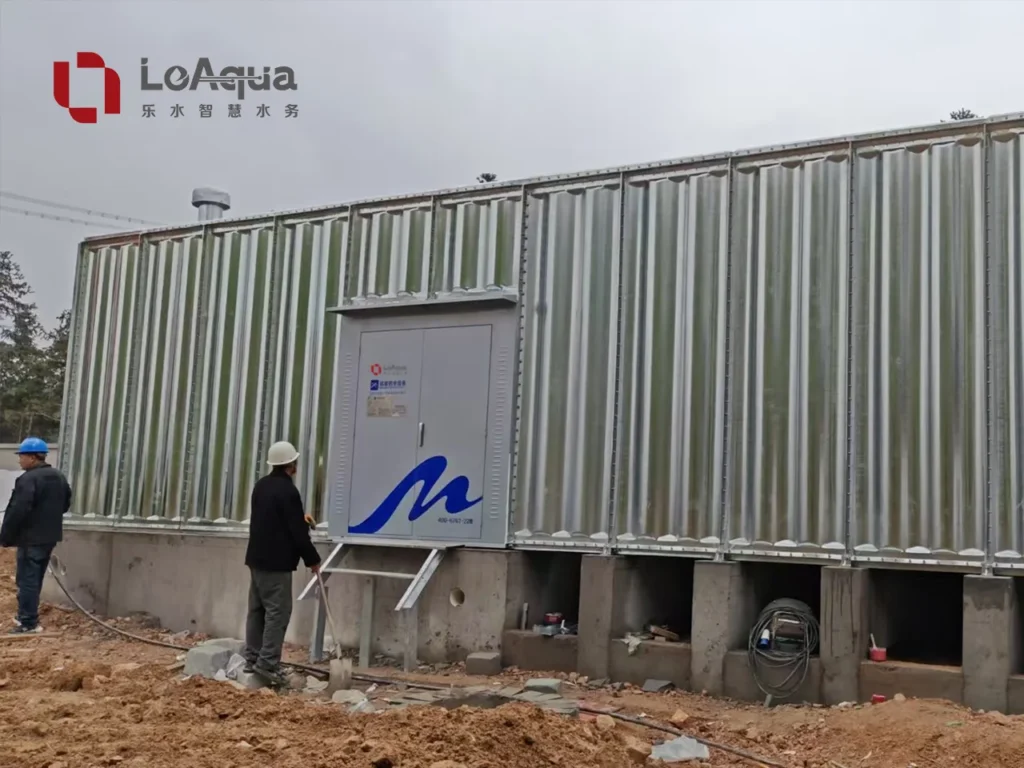
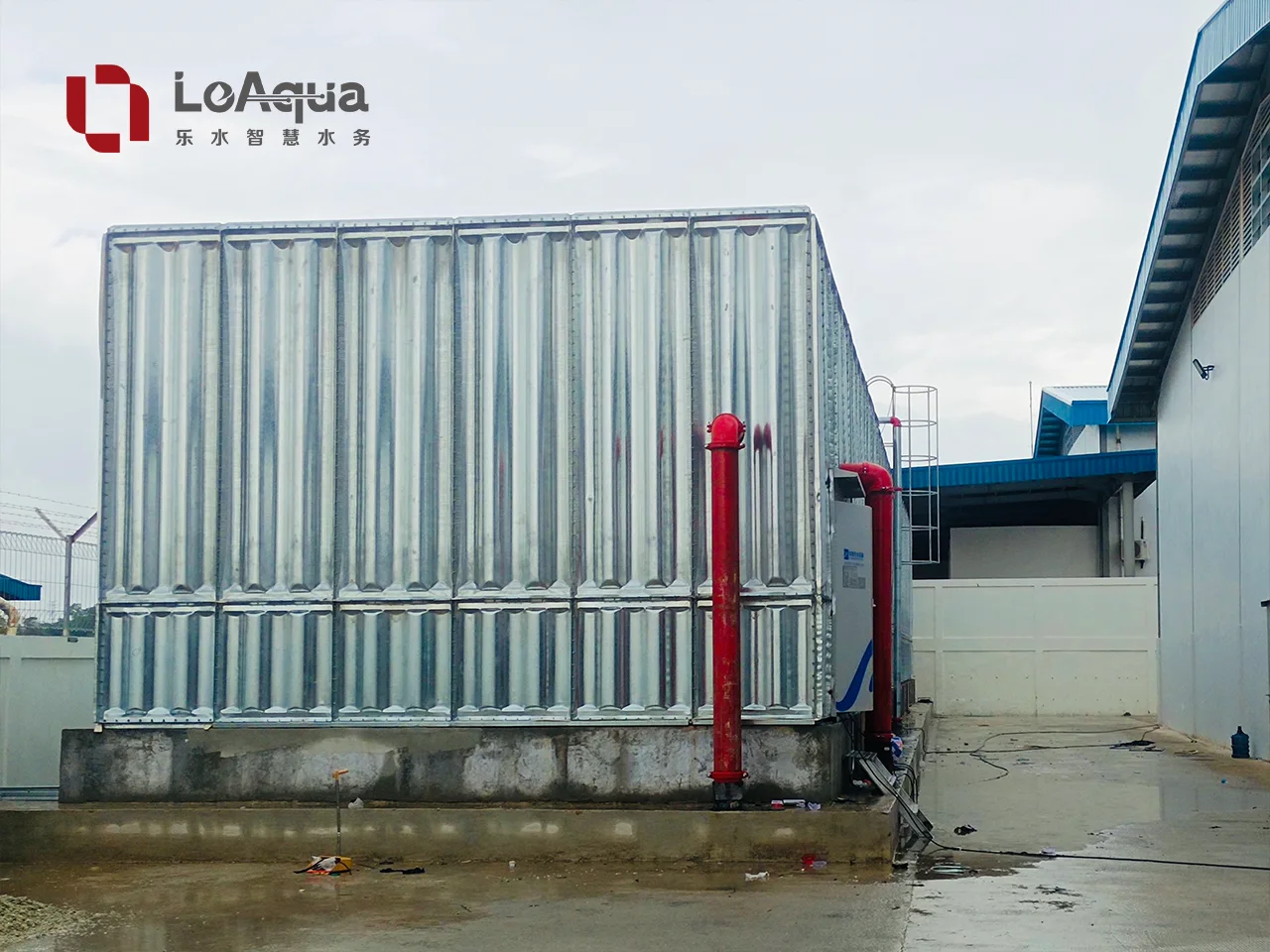
Strategically located tanks can put water closer to areas where emergency access is difficult.
This can be particularly useful for:
- Large wind farms
- Remote substations
- Areas with limited municipal water
- Sites with challenging terrain
Real projects use this approach in different ways.
For example, a wind farm in Germany uses three 50 m³ GRP fire water tanks for a wind farm with up to 13 turbines and a total capacity of 42.9 MW.
Other projects have gone further and installed separate fire tanks specifically so local fire services can access water close to the wind farm. A California wind project, for example, required strategically located tanks with dedicated vehicle access.
The final decision depends on the site.
A central tank is not automatically better, and remote tanks are not automatically necessary.
4. Calculate Fire Water Demand Before Selecting Capacity
Once the protection arrangement is established, engineers can determine the required water demand.
Typical considerations include:
- Fire flow
- Number of simultaneous outlets
- Required operating duration
- Fire scenario
- Existing water sources
- Local authority requirements
The installed capacity of a wind farm does not directly determine the required tank size.
A 30 MW wind farm and a 300 MW wind farm can have very different fire water requirements depending on:
- Number of turbines
- Site area
- Transformer arrangement
- Fire protection systems
- Available water supplies
- Local fire authority requirements
For this reason, engineers should avoid using a fixed rule such as “X cubic metres per MW.”
The correct approach is to determine the required fire scenario and then establish the corresponding flow and duration.
Some wind projects also use water storage primarily to support local firefighting response rather than as the sole water source for fixed suppression systems. This distinction should be made during the fire engineering stage.
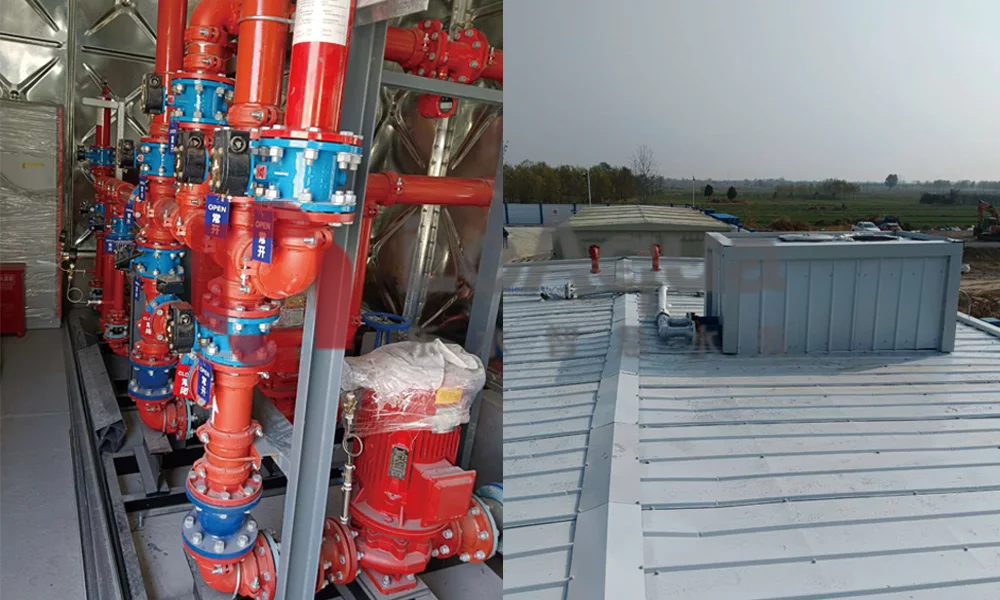
5. Tank Location Must Work for Emergency Response
A fire water tank can have sufficient capacity and still be poorly positioned.
Engineers should review:
- Fire truck access
- Road width
- Turning space
- Distance from protected equipment
- Tank accessibility
- Maintenance access
- Refill arrangements
This becomes particularly important on remote wind farms.
A tank hidden behind equipment or located on a difficult access road is less useful during an emergency than one that has been deliberately positioned for rapid access.
Recent wind farm projects continue to use dedicated water storage to improve wildfire response. For example, the Cathedral Rocks Wind Farm in South Australia installed a 30,000-litre tank specifically to give local firefighting crews direct access to water and allow helicopters to refill more efficiently.
This is a useful reminder that the role of a fire water tank can extend beyond the wind farm’s fixed fire protection system.
It can also form part of the wider emergency response infrastructure.
6. Above-Ground or Underground Fire Water Storage?
The installation method should be selected according to site conditions.
Above-Ground Tanks
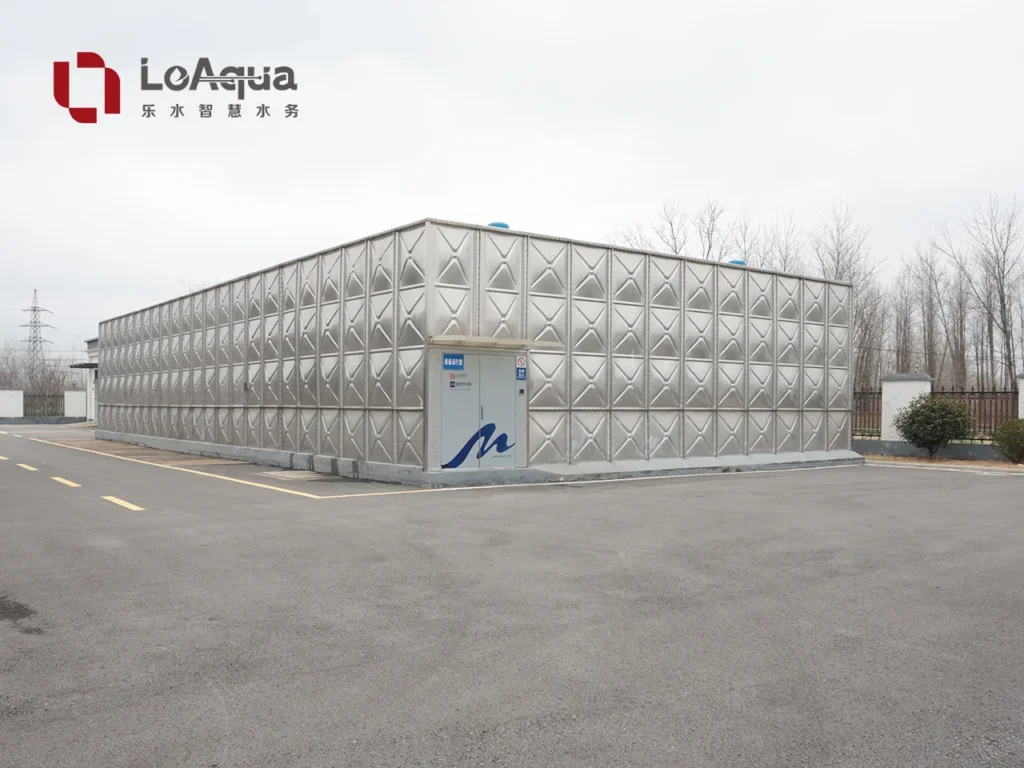
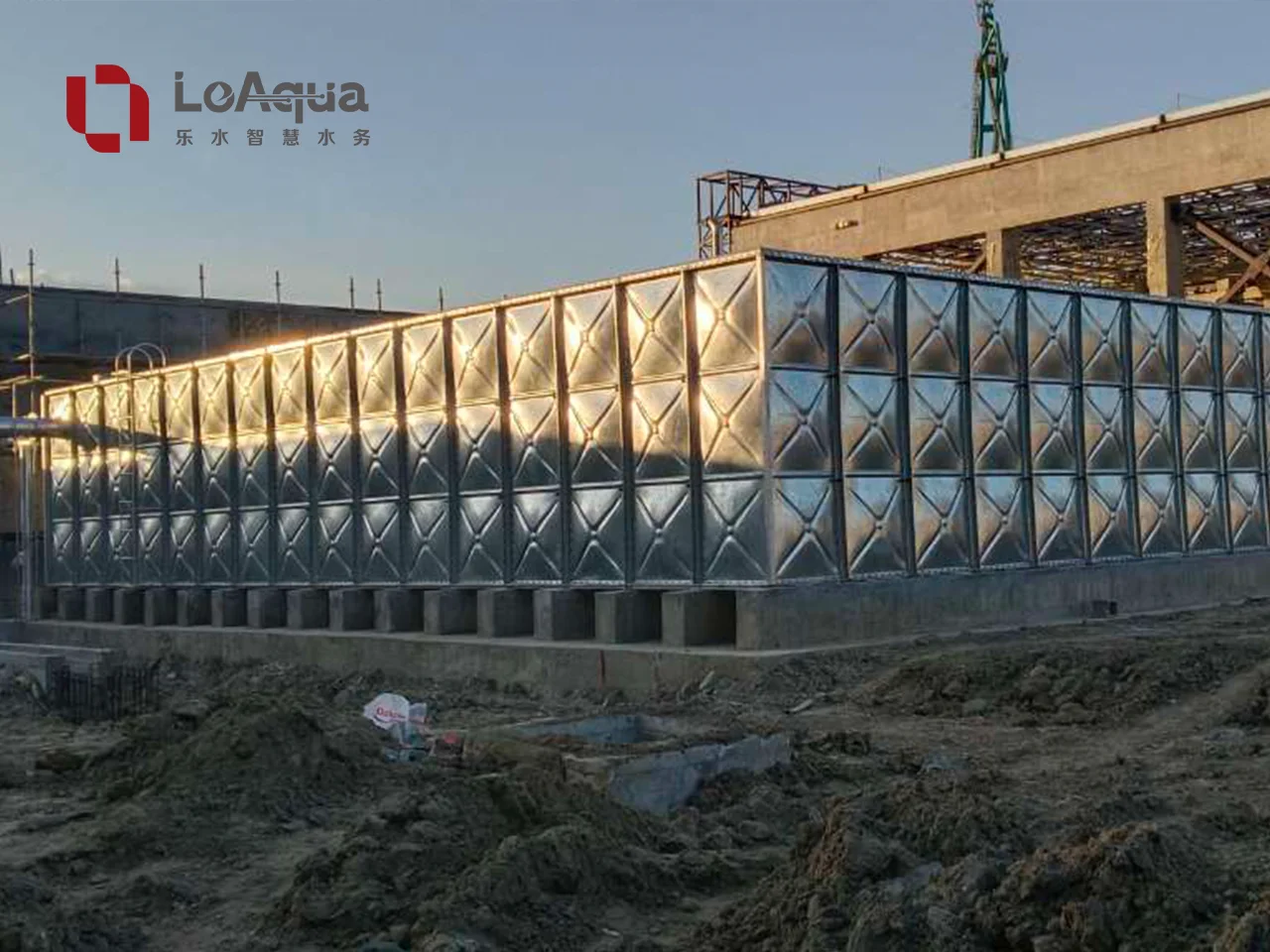
Above-ground storage can simplify:
- Inspection
- Access
- Maintenance
- Installation
It may be particularly practical where sufficient land is available.
However, engineers still need to consider:
- Weather exposure
- Structural loads
- Foundation design
- Transportation
Underground Tanks
Underground storage may be considered when the project needs to preserve surface space or integrate the tank into the site layout.
The engineering review then becomes more involved.
Engineers may need to consider:
- Soil pressure
- Groundwater
- Buoyancy
- Surface loading
- Waterproofing
- Inspection access
For remote wind farms with long service lives, maintenance access should be considered from the beginning rather than treated as a later construction issue.
7. Match the Fire Water Tank With the Pump System
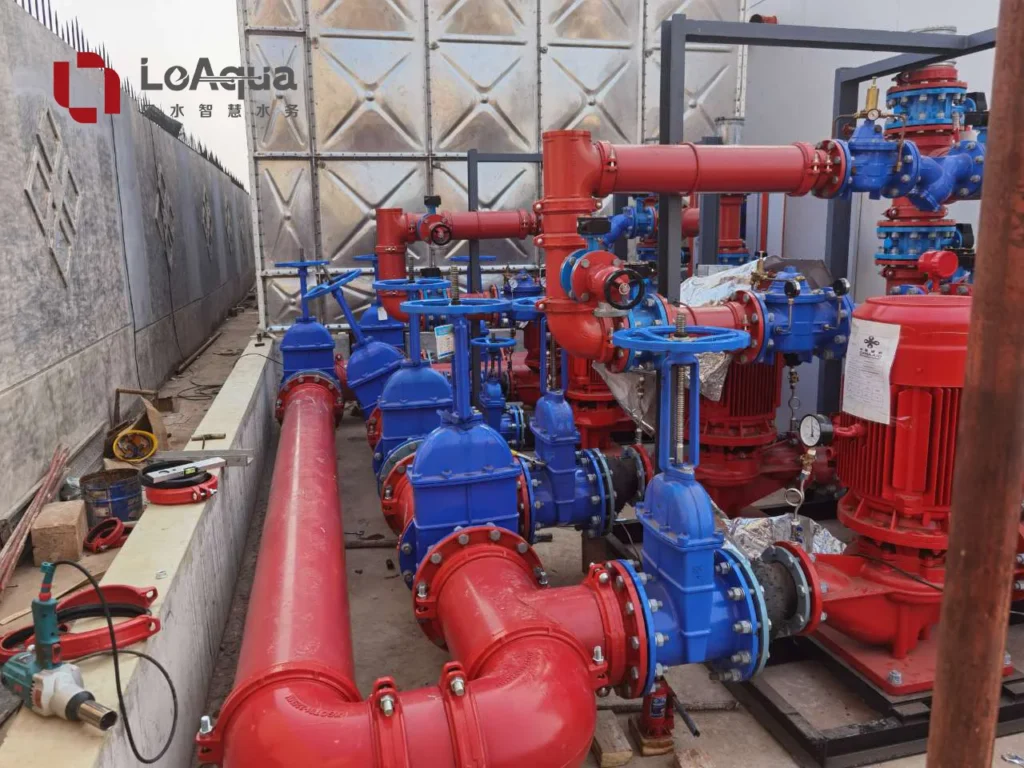
A fire water tank provides the reserve.
The pump system provides the pressure and flow needed to distribute that water.
The two therefore need to be reviewed together.
Engineers may evaluate:
- Fire pump duty
- Pump head
- Suction conditions
- Water level
- Pipe losses
- Duty and standby pumps
- Power supply
- Automatic starting
This is particularly important where a central tank supplies multiple remote fire protection points.
Long distribution distances can introduce significant hydraulic losses.
In other projects, remote tanks may reduce the distance between the stored water and the firefighting point.
The tank layout and pump arrangement are therefore part of the same engineering decision.
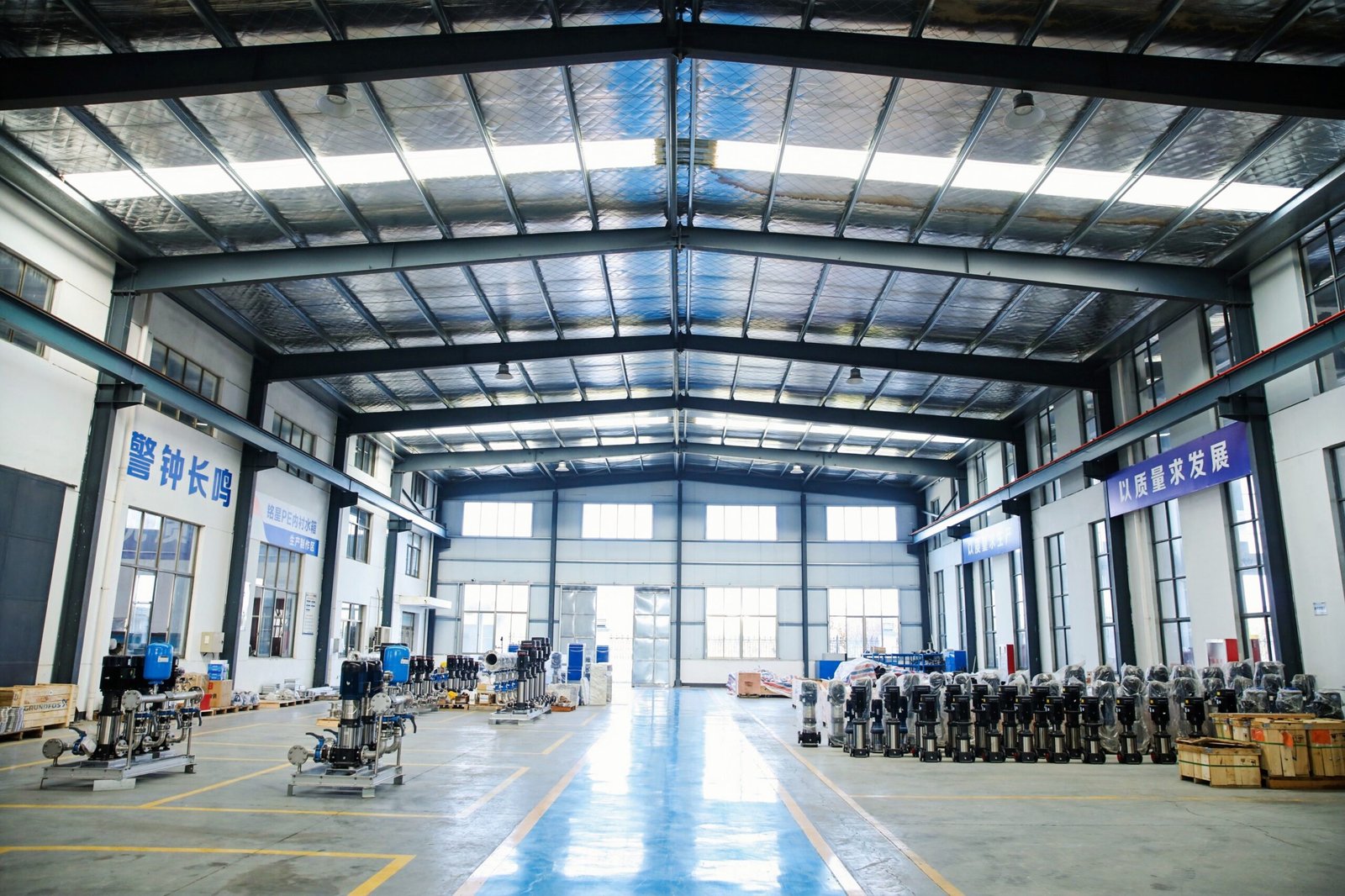
For a coordinated water storage and pumping solution, this can naturally develop into a water tank with pump system or a more fully integrated pump station arrangement.
8. Monitoring Matters More on Remote Sites
Wind farms often operate with limited staff on site.
That makes monitoring valuable for both routine operation and emergency preparedness.
A fire water system may monitor:
- Tank water level
- Pump status
- Pressure
- Power availability
- Alarm conditions
- Equipment faults
Remote monitoring allows operators to identify a low water level or equipment fault before it becomes a problem during an emergency.
It also provides a record of operating conditions that can be reviewed during maintenance.
For a large wind farm, this can be especially useful when the distance between the control room and individual equipment locations is significant.
A Practical Fire Water Planning Checklist for Wind Farms
Before approving the fire water system, engineers should confirm:
| Item | What to Review |
|---|---|
| Wind farm layout | Turbines, substations and O&M buildings |
| Fire risk | Turbine, transformer, electrical and building risks |
| Fire water demand | Required flow and duration |
| Storage arrangement | Central, remote or combined |
| Tank location | Emergency access and coverage |
| Water source | Municipal, private or dedicated storage |
| Pump system | Flow, head and redundancy |
| Pipework | Distance and hydraulic losses |
| Installation | Above-ground or underground |
| Monitoring | Water level, pressure and alarms |
| Local requirements | Fire authority and project standards |
| Maintenance | Inspection, refill and long-term access |
This checklist should support—not replace—the project’s fire protection engineering and local authority requirements.
A Project Perspective
Large renewable energy sites highlight an important difference between water storage and complete fire water planning.
The question is rarely just:
“Where can we put the tank?”
The better question is:
“Where does water need to be available, how quickly must it be delivered, and how will the system perform during an emergency?”
That approach is especially relevant to wind farms because turbines and supporting infrastructure can be distributed across a large area.
For LeAqua, this is where water tank engineering and pump system engineering begin to overlap.
A fire water project may start with a storage requirement, but the final solution may involve tank design, pump selection, piping, controls and monitoring as one coordinated system.
Final Thoughts
Planning fire water storage for a wind farm is not simply a matter of choosing a large tank.
The project team first needs to understand the fire risk, site arrangement, available water sources and emergency response strategy.
Only then can engineers determine whether a centralized tank, multiple remote tanks or a combination of storage arrangements makes sense.
Tank location, pump performance, hydraulic conditions and monitoring also need to be considered together.
For large and remote wind farms, the most useful fire water system is not necessarily the one with the largest storage volume.
It is the one that puts the right amount of water in the right place and makes that water available when it is needed.