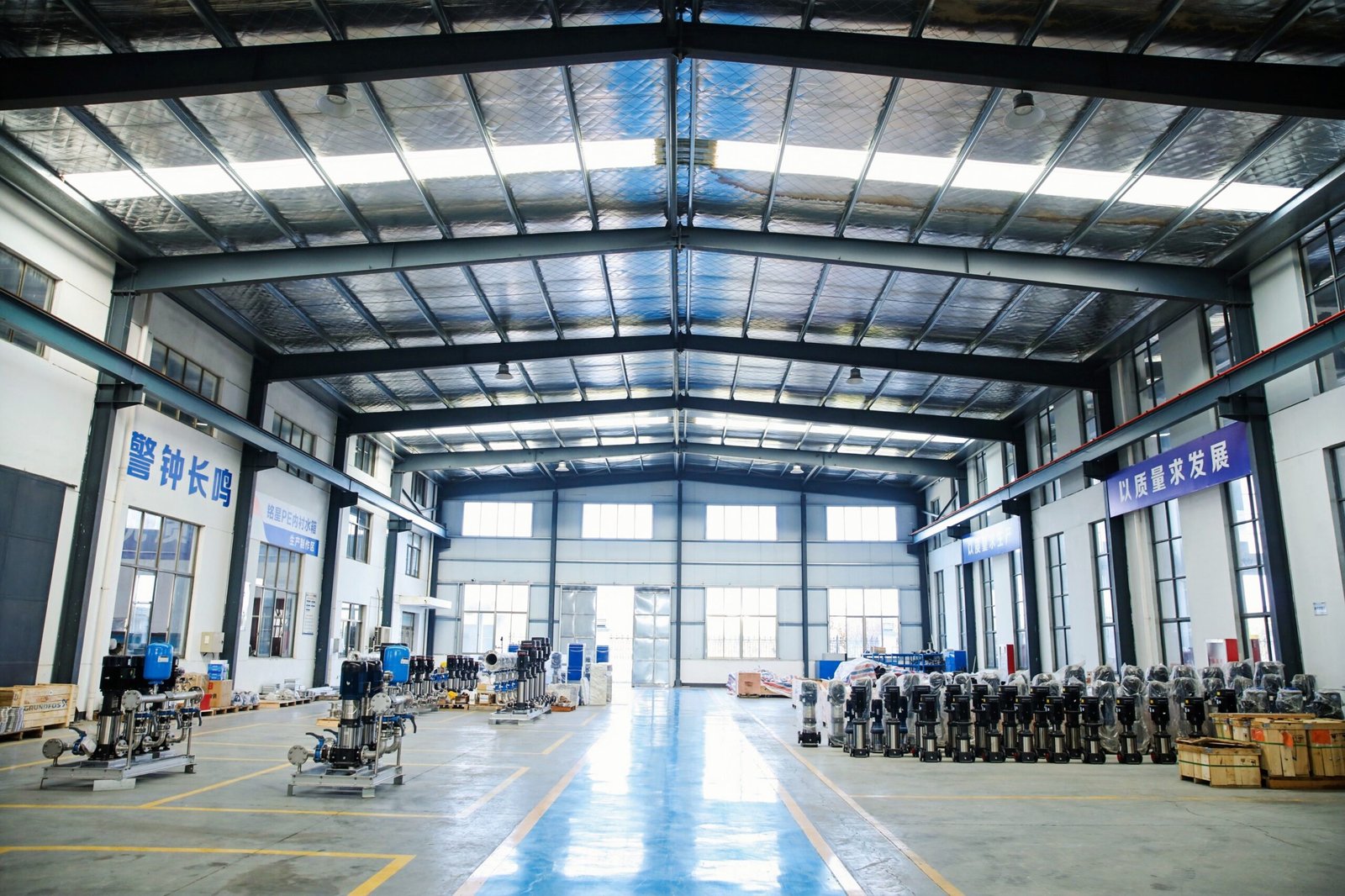
Selecting a water tank is not simply a matter of choosing a material or comparing storage capacity.
Modern water storage projects involve a wide range of engineering considerations, including structural design, installation conditions, maintenance accessibility, lifecycle performance, future expansion, and the operational objectives of the entire water supply system.
Whether the project serves a commercial building, municipal infrastructure, an industrial facility, a fire protection network, or an underground installation, the water tank becomes an essential part of the overall engineering system.
Many first-time buyers begin by asking questions such as:
- Which water tank is the best?
- Which material lasts the longest?
- Which type costs the least?
Experienced engineers usually ask different questions.
Instead of searching for a universally “best” water tank, they evaluate which engineering solution best supports the requirements of a specific project.
In practice, several different water tank systems can often satisfy the same application.
For example, potable water storage, fire protection, underground installations, and commercial buildings may all utilize different structural configurations depending on project size, design objectives, installation conditions, and long-term operational planning.
This means that selecting a water tank is rarely about identifying one correct product.
It is about understanding how different engineering solutions perform under different project conditions.
This guide explains the decision-making process commonly used during water tank selection and introduces the engineering factors that should be evaluated before choosing a storage system.
LeAqua develops engineered water storage solutions including stainless steel water tanks, composite water tanks, bolted systems, welded systems, and underground water storage solutions. Rather than promoting a single configuration for every application, the focus is on selecting the most appropriate engineering solution according to the project’s technical requirements.
Step 1: Start with Project Requirements, Not Product Types
One of the most common mistakes in water tank selection is choosing a product before fully understanding the project’s engineering requirements.
Professional design normally begins by defining the operating conditions of the system rather than selecting a particular tank configuration.
Typical engineering questions include:
- What type of water will be stored?
- What storage capacity is required today?
- Will future expansion be necessary?
- Is the tank installed above ground or underground?
- How much installation space is available?
- What structural loads must be considered?
- What maintenance access will be required?
- What is the expected service life of the facility?
These questions establish the engineering objectives that guide every later design decision.
Once these requirements are clearly defined, engineers can evaluate which structural solution provides the best balance between performance, construction efficiency, lifecycle cost, and long-term reliability.
This approach reduces the risk of selecting a system based only on initial purchase cost or product familiarity.
Step 2: Understand the Available Engineering Solutions
After defining the project requirements, engineers compare the available engineering solutions.
It is important to recognize that modern water tanks are not designed around a single application.
Many different structural configurations can be engineered for potable water storage, fire protection, municipal infrastructure, commercial buildings, industrial facilities, and underground installations.
The difference lies in how the system is engineered, rather than whether it can perform a particular application.
For this reason, engineers evaluate the characteristics of each structural solution instead of assuming that one product is limited to one specific use.
Stainless Steel Water Tanks
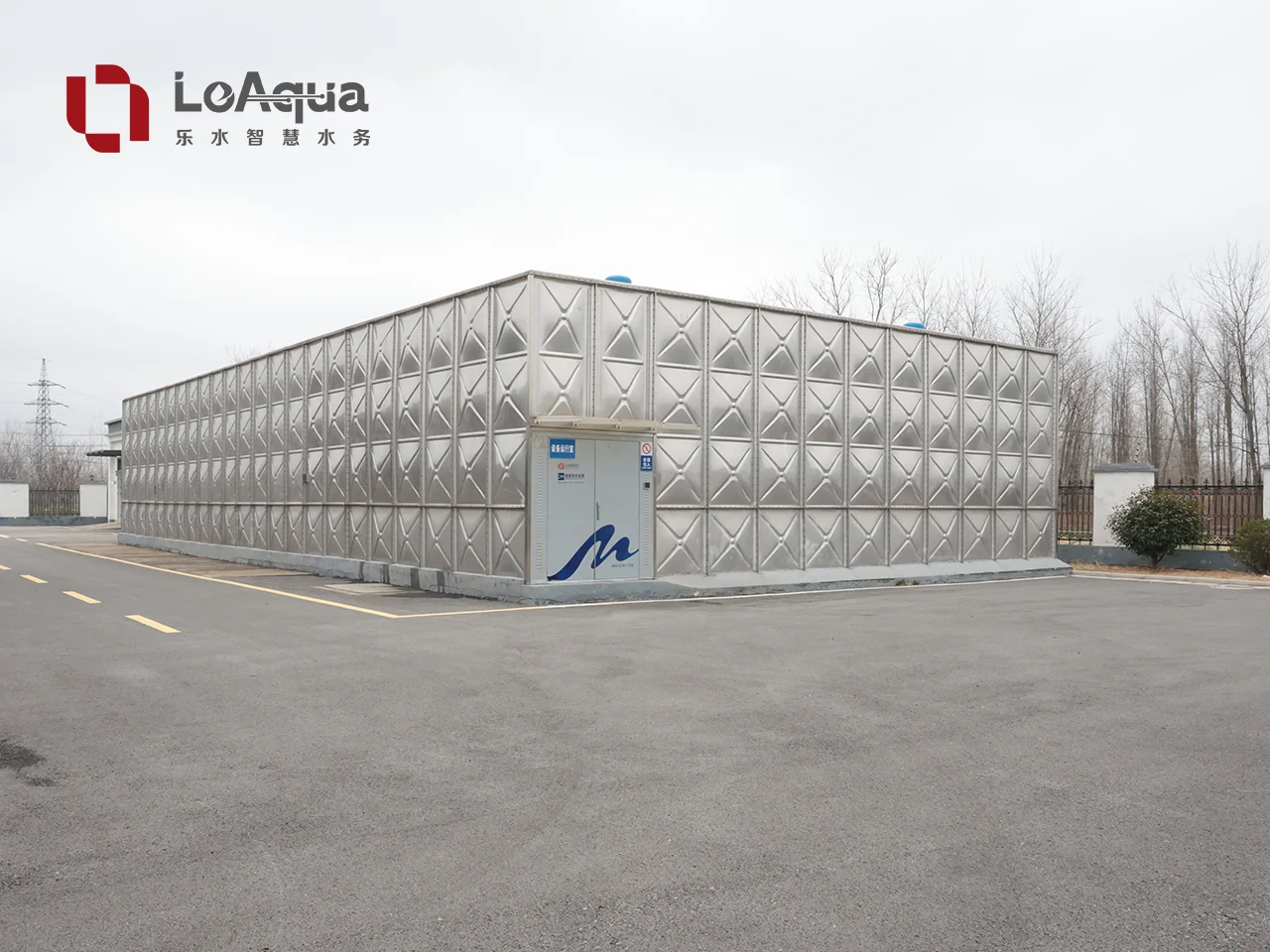
Stainless steel water tanks are engineered using stainless steel as the primary structural and water-contact material.
Depending on project requirements, they may be manufactured as welded systems or modular bolted systems.
Engineers often evaluate stainless steel water tanks because they offer:
- Excellent corrosion resistance
- Hygienic water-contact surfaces
- Flexible structural configurations
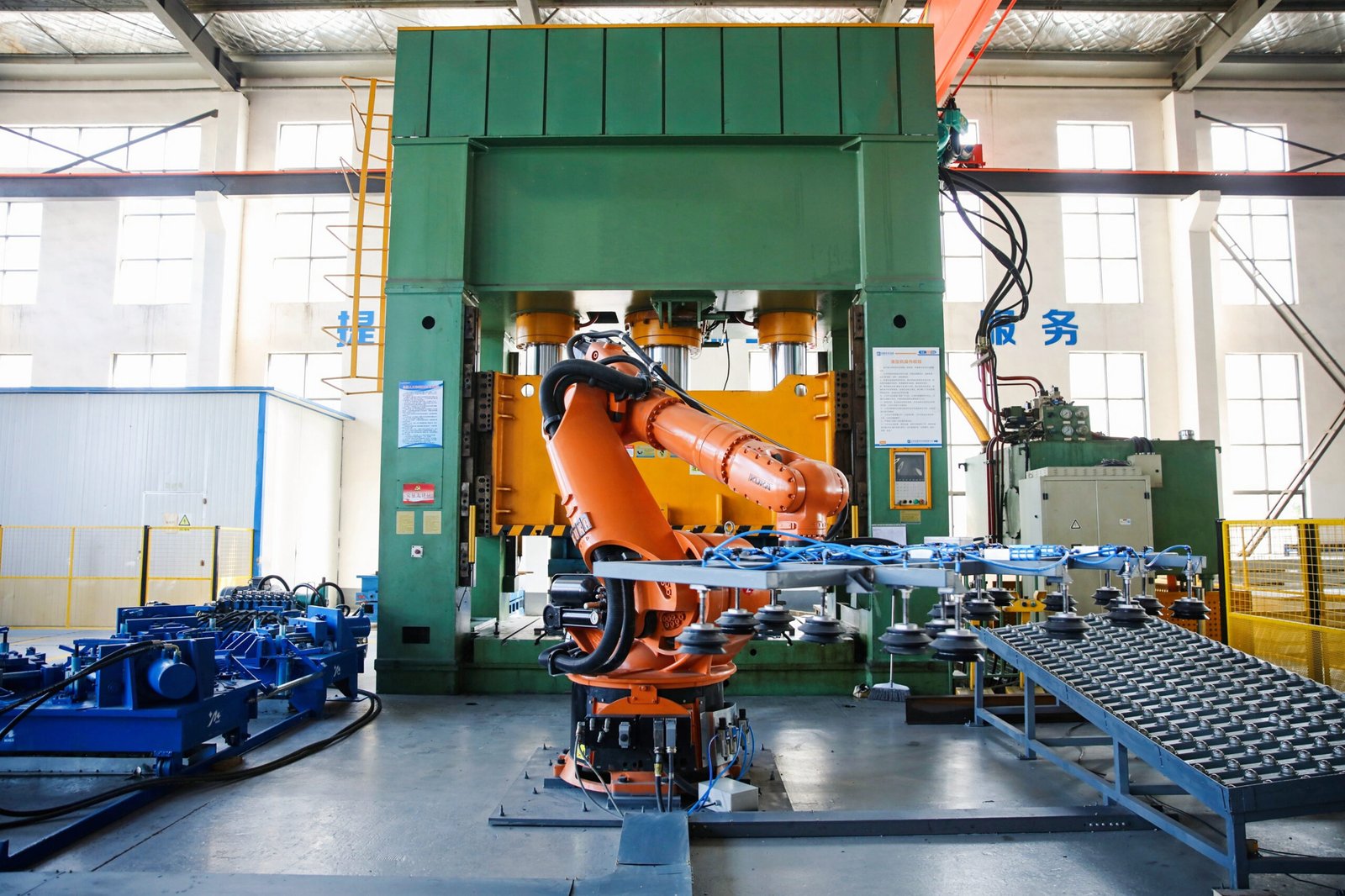
- Factory-controlled manufacturing
- Modular installation options
- Long-term lifecycle performance
According to project design, stainless steel water tanks can be engineered for commercial buildings, municipal infrastructure, industrial facilities, potable water systems, fire protection systems, and underground water storage.
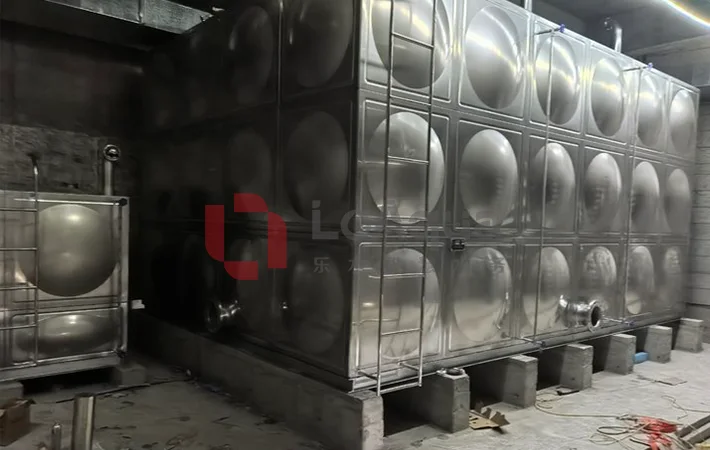
Composite Water Tanks
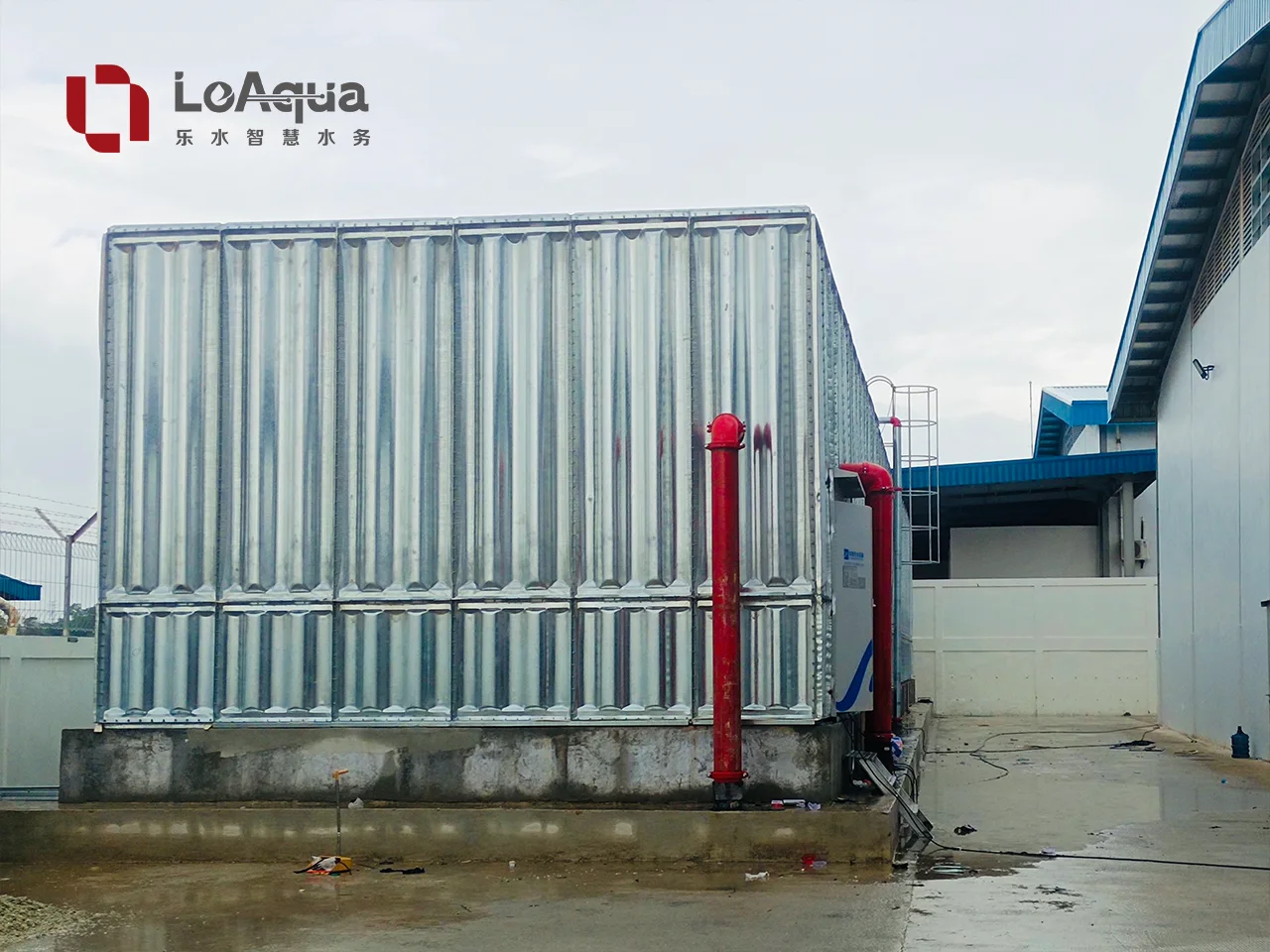
Composite water tanks combine a stainless steel inner water-contact surface with a hot-dip galvanized structural outer layer.
Rather than replacing stainless steel water tanks, they represent another engineering solution based on a different structural concept.
Depending on project requirements, composite water tanks can also be engineered for potable water storage, commercial buildings, industrial facilities, municipal projects, fire protection systems, and underground installations.
The engineering objective is to combine corrosion-resistant water-contact surfaces with an efficient structural design suitable for modular construction.
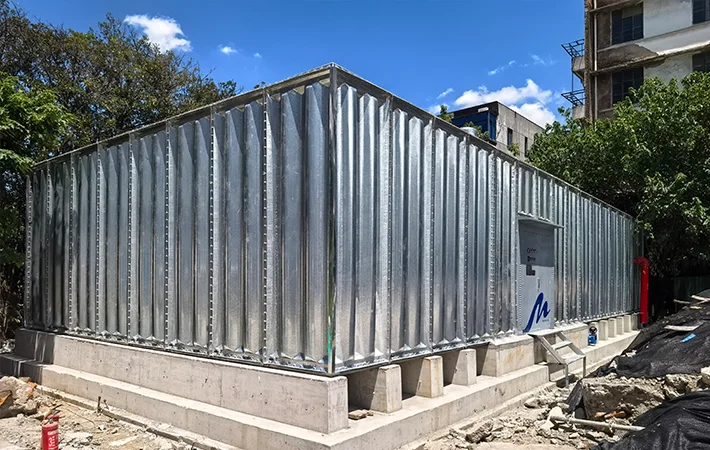
Double-sided Rib-Reinforced Water Tanks
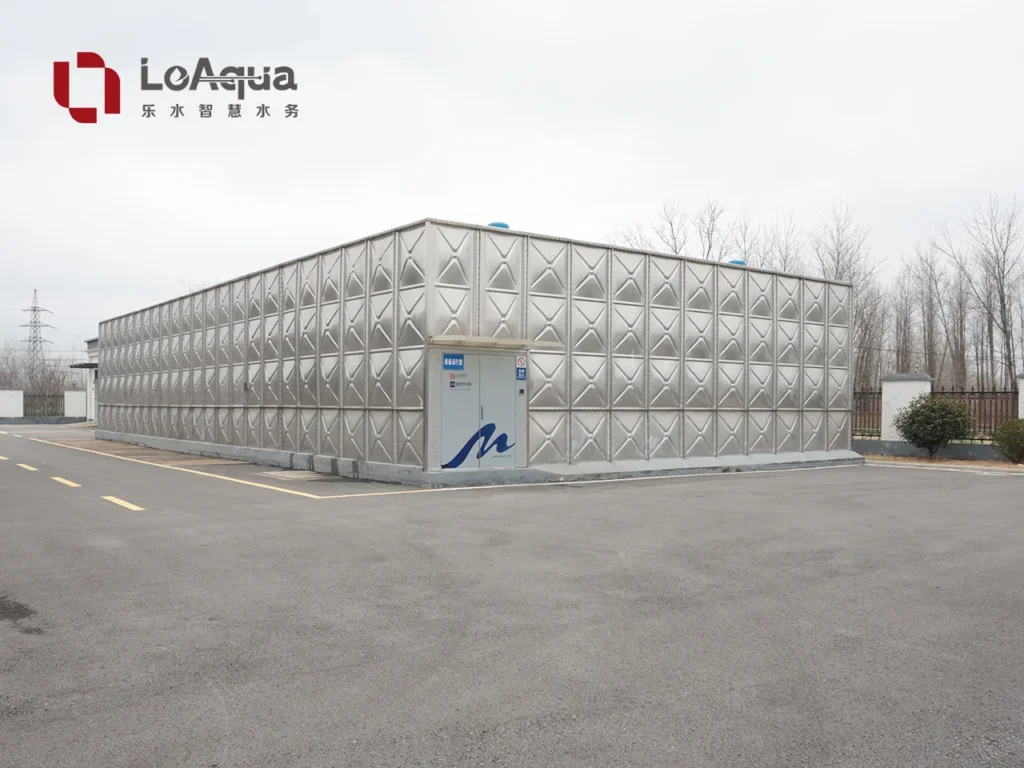
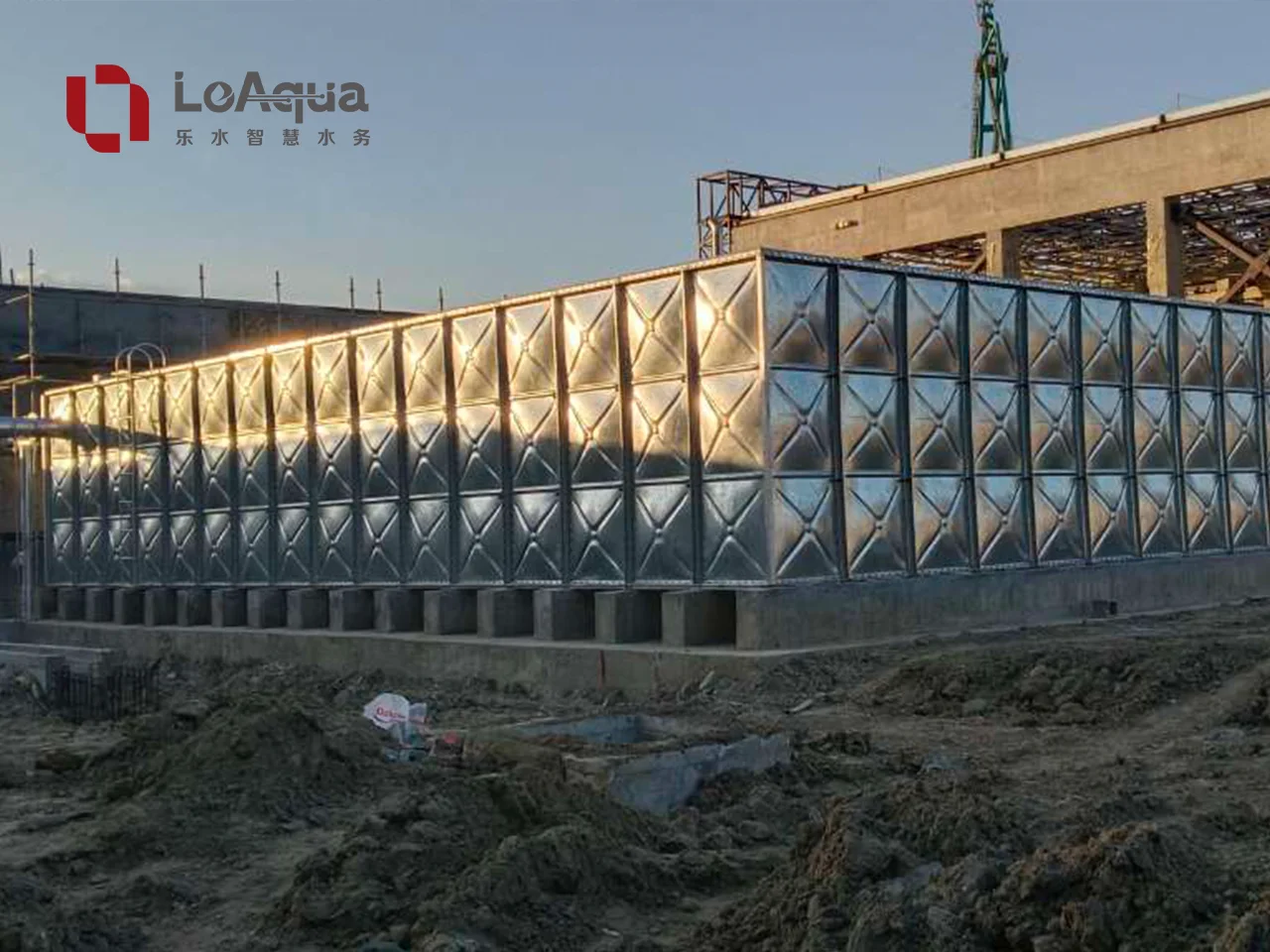
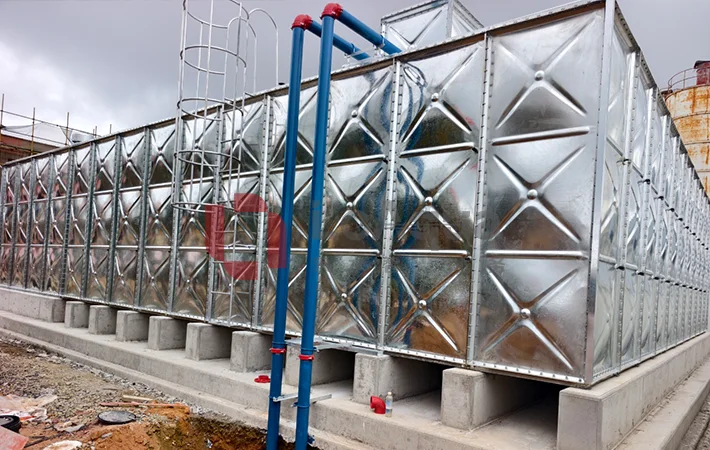
Among modular water storage solutions, the Double-sided Rib-Reinforced Water Tank represents an engineered pressed-panel structural design developed to improve panel rigidity and overall structural performance.
Unlike conventional flat-panel modular tanks, this design incorporates reinforcing ribs formed on both sides of each panel. The structural concept increases panel stiffness while distributing loads more efficiently throughout the tank structure.
Depending on project requirements, the system can be engineered for potable water storage, municipal infrastructure, commercial buildings, industrial facilities, fire protection systems, and underground installations.
One of the design characteristics of this structural concept is its modular pressed-panel construction, which supports factory manufacturing, transportation, and efficient on-site assembly.
For many projects, the reinforced panel geometry also improves internal space utilization by reducing the need for conventional internal bracing under many standard design conditions. Where larger capacities or higher structural loads are required, additional reinforcement may still be incorporated according to engineering calculations and project-specific design requirements.
Rather than representing a different application category, the Double-sided Rib-Reinforced Water Tank is another engineering solution within the modular water tank family, offering an alternative structural approach for projects that prioritize efficient load distribution, modular construction, and long-term structural reliability.
Choosing Between Engineering Solutions
Because both stainless steel water tanks and composite water tanks can be engineered for many of the same applications, engineers rarely make decisions based solely on project type.
Instead, they evaluate factors such as:
- Structural design philosophy
- Material configuration
- Installation method
- Site conditions
- Maintenance strategy
- Lifecycle planning
- Future expansion requirements
- Overall engineering objectives
This engineering-based approach provides a more reliable foundation for selecting a water storage system than simply comparing product names or materials.
By understanding how different solutions are designed to perform, project owners can make informed decisions that support reliable long-term operation rather than focusing on a single feature or specification.
| Engineering Characteristics Comparison | ||
| Engineering Aspect | Stainless Steel Tank | Composite Water Tank |
| Water-contact material | Stainless Steel | Stainless Steel |
| Structural concept | All stainless structure | Stainless steel + HDG composite |
| Typical construction | Welded or Bolted | Modular pressed-panel |
| Factory manufacturing | ✔ | ✔ |
| Modular assembly | ✔ | ✔ |
Step 3: Compare Long-Term Engineering Performance
After identifying the project requirements and understanding the available engineering solutions, the next step is to evaluate how each solution will perform throughout the life of the project.
Rather than focusing on a single feature such as material or purchase cost, engineers compare the complete lifecycle of the water storage system.
Important considerations typically include:
- Structural reliability
- Water quality performance
- Construction efficiency
- Maintenance accessibility
- Future expansion possibilities
- Inspection requirements
- Lifecycle cost
- Long-term operational stability
The objective is to identify the solution that provides the best overall engineering performance for the specific project rather than optimizing only one aspect of the design.
| Project Evaluation Checklist | |
| Evaluation Factor | Why It Matters |
| Water quality | Influences material selection |
| Storage capacity | Determines structural design |
| Site conditions | Affects installation planning |
| Maintenance access | Supports long-term operation |
| Future expansion | Improves lifecycle flexibility |
| Construction schedule | Influences project delivery |
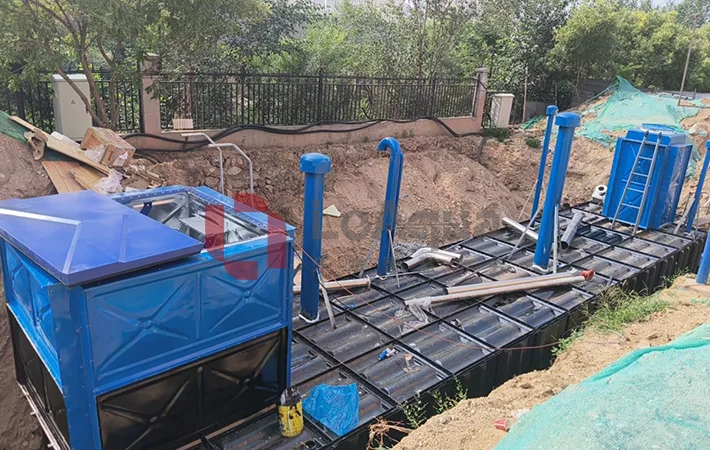
Step 4: Consider Installation and Future Maintenance
Water tanks are long-term infrastructure assets.
Once installed, they are expected to operate reliably for many years while remaining accessible for inspection, cleaning, and routine maintenance.
For this reason, installation planning should extend beyond the construction phase.
Engineers often evaluate questions such as:
- Can the tank be transported efficiently to the project site?
- Is there sufficient installation space?
- Will future inspection be convenient?
- Can components be maintained without major disruption?
- Is future expansion likely?
These practical considerations frequently influence project success as much as the tank’s structural design.
A solution that simplifies installation while supporting efficient maintenance can reduce operational challenges throughout the facility’s service life.
Step 5: Evaluate Lifecycle Value Instead of Initial Cost
One of the most common misconceptions during water tank selection is assuming that the lowest purchase price represents the best overall value.
Professional engineering decisions rarely rely on initial cost alone.
Instead, lifecycle value is evaluated by considering the complete operational period of the system.
Typical evaluation factors include:
- Manufacturing quality
- Installation efficiency
- Expected maintenance requirements
- Inspection accessibility
- Operational reliability
- Potential future upgrades
- Overall lifecycle management
By considering these factors together, project owners gain a more realistic understanding of the total value delivered by the water storage system over many years of operation.
A Practical Decision Framework for Selecting a Water Tank
Although every project is unique, the decision-making process usually follows a logical engineering sequence.
Rather than beginning with a preferred product, engineers generally proceed through several evaluation stages:
- Define the project’s operational objectives.
- Determine storage capacity and future demand.
- Understand site conditions and installation constraints.
- Evaluate available engineering solutions.
- Compare structural design concepts.
- Assess maintenance and inspection requirements.
- Review lifecycle performance.
- Select the solution that best supports the project’s long-term goals.
This structured approach helps reduce design risks while ensuring that the selected water tank aligns with both current operational needs and future infrastructure development.
Engineering Recommendations from LeAqua
At LeAqua, water tank selection is approached as an engineering process rather than a product comparison.
Each project is evaluated individually according to its technical requirements, operating environment, construction conditions, and long-term operational objectives.
During engineering discussions, the design team typically considers:
- Water quality requirements
- Storage capacity
- Available installation space
- Structural loading conditions
- Maintenance accessibility
- Construction schedule
- Future expansion plans
- Overall lifecycle expectations
These engineering factors help determine the most appropriate structural solution for each project instead of relying on a single standard configuration.
The objective is always to provide a dependable water storage system that supports safe operation, efficient maintenance, and reliable long-term performance.
| Decision Summary | |
| Decision Stage | Key Question |
| Project planning | What is the operational objective? |
| Site evaluation | What installation constraints exist? |
| Engineering design | Which structural solution best meets the requirements? |
| Lifecycle planning | How will the system be maintained over time? |
| Future expansion | Improves lifecycle flexibility |
| Construction schedule | Influences project delivery |
Frequently Asked Questions
Is there one “best” water tank for every project?
No.
Different engineering solutions can often satisfy the same application. The most appropriate choice depends on project requirements, operating conditions, structural design, and long-term lifecycle objectives.
Should material be the first consideration?
Material is important, but it should not be the starting point.
Professional selection normally begins by defining the project’s engineering requirements before evaluating different structural solutions.
Can different water tank structures be used for the same application?
Yes.
Depending on the engineering design, different structural configurations can be developed for potable water storage, fire protection, underground installations, commercial buildings, municipal infrastructure, and industrial facilities.
The selection depends on how the system is engineered rather than on the application alone.
Why is lifecycle performance important?
A water tank is expected to remain in service for many years.
Considering installation, maintenance, inspection, and future operational needs helps ensure that the selected system continues to perform reliably throughout its service life.
How do engineers make the final decision?
Rather than selecting a product based on a single feature, engineers evaluate the project as a complete system.
Factors such as structural design, operating conditions, construction planning, maintenance strategy, and lifecycle objectives are assessed together before selecting the most suitable engineering solution.
Conclusion
Choosing the right water tank is not about finding a universally superior product.
It is about understanding the engineering requirements of the project and selecting the structural solution that best supports those requirements throughout the system’s lifecycle.
By defining project objectives, evaluating available engineering solutions, considering installation and maintenance, and focusing on long-term performance rather than short-term cost, project owners can make more informed decisions and reduce operational risks in the future.
LeAqua believes that successful water storage projects begin with sound engineering. By combining practical design experience, modular manufacturing, and project-specific evaluation, we help customers select water tank solutions that deliver reliable performance, efficient construction, and sustainable long-term operation.