When a conflict ends, reconstruction often begins with the most visible damage: roads, bridges, homes, schools and public buildings.
But some of the most important work is less visible.
Water networks, pumping stations, storage tanks, treatment facilities and power systems may have been damaged at the same time. Even when a building has been repaired, it cannot function properly without a reliable water supply.
This is why water infrastructure should be treated as an early priority in post-conflict reconstruction.
A water tank alone cannot restore a water supply system. A pump station alone cannot solve storage or water quality problems. The final solution usually depends on how storage, pumping, treatment, power, controls and maintenance work together.
What role does water infrastructure play in post-conflict reconstruction?
In simple terms, post-conflict water infrastructure reconstruction aims to restore safe, reliable and maintainable water services for communities, public facilities and economic activity.
This may include:
- Rehabilitating damaged water networks
- Rebuilding or replacing water storage tanks
- Restoring pumping stations
- Re-equipping wells and water treatment facilities
- Providing water for hospitals, schools and public buildings
- Supporting fire protection systems
- Improving drainage and wastewater infrastructure
- Creating backup systems for unreliable power or water sources
The correct solution depends on the condition of the existing infrastructure, the available water source, the current population, the expected return of displaced people and the ability of local operators to maintain the system.
The World Bank has identified the rehabilitation of pumping stations, water storage tanks and distribution networks as important elements in restoring basic water and sanitation services in conflict-affected urban areas. (documents1.worldbank.org)
Water recovery is not only about replacing damaged equipment
One common mistake is to treat reconstruction as a simple replacement project.
If an old tank is damaged, the project replaces the tank. If a pump station is destroyed, the project installs new pumps. If a pipeline is broken, the project repairs the pipeline.
This approach may be necessary in the short term, but it does not always produce a reliable long-term system.
Conflict may have changed the conditions around the original design:
- The population may have moved to different areas.
- Public facilities may now operate at a higher capacity.
- Water demand may have increased because of returning residents.
- Electricity supply may be unstable.
- Local maintenance teams may have fewer resources.
- Roads and transport routes may be damaged.
- Flooding, drought or extreme heat may create additional risks.
- Original construction standards may no longer reflect current requirements.
For this reason, the first step should be a service and condition assessment rather than immediate product selection.
Before specifying a water tank or pump station, project teams should understand what still works, what can be repaired, what must be replaced and which services need to be restored first.
A water tank stores water. A pump station delivers it.
This distinction sounds simple, but it is important during project planning.
A water tank provides storage capacity. It can help balance variations in demand, maintain a reserve and separate water production from water distribution.
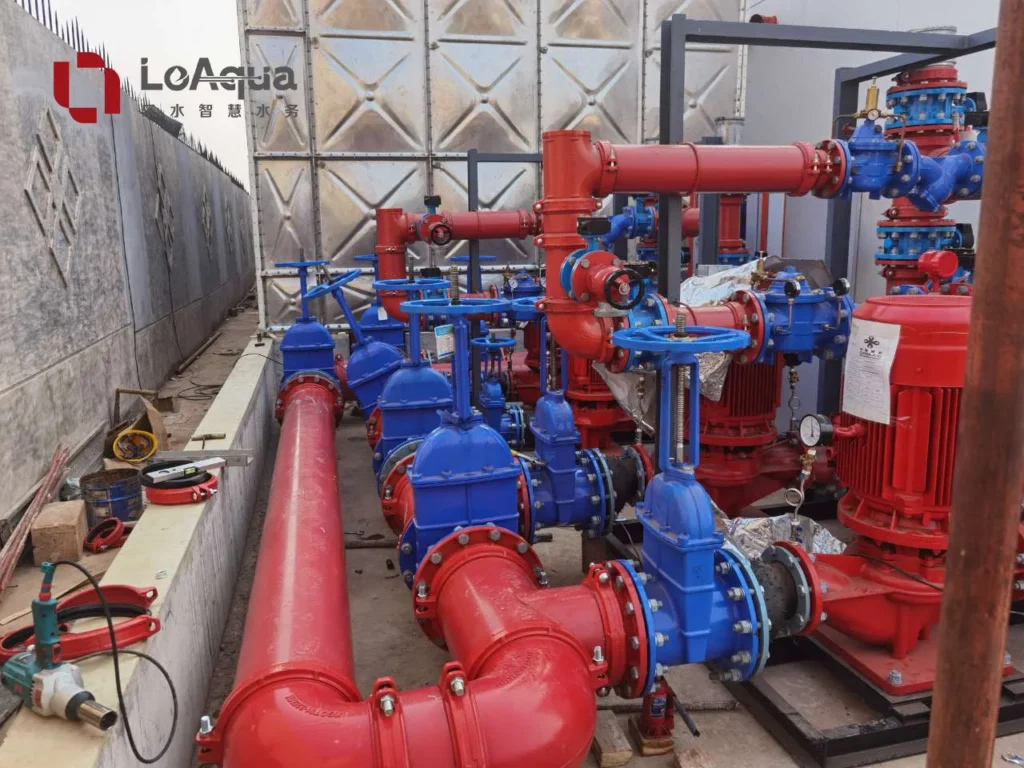
A pump system moves water from one point to another. It helps provide the required flow and pressure for buildings, networks, industrial facilities or fire protection systems.
Controls, valves, sensors and monitoring equipment help manage the system during changing operating conditions.
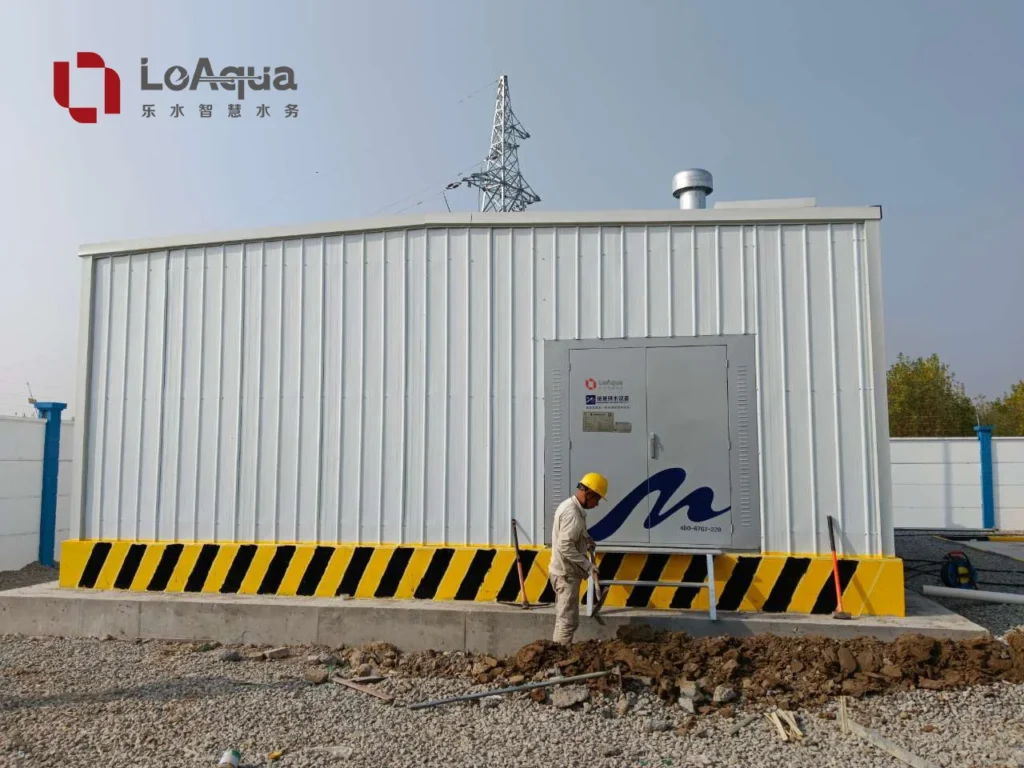
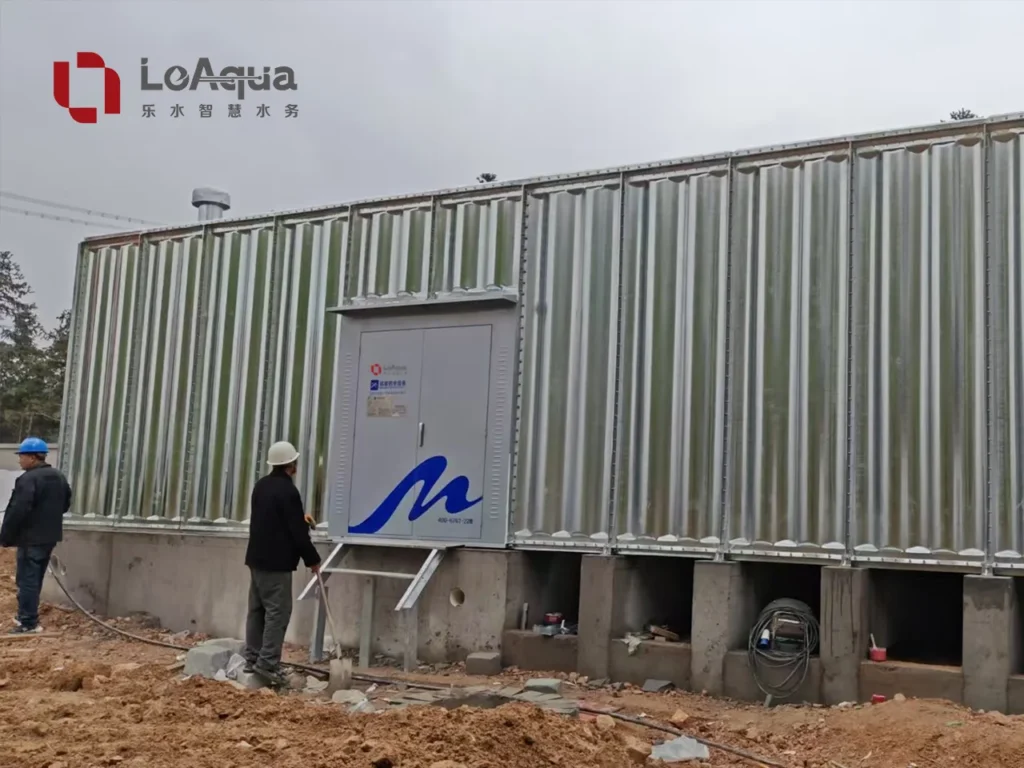
In other words, a tank and a pump station perform different jobs. They should be designed as connected parts of one water supply system, not as unrelated equipment packages. LeAqua’s own technical content also emphasizes that water storage, pumping and control functions need to be considered together when planning a complete system. (leaquacn.com)
This is especially important in reconstruction projects, where the water source, power supply, network pressure and operating conditions may not be stable.
How should water tanks be selected for reconstruction projects?
There is no single water tank type that is suitable for every post-conflict project.
The selection should begin with the application.
1. Potable water storage
If the tank will store drinking water, the project should define:
- Water-contact material requirements
- Cleaning and disinfection procedures
- Required inspection documents
- Ventilation and overflow arrangements
- Access for inspection and maintenance
- Applicable local regulations and approvals
- Required water turnover and storage duration
A tank described as “suitable for potable water” should not automatically be assumed to have approval for every country or project. The applicable water-contact requirements should be confirmed with the project designer and the local authority.
2. Fire water storage
Fire water storage has different requirements from potable water storage.
The design may need to consider:
- Required fire reserve
- Fire pump flow and pressure
- Hydrant or sprinkler demand
- Suction arrangements
- Emergency power
- Separation from domestic water
- Inspection and testing access
In some projects, fire and domestic water may be stored in a coordinated system. However, this should only be done when the applicable design and approval requirements allow it.
3. Industrial or process water storage
Factories, workshops and public utilities may require water for production, cleaning, cooling or other processes.
In these cases, the water tank selection may be influenced by:
- Chemical exposure
- Temperature
- Corrosion risk
- Cleaning frequency
- Process continuity
- Future expansion
- Local availability of replacement components
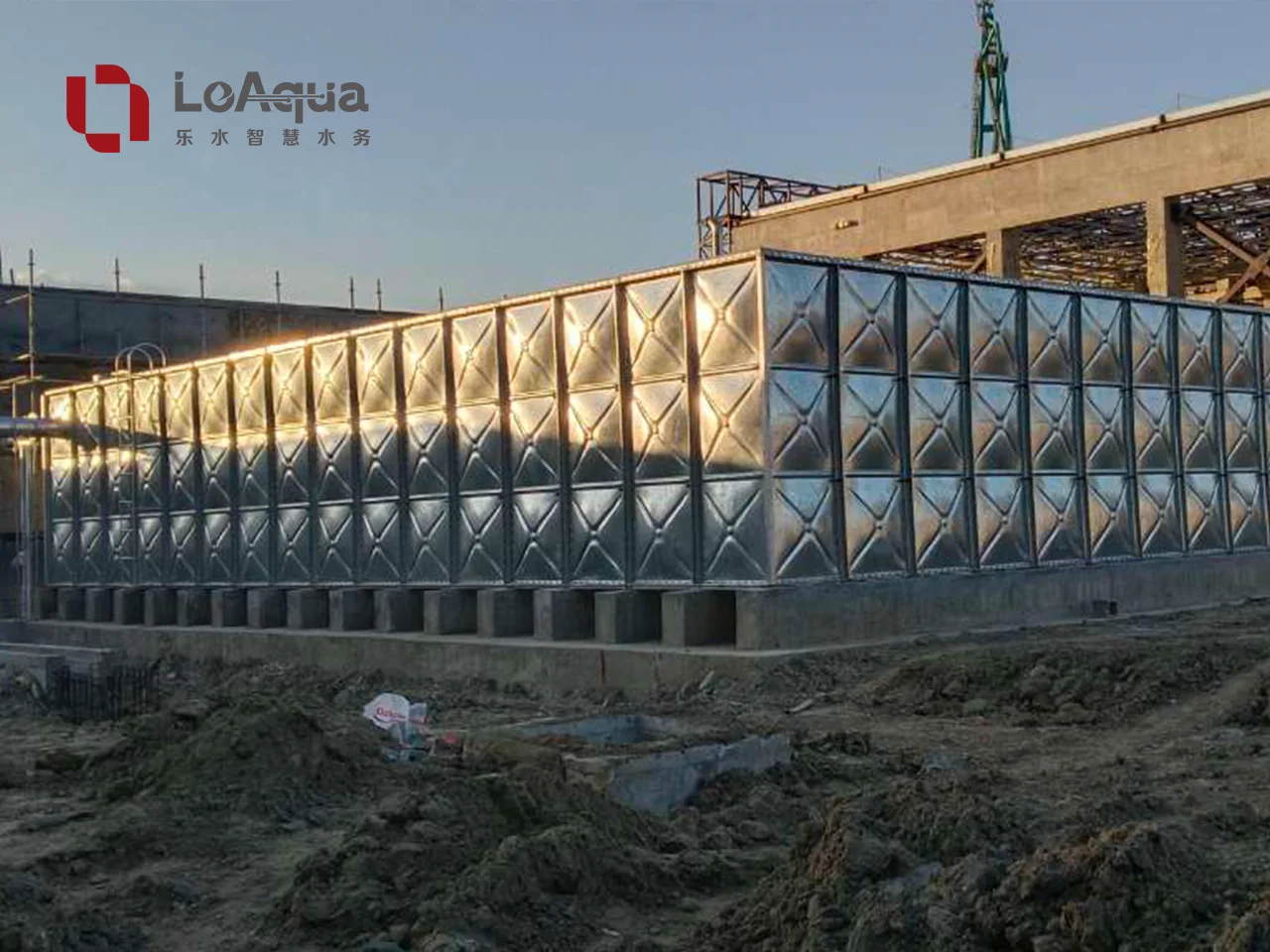
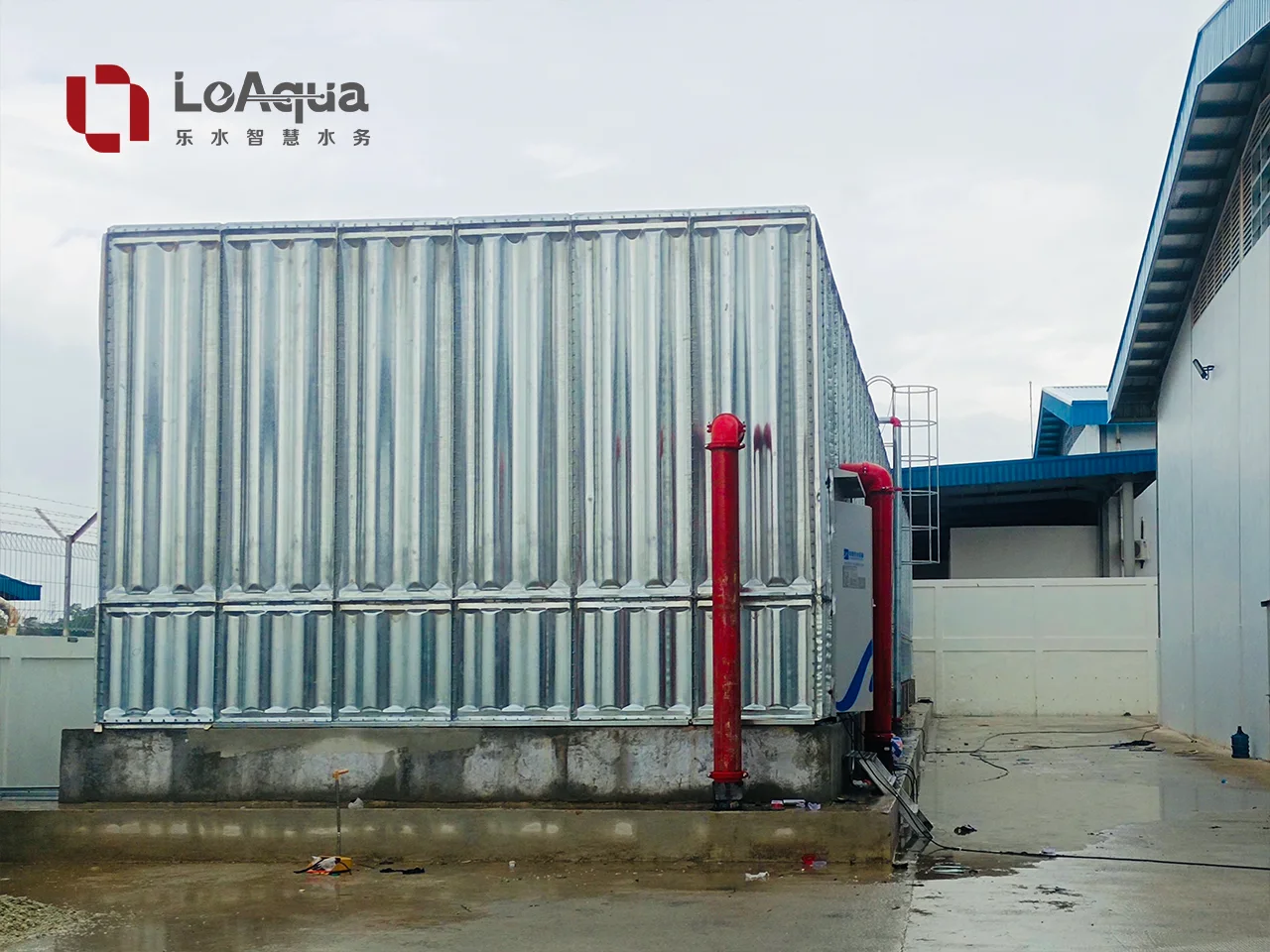
For modular reconstruction projects, sectional tanks can sometimes simplify transportation and on-site assembly. However, this is not automatically the best option. Road access, local labor, lifting equipment, installation space and the availability of technical support should all be reviewed before making a decision.
What should be considered when rebuilding a pump station?
A pump station is more than a group of pumps installed beside a tank.
Its performance depends on the relationship between the water source, storage volume, pipework, power supply and control system.
A reconstruction project should normally review the following points:
Flow and pressure requirements
The pump duty should be based on the actual demand profile, not only on the nominal tank capacity.
The design should consider:
- Peak demand
- Normal operating demand
- Required pressure
- Pipe length and elevation
- Friction losses
- Future expansion
- Fire flow, where applicable
Duty and standby arrangements
For critical facilities, a single operating pump may create a major point of failure.
The project may need duty and standby pumps, automatic changeover or other redundancy arrangements. The correct configuration depends on the importance of the facility, available budget and the ability of local teams to maintain the equipment.
Power reliability
In many conflict-affected areas, the electricity supply may be unreliable. This can directly affect the operation of water pumps.
Possible solutions may include:
- Backup generators
- Dedicated electrical protection
- Battery-supported controls
- Solar-powered pumping for selected applications
- Manual operating modes
- Local water storage that reduces dependence on continuous pumping
Solar pumping can be useful in some remote locations, but it should not be treated as a universal solution. The final choice depends on water demand, sunlight conditions, storage requirements, pump duty, maintenance capacity and the cost of replacement components.
Recent water recovery work in Sudan, for example, has combined the rehabilitation of water infrastructure with solar-powered pumping to reduce dependence on unreliable grid power. (undp.org)
Controls and monitoring
Remote monitoring can help operators identify changes in water level, pump status, pressure or power consumption.
However, a monitoring system should support local operation rather than make the system unnecessarily difficult to manage.
A practical control system should include:
- Clear operating logic
- Manual override where appropriate
- Simple fault indications
- Accessible replacement components
- Documentation in a language understood by local operators
- Training for operation and maintenance personnel
Resilience should be designed into the reconstruction project
Post-conflict infrastructure may face more than the original damage.
Flooding, drought, heat, corrosion, unstable power, limited access and future population changes can all affect the performance of a water supply system.
A resilient design may require:
- Locating critical equipment away from flood-prone areas
- Protecting electrical equipment from water and dust
- Providing safe access for maintenance
- Selecting materials suitable for the local climate
- Keeping essential spare parts available
- Designing for phased expansion
- Including backup storage
- Planning for local repairs instead of depending entirely on overseas support
The World Health Organization’s guidance on water, sanitation and hygiene services in conflict settings emphasizes readiness, rapid restoration, local-level assessment and inclusive consultation. (who.int)
The World Bank has also noted that reconstruction programs need to connect urgent service restoration with longer-term institutional capacity, climate resilience and local management. (documents1.worldbank.org)
This is an important point: a technically advanced water system is not necessarily a resilient water system if nobody nearby can operate, inspect or repair it.
What should be included in a water tank or pump station quotation?
The lowest equipment price is not always the lowest project cost.
Two suppliers may quote the same tank capacity but provide very different scopes of supply.
Before comparing quotations, the buyer should define:
- Tank capacity and dimensions
- Water application
- Tank material and thickness
- Internal and external structural components
- Inlet, outlet, overflow and drain connections
- Pump flow and head
- Number of operating and standby pumps
- Control cabinet and electrical requirements
- Sensors and monitoring functions
- Required drawings and technical documents
- Factory testing requirements
- Site installation responsibilities
- Foundation and civil works responsibilities
- Commissioning and training
- Spare parts and after-sales support
- Applicable local standards and inspection requirements
This is particularly important for international reconstruction projects, where transportation, customs, site access and local installation may affect the final cost as much as the equipment itself.
A clear supply boundary helps avoid disputes between the equipment supplier, contractor, consultant and project owner. LeAqua’s guidance on water tank supply scope also highlights the difference between a tank-only quotation and a coordinated system package.
How can a water tank manufacturer support reconstruction projects?
A water tank manufacturer may support a reconstruction project by providing more than a standard product catalogue.
Depending on the project scope, the supplier may be involved in:
- Reviewing the required storage capacity
- Selecting a suitable tank material
- Preparing general arrangement drawings
- Coordinating tank and pump interfaces
- Confirming the supply boundary
- Providing factory inspection documents
- Supporting installation guidance
- Supplying replacement parts
- Assisting with commissioning and operator training
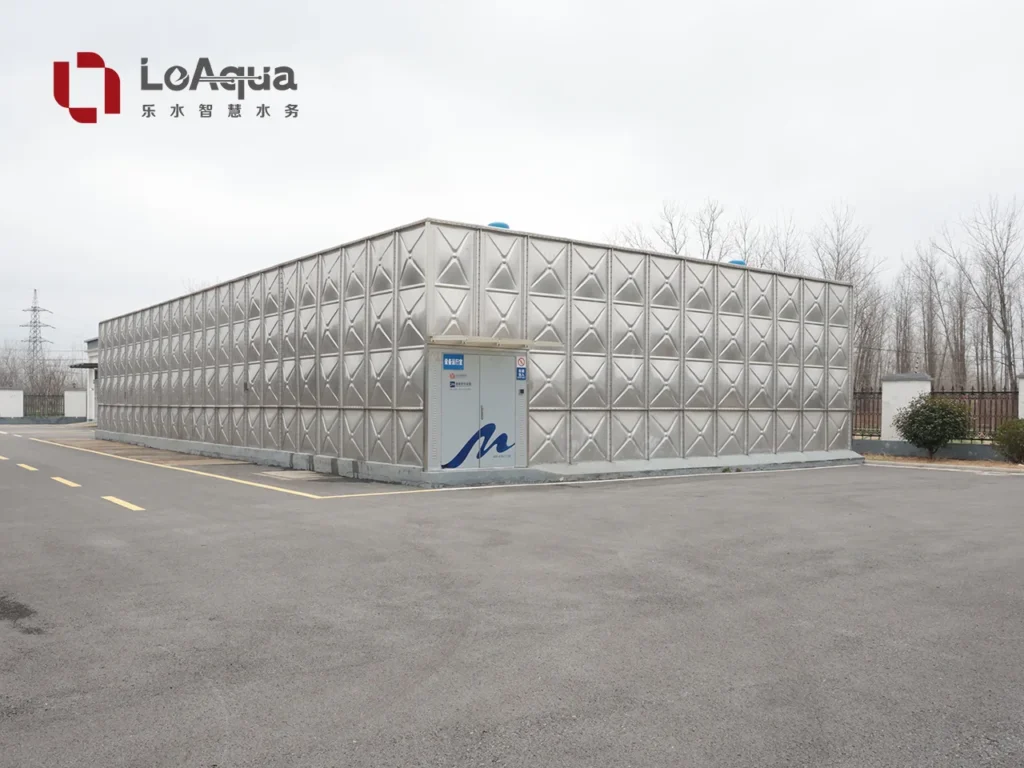
LeAqua’s publicly available product information includes stainless steel, GRP/FRP, composite and rib-reinforced water tanks, as well as pump systems and coordinated water supply solutions. The final configuration should still be based on the project’s water use, site conditions, local standards and available operating resources. (leaquacn.com)
For a post-conflict project, the most responsible approach is not to recommend a product before understanding the site.
The better approach is to clarify:
- Where the water comes from
- Who will use it
- How much water is required
- How the water will be pumped
- What happens when power fails
- Who will operate and maintain the system
- Which components must be supplied locally
- What the project owner expects the supplier to provide
A practical sequence for post-conflict water infrastructure reconstruction
A useful project sequence may look like this:
Step 1: Assess existing infrastructure
Inspect water sources, tanks, pumps, pipelines, power systems and treatment facilities.
Step 2: Identify essential services
Prioritize hospitals, schools, residential areas, public facilities, industrial zones and fire protection systems according to local needs.
Step 3: Provide temporary service where necessary
Temporary tanks, mobile pumps or water delivery may be required while permanent systems are being repaired.
Step 4: Design the permanent system
Develop the tank, pump station, pipework, controls, power supply and maintenance plan as one coordinated system.
Step 5: Define procurement responsibilities
Make it clear which items are supplied by the manufacturer, contractor, local installer and project owner.
Step 6: Commission and train local operators
A system should not be considered complete when the equipment is merely delivered. Operators need documentation, training and access to essential spare parts.
Step 7: Monitor performance after handover
Water level, pressure, pump operation, power consumption and maintenance records can help identify problems before they become major failures.
Final thoughts
Post-conflict reconstruction is not only about rebuilding what was destroyed.
It is also an opportunity to create water infrastructure that is easier to operate, more adaptable to changing demand and better prepared for future disruptions.
Water tanks provide the reserve. Pump stations provide movement and pressure. Controls provide coordination. Maintenance planning keeps the system working after the construction team has left.
The most successful projects are therefore not based on tank capacity alone. They are based on a clear understanding of the complete water supply system and the people who will operate it.
For project owners, engineering consultants and contractors, the first step is to define the application, site conditions and supply boundary before comparing equipment quotations.
That is how a water storage project becomes part of a reliable reconstruction strategy rather than a temporary replacement.
Frequently Asked Questions
What is the most important water equipment in post-conflict reconstruction?
There is no single piece of equipment that solves every reconstruction challenge. Water tanks, pump stations, pipelines, treatment equipment, power systems and controls need to be planned together.
How should a water tank be sized for a reconstruction project?
Tank capacity should be based on demand, water source reliability, operating hours, required reserve, fire protection requirements and future population or facility growth. Capacity should not be selected only by copying the original tank size.
Can a water tank and pump station be supplied as one package?
Yes, they can be coordinated as one package when the project clearly defines the pump duty, pressure requirements, electrical scope, controls, pipe connections, installation responsibilities and commissioning requirements.
Are stainless steel tanks suitable for post-conflict reconstruction?
Stainless steel tanks may be suitable for potable water, municipal, commercial or industrial applications, depending on the water quality, local climate, material requirements and project standards. The correct choice should be made after reviewing the site and application.
What should be requested from a water tank supplier?
The buyer should request technical drawings, material specifications, component details, connection information, testing documents, scope exclusions, installation requirements, maintenance guidance and spare-parts recommendations.
What makes a water infrastructure project resilient?
A resilient system is not only strong on paper. It should also be maintainable under local conditions, tolerate power interruptions, allow future expansion, protect water quality and include clear operating procedures for local teams.