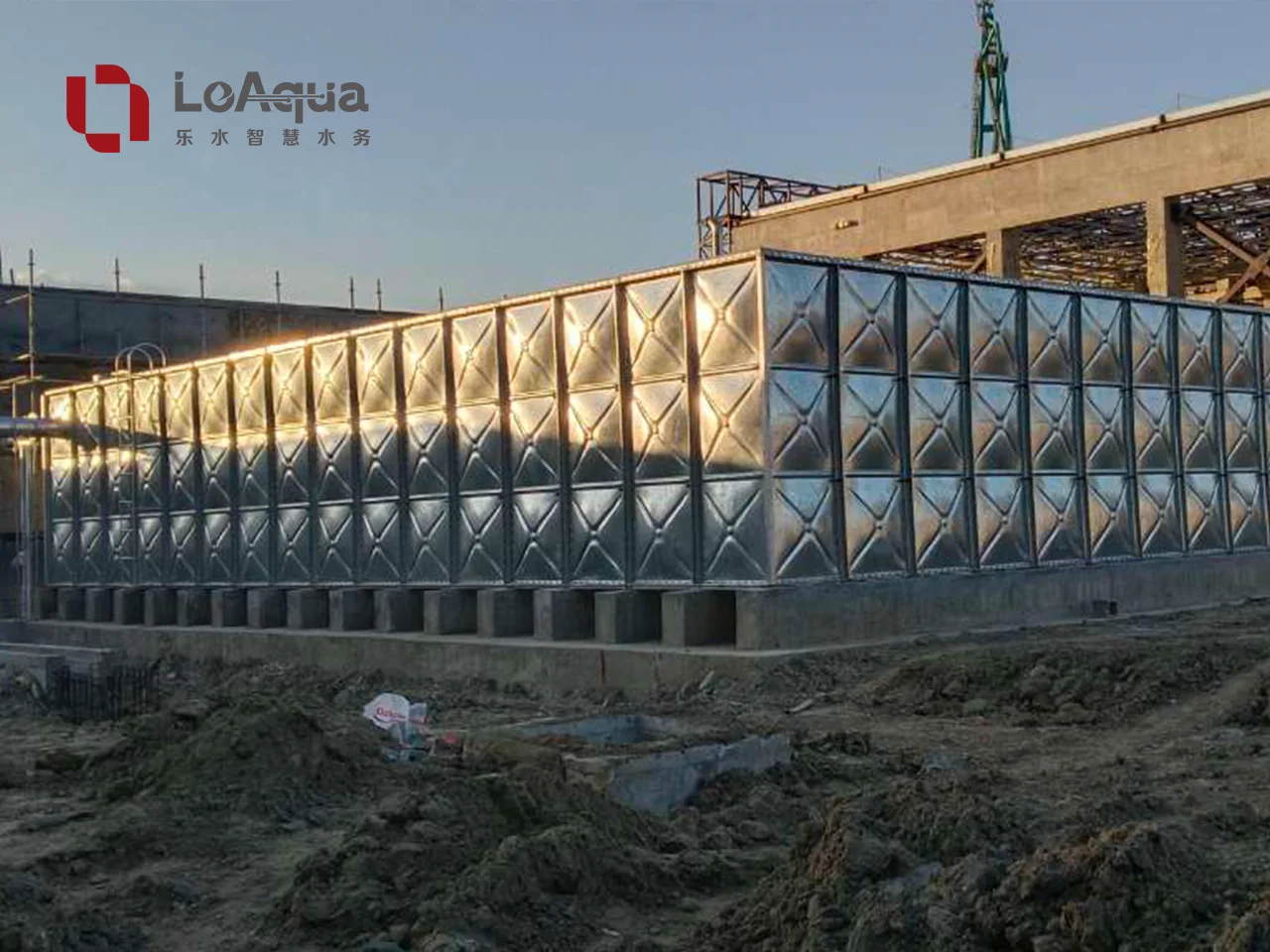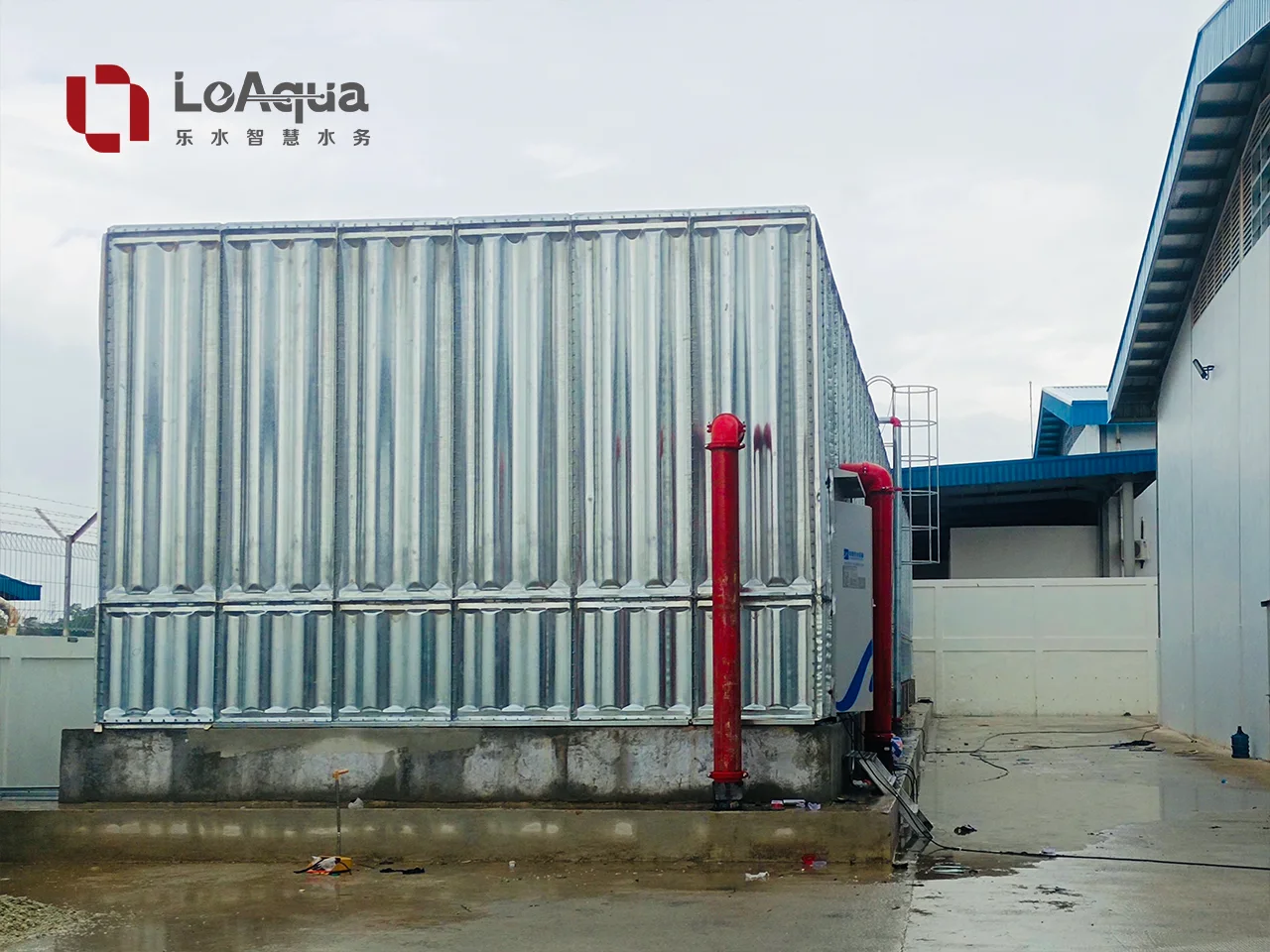
An FRP/GRP water tank can be a practical modular storage solution, but the first quotation is often too vague to compare. “FRP tank, 100 cubic metres” does not explain the water-contact material, usable capacity, installation scope or documents included.
A better procurement process turns those points into a short, written specification. This helps the buyer compare like with like and gives the supplier enough information to propose a tank that fits the site rather than a generic panel package.
In this article — click to expand
What Should Buyers Check Before Ordering an FRP/GRP Water Tank?
Before ordering, confirm the water use, usable and nominal capacity, SMC panel and resin specification, foundation and installation scope, connections, access for cleaning, and the documents included in the quotation. Compare total scope—not capacity alone or the lowest headline price.
Start With the Water and the Capacity You Actually Need
An FRP/GRP water tank quotation should begin with the service, not only a number such as “100 m³.” Potable water, fire reserve, process water and irrigation can impose different requirements for materials, access, cleaning and operating levels.
Before asking for an FRP/GRP water tank, define the required usable volume, maximum water level, minimum operating level and available installation space. The nominal volume may be higher than the water available to the system.
| Project input | What to state in the enquiry |
|---|---|
| Water use | Potable, fire protection, process, irrigation or another defined service |
| Capacity basis | Nominal volume, usable volume or a required operating range |
| Site limits | Length, width, height, access route and foundation condition |
| Water conditions | Temperature, treatment chemicals, salinity or other known exposure |
Read the Panel and Resin Specification Separately
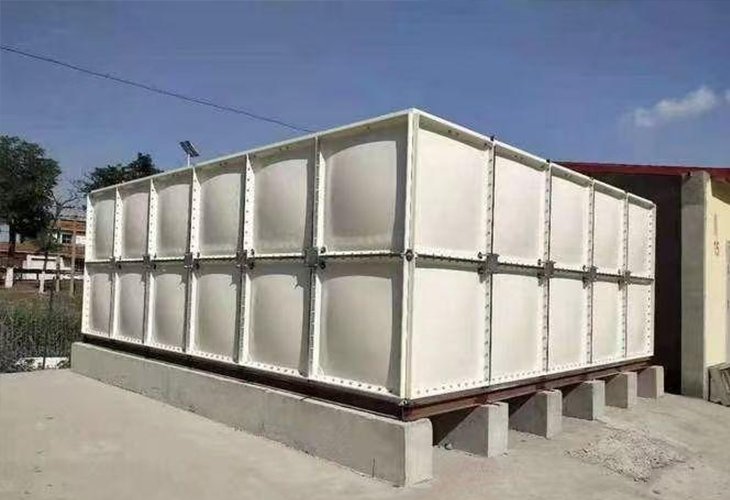
FRP and GRP are broad material descriptions. For a modular tank, the quotation should identify the SMC panel construction, panel dimensions, thickness schedule, reinforcement arrangement and the material used on the water-contact side.
LeAqua’s current product page describes SMC panels and food-grade resin. That wording should still be matched to the project: ask for the resin description, intended water use and any available approval or test documents that apply to the supplied panel and not to a different product.
- Panel size and layout, including the proposed tank length, width and height.
- Panel thickness or specification by position where the design uses different sections.
- Resin and laminate information for the water-contact surface.
- Seal, bolt, flange and reinforcement details included in the quoted system.
- The documents that will be supplied for material, inspection and installation review.
Separate the Tank Package From Site Installation
Two quotations may show the same capacity but cover very different work. One may include only panels and accessories; another may include design drawings, foundation guidance, installation supervision, testing or a complete pump interface.
Use the water tank supply scope checklist as a starting point, then mark each item as included, excluded or supplied by others.
- Tank panels, roof, base support and internal reinforcement.
- Manhole, ladder, vents, overflow, drain, inlet and outlet connections.
- Sealants, bolts, gaskets and other assembly consumables.
- General arrangement, foundation, installation and connection drawings.
- On-site assembly, lifting, testing, commissioning or technical supervision.
Check How the Tank Will Be Cleaned and Inspected
A tank that is difficult to access can become difficult to manage after handover. The specification should show the manhole position, internal clearance, ladder arrangement, washout route and the areas that need periodic inspection.
The World Health Organization’s tank-cleaning note treats selection, cleaning, disinfection and safe disposal as separate steps. It also highlights the need to plan access and safety before someone enters a tank.
For projects where maintenance access is important, compare the proposed arrangement with LeAqua’s water tank inspection access guidance. Do not treat a small roof opening as proof that the whole tank can be safely cleaned or inspected.
Compare FRP/GRP Quotations on the Same Basis
Price comparisons are useful only after the scope is made comparable. A lower figure may omit the foundation interface, installation work, testing documents or the fittings needed to connect the tank to the building system.
| Question | Why it matters |
|---|---|
| Is the capacity nominal or usable? | Prevents two suppliers from pricing different storage duties. |
| Which panel and resin specification is included? | Shows whether the offers use equivalent water-contact materials and structures. |
| What is included in delivery and installation? | Separates factory supply from site work, supervision and commissioning. |
| What documents are included? | Confirms whether drawings, inspection records and manuals are part of the handover. |
| What can change the final price? | Makes freight, site access, foundation changes and project revisions visible. |
What Should an FRP/GRP Water Tank RFQ Include?
A useful RFQ gives the supplier enough information to design against a real project rather than return a generic catalogue number. Send:
- Required usable and nominal capacity, if both are relevant.
- Application, water type, temperature and known chemical or environmental exposure.
- Available footprint, maximum height, access restrictions and foundation information.
- Inlet, outlet, drain, overflow, vent and pump connection requirements.
- Required delivery location, installation responsibility and document expectations.
The water tank RFQ checklist gives a broader engineering information list. For a LeAqua enquiry, include the project location and target schedule, but allow final material selection, dimensions and delivery timing to be confirmed after the technical requirements are reviewed.
The most useful FRP/GRP quotation is the one that makes its assumptions visible. Confirm the capacity basis, panel and resin details, site interface, installation responsibility and handover documents before comparing price.
If you are preparing an FRP/GRP water tank enquiry for LeAqua, send the project capacity, application, dimensions, location and site constraints. The supplier can then review the project-specific configuration and return a more useful quotation.