A quotation that says only ‘304 stainless steel, thickness as standard’ leaves an important question unanswered: which part of the tank does that thickness describe?
Stainless steel water tank thickness should be specified by component and checked against the tank’s design conditions. There is no single thickness that suits every water depth, panel size and support arrangement. Start with the construction type, then review the panel schedule rather than comparing one headline number.
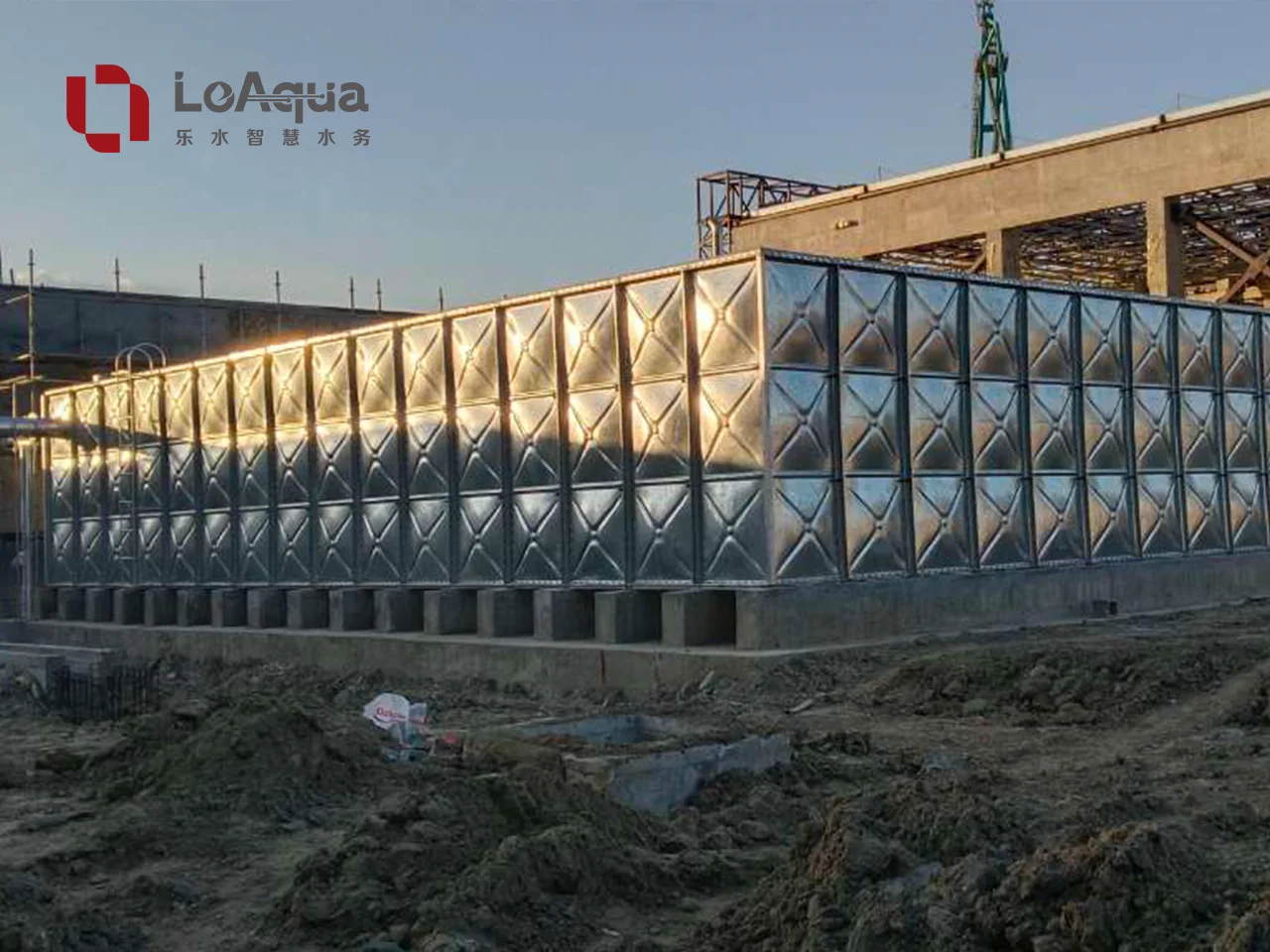
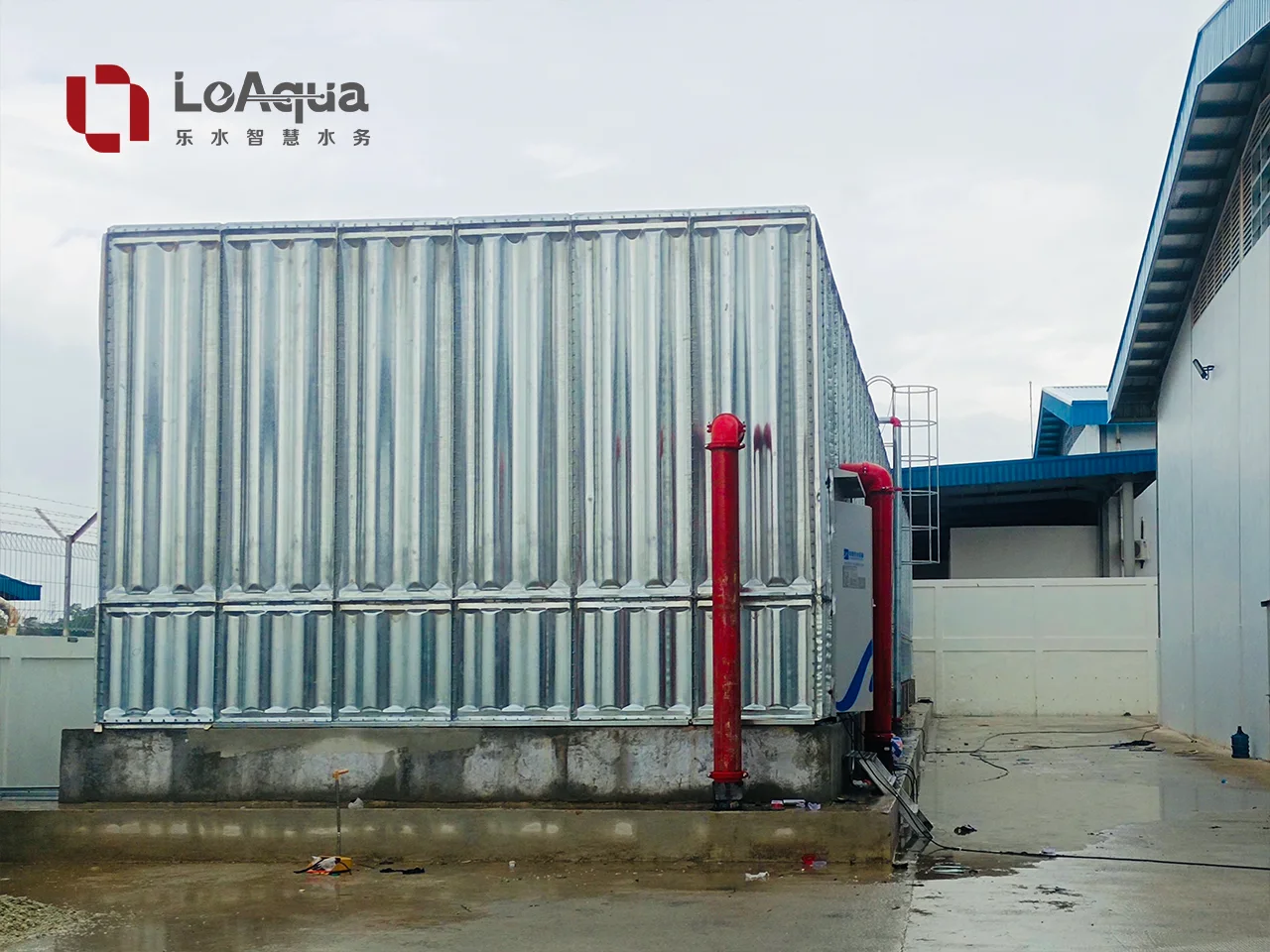
LeAqua’s stainless steel water tank range includes bolted and welded options. For either type, the quotation should make the material and thickness of the supplied components clear.
In this article — click to expand
First, Identify Which Material Layer Is Being Measured
The word ‘panel’ can describe different constructions. A single-wall stainless steel panel is not the same item as a structural backing panel with a stainless steel water-contact lining.
| Specification item | What the drawing should identify |
|---|---|
| Single-wall stainless steel panel | The stainless steel grade, thickness and panel position. |
| Composite panel | Backing material and thickness, stainless steel lining thickness, and how the layers and joints are constructed. |
| External insulation cladding | Outer covering material and thickness, listed separately from the tank wall. |
| Insulation | Insulation material and thickness, not included as structural metal thickness. |
For a composite water tank, do not compare lining thickness directly with the full thickness of a single-wall stainless steel panel. Ask for a section drawing explaining each layer’s role. Whether and how the layers contribute structurally must follow the actual design, not an assumption made from the quotation.

Why Can Different Parts of the Tank Have Different Thicknesses?
Water pressure increases with depth. As NASA’s hydrostatic pressure explanation shows, pressure depends on the depth and density of the fluid. For a tank wall, that makes maximum design water depth an important input.
The bottom, lower wall panels, upper wall panels and roof also have different support and loading conditions. A panel schedule should identify them separately, even if the approved design uses the same thickness for some positions.
Do not assume that a roof panel proves the side-wall specification, or that one delivered panel represents the whole tank. Match panel markings and locations to the approved drawing.
Thickness Is Only One Part of the Structural Design
Panel dimensions, formed geometry, material properties, joints and support spacing all affect how the assembly behaves. The British Stainless Steel Association’s structural guidance explains why stainless steel design requires strength, buckling and deflection checks, rather than a thickness decision alone.
Ribbed or pressed profiles may change the way a panel resists deformation. That does not justify a universal strength or stiffness multiplier, and it does not mean thinner material is automatically acceptable.
If two offers use different panel profiles or internal supports, ask how each proposed arrangement has been verified. A calculation or test should relate to the supplied panel, material, connections and support conditions. A report for a different specimen is not a blanket approval of every tank size.
Clarify Nominal Thickness, Tolerances and Measurement
Before placing the order, agree whether the quoted figure is a nominal sheet thickness or a specified minimum, and identify the applicable material standard and tolerance. A figure without that information is difficult to use as an acceptance criterion.
For formed panels, also agree whether the specification concerns the starting sheet, the finished panel at defined locations, or both. Ask where measurements will be taken and how coatings, protective film or multiple layers will be treated.
Keep the approved schedule, material records and inspection results connected to the delivery. Agree the inspection method with the supplier; a measurement at one convenient flange should not be treated as evidence for every part of a formed panel.
More Thickness Does Not Replace the Correct Material Grade
Structural thickness and corrosion suitability are separate questions. Increasing thickness is not a substitute for selecting a grade and joint detail suited to the water and surrounding environment.
Outokumpu’s corrosion guidance identifies water chemistry, temperature, surface condition, fabrication and design as relevant factors. Chlorides and tight crevices deserve particular attention in the material review.
Provide available water-quality information and the intended cleaning conditions. Do not assume a mirror finish, a thicker plate or the label ‘stainless steel’ establishes suitability or a guaranteed service life.
What Should Buyers Request Before Accepting a Quotation?
Keep the request specific. Ask for:
- Tank dimensions, maximum design water depth and applicable project design requirements.
- A panel schedule identifying the base, each wall zone and roof.
- Material grades and separate thicknesses for structural panels, linings and external cladding where used.
- Panel profile, joint and support drawings, with relevant structural verification.
- Agreed thickness tolerances, measurement method and material traceability records.
The wider technical submittal checklist explains how these items fit into drawing and document approval. A thicker quoted panel is not automatically a better offer if the water depth, materials or support scope differ.
For a LeAqua enquiry, send the required capacity, available dimensions, design water level, application and water conditions. Request a project-specific panel specification so that thickness can be reviewed as part of a complete tank design.