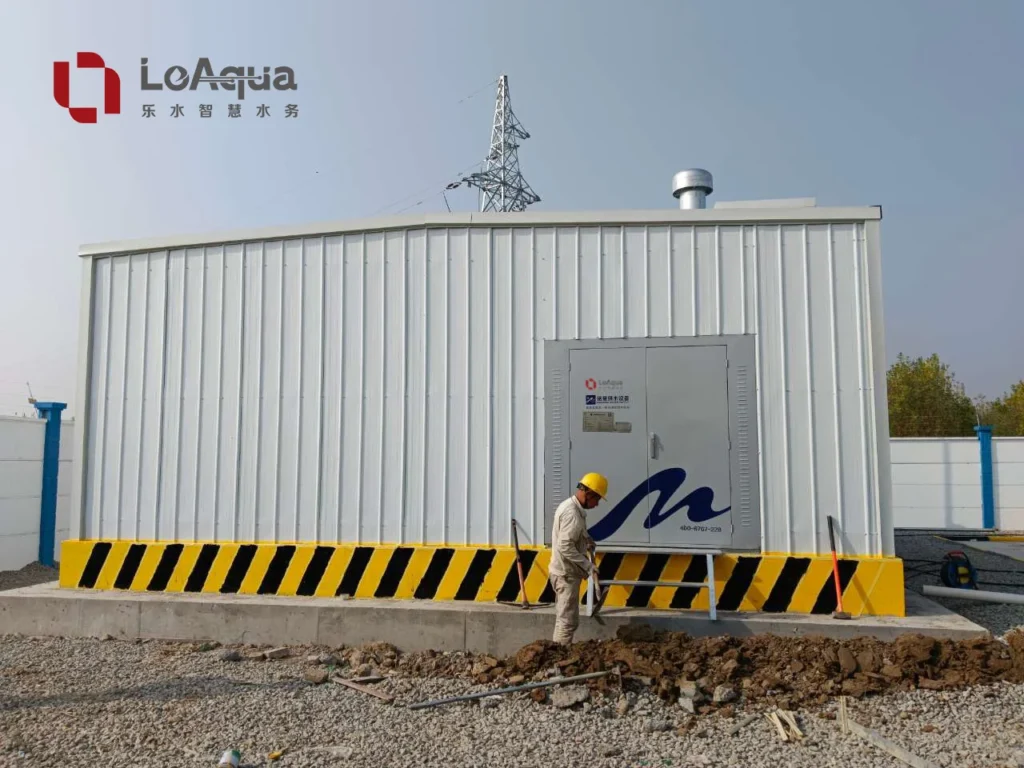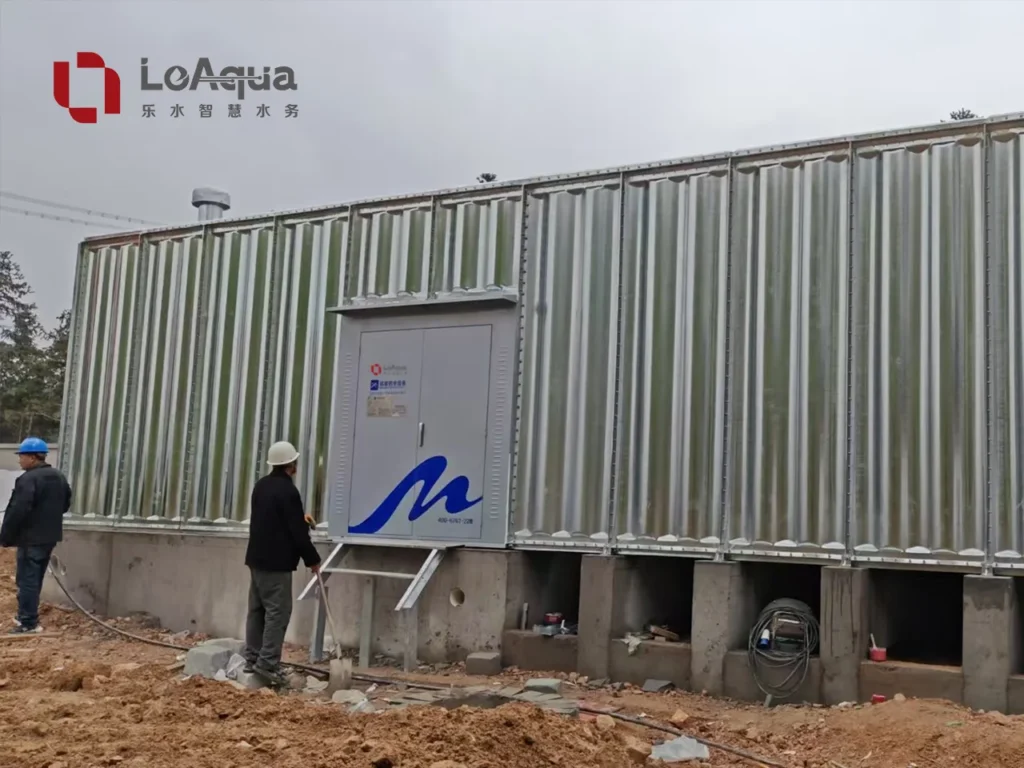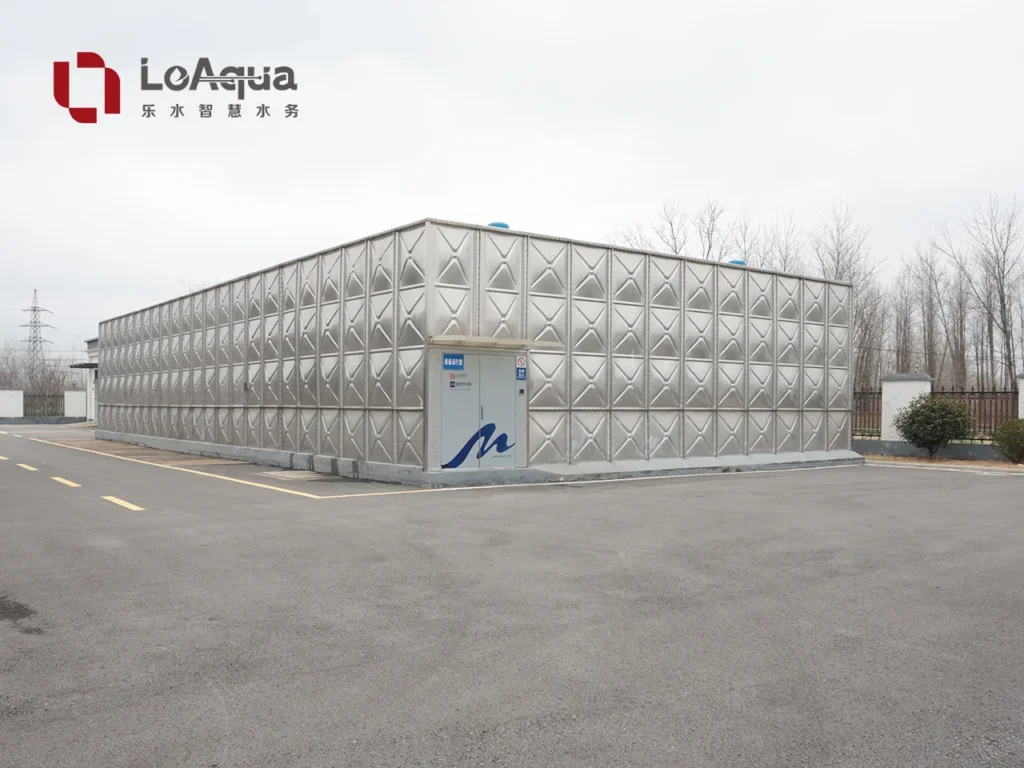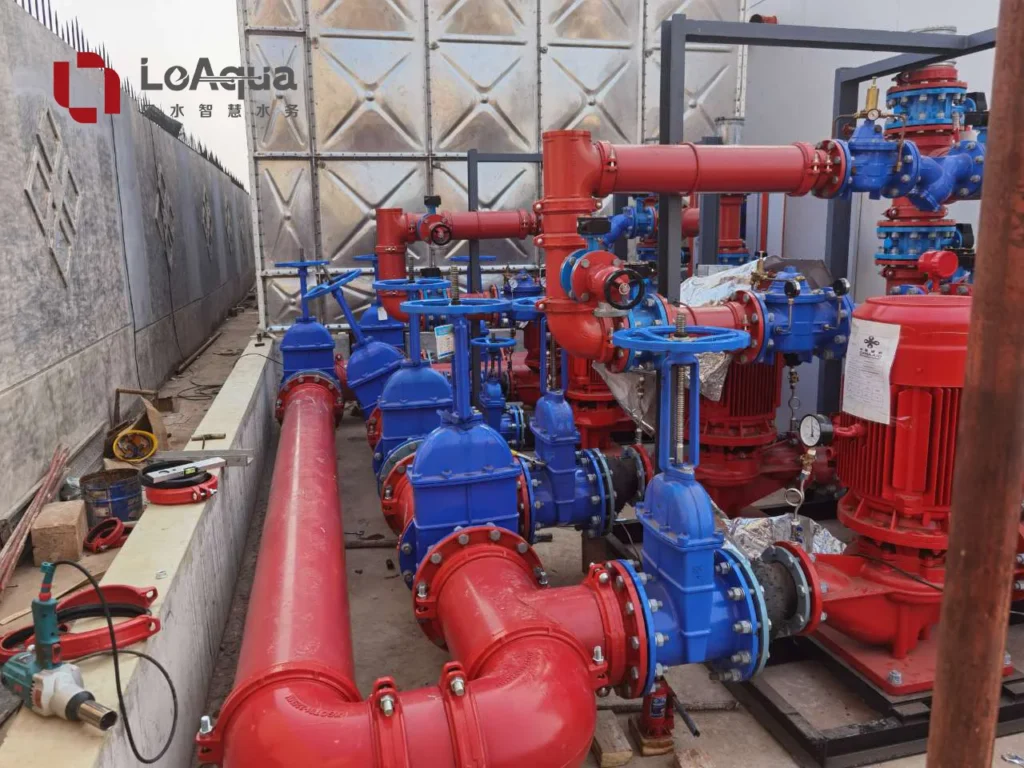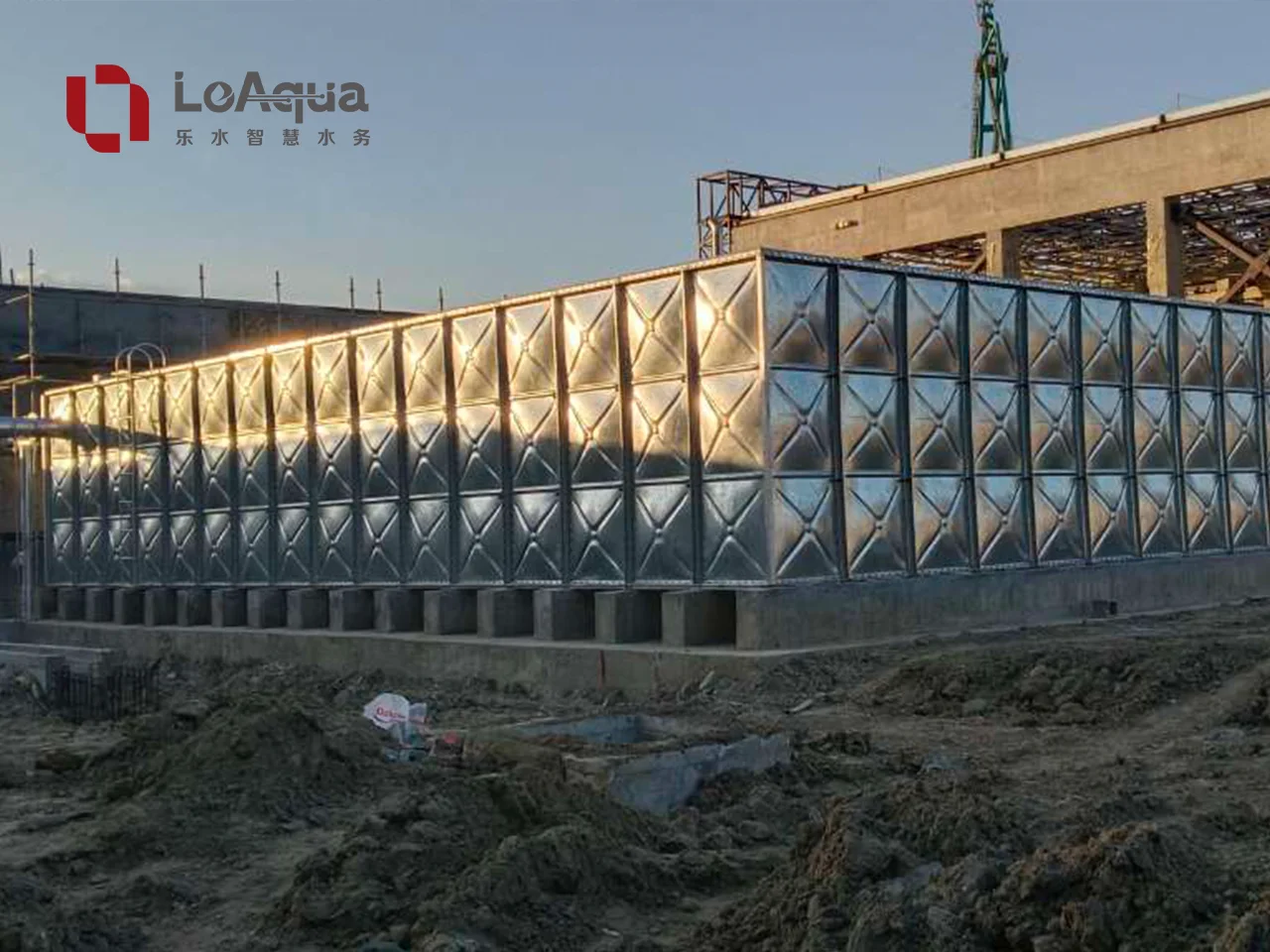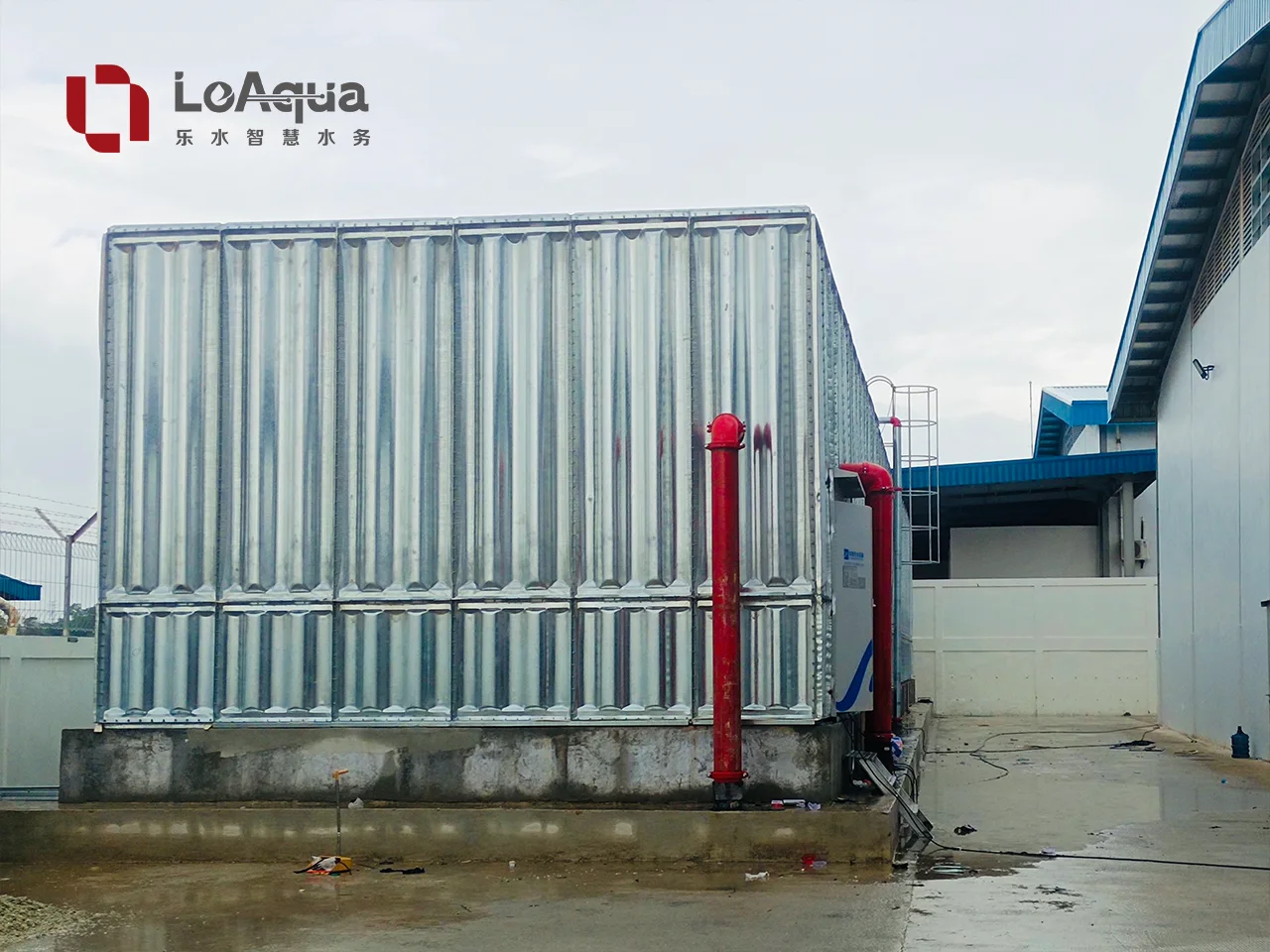
A water storage system for a city building is usually designed around a relatively simple assumption: water infrastructure is already nearby.
A remote solar farm, wind farm or battery energy storage project can be very different.
The site may be several kilometres from the nearest town. There may be no municipal hydrant network. Turbines, substations, battery containers and operation buildings may be spread across a large area. Even refilling a water tank can require a tanker truck to travel to the site.
That changes the engineering question.
Instead of asking only:
“How much water should the tank hold?”
Engineers may first need to ask:
“Where does the water need to be available, and how will it get there when it is needed?”
This is why remote renewable energy projects often require a different approach to water storage.
The final solution may involve one large tank, several strategically located tanks, a dedicated pump system, or a combination of storage and pumping equipment.
1. Distance Changes the Way Engineers Plan Water Storage
The biggest difference between a remote energy site and a conventional building is often distance.
A commercial building may have a water tank and pump room within the same structure.
A renewable energy site can have:
- Solar arrays spread over hundreds of hectares
- Wind turbines separated by long access roads
- Remote substations
- Battery containers distributed across a site
- Separate operation and maintenance buildings
The distance between the storage point and the protected equipment can affect pipe routing, hydraulic losses, emergency access and maintenance.
This means a centrally located tank is not automatically the best solution.
Engineers need to understand the geography of the site before deciding how storage should be distributed.
2. Central Storage or Multiple Remote Tanks?
This is one of the most important decisions for a remote renewable energy project.
Centralized Storage
One larger tank can simplify:
- Water level monitoring
- Refilling
- Pumping equipment
- Maintenance
- Site management
If the protected facilities are relatively close together, a central storage arrangement may be practical.
But the further water has to travel, the more important hydraulic calculations become.
Long pipe runs can introduce pressure losses, and remote areas may become difficult to serve during an emergency.
Distributed Storage
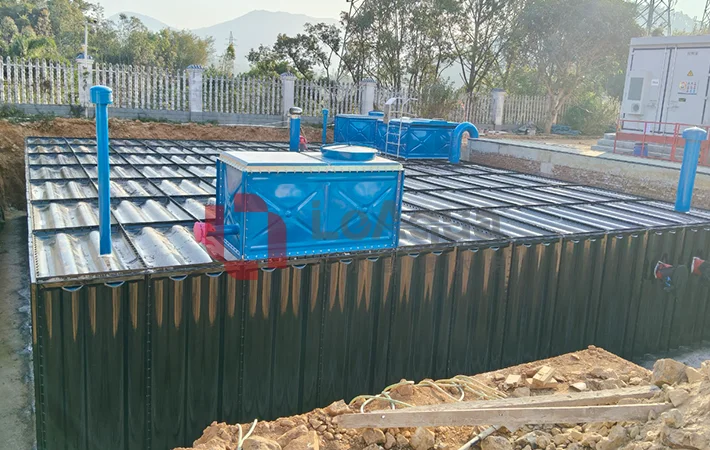
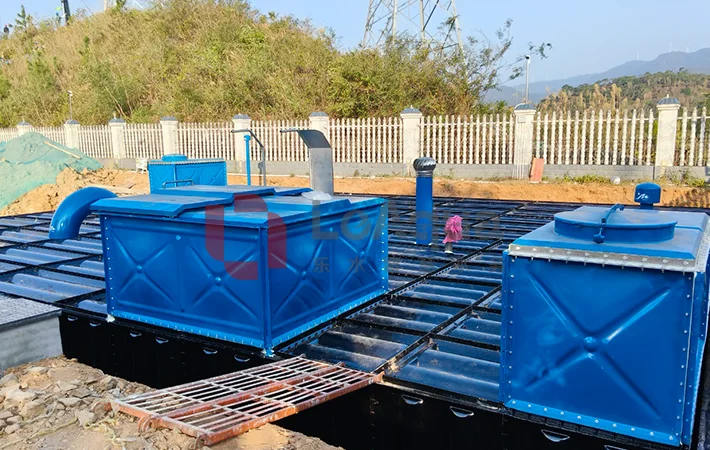
Several smaller tanks can place water closer to the locations where it may be needed.
This approach can be useful for:
- Large wind farms
- Remote substations
- Extensive solar sites
- Facilities with difficult terrain
Real projects demonstrate that distributed storage is not merely a theoretical concept.
A California wind project, for example, installed four strategically located 10,000-gallon water tanks to provide additional fire suppression water at locations with limited access to water. The project documents also specified direct road access to the tanks for firefighting equipment.
A German wind farm provides another example: three 50 m³ fire water tanks were installed for a 42.9 MW wind farm.
These projects illustrate an important engineering principle:
The location of stored water can be as important as the total amount of stored water.
3. Water Availability Matters as Much as Tank Capacity
A large storage tank does not solve a problem if it cannot be refilled or maintained.
Remote projects therefore need to consider the water source itself.
Possible sources include:
- Municipal water
- Private wells
- Dedicated water supply
- Tanker delivery
- On-site reservoirs
- Other approved sources
The project team should understand how quickly the tank can be replenished and what happens if the normal water source becomes unavailable.
This becomes particularly important for fire water storage.
Fire water may remain unused for long periods, but it still needs to be available when an emergency occurs.
A 2025 solar project in California, for example, proposed three 10,000-gallon tanks distributed across the site near the O&M building, BESS and solar arrays. The project documentation specified periodic monitoring and refilling to replace evaporative losses.
This is a useful reminder that storage planning includes the replenishment strategy, not only the tank volume.
4. Fire Water Requirements Depend on the Actual Site
Remote renewable energy projects often involve fire water storage, but the required volume should not simply be estimated from the project’s installed power capacity.
A 100 MW solar plant does not automatically require a particular tank volume just because another 100 MW plant used one.
Engineers need to consider:
- Fire scenarios
- Protected equipment
- Required flow
- Required duration
- Fire suppression systems
- Hydrant requirements
- Available external water
- Local regulations
The U.S. Department of Energy notes that solar installations create specific considerations for firefighters because electrical equipment may remain energized during a fire. Its guidance also emphasizes firefighter access and coordination with local fire authorities.
Actual project designs show how different the requirements can be.
One proposed solar facility, for example, distributed three 10,000-gallon water tanks around the site, while another solar project used four 100 m³ tanks because the remote site did not have a nearby hydrant supply.
The lesson is straightforward:
Renewable energy capacity is not a substitute for a project-specific fire water calculation.
5. Tank Location Needs to Work for Emergency Access
For a remote energy site, tank location should be considered together with emergency access.
Engineers may review:
- Fire access roads
- Vehicle turning areas
- Tank connection points
- Distance to protected equipment
- Ground conditions
- Maintenance access
A tank that is technically suitable but difficult for emergency crews to reach may not provide the intended benefit.
This is why some renewable energy projects specify tank locations directly alongside site roads.
The U.S. Department of the Interior documentation for the Tule Wind Project, for example, required strategic fire tanks to have direct access from McCain Valley Road, with dedicated turnouts for firefighting vehicles.
The same principle applies to solar projects.
The DOE recommends considering firefighting access within ground-mounted PV sites and coordinating access arrangements with local fire authorities.
So when engineers choose a tank location, they are not simply looking for an unused piece of land.
They are asking:
Can the water actually be reached when it matters?
6. Tank and Pump Design Should Be Reviewed Together
Distributed storage creates another engineering question:
How will water be delivered from the tank to the point of use?
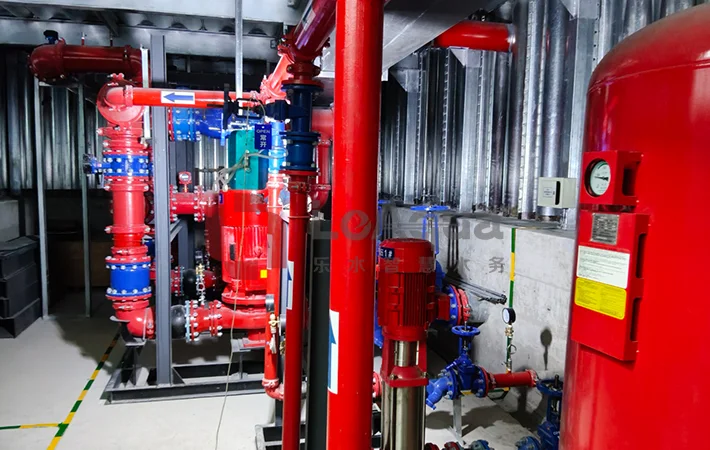
This is where tank selection and pump system design become closely connected.
Engineers may need to calculate:
- Pump flow
- Pump head
- Static elevation
- Pipe losses
- Suction conditions
- Required outlet pressure
- Duty and standby arrangement
A central tank may require a larger distribution network and greater pumping head.
Several remote tanks may reduce distribution distance but increase the number of storage points that need to be monitored and maintained.
Neither arrangement is universally better.
The correct solution depends on the site’s actual layout and fire protection requirements.
This is one reason remote renewable energy projects are good examples of why water storage should be planned as a system rather than as an individual tank.
7. Remote Monitoring Becomes More Useful as Sites Get Larger
A tank located next to a staffed building can be inspected relatively easily.
A tank several kilometres from the main control room is a different situation.
Remote monitoring can provide information such as:
- Tank water level
- Pump operating status
- Pressure
- Alarm conditions
- Power availability
- Equipment faults
This does not eliminate physical inspection.
It gives operators a way to identify abnormal conditions before they travel to a remote location.
For distributed renewable energy sites, monitoring can therefore become an important part of the water storage strategy.
A remote tank that cannot be monitored or maintained properly may create more operational work than expected.
8. Maintenance and Replenishment Should Be Planned From the Start
A remote water tank may operate for many years.
During that time, the project needs to maintain:
- Water level
- Tank condition
- Pumps
- Valves
- Monitoring equipment
- Access roads
The maintenance plan should also answer a simple practical question:
Who will refill the tank?
This matters particularly where there is no permanent water connection.
The project may need to plan:
- Tanker access
- Refill connections
- Water quality checks
- Inspection schedules
- Emergency replenishment
The tank therefore becomes part of the site’s long-term infrastructure rather than simply a construction item.
9. Remote Renewable Projects Often Need a Complete System
When water storage is far from the end point, the project usually needs more than a tank.
The complete arrangement may include:
Storage
Water tank and reserve volume.
Pumping
Fire or utility pump system.
Distribution
Pipework, valves and connection points.
Control
Automatic operation and protection.
Monitoring
Water level, pressure, alarms and equipment status.
This system approach is particularly relevant to projects where the owner wants centralized management of multiple remote assets.
For some projects, this may lead to a water tank with pump system.
For more integrated applications, the same engineering approach can extend to an integrated pump station combining storage, pumping, controls and monitoring.
Lessons From BESS, Solar and Wind Projects
Looking across different renewable energy projects, several patterns become clear.
A wind farm in Germany used three 50 m³ fire water tanks for a site with multiple turbines.
A large German solar park used four 100 m³ tanks because its remote location did not have a nearby hydrant supply.
A California solar project planned multiple 10,000-gallon tanks distributed around the site, including locations near BESS and solar arrays.
These examples do not establish a universal tank size.
They demonstrate something more useful:
Remote renewable projects frequently require storage strategies that respond to site geography, water availability and emergency access.
Final Thoughts
Water storage design for a remote renewable energy project starts with the site, not the tank catalogue.
Engineers need to understand:
- Where water is available
- Where it may be needed
- How far it needs to travel
- How much water is required
- How the system will be refilled
- How emergency crews will access it
- How the equipment will be monitored and maintained
For some projects, one central tank may be enough.
For others, several strategically located tanks may make more sense.
In either case, storage, pumping, distribution and monitoring should be considered together.
This is where water storage becomes more than a tank.
It becomes part of the infrastructure that allows a remote renewable energy project to operate and respond to emergencies over its entire service life.