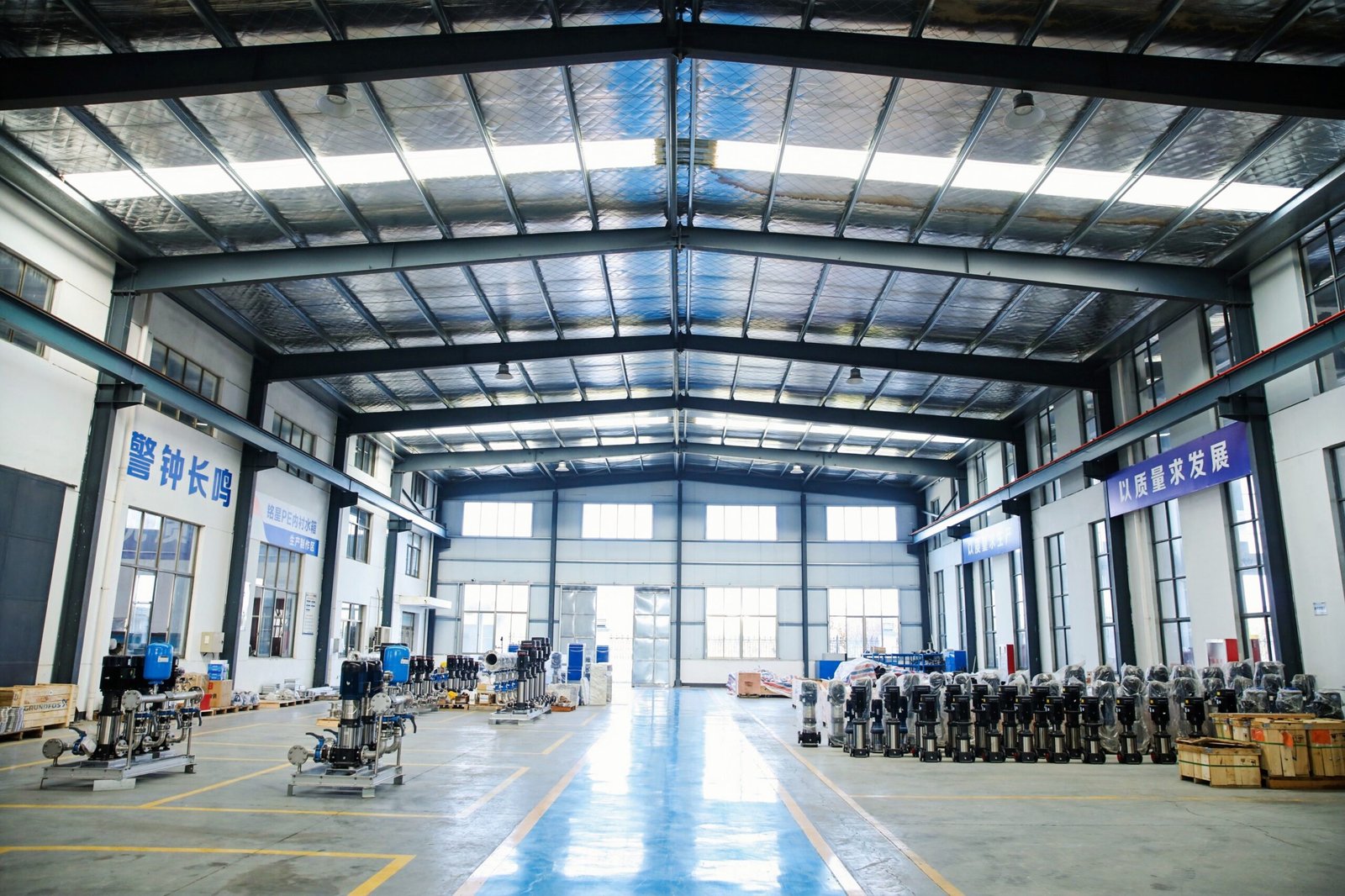
A data center has little room for uncertainty when it comes to fire protection.
Unlike many conventional buildings, data centers contain large amounts of electrical and IT equipment that may need to remain available around the clock. A fire protection system therefore has to consider not only how a fire is detected and suppressed, but also how the water supply will remain available when it is needed.
That makes fire water storage an important part of the overall fire protection design.
The first question, however, should not be:
“How large should the fire water tank be?”
Engineers normally begin with a different set of questions:
- What fire protection systems are installed?
- Which areas require water-based protection?
- What is the required fire water demand?
- How long must the water supply last?
- Is the available municipal supply sufficient?
- Where should the tank and fire pumps be located?
The answers determine the appropriate storage strategy.
For data centers, the tank should therefore be treated as part of the complete fire protection system rather than as an isolated water storage product.
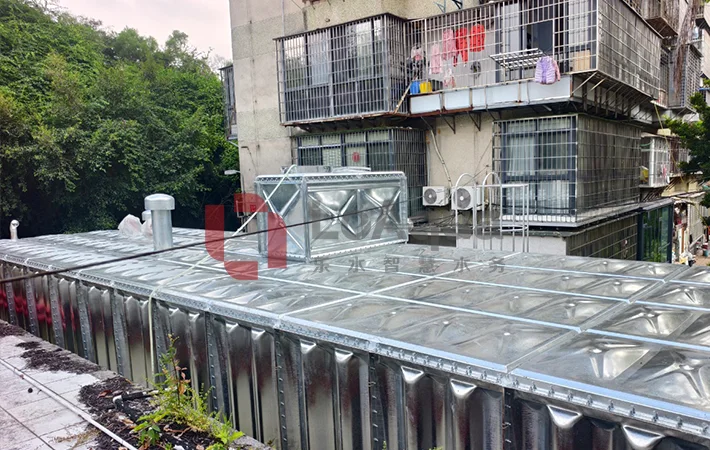
1. Start With the Data Center Fire Protection Strategy
Before selecting a tank, engineers need to understand how the facility is protected.
A modern data center may contain several different areas with different fire protection requirements, including:
- Server rooms
- Electrical rooms
- UPS areas
- Battery rooms
- Generator areas
- Transformers
- Mechanical spaces
- Offices and support areas
Not every space necessarily uses the same suppression method.
Depending on the project design, protection may include:
- Automatic sprinklers
- Water-based suppression
- Clean-agent systems
- Detection and alarm systems
- Pre-action systems
- Portable firefighting equipment
This is particularly important for data centers because the risk is not simply the value of the equipment. A fire protection system also needs to consider the potential impact of water on sensitive electrical and IT equipment.
NFPA 75 specifically addresses fire protection for information technology equipment facilities, and current NFPA development work is also considering the changing conditions associated with high-density computing and liquid-cooled data centers.
Therefore, the fire water tank should be selected after the overall fire protection strategy has been established.
2. Determine Fire Water Demand Before Choosing Tank Capacity
Once the fire protection systems have been defined, engineers can establish the required water demand.
The calculation may involve:
- Sprinkler demand
- Hose stream demand
- Hydrant demand
- Water spray requirements
- Required duration
- Simultaneous system operation
The required tank capacity should then be based on the applicable project design and local requirements.
This means there is no universal rule such as:
“A 50 MW data center needs X m³ of fire water.”
Two data centers of similar size may have different fire protection arrangements and therefore different water storage requirements.
Engineers should also distinguish between:
required fire water volume
and
total geometric tank capacity.
Operating levels, reserve requirements, suction conditions and other design details can affect how much water is actually available to the fire pump system.
3. Check Whether the Municipal Water Supply Is Enough
One of the first practical questions is whether the site already has an adequate water source.
A data center located in a major urban area may have access to a municipal water network.
A hyperscale campus in a remote location may have a very different situation.
Engineers may review:
- Available flow
- Available pressure
- Reliability
- Water main size
- Emergency supply
- Backup arrangements
If the external water supply cannot satisfy the required fire flow and duration, dedicated fire water storage may be necessary.
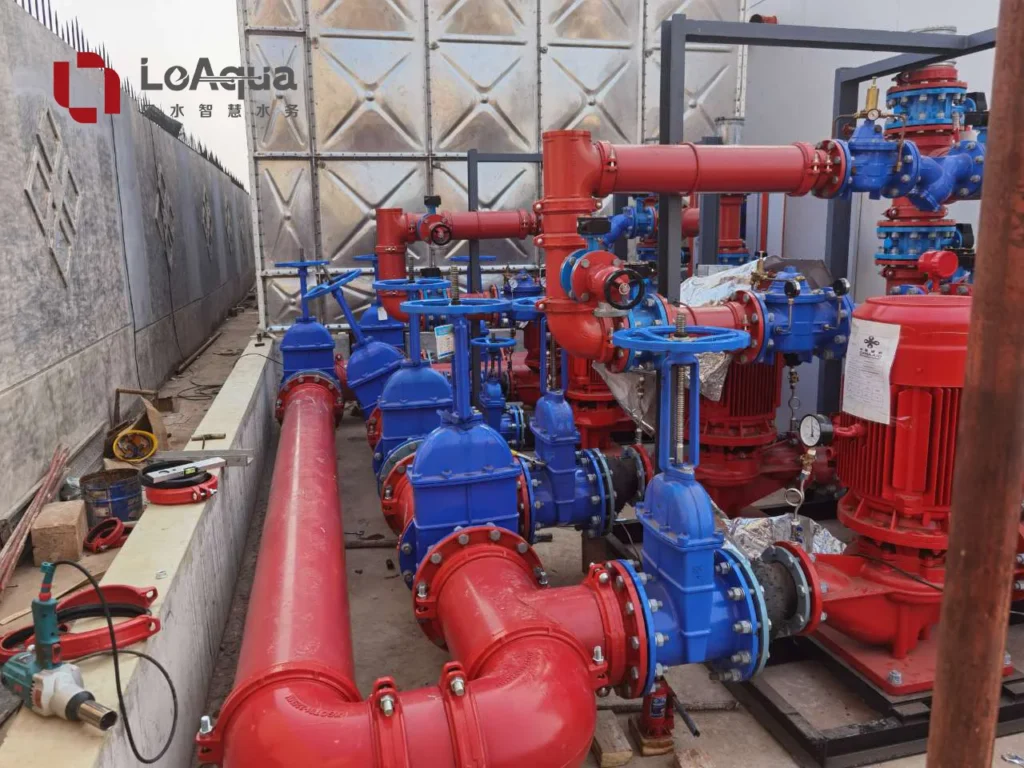
This is where the fire water tank and pump system become closely connected.
The tank provides the reserve.
The fire pumps provide the flow and pressure required by the protection system.
NFPA’s standard framework includes NFPA 22 for private fire protection water tanks and NFPA 24 for private fire service mains, reinforcing that storage and distribution infrastructure are part of the overall fire protection system rather than independent pieces of equipment.
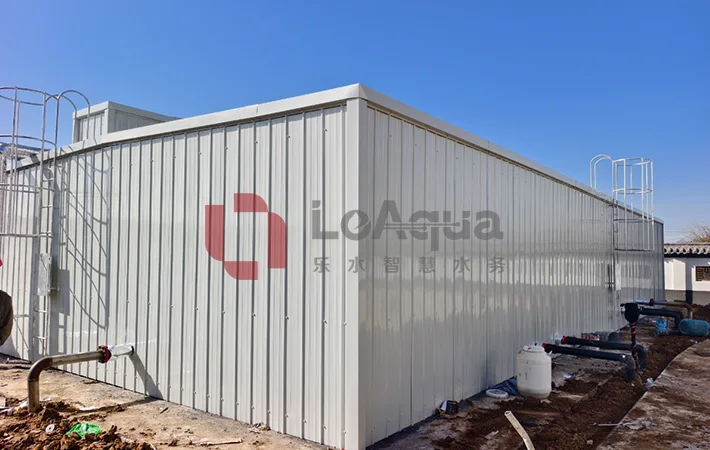
4. Consider Where the Tank and Pumps Should Be Located
A data center campus may contain several buildings or multiple data halls.
The location of the fire water storage system therefore affects both hydraulic performance and emergency access.
Engineers may consider:
- Distance to protected buildings
- Fire pump room location
- Fire service access
- Pipe routing
- Maintenance space
- Tanker access
- Future campus expansion
A central tank can simplify management and monitoring.
However, if the campus is very large, long pipe runs may increase hydraulic losses and complicate the distribution network.
This is why tank location should be reviewed together with the fire water main and pump layout.
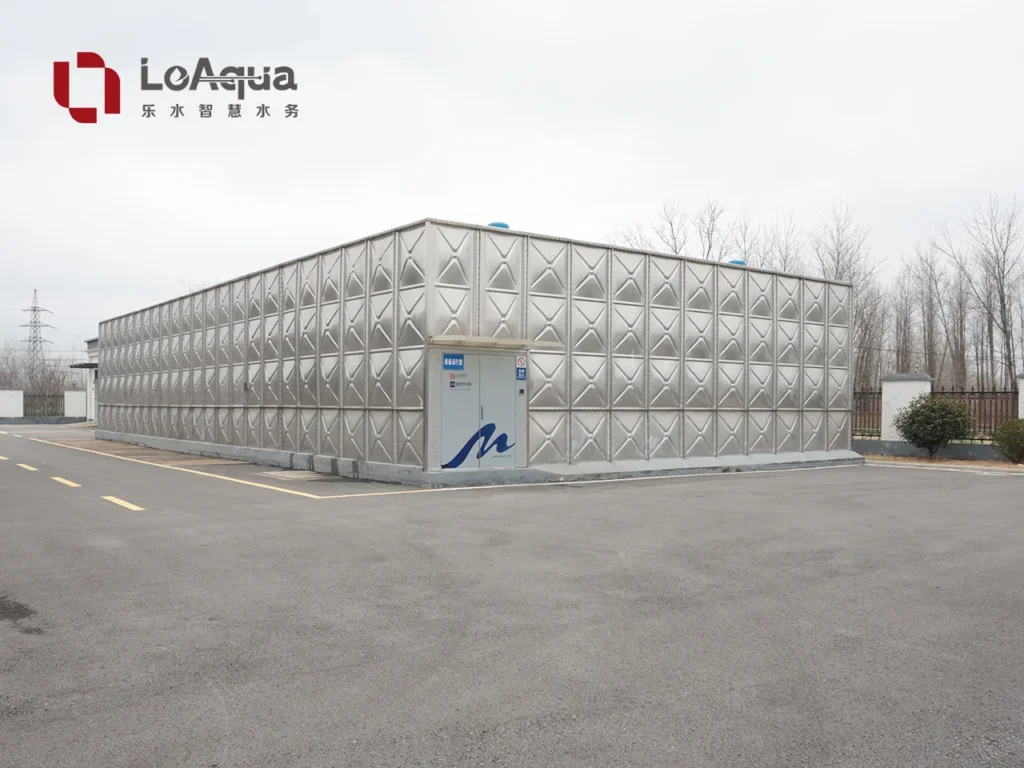
5. Above-Ground or Underground Fire Water Storage?
The site layout will often influence the preferred installation method.
Above-Ground Tanks
Above-ground storage can provide straightforward access for:
- Inspection
- Cleaning
- Maintenance
- Water level monitoring
It may also simplify replacement or future modification.
However, engineers need to consider:
- Available footprint
- Weather exposure
- Foundation requirements
- Site aesthetics
- Equipment access
Underground Tanks
Underground storage can preserve valuable surface space, which may be useful on dense data center campuses.
However, it introduces additional design questions:
- Soil conditions
- Groundwater
- Buoyancy
- Surface loads
- Waterproofing
- Inspection access
The choice should therefore be made with the civil, architectural and fire protection design teams rather than selected independently.
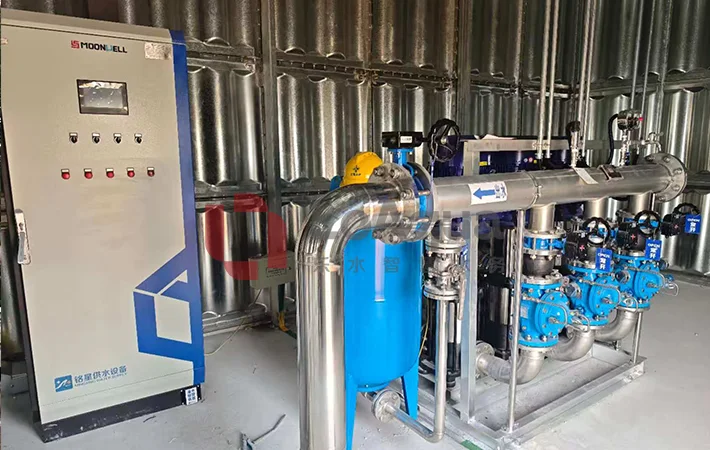
6. Match the Tank With the Fire Pump System
A fire water tank cannot provide adequate protection simply because it contains enough water.
The water also has to reach the fire protection system at the required flow and pressure.
Engineers may need to review:
- Fire pump flow
- Pump head
- Suction conditions
- Water level
- Pipe losses
- Duty and standby pumps
- Power supply
- Automatic starting
For a large data center, redundancy can become particularly important.
The fire protection design may require multiple pumps or alternative power arrangements so that a single equipment failure does not eliminate the intended protection.
This is why the tank and fire pumps should be treated as one engineering discussion.
A correctly sized tank connected to an incorrectly configured pump system does not provide a complete fire water solution.
7. Data Center Expansion Changes the Water Storage Decision
A data center is rarely designed without considering future expansion.
A campus may begin with one data hall and add additional buildings later.
That creates a question that is easy to overlook:
Will today’s fire water system still support the site after expansion?
Engineers may therefore review:
- Future building locations
- Additional fire protection demand
- Pump capacity
- Pipe network capacity
- Tank expansion possibilities
For large campuses, modular or expandable water storage arrangements may provide useful flexibility.
The important point is not to oversize every component simply because the site may expand.
Instead, the original design should identify which parts can be expanded and which parts need to be sized from the beginning.
8. Monitoring Becomes Important When the Site Is Critical
Data centers typically operate continuously, which makes equipment monitoring especially important.
A fire water system can monitor:
- Tank water level
- Fire pump status
- Pressure
- Power availability
- Alarm conditions
- Equipment faults
Monitoring does not replace physical inspection or testing.
It provides another layer of information.
For a facility with 24/7 operations, operators can use these signals to identify problems before the system is needed during an emergency.
This also creates an opportunity to connect the fire water system with a wider facility management or monitoring platform.
Data Center Fire Water Storage Checklist
Before approving the system, engineers should review:
| Item | What to Check |
|---|---|
| Fire strategy | Sprinklers, pre-action, suppression and other systems |
| Fire demand | Required flow and duration |
| Water source | Municipal or dedicated storage |
| Tank capacity | Based on project-specific calculations |
| Tank location | Access, coverage and expansion |
| Installation | Above-ground or underground |
| Fire pumps | Flow, head, redundancy and power |
| Pipework | Distribution and hydraulic losses |
| Monitoring | Level, pressure, alarms and pump status |
| Future expansion | Additional buildings or IT load |
| Standards | Applicable local and project requirements |
| Documentation | Calculations, drawings and test records |
This checklist is not a substitute for the project’s fire protection engineering design.
It is a way to ensure that the important water storage questions are addressed before equipment is ordered.
Final Thoughts
Fire water storage for a data center should be designed around the facility’s actual fire protection strategy.
The right tank capacity depends on the required fire water demand, operating duration, available water sources and applicable project requirements.
The tank also needs to work with the fire pumps, distribution network, controls and monitoring system.
For growing data center campuses, future expansion should be considered before the original system is finalized.
A suitable fire water storage system is therefore not simply a tank with a certain volume.
It is a coordinated part of the data center’s wider fire protection infrastructure.
For LeAqua, this type of project naturally connects water storage, pumping, control and monitoring into one engineering workflow rather than treating the tank as an isolated product.
If you’re unsure how to choose a water tank, you can go to 【Water Tank Selection Guide】