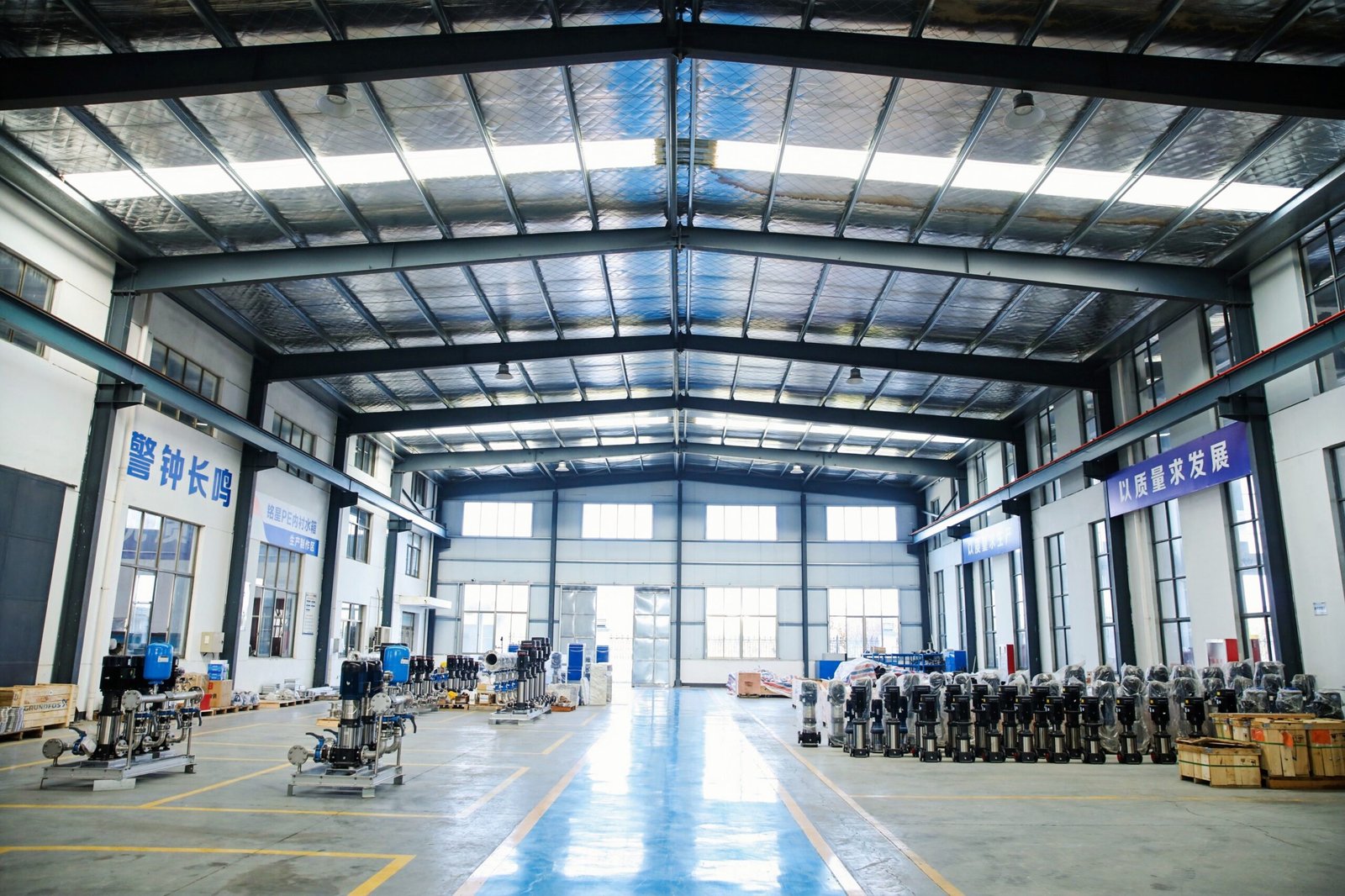
AI data centers are changing the way engineers think about data center infrastructure.
Higher computing densities mean greater power requirements and more demanding cooling systems. Some newer facilities are also adopting direct-to-chip or other liquid cooling technologies to deal with the heat generated by high-performance computing equipment.
These changes raise an important question for fire protection engineers:
Does an AI data center require a different approach to fire water storage?
The answer is not simply “more water.”
Fire water storage still needs to be determined from the actual fire protection strategy, required flow, required duration and applicable project requirements.
What has changed is the environment in which the fire protection system has to operate.
Higher equipment density, new cooling infrastructure, electrical systems and future expansion can all affect the way engineers plan the water supply.
For that reason, fire water storage should be considered as part of the data center’s wider fire protection infrastructure rather than as a standalone tank.
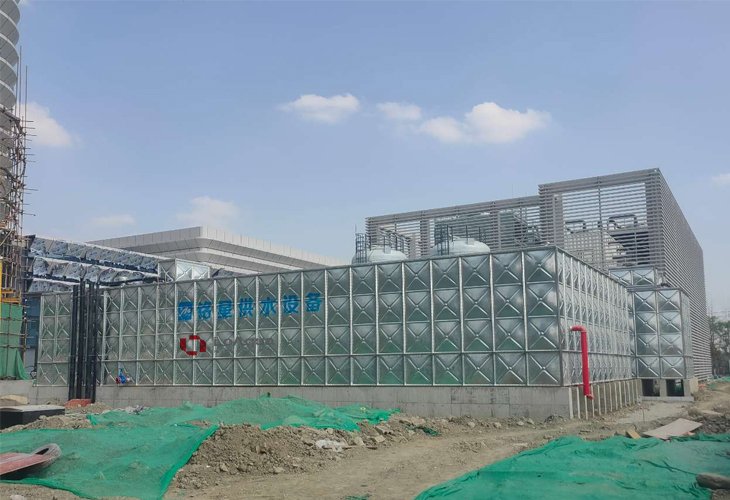
1. Start With the AI Data Center’s Fire Protection Strategy
Before selecting a fire water tank, engineers first need to understand what the facility is designed to protect.
An AI data center may contain:
- High-density server rooms
- Electrical rooms
- UPS systems
- Generator areas
- Transformers
- Cooling infrastructure
- Battery energy storage or UPS battery systems
- Operations and support areas
These spaces do not necessarily have the same fire protection requirements.
Depending on the project, the facility may use combinations of:
- Automatic sprinkler systems
- Pre-action sprinkler systems
- Clean-agent systems
- Fire detection
- Water-based suppression
- Portable firefighting equipment
NFPA 75 addresses fire protection for information technology equipment facilities, and current 2026 public inputs to the standard are specifically discussing the changing conditions associated with AI and high-performance computing facilities. (nfpa.org)
This is an important starting point:
The fire water tank should be designed around the protection strategy, not around the computing power of the facility.
2. Does Liquid Cooling Change Fire Water Requirements?
Liquid cooling is one of the biggest differences between some new AI data centers and older facilities.
Direct-to-chip cooling, for example, uses liquid delivered close to the processor to remove heat from high-performance CPUs and GPUs.
NFPA’s current 2026 NFPA 75 development material describes direct-to-chip systems using coolant distribution units and piping routed through data center spaces, and specifically notes that leaks from these systems should be considered. (nfpa.org)
This does not mean that the cooling water itself should automatically be counted as fire water.
The two systems have different purposes.
Instead, engineers should consider how the cooling infrastructure changes the physical environment of the data center.
There may be:
- More piping
- More equipment connections
- More utility infrastructure around racks
- Different equipment layouts
- Additional leak considerations
Current NFPA material also discusses concerns around water spray onto lithium-ion battery cells in areas using liquid cooling and rack-level UPS systems. (nfpa.org)
The practical conclusion is:
Liquid cooling can change fire protection coordination even when it does not change the fire water tank volume directly.
3. Determine Fire Water Demand From the Actual Design
After the fire protection strategy is established, engineers determine the required fire water demand.
Depending on the project, this may include:
- Sprinkler demand
- Hydrant demand
- Hose stream demand
- Water spray demand
- Other water-based suppression systems
The project team then determines how long the required flow must be maintained.
At a basic level:
Required fire water volume = Required fire flow × Required duration
But the actual values need to come from the applicable fire protection design.
An AI data center should therefore not be assigned a standard tank capacity simply because it has a particular IT load.
A 20 MW and a 100 MW facility may have different fire protection arrangements.
Even two facilities with the same IT load may have different water requirements because of differences in:
- Building configuration
- Fire protection systems
- Occupancy
- Equipment layout
- Local requirements
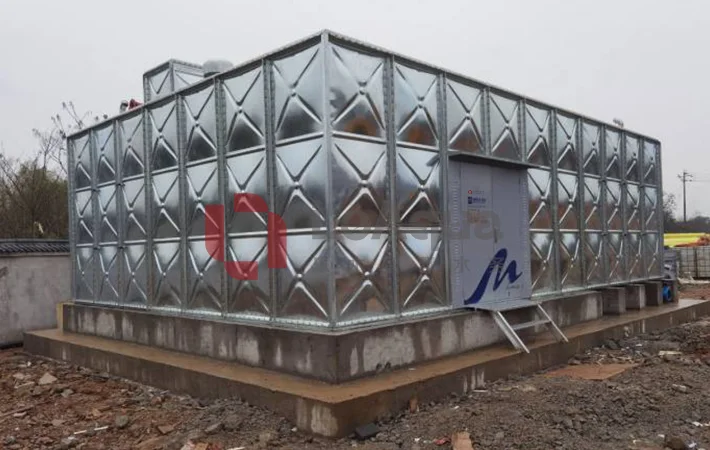
4. Check the Existing Water Supply
The next question is whether the site already has a suitable fire water source.
Engineers may review:
- Municipal water supply
- Private water supply
- Available flow
- Available pressure
- Reliability
- Emergency supply conditions
Some hyperscale data centers are located on large campuses where multiple buildings share infrastructure.
Other facilities may be developed in locations where the external water network has limited capacity.
If the available supply cannot reliably meet the required fire demand, dedicated fire water storage may be required.
The tank then becomes a reserve that can supply the fire pumps when the system needs it.
The Department of Energy’s data center resources also emphasize that water infrastructure is an important part of data center planning, although cooling water and fire water serve different purposes and should not be treated as interchangeable supplies. (energy.gov)
5. Tank Location Matters on a Large Data Center Campus
AI data centers are often planned as campuses rather than single buildings.
The location of the fire water storage system therefore needs to be coordinated with:
- Data halls
- Electrical buildings
- Generators
- Cooling facilities
- Fire pump rooms
- Fire service access roads
A central tank may simplify maintenance and monitoring.
However, a large campus may also have long distribution distances.
Engineers therefore need to evaluate whether a centralized arrangement can provide the required hydraulic performance throughout the site.
In some situations, the project may require additional storage or carefully planned distribution zones.
The decision depends on the campus layout.
6. Above-Ground or Underground Fire Water Storage?
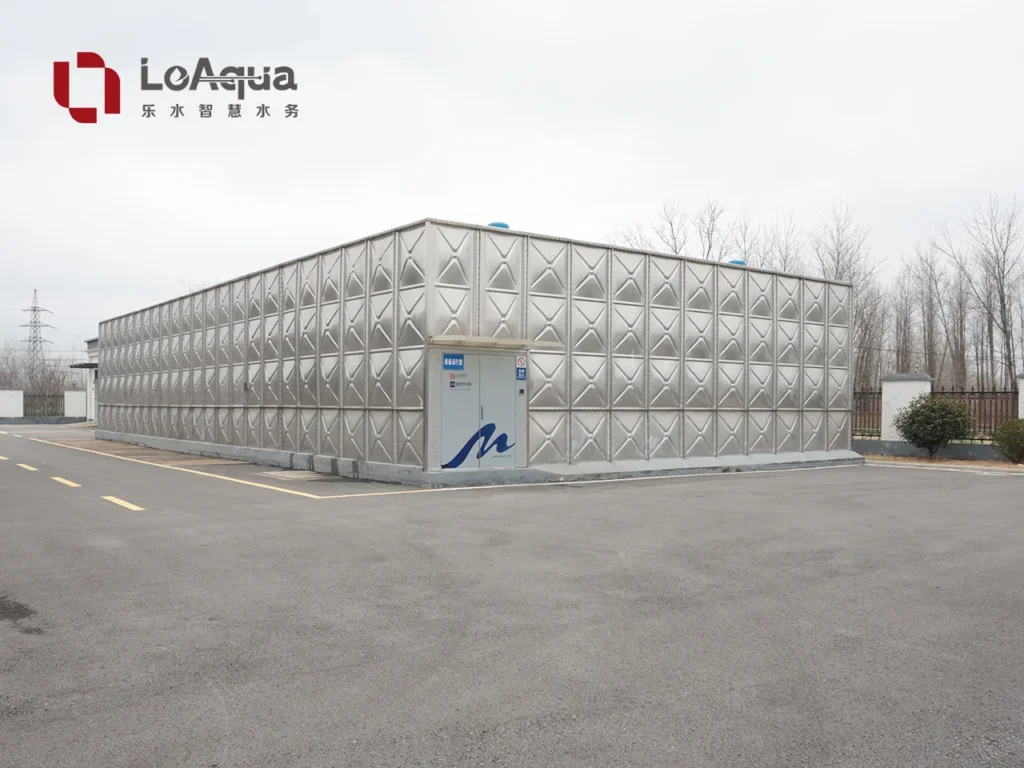
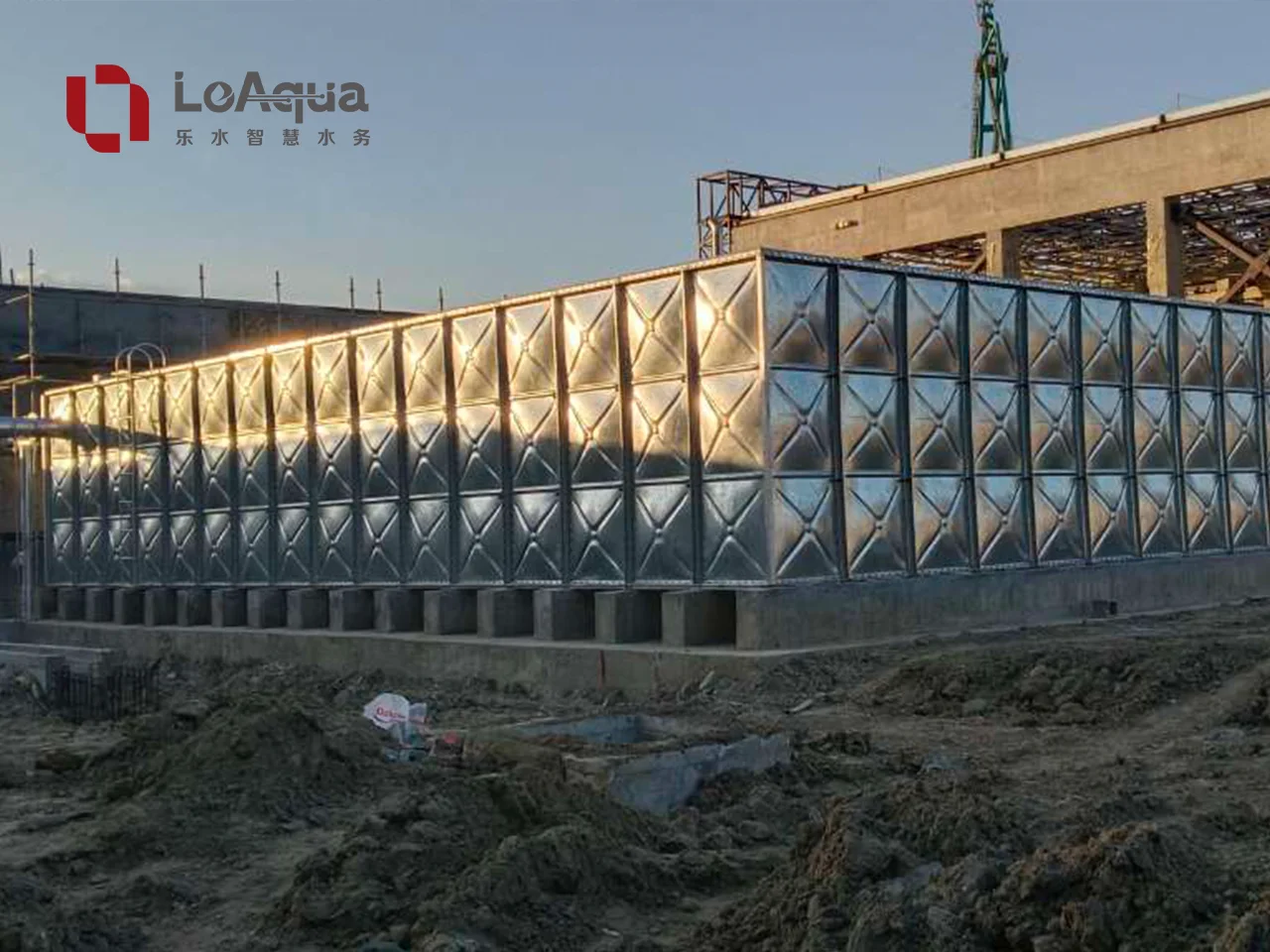
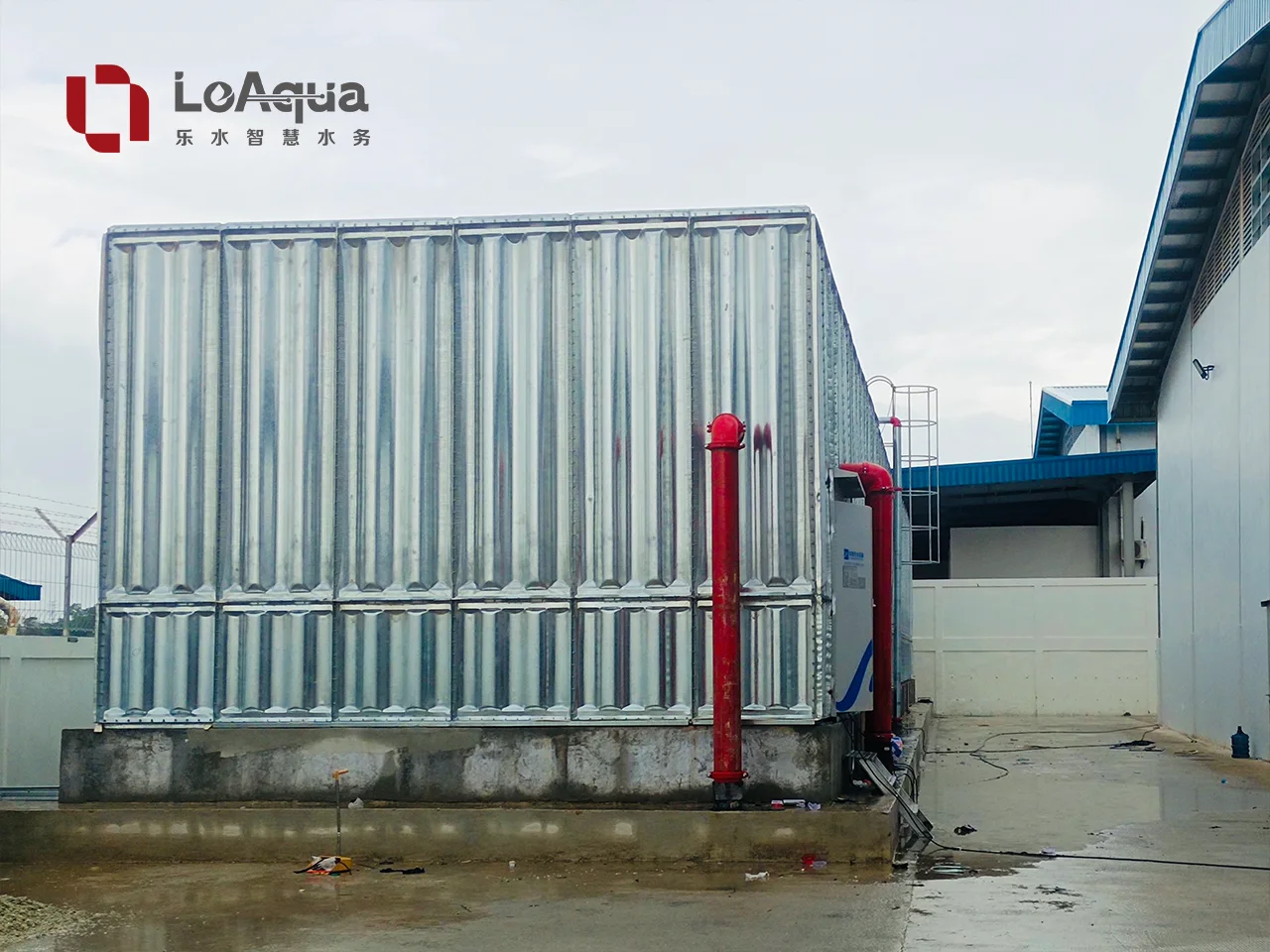
Both approaches can be considered.
Above-Ground Storage
Above-ground tanks can simplify:
- Inspection
- Access
- Maintenance
- Refill
- Water level monitoring
They also tend to be easier to modify or inspect visually.
However, the project needs to consider:
- Site footprint
- Weather
- Foundation
- Architectural requirements
Underground Storage
Underground tanks can preserve valuable surface space.
This may be useful when a large campus needs to reserve land for:
- Equipment
- Roads
- Cooling infrastructure
- Future buildings
However, underground systems introduce additional considerations such as:
- Groundwater
- Buoyancy
- Soil pressure
- Surface loading
- Waterproofing
- Maintenance access
The selection should be coordinated with the civil and fire protection design.
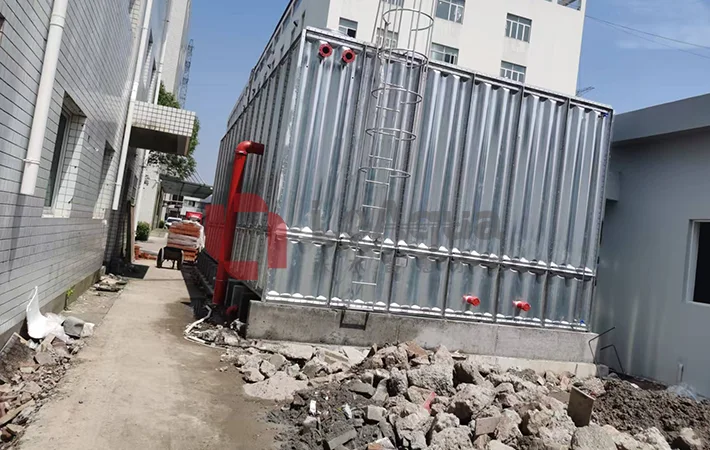
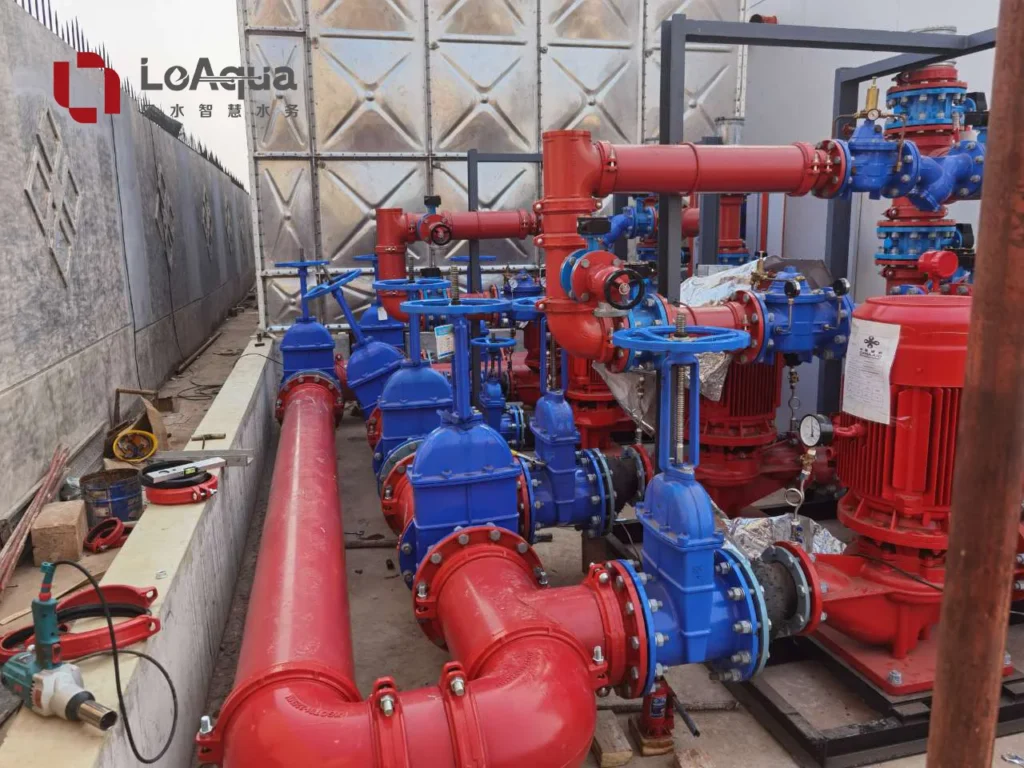
7. Match the Fire Water Tank With the Pump System
The tank provides the water reserve.
The fire pump system delivers that water to the protection network.
These two parts therefore need to be reviewed together.
Engineers may consider:
- Pump flow
- Pump head
- Suction conditions
- Static elevation
- Pipe losses
- Duty and standby pumps
- Power supply
- Automatic starting
For a large AI data center campus, the distribution network can be extensive.
The tank may be physically close to the pump room but still far from some protected buildings.
That makes hydraulic analysis important.
A tank with enough storage volume is not sufficient if the pump system cannot deliver the required flow and pressure to the most demanding point.
8. Plan for Future AI Capacity
One major difference between today’s AI data centers and many traditional facilities is the speed at which computing capacity can change.
A project may begin with one set of racks and later add:
- Additional computing halls
- More high-density racks
- New cooling equipment
- Additional electrical infrastructure
The fire protection system therefore needs to be reviewed together with the expansion strategy.
Engineers may ask:
- Can the existing tank capacity support future phases?
- Can the pump system be expanded?
- Does the fire water network have additional capacity?
- Will new buildings require separate protection zones?
This does not necessarily mean oversizing everything from the beginning.
A better approach is to understand which parts of the system need to accommodate future expansion and which can be added later.
9. Monitoring Is Important for Continuously Operated Facilities
AI data centers are designed for continuous operation.
That makes monitoring of supporting systems particularly useful.
A fire water system may monitor:
- Tank water level
- Pump status
- Pressure
- Power availability
- Alarm conditions
- Equipment faults
Remote monitoring allows operators to identify abnormal conditions without waiting for a routine site inspection.
For a large campus, this can be particularly useful when some equipment is located away from the main operations center.
The monitoring system should complement, not replace, physical inspection and testing.
What Engineers Should Review Before Ordering the Tank
Before the tank is approved, the project team should have answers to:
| Item | What to Confirm |
|---|---|
| Fire strategy | Which protection systems require water? |
| Fire demand | Required flow and duration |
| Water source | Municipal or dedicated supply |
| Tank capacity | Required usable fire water |
| Location | Access and distribution coverage |
| Installation | Above-ground or underground |
| Pump system | Flow, head and redundancy |
| Pipe network | Hydraulic losses and pressure |
| Cooling systems | Coordination with liquid cooling infrastructure |
| Expansion | Future data halls and capacity |
| Monitoring | Tank, pump and alarm status |
| Compliance | Applicable codes and project requirements |
The exact requirements should be established by the project’s qualified fire protection and engineering teams.
Final Thoughts
AI data centers are introducing new equipment densities, cooling arrangements and electrical infrastructure, but that does not mean there is a universal “AI data center fire water tank size.”
The correct approach remains project-specific.
Engineers need to establish the fire protection strategy, calculate the required water demand and duration, review the available water source and then select the tank and pump system accordingly.
What is changing is the complexity of the environment around the fire protection system.
High-density computing, liquid cooling, UPS systems and future expansion all create additional coordination requirements.
For LeAqua, this reinforces the value of treating fire water storage as part of a complete system:
Water Storage → Fire Pumps → Distribution → Control → Monitoring
The water tank is important, but its performance ultimately depends on how well it works with everything around it.